.png)
 Japanese
  English
  Spanish
  Korean
  Russian
  Chinese
Best PCB depaneling machines for EV and automotive electronics manufacturing—this isn’t just about equipment choice. It’s about reliability under harsh conditions, long product lifecycles, and zero tolerance for failure. In automotive electronics, even a small defect introduced during depaneling can lead to serious downstream risks.
So the question becomes practical: which machines actually meet these demands?
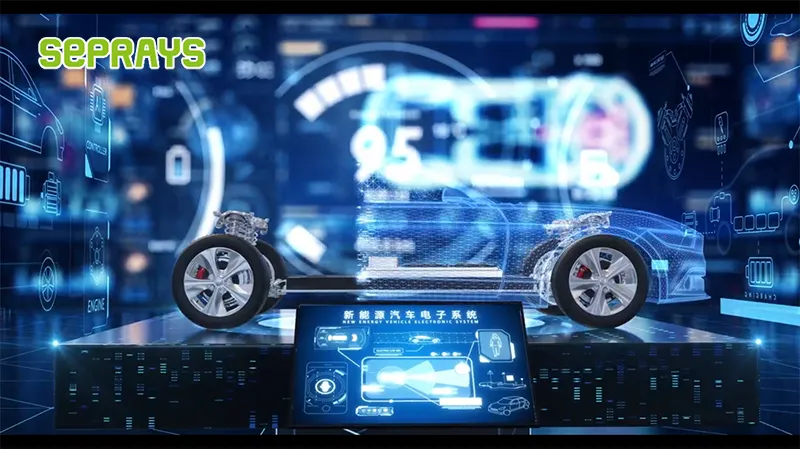
🚗 Why Automotive PCBs Are Different
Automotive and EV applications are not typical consumer electronics.
They involve:
- High-power circuits
- Thick PCBs and metal substrates
- Dense layouts with edge components
- Strict reliability standards (AEC-Q, IPC)
Depaneling here is not just separation. It’s a quality control point.
Any stress, burr, or micro-crack can compromise long-term performance.
⚙️ Key Challenges in EV PCB Depaneling
From real production environments, several issues appear repeatedly:
- Mechanical stress damages solder joints
- Inconsistent edge quality affecting assembly
- Low efficiency in high-volume production
- Tool wear when cutting thick or rigid boards
These are not isolated problems. They directly impact yield, cost, and delivery timelines.
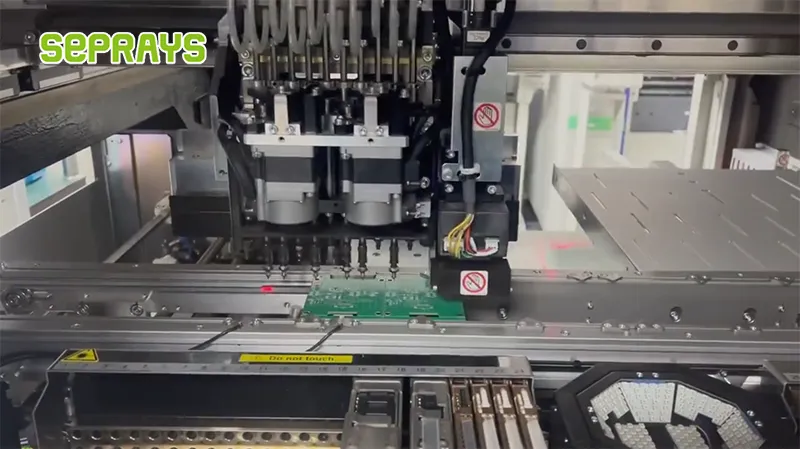
🔍 Comparing Depaneling Machine Options
Different depaneling machines solve different problems.
Here’s a practical comparison based on automotive use:
| Method | Stress Level | 精密 | 速度 | Suitable Applications |
|---|---|---|---|---|
| Saw Blade Machine | 中 | 中 | High | Power boards, straight cuts |
| Router Machine | 低-中 | High | 中 | Complex shapes, mixed layouts |
| Laser Machine | Very Low | Very High | 中 | Sensitive circuits, high-density PCBs |
| Punching Machine | 中 | 中 | Very High | High-volume, simple boards |
| V-Groove Machine | Low | 中 | 中 | Pre-scored automotive panels |
No single method fits all.
In automotive manufacturing, a hybrid approach is often used.
💡 Matching Machine to Application
Choosing the right machine depends on PCB type.
For power electronics (thick boards):
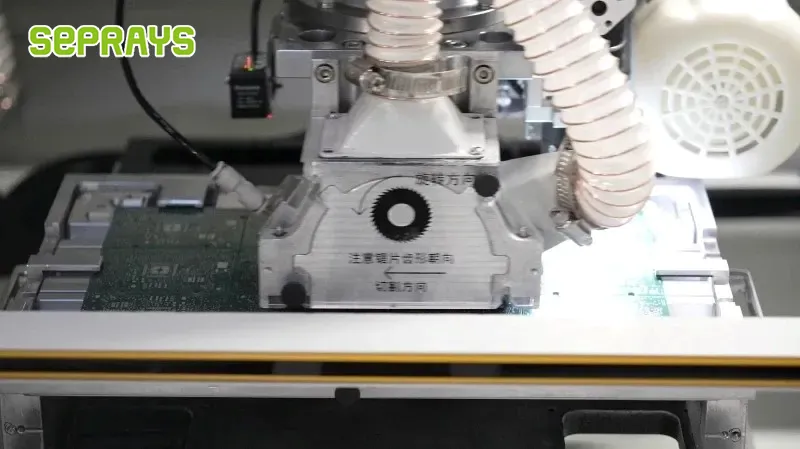
Saw blade machines provide speed and durability.
For control units (complex layouts):
Router depaneling ensures flexibility and cleaner edges.
For sensitive modules (ADAS, sensors):
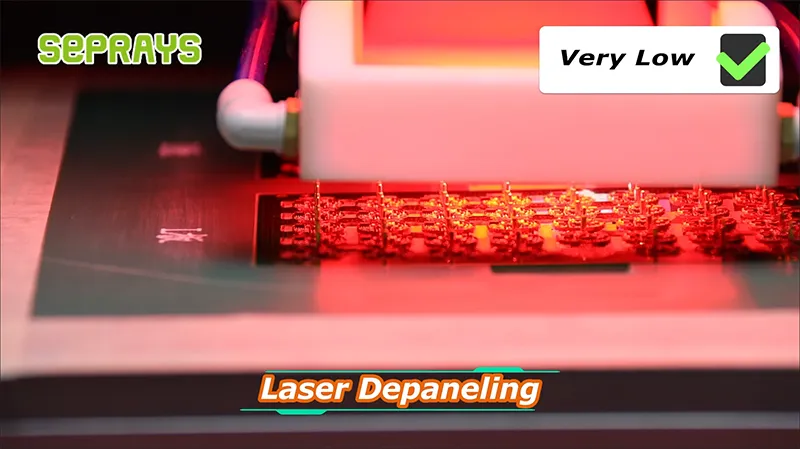
Laser depaneling minimizes stress and protects components.
For high-volume standardized boards:
Punching or V-groove systems improve efficiency.
This matching strategy reduces risk while optimizing cost.
💰 Cost vs. Reliability Trade-Off
Automotive manufacturers rarely choose the cheapest option.
Instead, they evaluate:
- Cost per unit over time
- Yield impact
- Maintenance frequency
- Risk of field failure
Laser systems, for example, have higher upfront costs but lower defect rates.
Saw blade systems are cost-effective but require careful parameter control.
A balanced investment often delivers the best ROI.
🧪 Case Study from an EV Supplier
An EV electronics supplier producing battery management system (BMS) boards faced recurring issues:
- Edge chipping during depaneling
- High tool wear due to thick PCBs
- Increasing rejection rates
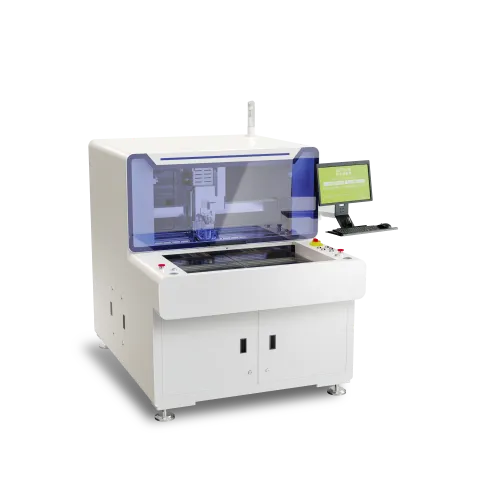
They worked with Seprays to redesign their depaneling process.
Solution implemented:
- Router depaneling for complex sections
- Saw blade cutting for straight edges
- Optimized tooling and parameters
Results:
- Defect rate has reduced significantly
- Tool life improved by over 30%
- Production efficiency increased
This hybrid approach aligned with both performance and cost targets.
🛠️ Practical Tips from Automotive Production
From shop floor experience:
- Use rigid fixtures to stabilize thick boards
- Monitor tool wear closely in high-load cutting
- Avoid placing sensitive components near edges
- Combine methods when necessary
Small process improvements can prevent large-scale failures.
🔄 Future Trends in Automotive Depaneling
The industry is evolving.
Key trends include:
- Increased use of レーザー depaneling for ADAS and sensor boards
- Automation and inline integration
- Smart monitoring for tool condition and quality control
As EV technology advances, depaneling requirements will continue to rise.
🚀 Why Choose Seprays Group?
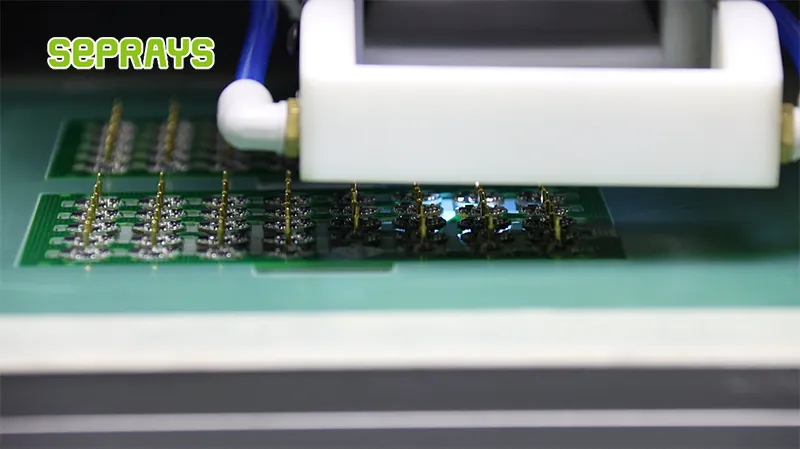
Seprays Group has been dedicated to PCB/FPC depaneling technology, offering a complete range of solutions tailored for demanding industries like automotive and EV manufacturing.
Their portfolio includes:
- Milling cutter depanelers
- Laser depaneling systems
- V溝depanelers
- Punching machines
- Automated handling solutions
Seprays equipment is trusted by leading global manufacturers such as Foxconn, Flextronics, State Grid, Luxshare, Compal, Wistron, China Electronics, Quanta, CRRC, China Aerospace, OPPO, ZTE, and Bosch. These partnerships demonstrate proven reliability across large-scale and high-precision production environments.
With a focus on real-world application needs, Seprays helps manufacturers balance performance, cost, and long-term reliability.
If you are evaluating depaneling solutions for EV or automotive electronics, feel free to contact us.
WhatsApp: +8618929266433
Eメール: sales@seprays.com
❓ FAQ
1. Which depaneling method is best for EV electronics?
It depends on the PCB type. Laser for sensitive boards, router for complex shapes, and saw blade for power boards.
2. Why is stress control important in automotive PCBs?
Because even minor defects can affect long-term reliability and safety.
3. Are laser depaneling machines worth the cost?
For high-value or sensitive applications, they often reduce defects and improve ROI.
4. Can one machine handle all PCB types?
Usually not. Many manufacturers use a combination of methods.
5. How to improve tool life in depaneling?
Optimize cutting parameters, use proper tooling, and perform regular maintenance.