Japanese
 English
 Spanish
 Korean
 Russian
 Chinese
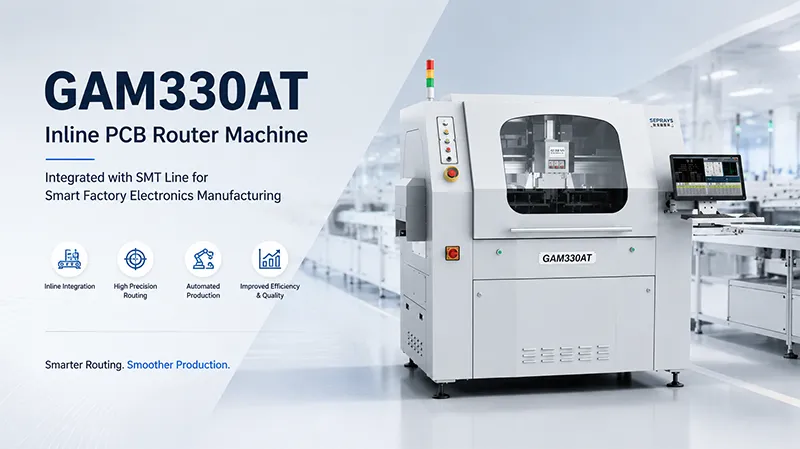
In modern electronics manufacturing, improving production efficiency involves more than increasing cutting speed. Material handling, product transfer, and process coordination also play important roles.
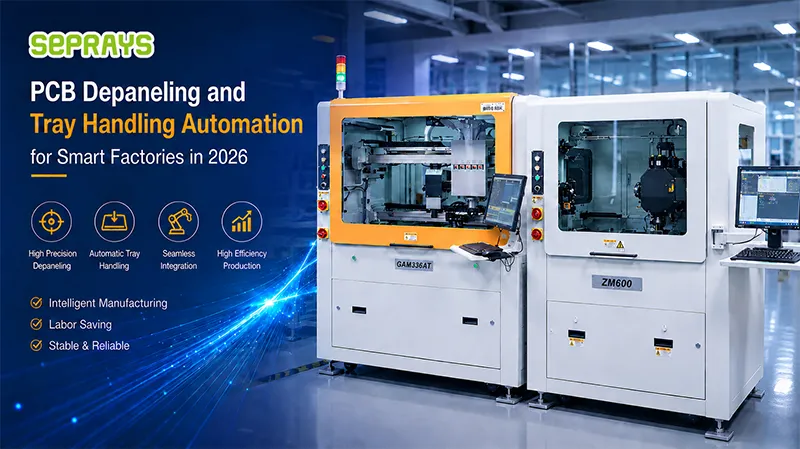
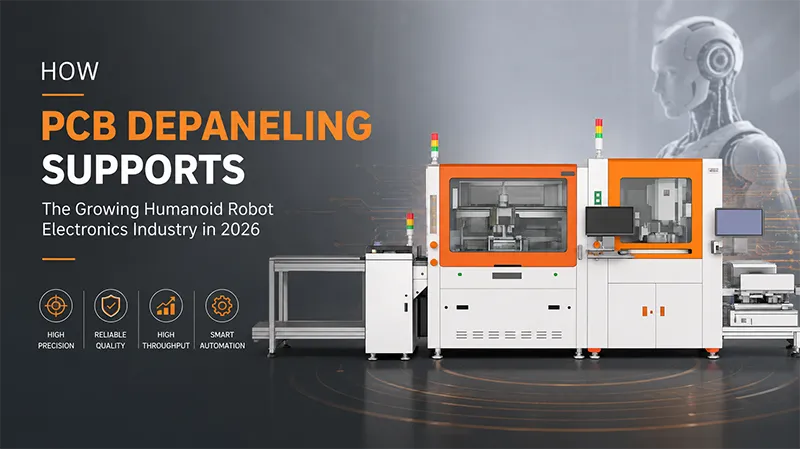
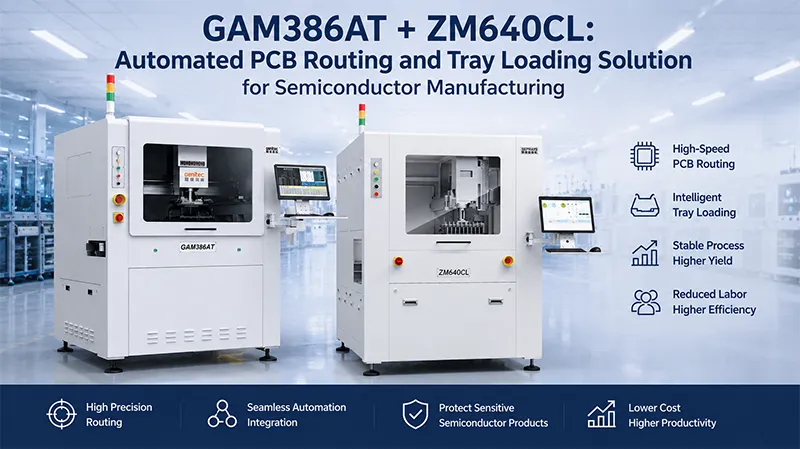
の Seprays GAM336AT In-Line Automatic PCB Router Depaneling Machine, combined with a PCB Board Unloader, provides an integrated approach to PCB separation and downstream board handling.
This solution is designed to help manufacturers streamline PCB depaneling, reduce repetitive manual operations, and create a more continuous production workflow.
Why PCB Unloading Matters in Automated Electronics Manufacturing
PCB depaneling is an important step in PCBA production.
After components are assembled and the PCB panel passes through the required inspection processes, individual boards need to be separated and transferred to the next production stage.
However, manual unloading can create additional work for operators.
Common challenges include:
- Repetitive manual board collection.
- Additional handling time after depaneling.
- Inconsistent product placement.
- Interrupted production flow.
- Increasing labor requirements as output grows.
These issues may become more noticeable in high-volume electronics manufacturing.
Integrating a PCB unloader with a depaneling machine helps address these handling requirements and supports a more organized production process.
How GAM336AT Performs Automatic PCB Routing
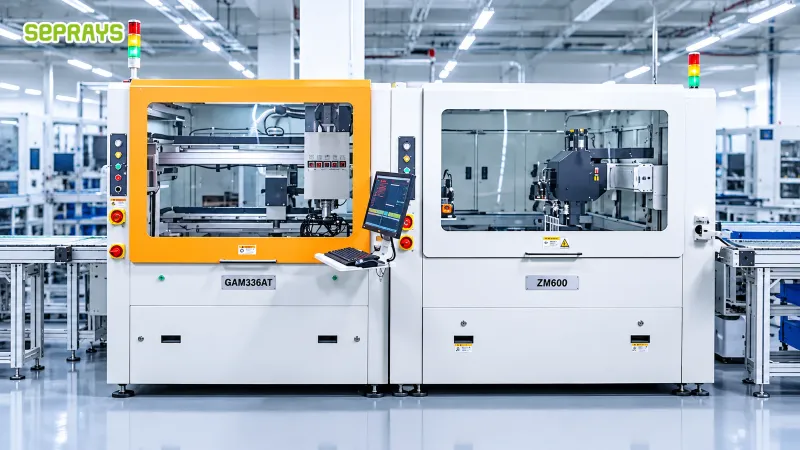
の GAM336AT is an in-line automatic PCB router depaneling machine designed for PCB separation in automated manufacturing environments.
It uses a milling-cutter process to follow programmed cutting paths and separate individual PCBs from a panel.
Compared with simple straight-line separation methods, PCB routing offers greater flexibility for different board outlines, including curves and irregular shapes.
Key capabilities include:
- Automatic PCB feeding and positioning.
- CCD vision-based positioning and teaching.
- High-speed spindle routing.
- Programmable cutting paths.
- Automatic tool-changing capability.
- Integration with upstream and downstream equipment.
Actual cutting performance depends on PCB material, panel design, cutting path, component clearance, and process settings.
These factors should be evaluated before selecting the final machine configuration.
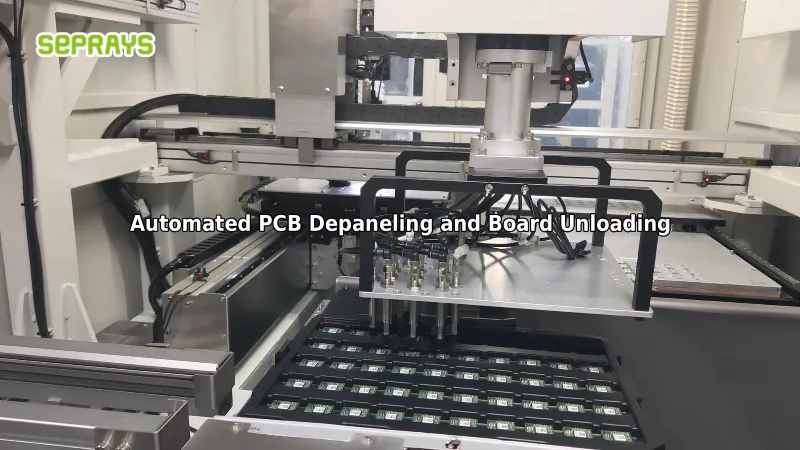
How a PCB Board Unloader Improves Material Handling
Cutting is only one part of the depaneling process.
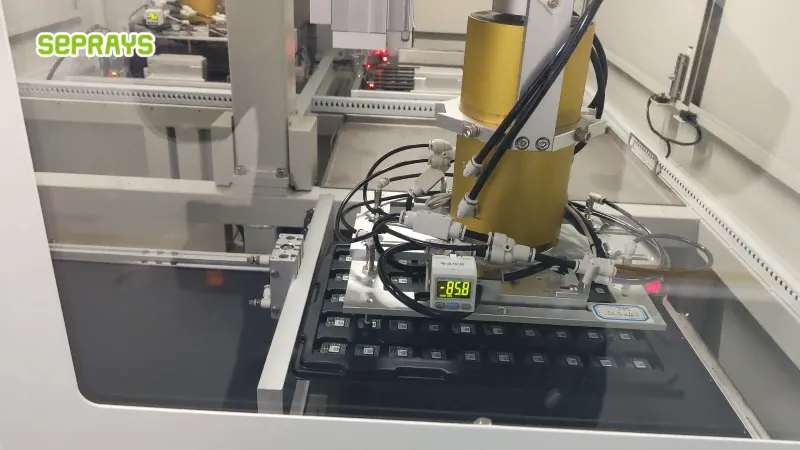
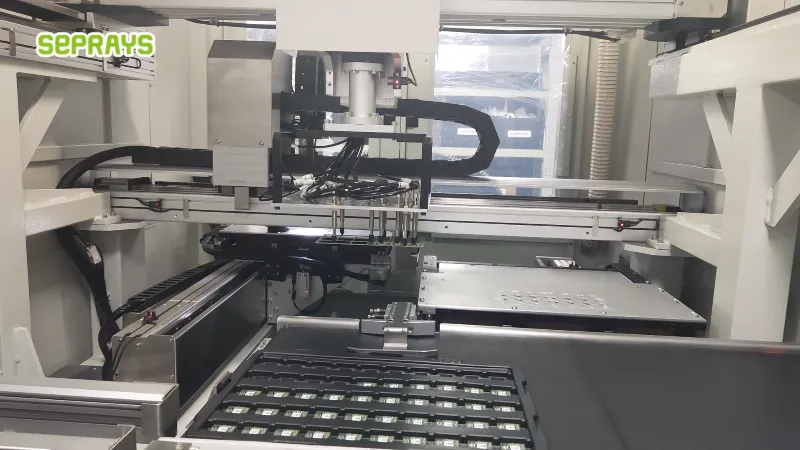
After separation, finished PCBs must be collected and transferred safely to the next operation.
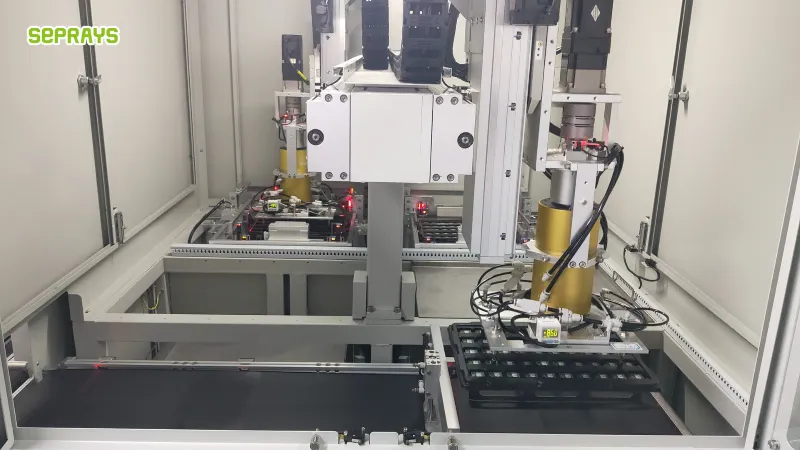
A PCB Board Unloader helps automate this stage.
By coordinating board unloading with the depaneling process, manufacturers can reduce repetitive manual collection and improve material transfer consistency.
Depending on the selected configuration, manufacturers can adapt the unloading process to different board dimensions, handling requirements, and production layouts.
This is particularly useful for factories looking to reduce manual intervention and improve workflow coordination.
Benefits of Integrating PCB Depaneling and Unloading
Combining the GAM336AT with a PCB Board Unloader offers several potential production benefits.
Reduced Manual Handling
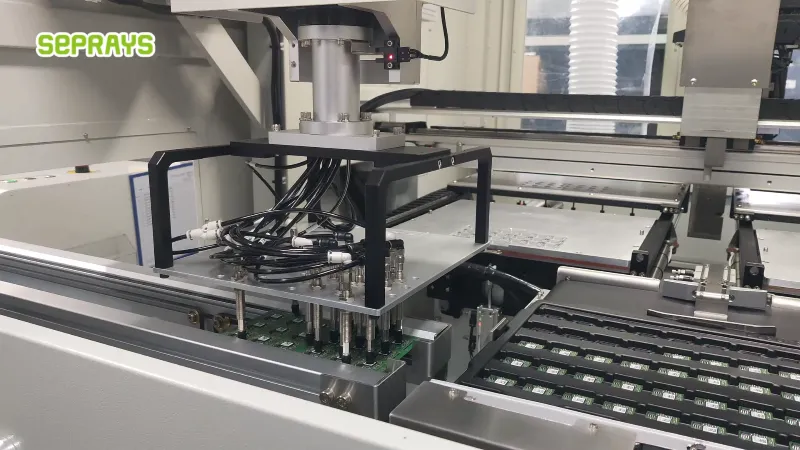
Automated unloading reduces the need for operators to repeatedly collect separated PCBs.
Improved Production Continuity
Coordinated cutting and unloading help reduce interruptions between processing stages.
More Consistent Board Transfer
An automated handling process can support more repeatable product collection and positioning.
Better Production Line Integration
Manufacturers can evaluate the system as part of a wider manufacturing workflow rather than as an isolated cutting machine.
Flexible Production Planning
Manufacturers can select the final configuration according to PCB specifications, output requirements, and downstream equipment.
The actual improvement in throughput depends on the complete production cycle, including cutting time, unloading speed, and equipment coordination.
Applications in SMT and Consumer Electronics Production
Automated PCB depaneling and unloading can be considered for various electronics manufacturing applications.
Typical examples include:
- Consumer electronics and communication products.
- Automotive electronic assemblies.
- Industrial control boards.
- High-density PCBA production.
- EMS and ODM manufacturing facilities.
For manufacturers handling multiple PCB models, equipment selection should consider product changeover, board dimensions, component locations, and handling requirements.
For high-volume production, it is also important to evaluate whether the unloading process can keep pace with the depaneling cycle.
A well-matched system helps create a more balanced production workflow.
Why Choose Seprays Group?
Since its establishment in 1993, Seprays Group has dedicated more than 30 years to developing PCB/FPC depaneling technology and manufacturing solutions.
Seprays Group provides a comprehensive portfolio of equipment, including milling-cutter depanelers, laser depanelers, V-groove depanelers, punching depanelers, and automated loading, unloading, and material handling systems.
Our equipment is trusted by leading manufacturers and organizations, including Foxconn, Flextronics, State Grid, Luxshare, Compal, Wistron, China Electronics, Quanta, CRRC, China Aerospace, OPPO, ZTE, and Bosch. Our solutions are used in factories across China and worldwide.
We understand that every production line has different requirements.
From PCB separation and precision routing to automatic unloading and production line integration, Seprays focuses on matching equipment configurations to actual manufacturing needs.
Our engineering team can evaluate PCB drawings, panel layouts, cutting paths, production volume, and downstream handling requirements to help identify a suitable solution.
Looking for an automated PCB depaneling and unloading solution?
Please contact Seprays Group to discuss your application, request a machine recommendation, or arrange a PCB sample evaluation.
WhatsApp: +8618929266433
Eメール: sales@seprays.com
FAQ
1. What is the purpose of a PCB Board Unloader?
A PCB Board Unloader collects and transfers separated PCBs after depaneling. It helps reduce manual handling and supports a more organized production workflow.
2. What is the advantage of combining GAM336AT with a PCB Unloader?
The combination connects PCB routing with downstream board handling. It can reduce repetitive manual operations and improve coordination between production stages.
3. Can GAM336AT process different PCB designs?
The GAM336AT supports programmable routing paths and CCD-based positioning. Compatibility depends on PCB dimensions, material, panel layout, cutting requirements, and fixture or handling configuration.
4. Is an automatic PCB unloading system suitable for high-volume production?
It can benefit high-volume production where manual board collection creates a bottleneck. The unloading capacity should be matched to the actual depaneling cycle and downstream process.
5. What information is needed to recommend a suitable PCB depaneling solution?
Useful information includes PCB drawings or Gerber files, panel dimensions, board thickness, material, cutting paths, production volume, and unloading requirements. These details help Seprays evaluate the application and recommend an appropriate configuration.