.png)
 Japanese
  English
  Spanish
  Korean
  Russian
  Chinese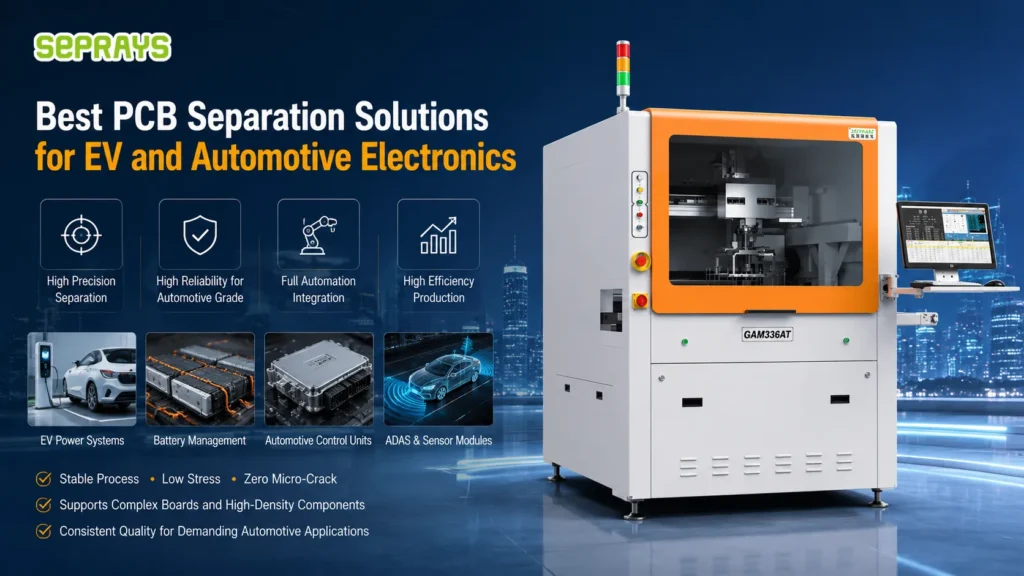
PCB Separation Solutions have become a critical part of EV and automotive electronics manufacturing. As vehicle electronics become more compact, intelligent, and safety-critical in 2026, manufacturers are paying much closer attention to what happens after SMT assembly.
Many production teams focus heavily on soldering quality, AOI inspection, and testing. Yet an overlooked depaneling process can introduce hidden stress, micro-cracks, edge damage, or component failures that only appear later in the field.
For automotive electronics, where reliability standards are far higher than those of consumer devices, choosing the right separation method is no longer just a production decision. It is a product quality decision.
Let’s explore how manufacturers can select the best approach for modern EV and automotive applications.
🚗 Why Automotive PCBs Are Different
Not all PCBs face the same operating conditions.
A smartphone PCB may operate for a few years under relatively stable conditions.
An automotive PCB can experience:
- Continuous vibration
- Extreme temperature cycling
- High humidity
- Dust exposure
- Voltage fluctuations
- Long service life requirements
Common automotive electronic products include:
- Tire Pressure Monitoring Systems (TPMS)
- Battery Management Systems (BMS)
- Motor Controllers
- Inverters
- ADAS Modules
- Vehicle Lighting Controllers
- Charging Systems
- Infotainment Systems
Even a small crack generated during PCB separation can eventually lead to costly failures in the field.
That is why automotive manufacturers increasingly focus on low-stress and highly repeatable separation processes.
🔍 The Hidden Cost of Choosing the Wrong Method
One of the most common misconceptions is that all depaneling methods achieve the same result.
In reality, different methods generate different levels of mechanical stress.
The wrong choice may cause:
- Solder joint fractures
- Ceramic capacitor cracking
- Edge delamination
- Copper trace damage
- Reduced reliability
- Increased scrap rates
Interestingly, the cheapest machine is often the most expensive option over time.
A lower equipment investment may result in:
- Higher rework costs
- Increased quality issues
- More operator intervention
- Lower production consistency
Many manufacturers discover this only after production volumes increase.
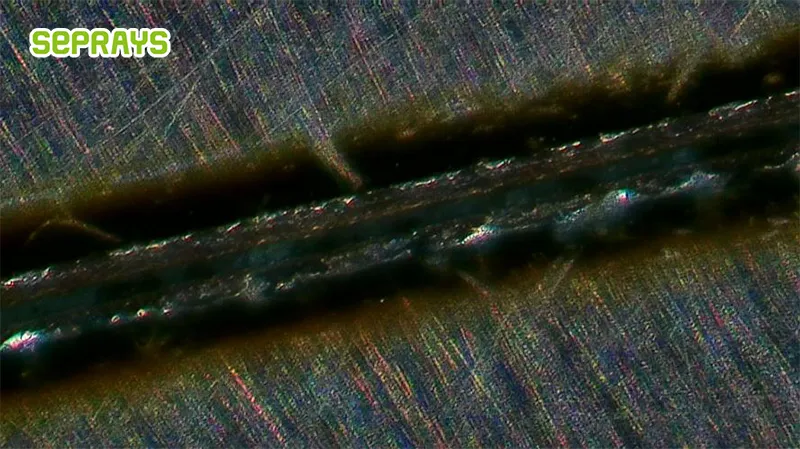
⚙️ Common Separation Methods for Automotive Electronics
| Method | Stress Level | 速度 | Suitable Applications |
|---|---|---|---|
| Manual Breaking | High | 高速 | Very simple low-value boards |
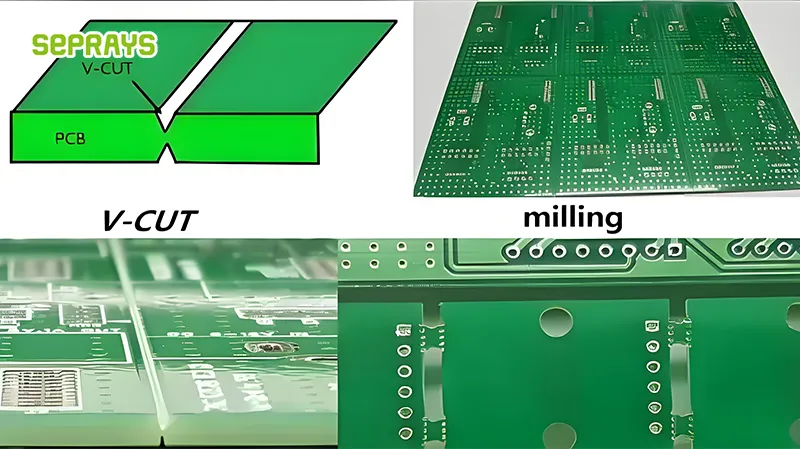
| V-Groove Depaneling | 中 | Very Fast | Straight-line V-cut panels |
| ルーター Depaneling | Low | 中 | Complex automotive PCBs |
| レーザー Depaneling | Extremely Low | 中 | Sensitive high-density boards |
| Hybrid Systems | Low | High | Mixed automotive products |
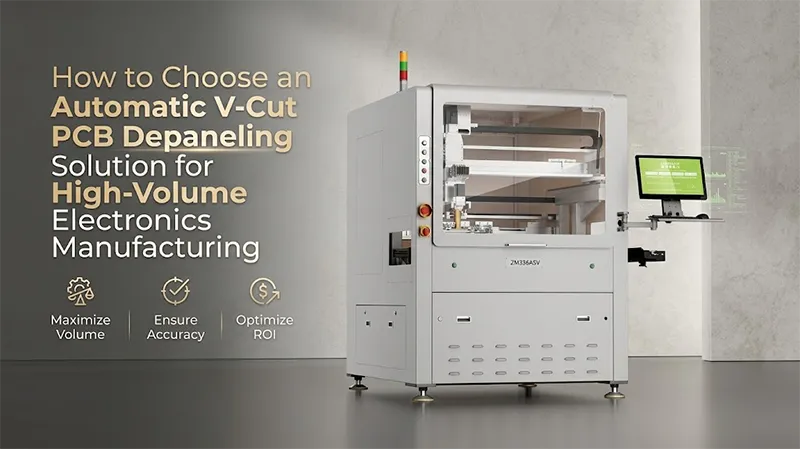
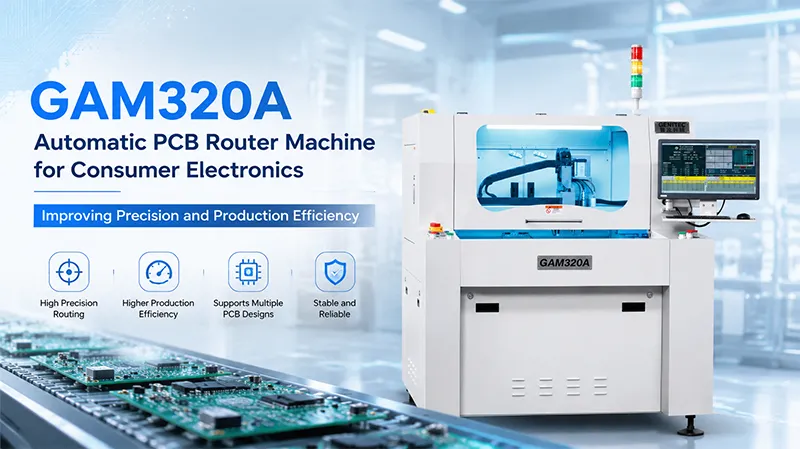
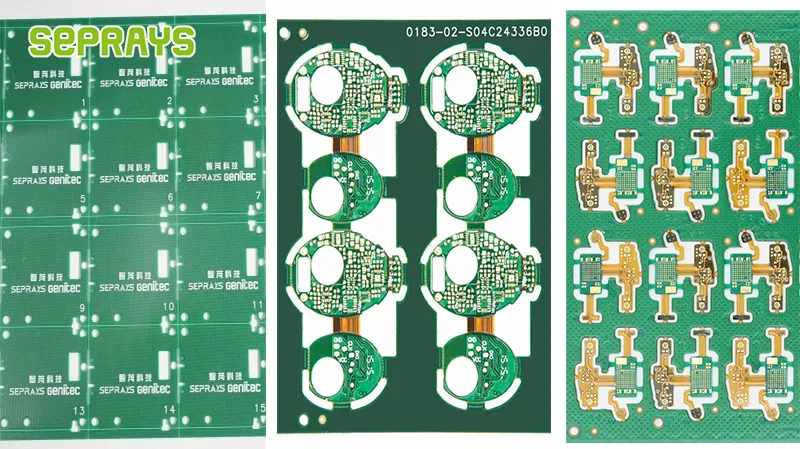
For most EV-related PCBA assemblies, router-based solutions remain one of the most practical choices due to their balance between precision, flexibility, and investment cost.
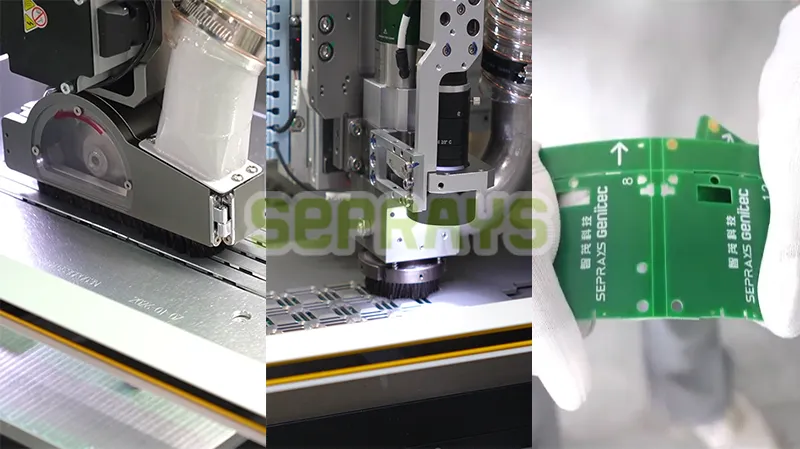
🧩 Which Automotive Boards Need Advanced Separation?
Many engineers ask:
“When does a standard V-cut machine stop being enough?”
Generally, advanced separation methods become necessary when boards include:
Sensitive Components Near Edges
Examples:
- MLCC capacitors
- Sensors
- RF modules
- Connectors
Mechanical stress can directly affect these components.
Irregular Board Shapes
Modern EV products rarely use simple rectangular designs.
Common features include:
- Curved outlines
- Slots
- Internal cutouts
- Complex contours
These designs typically require routing technology.
High-Density Assemblies
Automotive electronics continue to shrink while functionality increases.
Component spacing becomes tighter.
Error tolerance becomes smaller.
Separation accuracy becomes more important.
📈 Real Production Challenge: Throughput vs Quality
Many factories face a difficult balancing act.
They need:
- ✔ Faster production
- ✔ Lower labor costs
- ✔ Higher reliability
- ✔ Consistent output
Traditionally, increasing speed often meant increasing stress.
However, newer inline solutions are changing that equation.
A properly integrated separation process can improve throughput while maintaining board integrity.
This is particularly important for EV manufacturers experiencing rapid production growth.
🏭 Case Example: Automotive Sensor Production Line
A contract manufacturer producing automotive sensor modules faced three challenges:
- Manual unloading bottlenecks
- Growing labor costs
- Increasing output requirements
The company upgraded to an automated inline solution based on the Seprays GAM336AT platform.
The system combined:
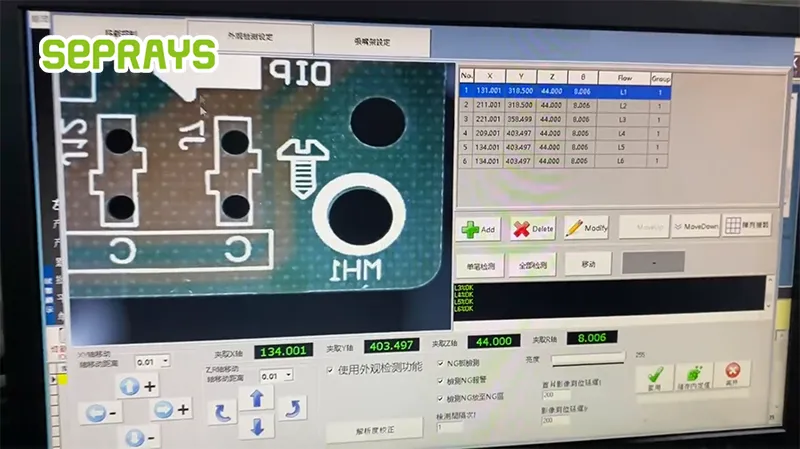
- CCD vision positioning
- Automatic routing
- Inline handling
- Automated material flow
Results observed after implementation:
- Reduced manual intervention
- Improved process consistency
- Higher production throughput
- Better traceability
Most importantly, board quality remained stable despite higher production volumes.
This is often where automation delivers its greatest value—not just speed, but repeatability.
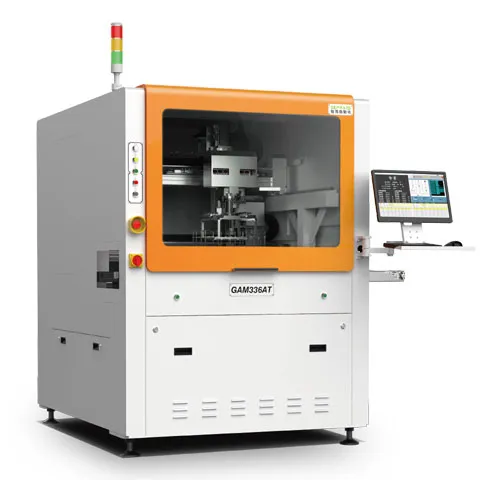
🔧 Why GAM336AT Fits Automotive Production
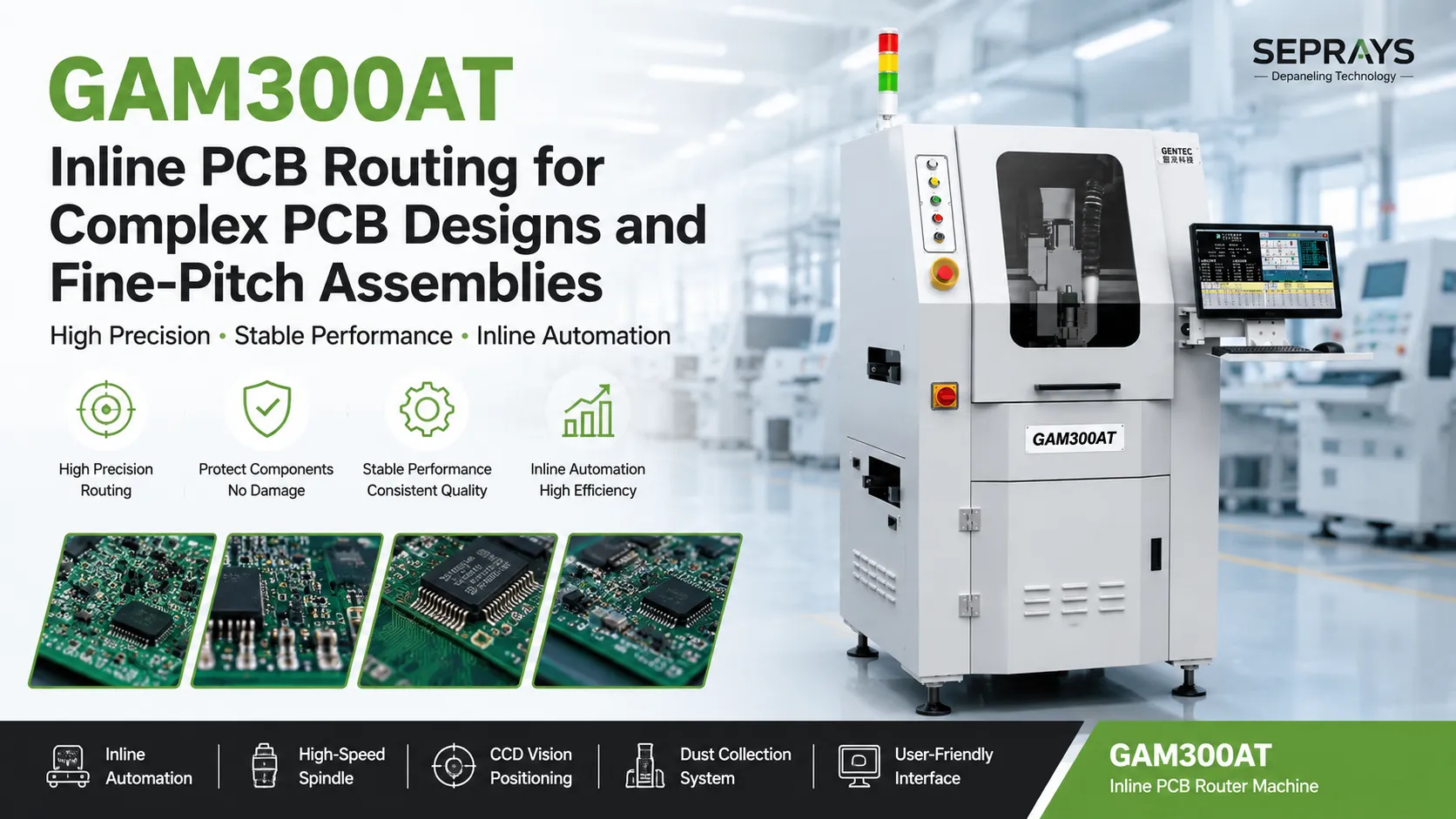
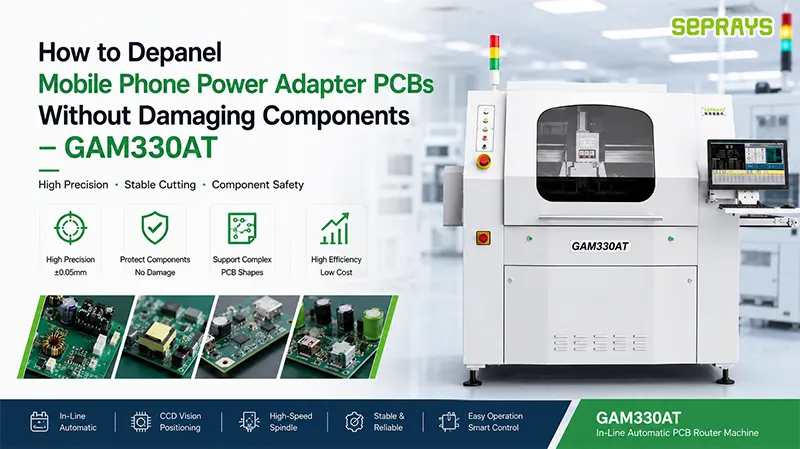
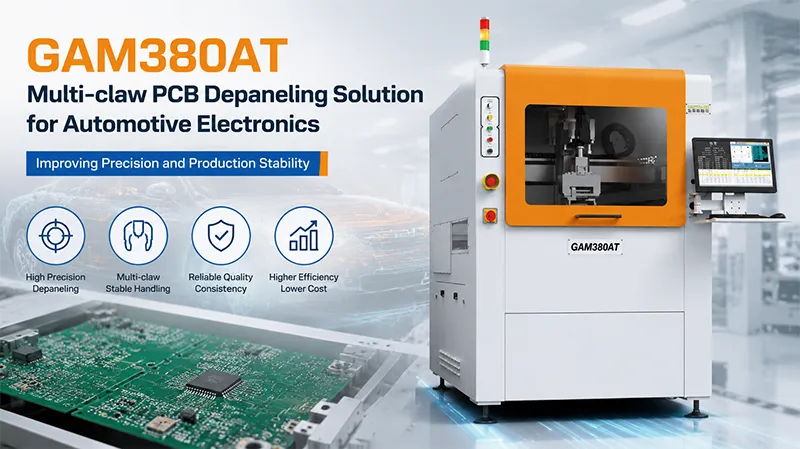
の GAM336AT In-Line Automatic PCB Router Depaneling Machine is designed for manufacturers seeking both precision and production efficiency.
Key capabilities include:
- Flexible 0–180° PCBA handling
- CCD vision positioning
- High-speed ESD spindle
- Automatic tool change
- Stable inline integration
- Patented flexible brush design
For automotive applications, these features help maintain cutting accuracy while supporting continuous production flow.
As EV production expands globally, automated inline depaneling is becoming increasingly attractive for manufacturers focused on scalability.
📊 Cost Comparison: Short-Term vs Long-Term Thinking
| Factor | Basic Solution | Automated Inline Solution |
| Initial Investment | Lower | Higher |
| Labor Dependency | High | Low |
| スループット | 中 | High |
| Quality Consistency | Variable | Stable |
| Traceability | Limited | Strong |
| Scalability | 緩やかな | Excellent |
A counterintuitive observation from many factories is that higher automation often becomes more economical once production volumes reach stable levels.
The savings usually come from reduced labor, fewer defects, and improved efficiency rather than from cutting speed alone.
💡 How to Select the Right Solution
Before investing, ask these questions:
- Are components located close to board edges?
- Does the PCB contain irregular outlines?
- Is production volume expected to grow within 2 years?
- Are automotive quality standards required?
- Is labor becoming a production bottleneck?
If the answer to several of these questions is yes, an automated router-based solution may offer a strong balance between quality and return on investment.
The best solution is rarely the fastest machine.
The best solution is the one that consistently protects product quality while supporting future production growth.
🎯 Final Thoughts
Automotive electronics are becoming more complex every year.
At the same time, manufacturers face growing pressure to increase output, reduce labor dependency, and maintain strict quality standards.
The separation process may seem like a small step in production, but it directly affects reliability, yield, and long-term product performance.
For EV manufacturers, choosing the right separation strategy today can help prevent costly quality issues tomorrow.
As production requirements evolve throughout 2026, more companies are moving toward automated, low-stress, and data-driven solutions that support both efficiency and reliability.
🌟 Why Choose Seprays Group?
For more than 30 years, Seprays Group has been dedicated to PCB/FPC depaneling technology and intelligent automation solutions for global electronics manufacturing.
We provide a complete portfolio of depaneling equipment, including:
- Milling-cutter PCB depanelers
- Laser depaneling systems
- V-groove depaneling machines
- Punching depanelers
- Fully automated inline handling systems
- Tray loading and unloading solutions
- Smart factory integration solutions
Our technologies are trusted by many internationally recognized manufacturers, including Foxconn, Flextronics, State Grid, Luxshare, Compal, Wistron, China Electronics, Quanta, CRRC, China Aerospace, OPPO, ZTE, and Bosch.
Today, Seprays equipment operates in factories across China, Europe, Southeast Asia, North America, and other global manufacturing regions.
Whether you are producing EV electronics, automotive sensors, BMS modules, industrial controllers, medical devices, or consumer electronics, our engineering team can help you identify the most suitable depaneling solution for your production requirements.
If you are evaluating a new PCB depaneling project or planning an automation upgrade, please feel free to contact us.
WhatsApp: +8618929266433
Eメール: sales@seprays.com
❓FAQ
1. What is the best PCB separation method for automotive electronics?
Router depaneling is often preferred because it offers low stress, high precision, and flexibility for complex automotive PCB designs.
2. Why are EV electronics more sensitive to depaneling quality?
EV electronic systems operate under vibration, temperature fluctuations, and long-service-life requirements. Small defects created during separation can affect long-term reliability.
3. Is inline depaneling suitable for automotive production?
Yes. Inline systems improve throughput, reduce manual handling, and provide better consistency for high-volume automotive manufacturing.
4. What advantages does CCD vision provide during depaneling?
CCD vision helps identify fiducial marks and compensate for variations in board positioning, improving cutting accuracy and process stability.
5. When should manufacturers consider automated depaneling systems?
Automation becomes increasingly valuable when production volumes increase, labor costs rise, traceability is required, or product quality standards become more demanding.