.png)
 Japanese
  English
  Spanish
  Korean
  Russian
  Chinese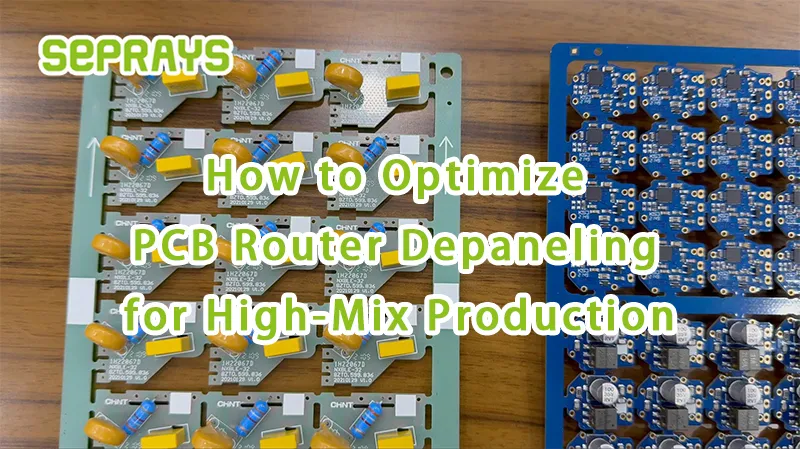
How to optimize PCB router depaneling for high-mix production is becoming a daily question in many SMT factories. Not because machines are slow, but because product changeovers are getting more frequent than ever.
One line. Multiple products. Constant switching.
And every switch costs time.
🔍 Why High-Mix Production Slows Down Your Line
High-mix PCB manufacturing is not just a production model—it is a scheduling challenge.
Most engineers face the same problems:
- Frequent changeovers between PCB models
- Manual setup and fixture adjustments
- Operator-dependent alignment accuracy
- Unplanned downtime during switching
The real issue is not cutting speed.
It is setup inefficiency.
Even a few minutes lost per changeover quickly becomes hours per day.
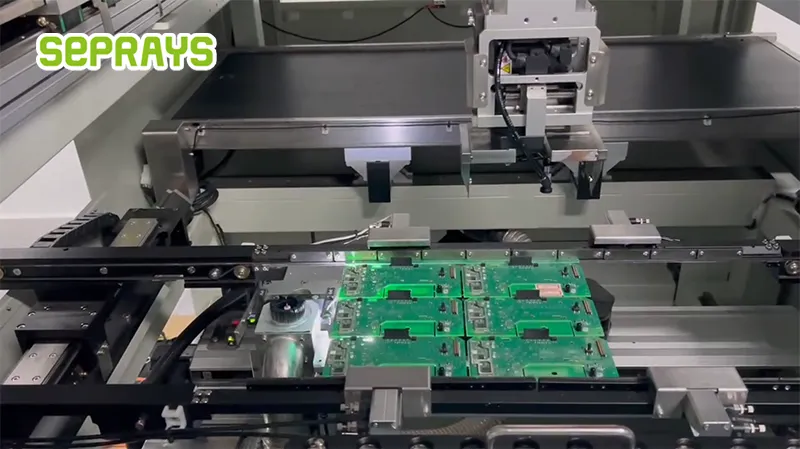
⚙️ The Hidden Bottleneck — Manual Setup
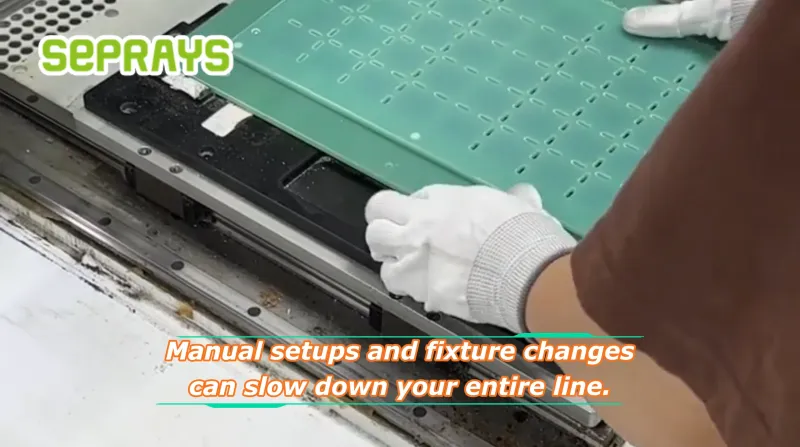
In many router depaneling lines, setup still depends heavily on manual work.
Operators must:
- Align fixtures manually
- Re-adjust clamping positions
- Load new programs one by one
This creates variation.
And variation creates instability.
When production mix increases, this becomes even more visible.
📷 CCD Vision Alignment — Reducing Setup Time in Real Production
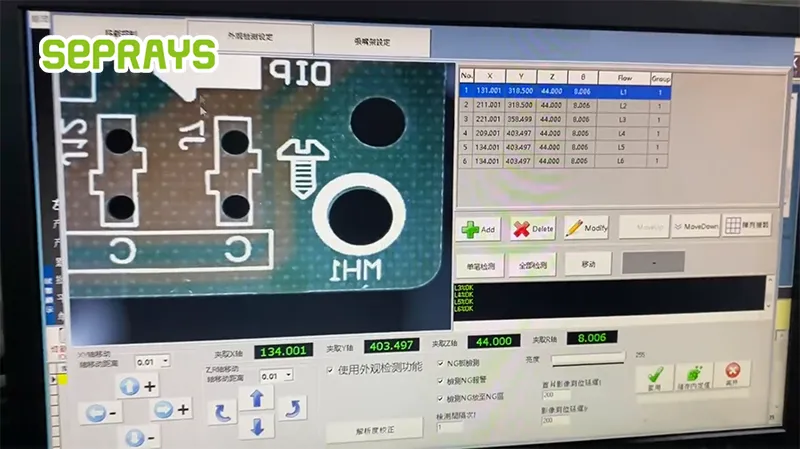
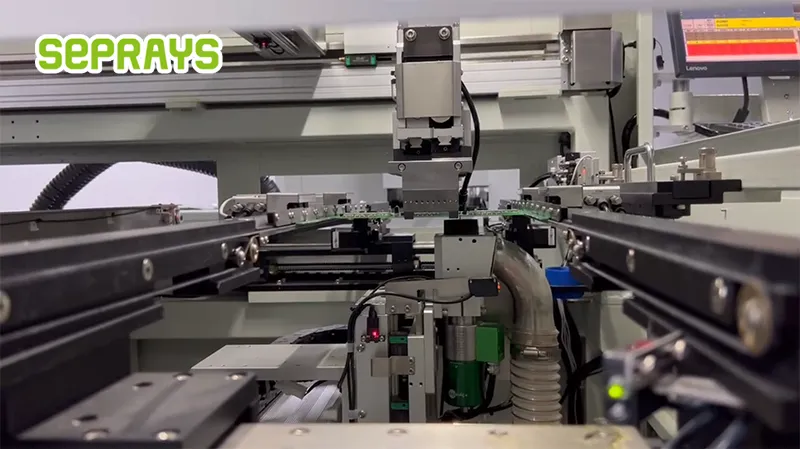
One of the most effective improvements is CCD vision alignment.
Instead of manual positioning, the system:
- Automatically detects PCB reference points
- Aligns cutting paths in seconds
- Reduces operator intervention
The result is simple:
Less setup time.
More consistent accuracy.
In high-mix environments, this alone can significantly reduce changeover losses.
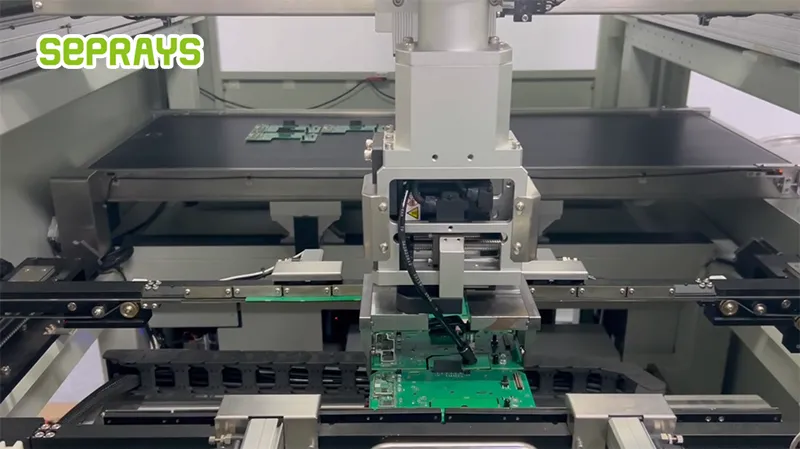
🧩 Fixture-Less Design — Removing Mechanical Limitations
Traditional fixtures are one of the biggest slowdowns.
Every product change often requires:
- New fixture design
- Mechanical adjustment
- Trial alignment
A fixture-less approach changes this logic.
Benefits include:
- Faster product switching
- No physical fixture replacement
- Lower tooling dependency
It is especially useful for short-run and mixed-model production.
💻 Offline Programming — Preparing Before Production Starts
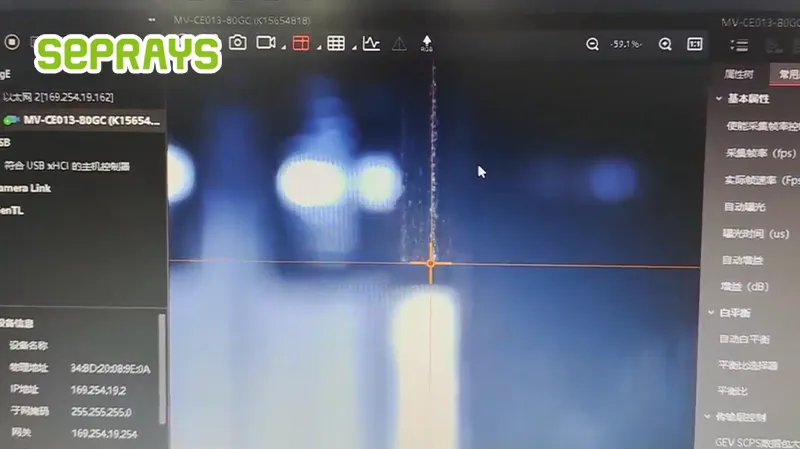
Another key optimization is offline programming.
Instead of stopping the line:
- Programs are prepared in advance
- Tool paths are simulated digitally
- Setup errors are reduced before execution
This allows engineers to:
- Reduce machine idle time
- Switch jobs faster
- Avoid online debugging delays
In high-mix environments, preparation is everything.
📊 Traditional vs Optimized High-Mix Router Depaneling
| Factor | Traditional Setup | Optimized Setup (CCD + Offline + Fixture-less) |
|---|---|---|
| Changeover Time | Long | Short |
| Alignment Method | Manual | CCD Vision |
| Fixture Dependency | High | Low / None |
| Programming | On-machine | Offline |
| Efficiency Stability | Variable | Consistent |
The difference is not incremental.
It is structural.
💥 Real Production Pain Points (What Engineers Actually Say)
From real factory feedback:
- “We spend more time setting up than cutting.”
- “Every product change slows the whole line.”
- “Operators align differently every shift.”
- “Small batches kill efficiency.”
These are not machine problems alone.
They are workflow problems.
🧪 Case Example — High-Mix Optimization with Seprays
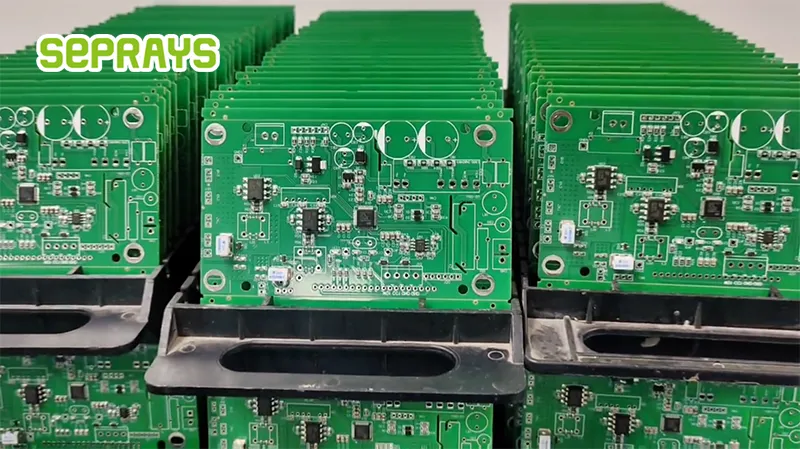
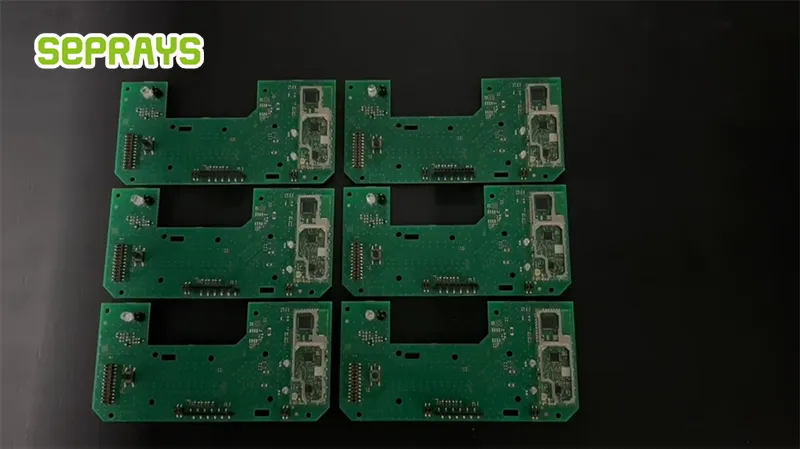
A manufacturer producing industrial and consumer PCB assemblies faced constant switching between 15+ product types daily.
Challenges included:
- Long fixture changeover time
- Inconsistent alignment accuracy
- Frequent line stoppages
After working with Seprays, the optimization approach included:
- CCD vision alignment system for automatic positioning
- Fixture-less design for fast switching
- Offline programming to prepare jobs in advance
Results:
- Significantly reduced changeover time
- More stable production flow
- Improved consistency across product types
The biggest improvement was not speed—it was stability.
💰 Efficiency vs Cost — What Actually Matters
Many factories initially focus on machine speed.
But in high-mix production, real cost comes from:
- Setup downtime
- Repeated alignment errors
- Operator dependency
- Small batch inefficiencies
Reducing these often delivers a higher ROI than upgrading cutting speed alone.
🔄 Key Takeaway for High-Mix PCB Router Depaneling
To optimize high-mix production, focus on:
- CCD vision alignment (reduce manual setup)
- Fixture-less design (reduce mechanical switching)
- Offline programming (reduce machine downtime)
These three elements work together.
Not independently.
🚀 Why Choose Seprays Group?
Seprays Group focuses on solving real production bottlenecks in PCB depaneling, especially in high-mix and high-changeover environments.
Seprays Group has been dedicated to PCB/FPC depaneling technology, providing a full range of solutions—milling-cutter depanelers, laser depanelers, V-groove depanelers, punching depanelers, and automated handling systems. Leading manufacturers, including Foxconn, Flextronics, State Grid, Luxshare, Compal, Wistron, China Electronics, Quanta, CRRC, China Aerospace, OPPO, ZTE, and Bosch, trust our equipment. It is used in factories across China and worldwide.
With strong application experience, Seprays helps manufacturers reduce changeover time, improve line stability, and build more flexible SMT production systems.
If you are facing high-mix production challenges, feel free to contact us.
WhatsApp: +8618929266433
Eメール: sales@seprays.com
❓ FAQ
1. What is the biggest issue in high-mix PCB production?
Frequent changeovers and manual setup delays are the main bottlenecks.
2. How does CCD vision improve router depaneling?
It automatically aligns PCBs, reducing manual positioning time and errors.
3. What is fixture-less depaneling?
A system that removes the need for dedicated mechanical fixtures for each PCB type.
4. Why is offline programming important?
It allows setup preparation before production, reducing machine downtime.
5. What improves efficiency the most in high-mix lines?
A combination of CCD alignment, fixture-less design, and offline programming delivers the best results.