.png)
 Japanese
  English
  Spanish
  Korean
  Russian
  Chinese
Laser vs router depaneling for ADAS and EV control boards is not just a technical comparison—it’s a decision that directly affects reliability, yield, and long-term performance. In automotive electronics, especially for ADAS modules and EV control units, even minor defects introduced during depaneling can lead to serious consequences down the line.
So how do manufacturers choose between these two methods?
🚗 Why ADAS and EV Boards Demand More
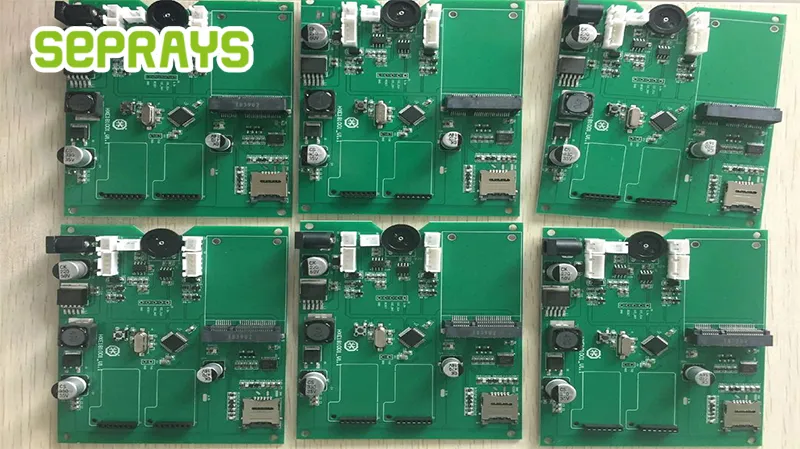
ADAS and EV control boards are different from standard PCBs.
They often feature:
- High-density layouts
- Fine-pitch components near edges
- Multi-layer or thick copper structures
- Strict automotive reliability standards
This means the depaneling process must balance precision, stress control, and efficiency.
Any compromise shows up later—in testing or in the field.
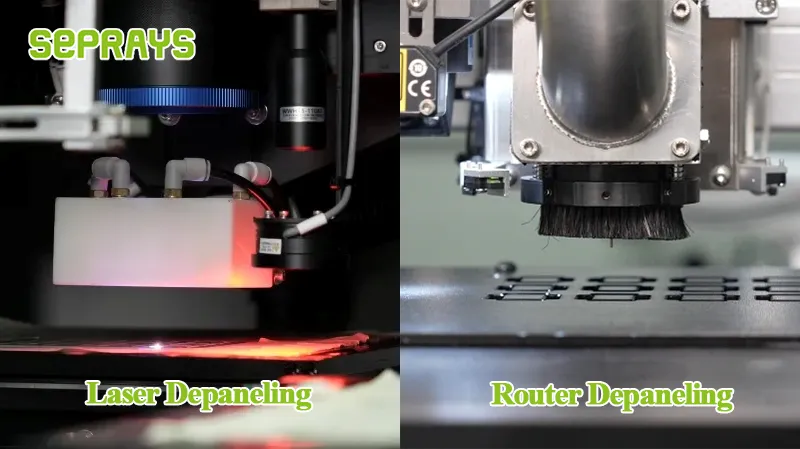
⚙️ Understanding Laser Depaneling
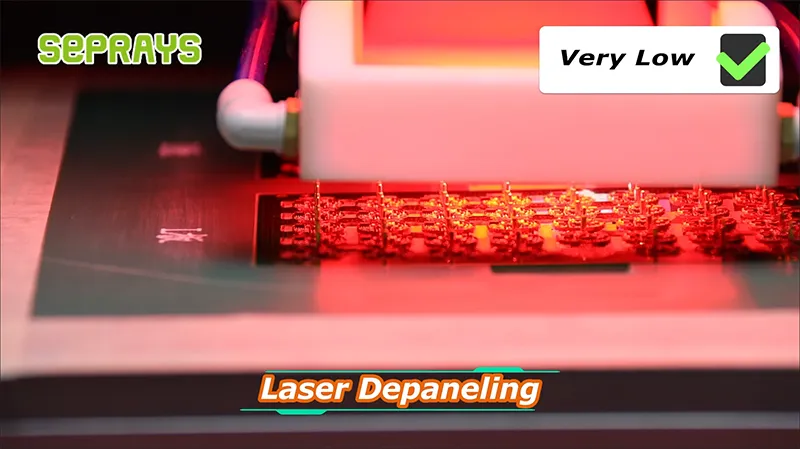
Laser depaneling is a non-contact process.
No physical force is applied to the PCB.
Key characteristics:
- Extremely low mechanical stress
- High precision cutting paths
- Clean edges with minimal burrs
- Suitable for fragile and thin boards
For ADAS sensors or camera modules, this level of precision is often critical.
But there are trade-offs.
🔧 Understanding Router Depaneling
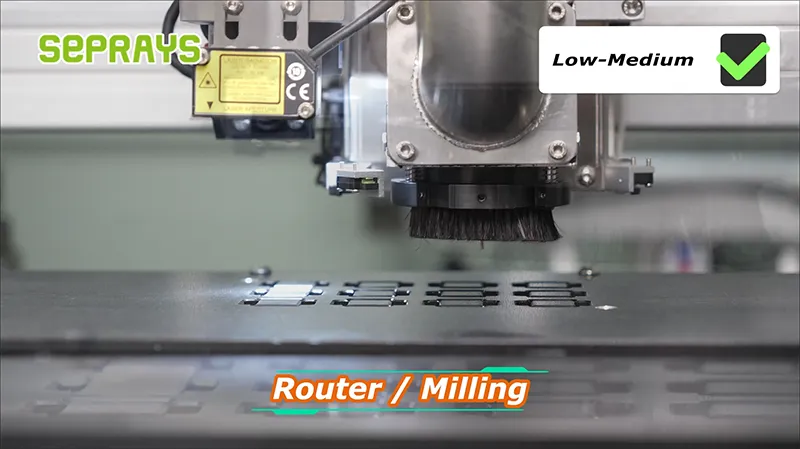
Router depaneling uses a high-speed milling cutter.
It physically removes material along the cutting path.
Key advantages:
- Strong flexibility for complex shapes
- Good edge quality when optimized
- Lower investment compared to the laser
- Widely used across industries
It’s a mature and reliable solution.
Especially when board designs are not extremely sensitive.
🔍 Direct Comparison — Laser vs Router
Here’s a practical comparison based on real applications:
| Factor | レーザー Depaneling | ルーター Depaneling |
|---|---|---|
| Stress Level | Very Low | 低-中 |
| 精密 | Very High | High |
| 質感 | Excellent | Good (tool-dependent) |
| Flexibility | Very High | High |
| 速度 | 中 | 中 |
| Initial Cost | High | 中 |
| Maintenance | Low | 中 |
| Best Use Case | Sensitive ADAS boards | General EV control boards |
Both methods are capable.
The difference lies in application sensitivity and cost priorities.
💥 Common Pain Points in Real Production
From production lines working with ADAS and EV boards:
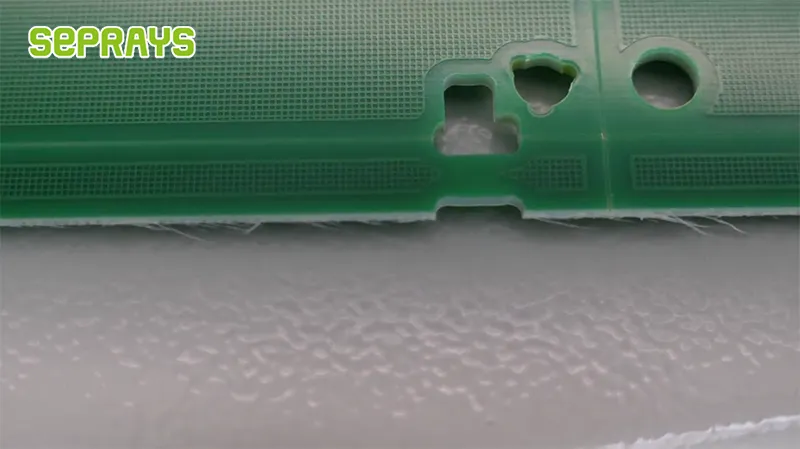
- Edge cracking during mechanical cutting
- Component damage near PCB edges
- Tool wear is affecting consistency
- Balancing cost with quality requirements
These challenges push manufacturers to rethink their depaneling strategy.
Especially as designs become more compact.
🧪 Case Study — Choosing the Right Method
An automotive electronics supplier producing ADAS control boards faced repeated yield issues.
Problems included:
- Micro-cracks near BGA components
- Inconsistent edge finish
- Increased inspection failures
They evaluated both methods with Seprays.
Final approach:
- Laser depaneling for sensitive sections
- Router depaneling for less critical areas
Results:
- Defect rate has reduced significantly
- Process stability improved
- Overall cost remained controlled
This hybrid solution balanced precision and efficiency.
💰 Cost vs Risk — A Practical View
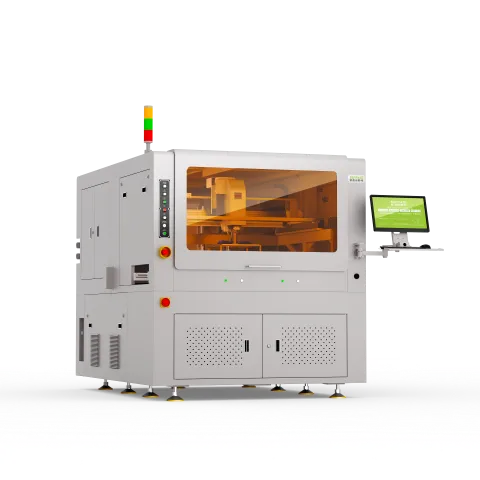
Laser systems require a higher upfront investment.
But they reduce:
- Rework
- Scrap
- Risk of latent defects
Router systems are more cost-effective initially.
But they require:
- Tool maintenance
- Careful parameter control
In high-value automotive applications, risk reduction often outweighs equipment cost.
🔄 When to Choose Laser or Router
Choose laser depaneling when:
- PCB is highly sensitive
- Components are close to the edges
- Stress must be minimized

Choose router depaneling when:
- Board shapes are complex
- Cost control is critical
- Mechanical stress is acceptable within limits
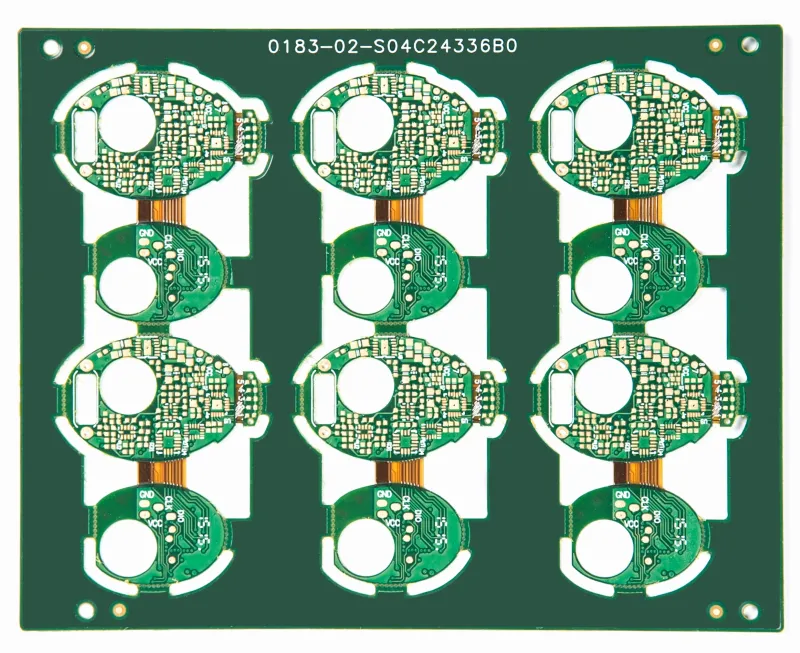
In many factories, the best solution is not either/or, but both.
🛠️ Practical Optimization Tips
Regardless of method:
- Optimize cutting parameters for each PCB type
- Keep equipment well-maintained
- Validate edge quality regularly
- Align depaneling with the overall SMT process
Small adjustments prevent large failures.
🚀 Why Choose Seprays Group?
Seprays Group focuses on delivering reliable depaneling solutions tailored for demanding industries like automotive and EV electronics.
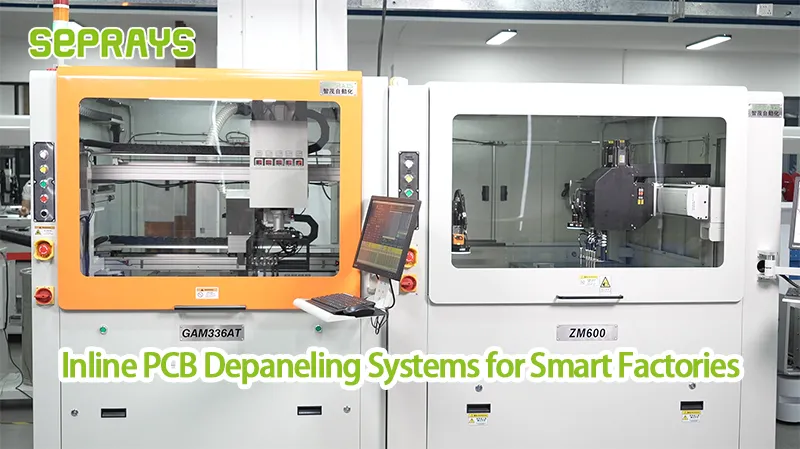
Seprays Group has been dedicated to PCB/FPC depaneling technology, providing a full range of solutions — including milling cutter depanelers, laser depanelers, V-groove depanelers, punching depanelers, and automated handling systems.
Their equipment is trusted by leading manufacturers such as Foxconn, Flextronics, State Grid, Luxshare, Compal, Wistron, China Electronics, Quanta, CRRC, China Aerospace, OPPO, ZTE, and Bosch. These collaborations reflect strong performance across high-reliability and large-scale production environments worldwide.
With deep application experience, Seprays helps manufacturers choose the right balance between precision, efficiency, and cost.
If you are evaluating laser or router depaneling for ADAS or EV boards, feel free to contact us.
WhatsApp: +8618929266433
Eメール: sales@seprays.com
❓ FAQ
1. Which method is better for ADAS boards?
Laser depaneling is generally preferred due to its minimal stress and high precision.
2. Is router depaneling still suitable for EV electronics?
Yes, especially for less sensitive control boards and complex shapes.
3. Does laser depaneling affect PCB materials?
When properly optimized, thermal impact is minimal and controlled.
4. Can both methods be used in one production line?
Yes. Many manufacturers adopt hybrid solutions for different PCB sections.
5. How to reduce defects in depaneling?
Choose the right method, optimize parameters, and maintain equipment regularly.