.png)
 Japanese
  English
  Spanish
  Korean
  Russian
  Chinese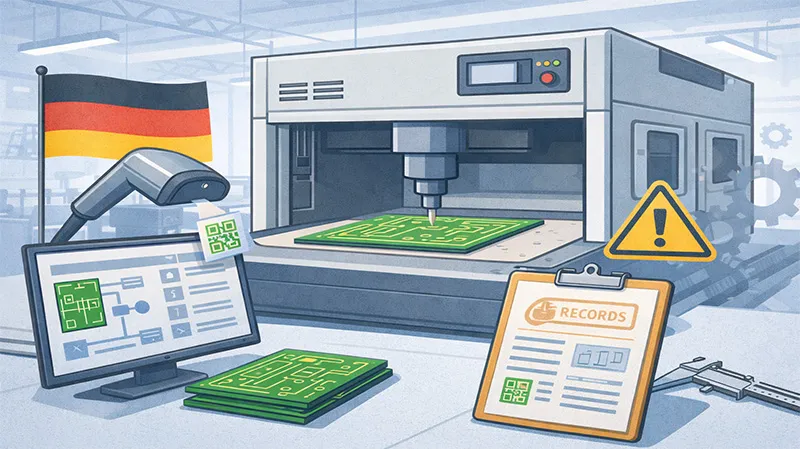
Inline PCB Router Depaneling System in Germany: Precision and Traceability Requirements
Inline PCB Router Depaneling System in Germany is often discussed among SMT engineers because German manufacturing places exceptional emphasis on precision, documentation, and long-term reliability. In automotive, industrial control, and high-reliability electronics, depaneling is no longer a simple separation step—it is a controlled process that must meet strict quality and traceability expectations. This article summarizes lessons shared by engineers working within German SMT environments. 🏭 Precision Expectations — Beyond Nominal Accuracy In German SMT lines, accuracy is evaluated over extended production periods rather than during initial acceptance tests. Engineers frequently point out that a system capable of ±0.05 mm accuracy on day one must maintain that level after months of continuous operation. Common challenges include: As a result, inline router systems are often assessed based on structural rigidity, thermal stability, and motion control consistency rather than advertised speed. 🔍 Traceability — A Non-Negotiable Requirement Traceability plays a central role in German electronics manufacturing. Depaneling systems are expected to integrate seamlessly with MES and line control systems. Key traceability requirements discussed by engineers: Without reliable traceability, downstream quality analysis and compliance reporting become difficult, increasing operational risk. ⚙️ Inline Integration — Stability Over Throughput Inline depaneling is valued for automation, but

Automatic PCB Router Machine vs V-Cut Systems: What Global SMT Lines Prefer
The comparison between Automatic PCB Router Machines and V-Cut Systems is a topic frequently discussed among global SMT engineers, especially as PCB designs become thinner, denser, and more reliability-driven. While both technologies remain widely used, real production experience shows that the choice is rarely about speed alone—it is about long-term process stability, stress control, and total cost of ownership. 🧱 Mechanical Impact — Stress Is the First Decision Point From an engineering perspective, the core difference lies in how each method applies force to the PCB. V-cut systems rely on mechanical separation along predefined grooves. While efficient, this approach introduces bending stress that can affect: Router-based systems remove material progressively, which significantly reduces mechanical stress. Many SMT lines report fewer latent defects when routing is used for high-density or sensitive assemblies. 🎯 Accuracy and Design Flexibility One recurring pain point shared by production teams is the frequency of design changes. V-cut advantages: However, limitations appear when: Automatic routing systems offer greater flexibility, supporting complex geometries and tighter tolerances, which align better with modern PCB layouts. ⚙️ Durability and Long-Term Stability In continuous SMT environments, equipment durability often matters more than peak throughput. Engineers frequently mention: Router machines, when built with

PCB Depaneling Machine Manufacturer: What Global SMT Lines Look for Beyond Price
PCB Depaneling Machine Manufacturer selection has become a strategic decision for global SMT lines, especially as electronics move toward higher density, thinner substrates, and longer product life cycles. While price is often the primary comparison point, engineers and production managers consistently report that long-term performance, process stability, and technical support are far more important than initial cost. This article summarizes practical insights shared across SMT facilities worldwide. 🏗 Build Quality — The Foundation of Long-Term Stability One of the first aspects engineers evaluate is the mechanical structure. Lightweight frames may reduce upfront cost, but they often introduce vibration and alignment drift over time. Common concerns raised by SMT teams include: Manufacturers that prioritize rigid frames, precision linear guides, and stable spindle systems tend to deliver more consistent results under real production conditions. 🎯 Process Consistency — More Important Than Peak Performance In many factories, machines perform well during acceptance testing but exhibit different behavior during 24/7 operation. Typical pain points: Global SMT lines often favor manufacturers that focus on repeatability, motion control stability, and well-documented process parameters rather than maximum advertised speed. ⚙️ Engineering Support — A Hidden Differentiator Beyond hardware, engineering collaboration plays a critical role. Manufacturers who understand
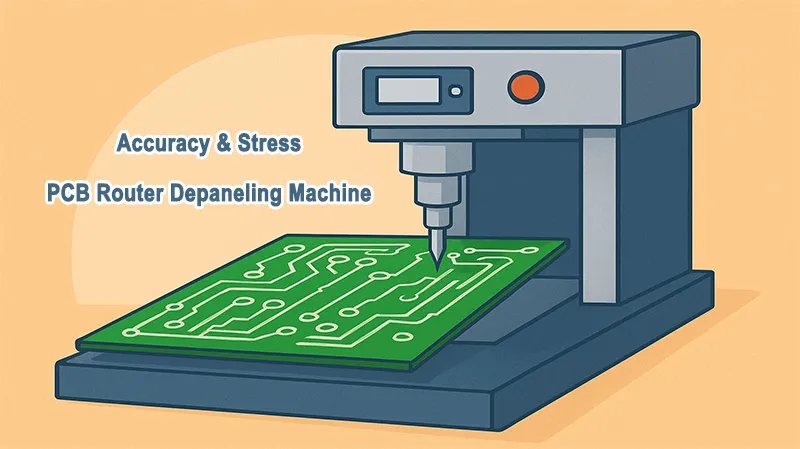
PCB Router Depaneling Machine: What Engineers Learned About Accuracy and Stress Control
PCB Router Depaneling Machine selection has become a critical topic as PCB layouts grow denser and mechanical tolerances tighten. Across global SMT lines, engineers are no longer asking how fast a router can cut, but how consistently it maintains accuracy while minimizing mechanical stress over long production cycles. This article reflects shared lessons from real manufacturing environments rather than promotional claims. 🎯 Accuracy — Where Most Problems Begin In router-based depaneling, accuracy is not defined by a single test cut. Engineers often report that machines perform well during trials but gradually drift during continuous production. Common accuracy-related pain points include: Experienced SMT teams emphasize that stable motion control, rigid machine frames, and consistent spindle behavior matter more than nominal speed specifications. 🧩 Stress Control — The Hidden Yield Factor Mechanical stress introduced during routing is often invisible until it is revealed by functional testing or thermal cycling, at which point failures become apparent. Engineers working with fine-pitch components note that even small stress concentrations can affect solder joints near board edges. Frequently observed issues: To mitigate these risks, many factories adjust routing sequences, reduce plunge force, and prioritize even load distribution instead of aggressive cutting strategies. ⚙️ Machine Design —
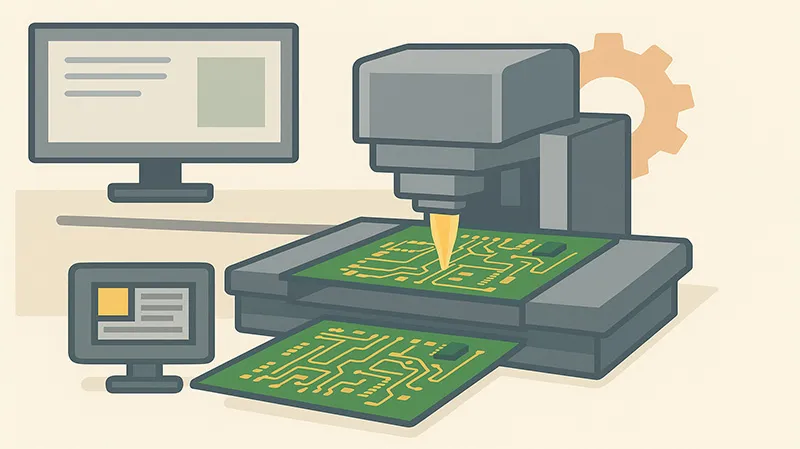
PCB Panel Cutting Machine: Lessons from Handling Thin and High-Density PCB Panels
PCB Panel Cutting Machine performance becomes increasingly critical as modern electronics move toward thinner substrates and higher component density. In recent years, SMT engineers across Europe, North America, and Asia have shared similar challenges: maintaining cut accuracy without introducing stress, protecting fine-pitch components, and controlling long-term operating costs. This article summarizes practical lessons learned from real production environments rather than theoretical specifications. 🔬 Thin PCB Panels — Stability Before Speed Thin PCB panels, often below 1.0 mm, behave very differently during depaneling. Engineers frequently report micro-vibration, panel flexing, and edge chipping as major risks. Common pain points include: In practice, factories mitigate these risks by prioritizing rigid support structures, controlled feed rates, and cutting paths designed to distribute stress evenly rather than maximize throughput. 🧠 High-Density Designs — Clearance Is the Real Constraint High-density PCBs leave little margin for error. Component-to-edge distances continue to shrink, and traditional cutting assumptions no longer apply. Observed challenges: Many SMT lines now evaluate cutting machines based on vision accuracy, Z-axis repeatability, and tool control precision rather than raw cutting speed. ⚙️ Process Selection — Router, Laser, or Hybrid Approaches No single cutting method fits all thin or dense PCB applications. The lesson shared by
PCB Depaneling Machine Recommendations: What Global SMT Lines Prefer in 2025
In 2025, global SMT lines—from Europe to Southeast Asia—continue to prioritize cutting stability, long-term durability, and predictable process quality when selecting a PCB depaneling machine. The decision is rarely made solely based on speed. Instead, factories focus on equipment robustness, maintenance intervals, integration capacity, and the ability to support increasingly complex PCB designs. This article summarizes real observations, engineering discussions, and shared experiences across different production environments. 🔧 Router-Type Depaneling — Flexibility and Mechanical Consistency Router solutions remain widely used in mixed-product SMT lines. Engineers value the ability to create flexible tool paths and handle irregular board outlines. Common pain points reported in workshops include: Global factories often solve these issues with fiducial-based correction, stronger spindle designs, and active tool-life algorithms. These improvements help stabilize dimensional accuracy and reduce scrap caused by mechanical stress. ⚡ Laser Depaneling — Clean Edges and Stress-Free Cutting As PCBs become thinner and assemblies more sensitive, laser processes have become increasingly relevant. Many SMT lines—especially in Germany, the U.S., and Japan—emphasize the value of: However, engineers also mention challenges: Still, in high-value industries such as automotive radar modules, medical electronics, and RF boards, laser systems are often preferred due to consistent edge quality and minimal


