.png)
 Japanese
  English
  Spanish
  Korean
  Russian
  Chinese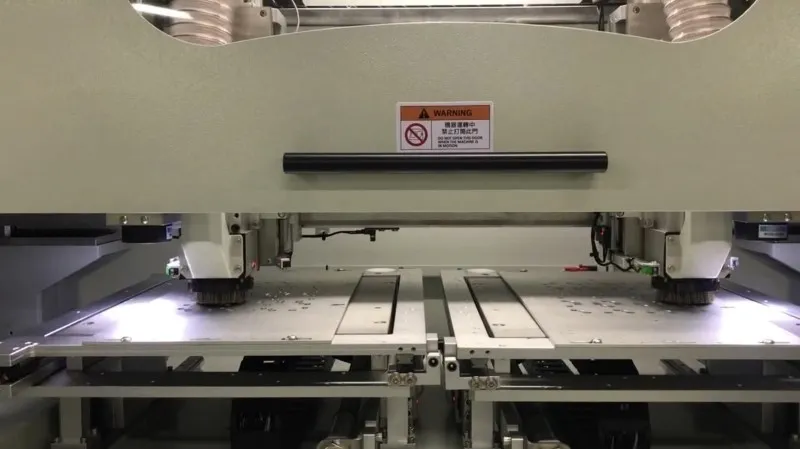
How Much More Efficient is a Dual-Platform Milling Cutter Depaneling Machine Compared to a Single-Platform One?
Dual-platform milling cutter depaneling machine efficiency is a topic that frequently arises when SMT lines encounter throughput bottlenecks, but hesitate to add headcount or floor space. On paper, the answer seems simple: dual platforms mean higher output. In reality, the efficiency gain depends on workflow design, product mix, and how “productive time” is defined on the shop floor. This article shares practical observations from EMS and OEM factories, focusing on industrial quality, durability, and realistic return on investment—rather than idealized cycle-time calculations. 🔍 Understanding the Real Bottleneck in Single-Platform Routing In many single-platform systems, the limiting factor is not cutting speed, but non-cutting time, such as: Field data shows that the spindle may be cutting only 60–70% of total machine time. The rest is idle by necessity. ⚙️ What a Dual-Platform System Changes A dual-platform design separates cutting and handling into parallel actions: In stable production scenarios, this structural change alone often increases effective utilization. 📊 Efficiency Gains: What Production Lines Actually See Across multiple SMT environments, typical improvements reported include: The exact gain depends on panel size, routing complexity, and operator skill, but few lines see less than a one-third improvement. 🧠 User Pain Points Addressed by Dual Platforms
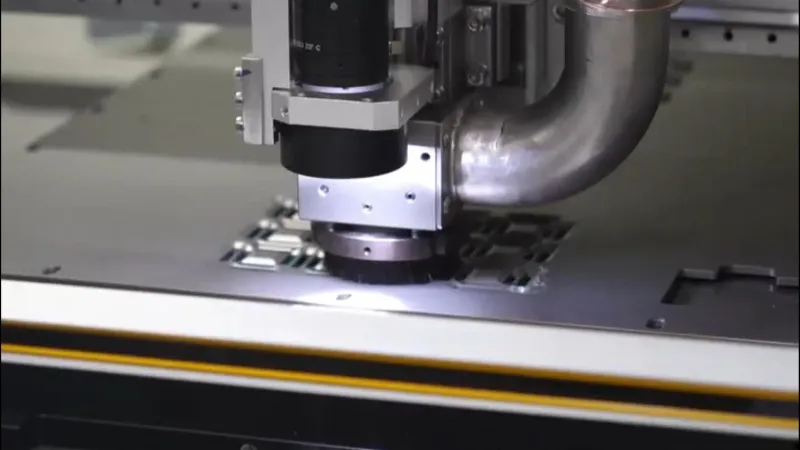
How Effective is the Dust Collection System of the Milling Cutter PCB Depaneling Machine?
Milling cutter PCB depaneling machine dust collection performance is often underestimated until production problems appear. Fine fiberglass dust, resin particles, and copper debris generated during routing do not just affect cleanliness—they directly influence yield, equipment lifespan, and operator safety. So how effective are modern dust collection systems in real SMT environments? This article shares practical, experience-based insights from global EMS and OEM production lines, focusing on industrial quality, durability, and long-term operational value rather than specifications alone. 🧠 Why Dust Control Matters More Than It Seems In high-density PCBA production, routing dust creates several hidden risks: Many engineers only notice dust issues after yield drops or maintenance intervals are shortened. ⚙️ How Dust Is Generated During Milling Depaneling Unlike laser or V-cut methods, milling physically removes material. This creates: An effective dust collection system must handle both heavy chips and ultra-fine particles simultaneously. 🧩 Design Factors That Define Dust Collection Efficiency Field comparisons show that dust collection performance depends less on suction power alone and more on system design: Poorly designed systems may look powerful on paper,r but lose efficiency once panels vary in thickness. 🏭 Case Insight: Medical Electronics Assembly Line A medical device manufacturer experienced unexplained contamination during
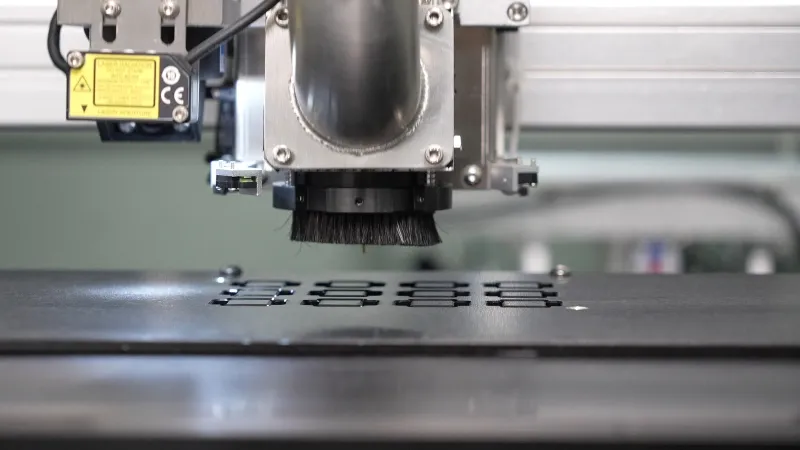
Can a Milling Cutter PCB Depaneling Machine Achieve a Cutting Accuracy of ±0.05 mm?
Milling cutter PCB depaneling machine accuracy is a recurring discussion point among process engineers working with high-value and high-density PCBAs. ±0.05 mm is often quoted in specifications—but can it be achieved consistently in real production? The short answer is yes, under defined conditions. The longer answer depends on process control, mechanical design, and expectations around repeatability versus peak performance. This article shares field-proven insights from EMS and OEM production lines, focusing on industrial quality, durability, and realistic cost–performance trade-offs. 🧭 What Does ±0.05 mm Accuracy Actually Mean in Production? In practice, cutting accuracy refers to the deviation between the programmed tool path and the final board edge. Engineers often discover that: For most SMT lines, ±0.05 mm must be evaluated as process capability, not just machine resolution. ⚙️ Key Mechanical Factors That Enable High Accuracy Achieving tight tolerances is less about marketing claims and more about mechanical fundamentals: Production audits show that machines with stronger mechanical damping maintain accuracy longer during extended shifts. 🪚 Tooling and Process Control: The Hidden Variables Even with a capable system, results degrade quickly without discipline: Several lines reached ±0.05 mm only after switching from time-based to cut-length-based tool replacement strategies. 🧩 Panel Support and

PCB Milling Depaneling Machine: Maintaining Edge Accuracy for High-Value PCBA
PCB Milling Depaneling Machine has become a cornerstone for high-value, high-density PCBAs where precision, edge integrity, and component safety are critical. Unlike V-cut or blade depaneling, milling provides controlled material removal and is especially effective for dense layouts, fragile boards, and applications demanding high reliability. This article explores practical strategies, common challenges, and field-tested solutions shared by engineers in global SMT environments. ⚙️ Understanding the Importance of Edge Accuracy For high-value PCBAs, edge accuracy is not just cosmetic—it affects: Even slight deviations or burr formation can result in micro-cracks, electrical shorts, or customer returns, highlighting the need for precise milling parameters and fixture support. 🧩 Challenge 1: Spindle Vibration and Tool Wear Field engineers frequently report that spindle vibration or dull milling bits are primary sources of edge inconsistency. Effects include: Best practices involve monitoring tool wear, calibrating spindle runout, and implementing preventive maintenance schedules. Some high-density automotive PCBA lines saw a 25% reduction in edge defects by following these steps. 🪚 Challenge 2: Panel Flex and Support Thin or large-format PCB panels can flex during milling, especially when multiple boards are processed simultaneously. Panel flex can transfer stress into populated areas, causing: Solutions include using full-surface vacuum fixtures, adaptive

Low-Stress Depaneling Solutions: Practical Approaches for Fragile and Dense PCBAs
Low-Stress Depaneling Solutions have become a priority as PCBAs grow thinner, denser, and more functionally integrated. In applications such as automotive electronics, industrial controls, and medical devices, depaneling is no longer viewed as a simple mechanical step—it is a process that can directly influence long-term reliability. This article shares practical approaches that engineers report actually working on fragile and high-density PCBAs. ⚙️ Why Fragile PCBAs React Differently to Depaneling Dense PCBAs often combine fine-pitch components, edge-mounted connectors, and multi-layer stackups. During depaneling, even moderate mechanical force can propagate stress into sensitive areas. Common pain points reported by SMT engineers include: Because these issues rarely appear during visual inspection, depaneling-related stress is increasingly treated as a preventive quality risk. 🧩 Routing with Stability in Mind Router depaneling remains widely used for dense layouts due to its flexibility and adaptability. However, field experience shows that stress control depends less on routing itself and more on how it is implemented. Effective practices include: Several industrial electronics lines report noticeable yield improvement after upgrading fixtures rather than changing machines. 🪚 V-Cut Depaneling: When Simplicity Needs Discipline V-cut depaneling is still common in high-volume environments, but fragile PCBAs demand tighter control. Engineers emphasize: When these

PCB Depaneling Stress Reduction Techniques: What Actually Works in High-Density PCBA
PCB Depaneling Stress Reduction Techniques have become a crucial topic in high-density PCBA production. As boards become more compact, populated with sensitive components, and multi-layered, mechanical stress during depaneling can lead to micro-cracks, solder joint fatigue, and long-term reliability issues. This article presents field-tested approaches, practical fixes, and engineering insights from global SMT lines. ⚙️ Understanding Stress in High-Density PCBA Depaneling High-density PCBA presents unique stress challenges: Engineers report that even minor deviations in tool alignment or panel support can trigger latent defects, which often remain hidden until thermal cycling or vibration testing. 🧩 Technique 1: Optimized Router Parameters Routing remains a widely used depaneling method for dense boards. Key stress-reduction strategies include: Case insight: A European automotive EMS line reduced micro-crack rates by 30% by fine-tuning router speed and adding full-panel support. 🪚 Technique 2: V-Cut and Blade Handling Adjustments V-cut and blade separation remain common in high-volume production. Best practices for stress control: Properly tuned V-cut processes can maintain high throughput without compromising reliability. 🔦 Technique 3: Laser Depaneling for Minimal Contact Laser depaneling eliminates direct mechanical stress, ideal for sensitive or ultra-thin boards. Practical considerations include: While initial costs are higher, stress reduction and consistency often justify


