.png)
 Japanese
  English
  Spanish
  Korean
  Russian
  Chinese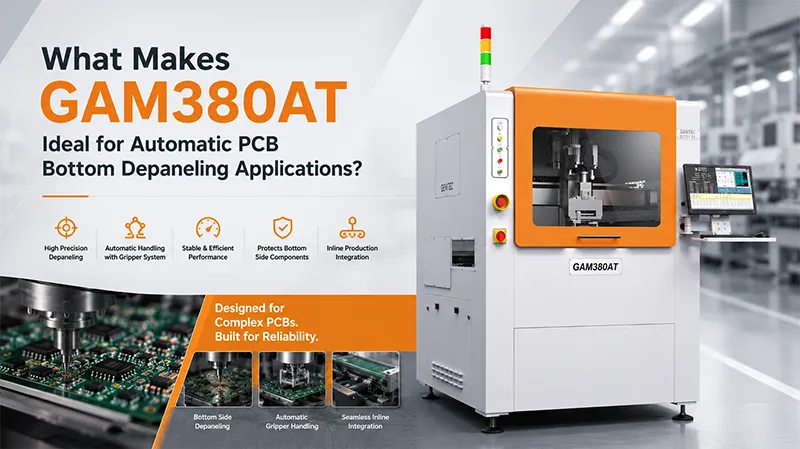
What Makes GAM380AT Ideal for Automatic PCB Bottom Depaneling Applications?
Automatic PCB Bottom Depaneling Applications are becoming a much bigger topic in electronics manufacturing than they were just a few years ago. Walk into an automotive electronics factory today, and the discussion often moves beyond simple cutting speed. Engineers are asking different questions: Can we reduce stress on sensitive components? Can we maintain a stable yield during high-volume production? Can we automate material handling without sacrificing precision? Can depaneling become part of a connected production process instead of remaining an isolated machine? Those questions did not appear by accident. Modern PCBs have changed. Manufacturing expectations have changed as well. And this shift explains why solutions like the GAM380AT were developed. 🔍 Why Traditional PCB Separation Started Reaching Its Limits Several years ago, many depaneling applications were relatively straightforward. Boards were thicker. Components had more spacing. Product cycles moved more slowly. But modern automotive electronics introduced different requirements. Examples now include: At first glance, these products appear smaller. Ironically, smaller boards often create larger manufacturing problems. Common issues started appearing repeatedly: Factories discovered something unexpected: Increasing production speed alone did not solve the problem. Sometimes it made problems appear faster. ⚠️ A Story Behind Why GAM380AT Was Developed More than thirty
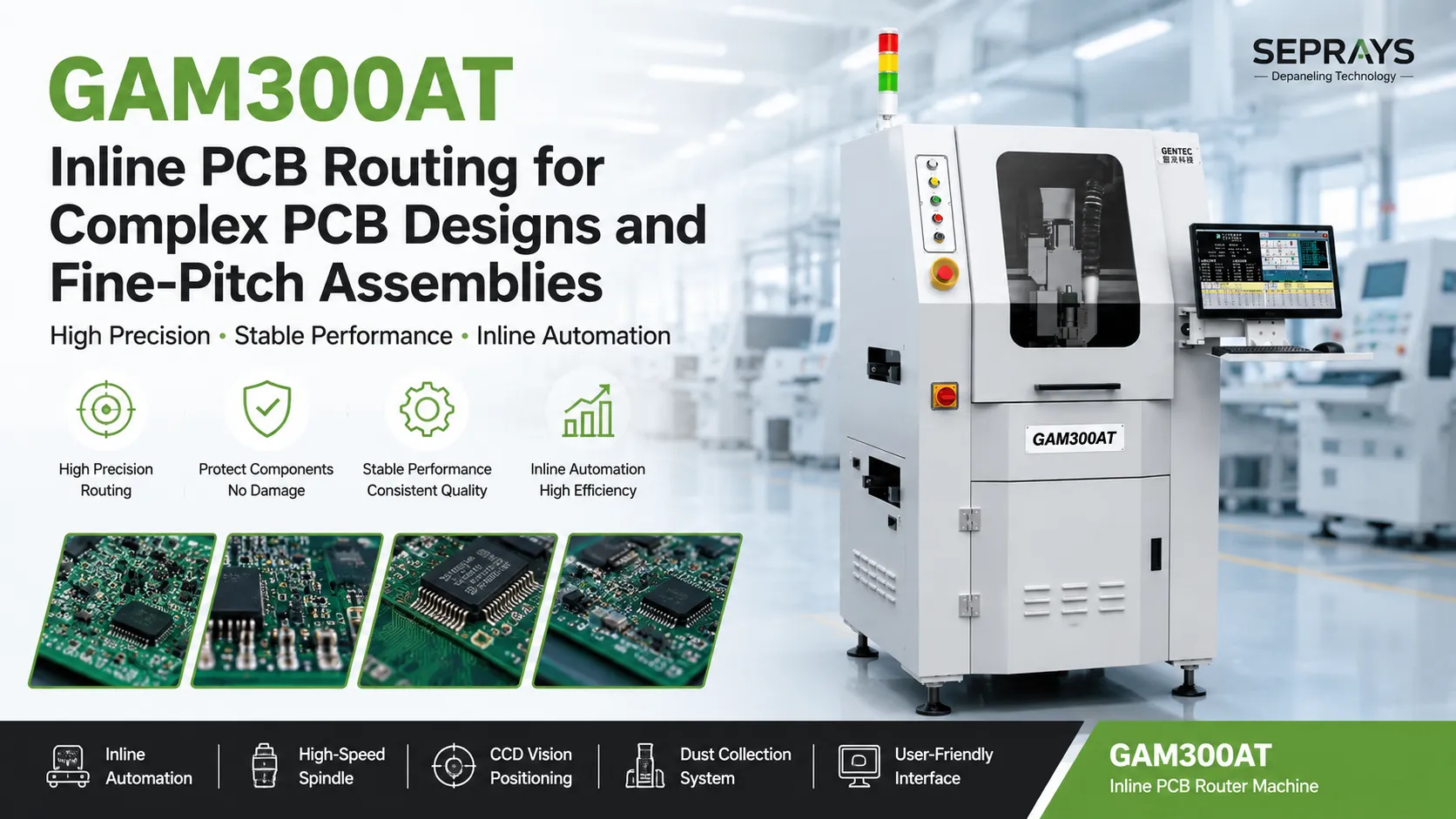
GAM300AT Inline PCB Routing for Complex PCB Designs and Fine-Pitch Assemblies
GAM300AT Inline PCB Routing is becoming a practical topic in manufacturing discussions because PCB designs are changing faster than many production processes can keep pace with. A few years ago, most boards followed relatively simple layouts with comfortable component spacing. Today, things look very different. High-density assemblies are becoming standard. Fine-pitch components continue shrinking. Board shapes are becoming more complex. And designers increasingly place components close to board edges. For production teams, this creates an uncomfortable reality: the assembly process may improve while depaneling becomes more difficult. Many factories only discover this after quality issues begin appearing. 🔍 Why Complex PCB Designs Create Unexpected Production Problems Traditional PCB layouts were relatively forgiving. Routing paths were predictable. Support structures were easier to design. Mechanical stress remained relatively consistent. Complex assemblies change that. Modern applications increasingly include: Several manufacturing challenges often appear at the same time: The situation becomes more difficult when components sit extremely close to PCB edges. Sometimes a fraction of a millimeter determines success or failure. ⚠️ Common Questions Manufacturing Teams Keep Asking Across different factories, many conversations sound surprisingly similar: “Why did the board pass electrical testing but fail reliability testing?” “Why are some components damaged after separation?”
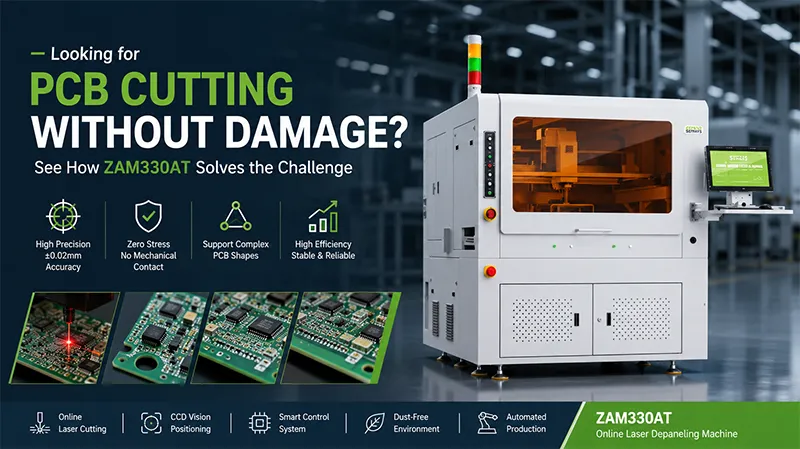
Looking for PCB Cutting Without Damage? See How ZAM330AT Solves the Challenge
PCB cutting without damage has become a bigger discussion point in electronics manufacturing in 2026. Many production teams are discovering that achieving a clean separation is no longer enough. The board may look perfect after depaneling, pass visual inspection, and even complete electrical testing successfully—but hidden stress can remain inside the assembly. The problem is that damage is not always visible. Tiny micro-cracks, weakened solder joints, edge chipping, and invisible stress around sensitive components may not appear immediately. In some cases, failures only emerge after vibration testing, thermal cycling, or long-term field use. This creates an uncomfortable situation for manufacturers. Everything appears normal at first. Then, unexpected quality problems start showing up later. For engineers working with increasingly compact products, avoiding damage during depaneling is becoming part of the entire reliability strategy rather than simply a cutting process. 🔍 Why PCB Damage Happens More Frequently in Modern Electronics Several years ago, component spacing was relatively forgiving. Today, things look different. Modern PCB assemblies now commonly include: Because of these trends, even small amounts of mechanical force can create unexpected issues. Common examples include: The challenge becomes larger as product sizes continue shrinking. Ironically, smaller products often create bigger manufacturing problems.
Happy Dragon Boat Festival: Warm Wishes from SEPRAYS · Genitec
Happy Dragon Boat Festival from SEPRAYS · Genitec! The Dragon Boat Festival is a meaningful tradition celebrated by many people around the world. It is a special time that brings together family, culture, and the spirit of unity. Through generations, this festival has carried values of perseverance, teamwork, and shared happiness, making it one of the most respected traditional celebrations. As we celebrate this special occasion, it is also a moment to appreciate the people around us—family members, friends, colleagues, customers, and partners who contribute to our daily lives and shared success. At SEPRAYS · Genitec, we would like to extend our sincere gratitude and best wishes to everyone celebrating this important festival. We build meaningful connections and long-term relationships through trust, support, and mutual growth. May this festive season bring joy and positivity to you and those around you. 🌿 Our wishes for this Dragon Boat Festival: As traditions continue to connect people across different cultures and regions, we hope this celebration brings warmth and memorable moments to every family and community. Once again, Happy Dragon Boat Festival from SEPRAYS · Genitec. We wish you a wonderful holiday filled with happiness, good fortune, and lasting success. Happy Dragon Boat
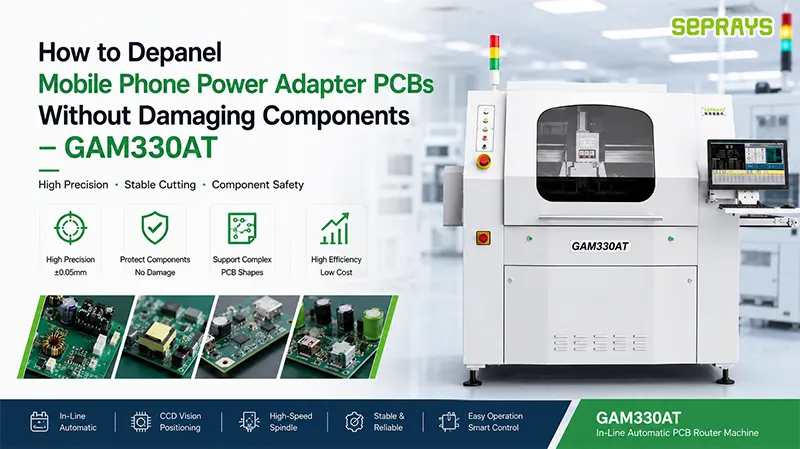
How to Depanel Mobile Phone Power Adapter PCBs Without Damaging Components – GAM330AT
Mobile phone power adapter PCBs are getting smaller every year. Faster charging requirements, adoption of GaN technology, and more compact product designs are pushing components closer together than many manufacturers expected a few years ago. On paper, the design looks efficient. On the production floor, it often creates a different discussion. Engineers start noticing small but frustrating problems: Cracked solder joints. Damaged edge components. Micro-stress around sensitive ICs. Unexpected yield drops. And sometimes the depaneling process becomes the last place people investigate. The issue is that power adapter boards are no longer simple rectangular PCBs with large empty margins. In many cases, components sit only a few millimeters—or even less—from the board edge. A separation process that worked perfectly in 2022 may not be sufficient in 2026. 🔍 Why Mobile Phone Power Adapter Boards Are More Difficult Than They Look Power adapter boards have several characteristics that create challenges during separation. Typical structures include: Unlike standard industrial boards, power adapters prioritize compact size. Every millimeter matters. That design decision creates several manufacturing risks. Even tiny movements during cutting can affect quality. A few tenths of a millimeter sometimes determine whether the board passes inspection or becomes scrap. ⚙️ Common Problems
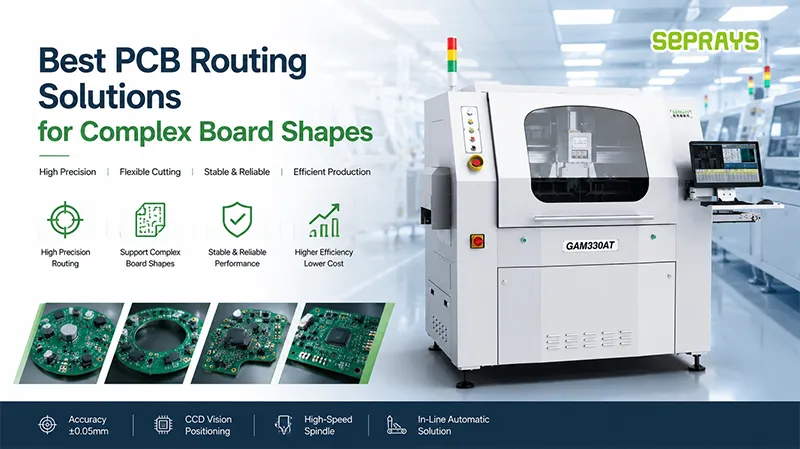
Best PCB Routing Solutions for Complex Board Shapes
PCB routing solutions often become a serious discussion only after manufacturers run into problems. At the prototype stage, unusual board designs usually look manageable. But once production scales, irregular shapes start creating issues that are difficult to ignore. Rounded corners. L-shaped boards. Sensor modules with openings. Automotive control units with unique outlines. Wearable electronics with curved structures. On the screen, these designs look clean and efficient. On the factory floor, they can become a source of yield loss, longer cycle times, tool wear, and inconsistent separation quality. As product miniaturization continues in 2026, complex PCB geometries are becoming increasingly common across automotive electronics, industrial control systems, consumer devices, and IoT products. The question manufacturers ask is no longer simply: “Can this board be separated?” More often, it becomes: “Can it be separated repeatedly, efficiently, and without affecting quality?” 🔍 Why Complex PCB Shapes Create Unexpected Manufacturing Challenges Traditional rectangular PCBs are relatively predictable. The cutting path is simple. Material movement is stable. Support fixtures are easier to design. Complex board structures change that. Common examples include: Several challenges appear at the same time: The challenge becomes larger when components are close to the edges. A few tenths of a millimeter