.png)
 Japanese
  English
  Spanish
  Korean
  Russian
  Chinese
 Automated PCB Depaneling and Tray Handling for AI Hardware Manufacturing
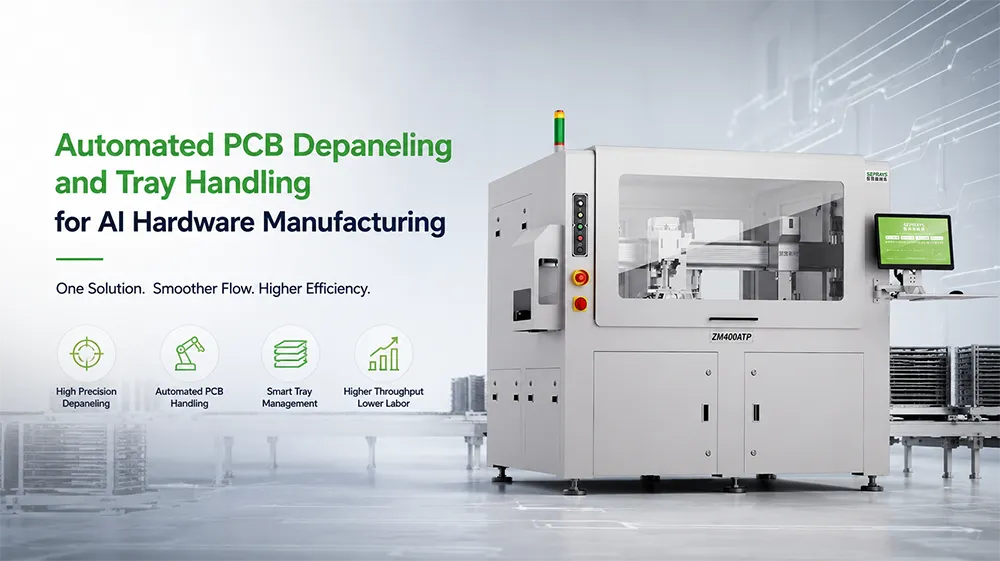
Automated PCB depaneling is becoming more relevant as AI hardware moves from engineering samples into higher-volume production. For a factory, however, the challenge is not simply separating PCBs faster. The bigger question is what happens after separation. Who removes the finished boards?Where are they placed?How are trays exchanged?How much operator handling is still required? When production runs across multiple shifts, these small steps can become a surprisingly large part of the manufacturing cost. 🤖 Why AI Hardware Needs a Different Production Approach AI servers, accelerator systems, communication equipment, and other high-performance electronics often use densely populated PCB assemblies. Manufacturers can separate and transfer multiple boards from a single panel without […]
Why More Electronics Manufacturers Are Switching to Automated PCB Depaneling
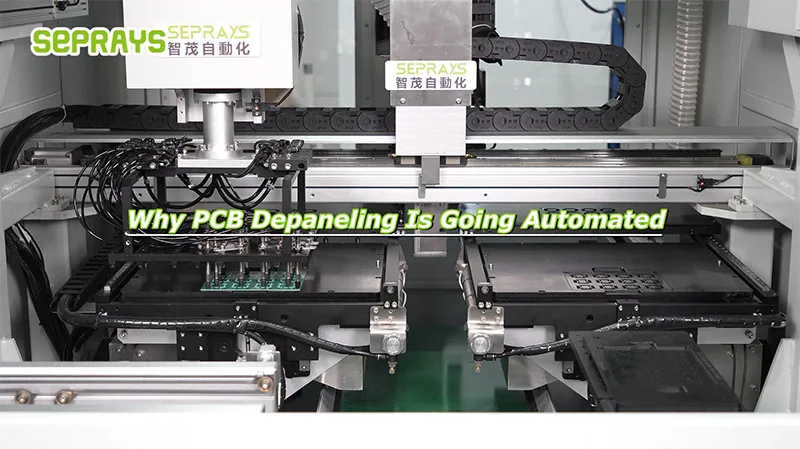
Automated PCB depaneling is becoming a serious topic in electronics manufacturing circles in 2026. Not because it is “new,” but because production realities have changed. Labor costs are rising.PCB designs are getting denser.SMT lines are running faster.And manual separation methods are starting to create bottlenecks. Many factories that once relied on manual routing or standalone cutting stations are now rethinking the entire depaneling process. Especially in automotive electronics, communication devices, medical PCBA, and consumer electronics production. The shift is not only about speed.It is about consistency, yield, and long-term manufacturing stability. 🔍 Why Manual PCB Depaneling Is Becoming a Problem A common issue in many SMT factories looks like this: […]
伝統的なPCB分割における粉塵問題と高効率無塵切断を実現するPCBセパレーター

にエレクトロニクス製造業、プリント基板depaneling重要な生産ます。 しかし、伝統的なdepaneling法面の粘粉塵の問題を招き、生産性、労働者の健康およびワークショップの清浄度を低減製品も有ります。 工場経営者、調達の意思決定者、技術者、この課題解決の鍵となる競争力向上の この記事の分析の根本的原因に対しては、粉塵の問題を探求する高度な基板depanelingソリューション。