.png)
 Japanese
  English
  Spanish
  Korean
  Russian
  Chinese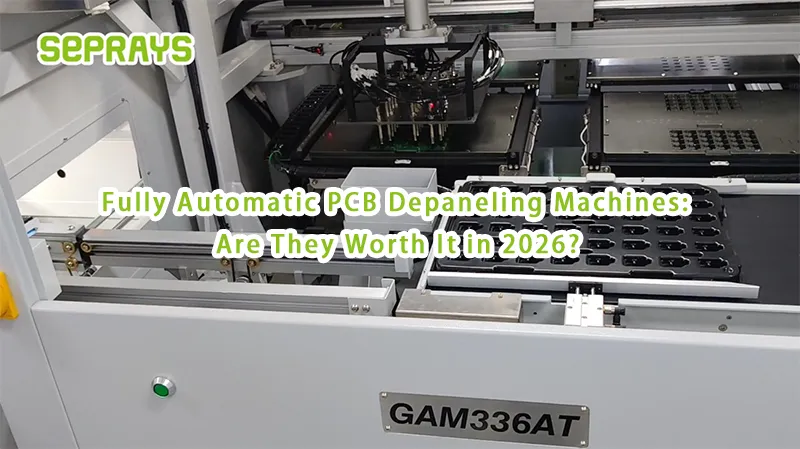
Fully automatic PCB depaneling machines are becoming a serious consideration in 2026. Not because they are new—but because production pressure has changed.
Orders are increasing.
But many depaneling processes still rely on manual handling.
Frequent loading.
Inconsistent output.
Rising labor costs.
These are no longer small inefficiencies.
They are bottlenecks.
So the real question is not “automation or not.”
It’s whether your current process can keep up.
🔍 What “Fully Automatic” Really Means on the Line
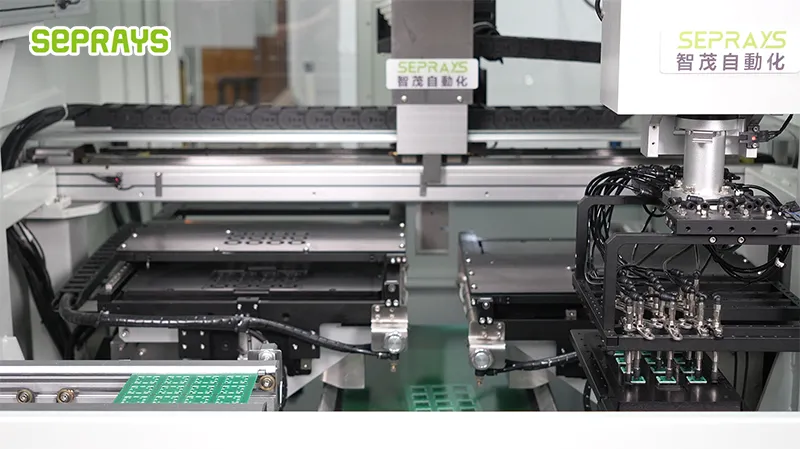
A fully automatic depaneling system typically includes:
- Automatic loading and unloading
- Inline conveyor integration
- Vision alignment (CCD)
- Programmable cutting paths
- Data traceability
It runs continuously.
With minimal manual intervention.
The goal is simple:
Stable, repeatable production.

⚙️ What Problems Automation Actually Solves
From a user perspective, automation addresses real pain points:
1. Labor Dependency
Manual loading creates:
- Operator fatigue
- Inconsistent handling
- Training costs
Automation reduces variability.
2. Production Interruptions
Manual processes often cause:
- Waiting time between cycles
- Line imbalance
- Unpredictable delays
Automation keeps the flow continuous.
3. Inconsistent Quality
Human factors introduced:
- Positioning errors
- Uneven handling
- Quality fluctuations
Machines repeat the same process every time.
💥 When Manual Depaneling Becomes a Bottleneck
You may already feel it if:
- SMT lines are waiting for depaneling
- Operators cannot keep up with the throughput
- Output varies between shifts
- Labor cost is rising faster than output
These are clear signals.
Not temporary issues.
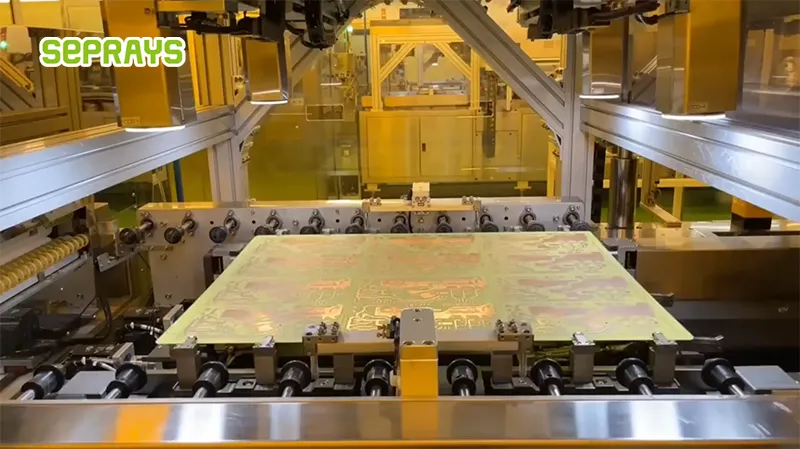
🧩 What Kind of PCB Production Needs Full Automation?
Fully automatic depaneling is not for every factory.
It becomes valuable when you are dealing with:
1. High-Volume Production
- Consumer electronics
- Automotive modules
- Communication devices
Consistency matters more than flexibility.
2. Inline SMT Lines
- Direct connection with conveyors
- No buffer between processes
- Continuous production flow
Manual steps break the rhythm.
3. Standardized PCB Designs
- Repeated product models
- Stable cutting paths
- Predictable processes
Automation thrives on consistency.
4. Labor-Constrained Environments
- Difficulty hiring operators
- High turnover
- Rising wages
Automation reduces dependency.
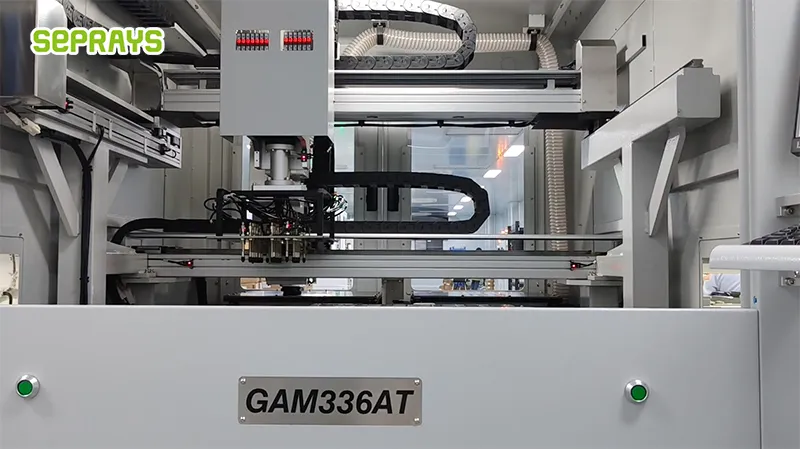
💡 A Counterintuitive Insight
Many assume:
“Automation always increases efficiency.”
But not always.
If your production is:
- High-mix
- Frequently changing
- Low volume
Then, full automation may reduce flexibility.
Conclusion:
Automation works best when your process is stable.

📊 Manual vs Semi-Auto vs Fully Automatic
| Factor | Manual / Semi-Auto | Fully Automatic System |
|---|---|---|
| Labor Requirement | High | Low |
| Production Speed | Variable | Consistent |
| Output Stability | Operator-dependent | Machine-controlled |
| Flexibility | High | 中 |
| Initial Investment | Low | High |
| Long-Term Cost | Higher | Lower |
⚡ Cost Perspective — Is It Really Worth It?
Upfront cost is higher.
That’s obvious.
But the real calculation includes:
- Labor savings
- Reduced scrap
- Higher throughput
- Lower downtime
In many 2026 production environments:
Payback periods are shorter than expected.
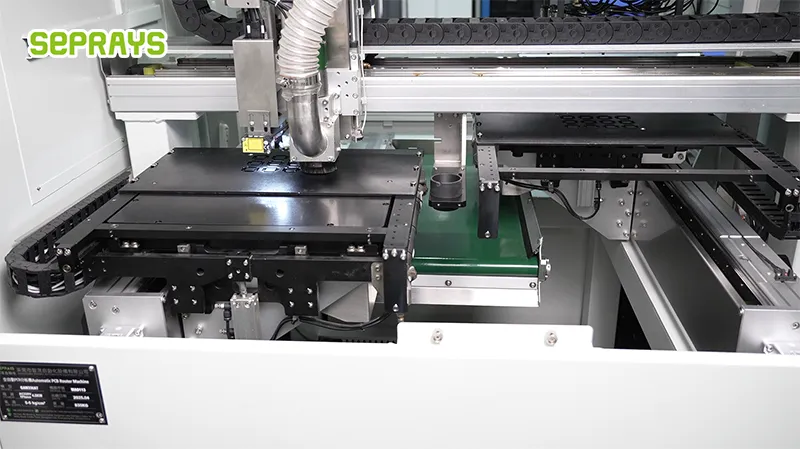
🧪 Case Example — From Manual to Fully Automatic
A manufacturer producing communication PCBs faced:
- Increasing order volume
- Labor shortages
- Inconsistent depaneling quality
Initial setup:
- Semi-automatic depaneling machines
Problems:
- Frequent manual loading delays
- Output variation between operators
- SMT line waiting for depaneling
After working with Seprays, they upgraded to a fully automatic inline system:
- Integrated with the SMT conveyor
- Automated loading and unloading
- Vision alignment for precision
Results:
- Continuous production flow
- Reduced labor dependency
- Improved consistency across batches
The biggest gain?
Predictability.
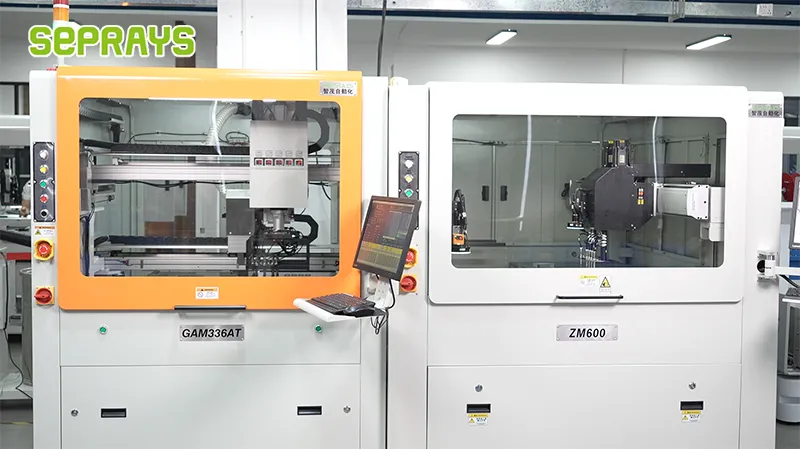
🛠️ Practical Considerations Before Investing
Before choosing full automation, evaluate:
- Production volume stability
- Product variation frequency
- Available floor space
- Integration with existing SMT lines
- ROI timeline
Skipping this step leads to underutilized equipment.
🔄 When Full Automation May NOT Be the Best Choice
You may not need full automation if:
- You run high-mix, low-volume production
- PCB designs change frequently
- Flexibility is more important than speed
In these cases:
Semi-automatic or hybrid solutions may be more practical.
🚀 2026 Trend — Why Automation Is Accelerating
Manufacturing trends are clear:
- Labor costs are rising globally
- Production speed expectations are increasing
- Quality standards are tightening
Automation is no longer optional for many factories.
It is becoming a baseline.
🚀 Final Thought — It’s About Fit, Not Hype
Fully automatic depaneling machines are powerful.
But only when matched to the right scenario.
The best decision is not:
“Should we automate?”
It is:
“Where does automation create real value?”
🚀 Why Choose Seprays Group?
Seprays Group focuses on helping manufacturers transition from manual or semi-automatic processes to optimized, fully automated depaneling solutions—based on real production needs, not assumptions.
With over 30 years of industry experience, Seprays Group has been dedicated to PCB/FPC depaneling technology, providing a full range of solutions—milling-cutter, laser, V-groove, and punching depanelers, as well as fully automated handling systems. Our equipment is trusted by leading manufacturers, including Foxconn, Flextronics, State Grid, Luxshare, Compal, Wistron, China Electronics, Quanta, CRRC, China Aerospace, OPPO, ZTE, and Bosch. It is widely used in factories across China and worldwide.
With deep application expertise, Seprays helps you evaluate ROI, design automation strategies, and ensure smooth integration into your SMT production line.
If you are considering upgrading to a fully automatic depaneling system, feel free to contact us—we’ll help you assess which option best fits your production.
WhatsApp: +8618929266433
Eメール: sales@seprays.com
❓ FAQ
1. Are fully automatic depaneling machines worth it in 2026?
For high-volume, stable production lines, yes—they improve efficiency and reduce labor costs.
2. What is the biggest benefit of automation?
Consistent output and reduced manual dependency.
3. Is automation suitable for high-mix production?
Not always. Flexibility may be limited.
4. How long is the ROI period?
It depends on production scale, but it is often shorter than expected due to labor savings.
5. Can automatic systems integrate with SMT lines?
Yes, most modern systems are designed for inline integration.