.png)
 Russian
  English
  Spanish
  Japanese
  Korean
  Chinese
What is the working principle of router paneling?
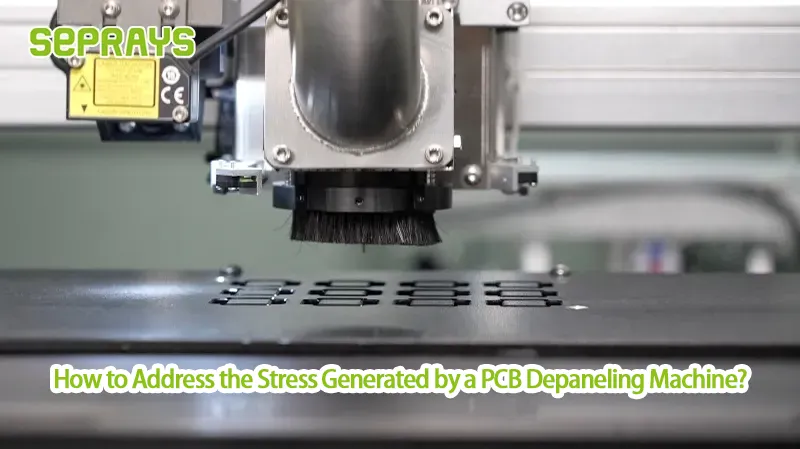
Router depaneling is a precision PCB separation process that utilizes computer-controlled spindle systems equipped with specialized cutting tools to simulate individual boards from production panels. The CNC-guided operation follows pre-programmed toolpaths to achieve micron-level cutting accuracy while maintaining high throughput rates. This mechanical method offers distinct advantages for thicker multilayer boards and complex designs, combining the reliability of traditional milling with advanced features like real-time tool monitoring and automated debris management. The process eliminates the need for consumables associated with laser systems while delivering consistent results across high-volume production runs. Proper tool maintenance remains essential to preserve cut quality and prevent potential defects in sensitive board areas.
What are the advantages of Router handling compared to traditional punch depaneling?
| Feature | Router Depaneling | Punch Depaneling |
| Precision | ±25μm (micron-level) | ±100–200μm (limited by die tolerance) |
| Stress on PCB | Low (controlled cutting force) | High (impact force risks delamination) |
| Tooling Cost | No custom dies (uses standard end mills) | High (5k–5k–20k per die design) |
| Setup Time | Minutes (digital toolpath upload) | Hours (die alignment/calibration) |
| Design Flexibility | Unlimited (CAD-driven, handles complex shapes) | Limited (fixed die geometry) |
| Material Compatibility | FR4, Rogers, metal-core, rigid-flex (0.1–6mm) | Best for simple FR4 designs (≤3mm) |
| Edge Quality | Burr-free (meets IPC-A-600 Class 3) | May require deburring |
| Throughput | 300–800 panels/hour | 1,000+ panels/hour (for simple designs) |
| Automation | Fully automatable (vision/ATC integration) | Limited by manual die changes |
| Best For | High-mix, complex, or sensitive PCBs | High-volume, simple designs |
What are the application fields of router paneling?
| Industry | Applications | Why Router Depaneling is Used |
| Consumer Electronics | Smartphones, tablets, laptops, wearables | High precision for small, dense PCBs |
| Automotive | ADAS, infotainment, EV battery systems | Handles thick, high-current boards safely |
| Medical Devices | Implants, diagnostic equipment, imaging | Low stress prevents damage to delicate circuits |
| Industrial | Control systems, power electronics | Cuts complex shapes in rugged boards |
| Aerospace/Defense | Avionics, satellites, military hardware | Meets strict reliability standards |
| Telecom | 5G base stations, network gear | Precision for high-frequency signal integrity |
| LED Lighting | High-power LED arrays, displays | Clean cuts for heat-sensitive materials |
What key parameters should be considered when selecting a PCB depaneling router?
| Parameter Category | Key Considerations | Why It Matters |
| Spindle Specifications | • Speed range (e.g., 30,000–100,000 RPM) | Determines cutting precision and material compatibility |
| • Power rating (1–5kW typical) | ||
| • Runout accuracy (<1µm preferred) | ||
| Positioning Accuracy | • Linear encoder resolution (±5µm or better) | Ensures consistent cut quality for fine-pitch components |
| • Repeatability (±2µm) | ||
| Cutting Capacity | • Max panel size (e.g., 610×610mm) | Must match your production panel sizes and PCB types |
| • Material thickness range (0.1–6mm) | ||
| Automation Features | • Automatic Tool Changer (ATC) | Reduces setup time and enables lights-out manufacturing |
| • Vision alignment system | ||
| • Conveyor interface | ||
| Dust Management | • HEPA filtration (≥99.97% @ 0.3µm) | Critical for cleanroom environments and operator safety |
| • Vacuum suction power (≥5,000Pa) | ||
| Software Compatibility | • Supports Gerber, DXF, IPC-7351 | Streamlines workflow from design to production |
| • CAD/CAM integration options | ||
| Material Compatibility | • FR4, Rogers, metal-core, flex | Ensures capability with your specific PCB materials |
| • Copper weight handling (1–6oz) | ||
| Throughput | • Feed rate (0.5–5 m/min adjustable) | Impacts production efficiency and ROI |
| • Tool change time (<5 sec preferred) | ||
| Maintenance Requirements | • Tool life monitoring | Affects long-term operating costs |
| • Lubrication intervals | ||
| • Calibration frequency | ||
| Safety Features | • Emergency stop | Protects operators and equipment |
| • Vibration damping | ||
| • Enclosed cutting area |
Seprays’ PCB Router Depaneling Solutions
Встроенная Автоматическая машина для снятия панелей с печатных плат GAM 336AT
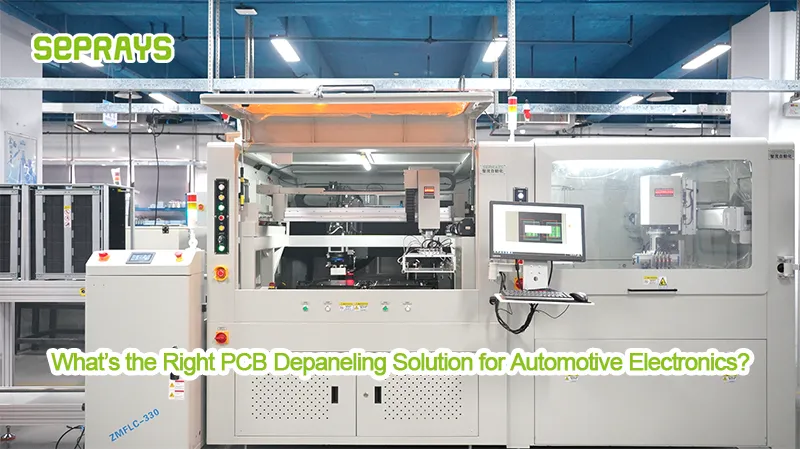
GAM336AT In-Line Automatic PCB Router Depaneling Machine streamlines PCBA handling with 0-180° flexibility, ensuring compatibility across various production stages. For elevated productivity, dual-spindle models like the GAM336AD and GAM336ALD are also available, making the GAM 336AT series a versatile and efficient choice for high-quality PCB separation.

Встроенный автоматический маршрутизатор печатных плат GAM 330AT
The GAM 330AT In-Line Automatic PCB Router Machine by SEPRAYS is a high-precision and efficient solution for automatic routing and depaneling of printed circuit boards (PCBs).

Conclusion
As the electronics industry advances, router depaneling remains an essential method for achieving high-precision PCB separation. Its ability to accommodate multilayer designs, minimize mechanical stress, and maintain consistency in large-scale production makes it an invaluable asset in various industries. By carefully considering factors such as spindle speed, tooling selection, and automated features, manufacturers can optimize their depaneling processes to meet stringent quality standards. As technology progresses, further advancements in CNC control and automation will continue to enhance the capabilities of router depaneling, solidifying its role in the future of PCB manufacturing.