.png)
 Russian
  English
  Spanish
  Japanese
  Korean
  Chinese
 Classification and Advantages of PCB Laser Depaneling

In electronics manufacturing, precision and efficiency in PCB depaneling are more important than ever. Traditional methods like routing and punching are being replaced by advanced laser depaneling techniques, which offer better accuracy and less stress on the boards. UV laser, CO₂ laser, and fiber laser depaneling are the top choices, each suited for different materials and uses. From delicate flexible PCBs to strong metal-core boards, laser depaneling provides clean cuts, minimal heat damage, and faster production. This essay explains the types, benefits, and advantages of these laser depaneling methods and how they transform industries like consumer electronics, aerospace, and automotive.
PCB Router Depaneling: Advantages, Disadvantages, and Selection Guide

PCB router depaneling is an important process in electronics manufacturing that helps separate individual circuit boards from a larger panel. This method uses a high-speed cutting tool to ensure clean edges and minimize stress on the components, making it ideal for complex designs. As demand for more detailed and high-density PCBs grows, router depaneling becomes a key solution for maintaining quality and improving production efficiency. However, it’s important to consider both the benefits and challenges of this method when choosing the best solution for your needs.
What Is PCB/FPC Punching Depaneling? Advantages and Disadvantages Explained

In electronics manufacturing, separating individual printed circuit boards (PCBs) or flexible printed circuits (FPCs) from a larger panel is a crucial step. PCB/FPC punching depaneling is a popular method, offering speed, precision, and cost savings. It helps meet the high demands of modern production while ensuring product quality. This essay explains the benefits, drawbacks, and advancements in punching depaneling, showing why it’s essential in today’s electronics industry.
What Is PCB V-Cut Depaneling? Advantages and Disadvantages Explained

PCB V-cut depaneling is a common method used to separate individual circuit boards from a larger panel. It involves cutting V-shaped grooves along the break lines, making it a fast, simple, and cost-effective way to handle high-volume production. While it has many benefits, like saving money and time, it also has some drawbacks, such as only working for straight edges and possibly damaging delicate parts. This essay explains the pros and cons of V-cut depaneling to help you decide when to use it.
SEPRAYS Spring Team-Building: A Fun Day at Yacok Farm
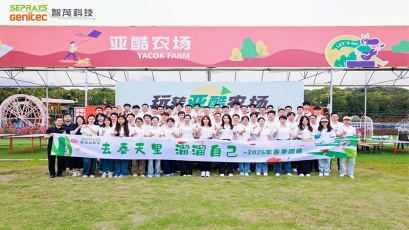
On March 15, 2025, SEPRAYS Company visited Yacok Farm in Dalingshan, Dongguan, for a spring team-building event. The day was full of exciting activities and laughter, making it a great break from work.
Laser Depaneling: A Smarter Way to Cut PCBs

In today’s electronics industry, making smaller and more complex PCBs requires advanced cutting technology. Laser depaneling is a modern solution that offers high precision, flexibility, and reliability, outperforming traditional mechanical methods. Using a focused laser beam, this method cuts through PCB panels without physical contact, ensuring clean and stress-free separation of individual boards. This essay explains how laser depaneling works, the types of lasers used, the differences between CO2 and UV lasers, and why laser depaneling is better than traditional mechanical methods. Let’s explore how this technology is changing PCB manufacturing.
Как автоматизированные станки для снятия панелей с печатных плат Обеспечивают высокоэффективную беспылевую резку

In the electronics manufacturing industry, PCB depaneling is a critical production step. However, traditional depaneling methods face persistent dust issues, harming productivity, worker health, and workshop cleanliness, while also reducing product yield. For plant managers, procurement decision-makers, and engineers, solving this challenge is key to improving competitiveness. This article analyzes the root causes of dust problems and explores advanced PCB depaneling solutions.
A Guide to PCB Router Depaneling: How It Works and Why It Matters

In the ever-evolving landscape of electronics manufacturing, PCB depaneling is crucial in ensuring quality and efficiency. Among the various depaneling methods, PCB router depaneling has emerged as a preferred choice due to its precision, versatility, and ability to handle complex board designs. This computer-controlled mechanical process utilizes specialized cutting tools to separate individual boards from a panel while maintaining structural integrity and minimizing stress on delicate components. As industries demand higher accuracy and throughput, router depaneling continues to be a key solution for achieving superior results in PCB production.
Punching Depaneling: The High-Speed Solution for Mass FPC/PCB Production

In electronics manufacturing, companies need to make flexible circuits (FPCs) quickly, affordably, and with perfect consistency. Punching depaneling solves this challenge perfectly. It’s fast, precise, and cost-effective – exactly what mass producers need. This method helps make the electronic parts in your phones, cars, and other devices quickly and reliably.
PCB V-Cut Depaneling: A Comprehensive Guide to Efficient Board Separation

Making electronics faster and cheaper is important for manufacturers. V-cut depaneling is a clever way to quickly separate many circuit boards made together in one big panel. It works like perforated paper – special V-shaped cuts are made so boards can snap apart easily. This method saves time and money, especially for simple, rectangular boards used in phones, lights, and other everyday electronics. Let’s look at how it works when to use it, and the tools that make it easy.


