.png)
 Chinese
  English
  Spanish
  Japanese
  Korean
  Russian
How Tooling, Spindle Speed, and Routing Paths Impact PCB Milling Cutting Effect
How Tooling, Spindle Speed, and Routing Paths Impact PCB Milling Cutting Effect is a topic frequently discussed among manufacturing engineers aiming to improve precision while controlling operational cost. Across German and French factories—known for their industrial craftsmanship, durability expectations, and engineering discipline—PCB milling performance is not judged only by cutting quality, but also by the long-term stability of the process. In this article, we share practical insights from real factory experiences, cost analyses, and lessons learned from high-volume SMT lines. 🔧 H1: The Critical Role of Tooling Quality in Milling Performance For many factories, tooling is often treated as a consumable rather than a strategic factor. However, engineers from automotive, aerospace, and telecom plants in the EU have repeatedly shown that: When low-grade tools are used, micro-cracks, fiber tearing, and inconsistent edge profiles become common issues. Over time, this increases rework, tightens inspection tolerances, and raises operational cost. Practical Factory Insight: In one French EMS line, switching from standard carbide to coated micro-grain tooling extended tool life by 42% and reduced board-edge polishing time to nearly zero. ⚙️ H2: How Spindle Speed Affects Cutting Stability and Accuracy High spindle speed is often assumed to deliver better cutting results—but this is
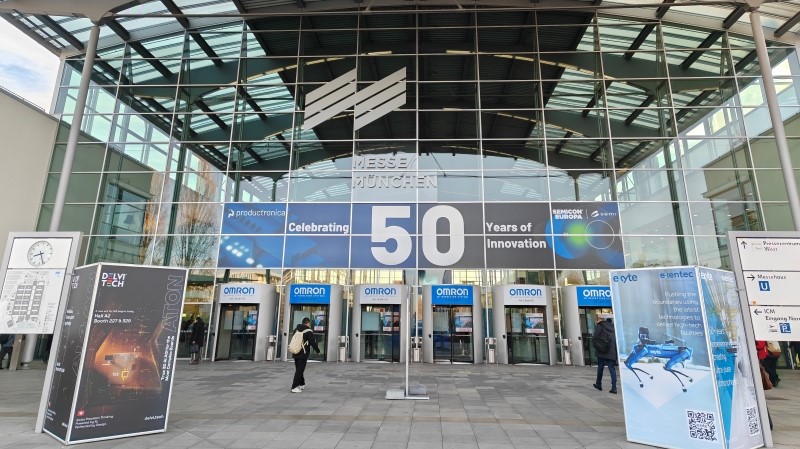
Seprays Successfully Concludes Productronica 2025 — Thank You for Joining Us in Munich
Seprays proudly concluded a successful exhibition at Productronica 2025, held from November 18–21 in Munich, Germany. We were honored to welcome visitors from around the world to Hall A3, Booth 144, where we showcased our latest advancements in intelligent PCB depaneling technologies. ⭐ A Great Experience Meeting Global Partners Throughout the four-day event, our team had the pleasure of meeting industry partners, long-term customers, and new friends from Europe, Asia, the Americas, and beyond.Productronica continues to be one of the most influential platforms in the electronics manufacturing industry, and this year’s edition once again demonstrated the strong global demand for high-precision, high-efficiency PCB depaneling solutions. Your active discussions, valuable insights, and professional feedback reinforced the close relationship between Seprays and the global SMT/EMS community. ⚙️ Showcasing the Future of PCB Depaneling Technology During the exhibition, Seprays presented several innovations designed to support modern electronics manufacturing, including: Visitors were particularly interested in our intelligent control systems, stable mechanical structures, and automation modules that address key challenges in today’s SMT production environments. 🤝 Collaboration That Drives Progress We greatly appreciate the meaningful conversations that took place during the show. Every suggestion, technical discussion, and application requirement shared with us inspires our continuous
Saw Blade Depaneling Machine Manufacturer for the U.S. Market — What to Consider
Saw Blade Depaneling Machine is a crucial topic for any SMT engineer or production manager supplying the U.S. electronics manufacturing market. In this article, we explore the key factors that influence machine quality, long-term operation, compliance, maintenance cost, and supplier selection. The goal is not marketing, but to share experience, compare industry standards, and help teams make more confident decisions when upgrading or replacing saw-type V-cut PCB separators. 🔧 Overview: Why the U.S. Market Has Higher Requirements The U.S. electronics manufacturing sector—especially automotive, medical, industrial controls, and aerospace—sets strict expectations for durability, repeatability, and workplace safety. Saw Blade Depaneling Machine buyers frequently emphasize: These expectations shape what manufacturers need to provide. 📏 ⚙️ H1: Key Mechanical Considerations for Saw Blade Depaneling Producing Saw Blade Depaneling Machine equipment for the U.S. market requires engineering decisions centered on precision and durability—qualities particularly valued in Germany and France as well. 🛠️ Rigid Frame & Long-Term Accuracy A stable, welded steel structure prevents vibration, which directly affects cut quality and burr formation. In practice: European buyers often prioritize this, and U.S. factories increasingly follow the same standard. 🔍 ⚙️ H2: Safety & Compliance — What U.S. Manufacturers Expect American buyers often request documents and
Avoiding Common FPC Punching Errors: Lessons from Southeast Asian SMT Lines
Avoiding Common FPC Punching Errors is becoming a critical topic as Southeast Asian SMT factories continue to scale volume while facing rising quality expectations from European and global customers. With FPC substrates becoming thinner, softer, and more complex, even minor deviations in the punching process can lead to yield loss, dimensional inaccuracies, or damage to fragile copper traces.This article summarizes real issues observed in Vietnam, Malaysia, and Thailand SMT lines and provides engineering-driven guidance in a tone aligned with German and French industrial expectations: precise, durable, and experience-based. 🔧 H1 — Why FPC Punching Is More Challenging Than Rigid PCB Cutting FPC materials behave differently from FR4. They stretch, bend, and deform under pressure. As a result: Factories attempting to scale production without adjusting their punching workflow often face stability issues, especially with multi-layer flex designs used in smartphones, wearables, and automotive modules. ⚙️ H2 — Pain Points Observed in Southeast Asian SMT Lines Through multiple on-site assessments, several recurring problems appear across factories: • Tool Wear Ignored Until Failure In many plants, punching dies are replaced based on visible wear, not precision metrics. This leads to unpredictable edge quality. • Inconsistent Punching Pressure Different operators, varying equipment age, and

Laser vs Blade PCB Cutting — Which One Fits Your Factory?
Laser vs Blade PCB Cutting is a common comparison in European factories where reliability, repeatability, and long-term durability matter as much as upfront cost. German and French manufacturers often face pressure to balance high-quality production with restrained investment budgets. This article offers a practical, engineering-focused discussion to help make an informed decision based on real pain points from the shop floor. 🔧 H1 — Understanding the Two Cutting Principles Both laser and blade methods have proven industrial value, but their strengths differ: Factories choosing between them typically prioritize:precision, cut quality, long-term stability, consumable cost, and compatibility with various PCB stack-ups. ⚙️ H2 — Common Pain Points in EU PCB Production German automotive, industrial automation, and French aerospace electronics share similar challenges: These pain points heavily influence whether laser or blade systems can be integrated efficiently. 🔍 H3 — Long-Term Cost Analysis (Beyond Purchase Price) Many factories initially compare machines solely by the sticker price. However, lifetime cost usually tells a more realistic story: Laser Blade A German EMS case study showed that while laser equipment cost ~30–40% more initially, annual savings from reduced rework compensated the difference within two years. 🧪 H4 — Real Factory Scenarios: Which One Fits? ✔

Top 5 Affordable PCB Depaneling Machines for Small Factories
🛠️ Overview: practical choices for constrained budgets Top 5 Affordable PCB Depaneling Machines for Small Factories — for many small EMS and prototype shops in Germany and France, the right depaneling machine must balance industrial durability, repeatable accuracy, and low total cost of ownership. This guide highlights five machine types/models (by category), explains where they fit, and shows how small factories can save money without sacrificing quality. ⚙️ 1 — Compact Router Systems (Best all-rounder) Compact router depaneling machines use a small high-speed spindle and CNC motion to cut panels with low stress. They are: 🔩 2 — Bench-top Saw Blade Units (Lowest entry cost for rigid boards) Simple, benchtop saw machines are attractive when budgets are tight: 💰 3 — Economical V-cut / Scoring Systems (Fast throughput for standard panels) V-scoring machines (manual or semi-auto) excel with uniform panel layouts: 🧰 4 — Entry-Level Laser Depaneling (No-contact, low rework) Small, lower-power laser systems now exist at more affordable price points: 🏭 5 — Multi-function Modular Cells (Scalable investment) Modular cells combine a basic depaneling head (router or blade) with automated handling options: 📉 Cost Analysis — look beyond the sticker price Small factories often focus on purchase price, but


