.png)
 Chinese
  English
  Spanish
  Japanese
  Korean
  Russian
How to Eliminate Burrs in the PCB Depaneling Process
In PCB manufacturing, burrs—those tiny, unwanted metal or fiberglass edges—are a common issue during depaneling. They may seem minor, but they can lead to serious quality concerns such as electrical shorts, poor solderability, and reduced product reliability. This article explores how to eliminate burrs in the PCB depaneling process, comparing traditional and advanced methods, and sharing insights from real factory applications. ⚙️ Understanding the Root Cause of Burrs Burrs typically form when the cutting stress between the tool and PCB substrate exceeds material tolerance.Key causes include: In manual or saw-blade depaneling, mechanical contact is the main culprit. Operators apply force inconsistently, and even small deviations in angle or speed can create burr edges that require extra sanding or cleaning. 🔍 Pain Points in Traditional Depaneling Before moving to advanced solutions, it’s important to acknowledge what manufacturers face when using manual or semi-automatic methods: These issues compound into significant hidden costs and quality instability over time. 💡 The Cost of Burrs in PCB Production Let’s break down the real-world financial impact of burrs: Thus, eliminating burrs is not only a quality improvement—it’s a profit protection strategy. 🚀 Advanced Solutions to Eliminate Burrs Today’s leading manufacturers are shifting toward non-contact or precision-controlled
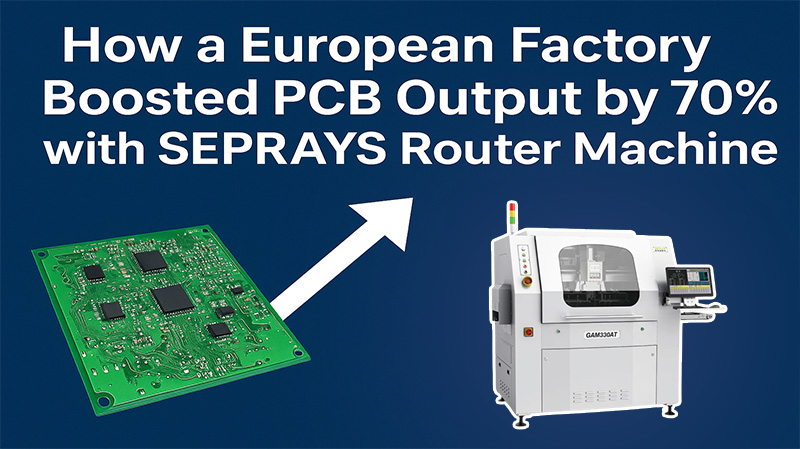
How a European Factory Boosted PCB Output by 70% with SEPRAYS Router Machine
PCB depaneling plays a crucial role in electronics manufacturing — it’s the final step between assembly and product readiness. Yet for many factories, it remains a bottleneck. Long cycle times, uneven cutting quality, and costly manual handling all limit productivity. A European electronics manufacturer recently faced these exact challenges. By adopting the SEPRAYS Router Machine, the company transformed its production line, achieving a 70% increase in PCB output — all while improving yield and reducing operating costs. 🔍 The Pain Points: Manual and Semi-Automatic Limitations Before upgrading, the factory relied on semi-automatic depaneling with operator-assisted routing. While sufficient for small batches, it caused several pain points when scaling up: As production volume grew — especially for automotive and communication boards — these inefficiencies became unsustainable. The company needed a scalable, high-speed, low-stress depaneling solution. ⚡ The Solution: SEPRAYS Router Machine Integration After detailed process analysis, SEPRAYS recommended the GAM330AT In-Line PCB Router Machine, designed for automated depaneling in SMT production lines. Key features that addressed the factory’s challenges included: Integration was completed in under two weeks, without disrupting existing SMT processes. 💡 The Results: 70% Output Growth and Cost Optimization After one quarter of operation, the results were measurable and

Struggling with Uneven V-Cuts? Here’s How a Smart V-Groove Cutting Machine Can Help
V-cuts are a critical step in PCB depaneling. If the process is inconsistent, it can lead to board damage, wasted materials, and delayed production. Struggling with uneven V-cuts is a common pain point in many SMT workshops, especially when scaling up production or handling complex PCB designs. Fortunately, a smart V-groove cutting machine can help address these challenges efficiently. 🔧 Understanding the Problem of Uneven V-Cuts Uneven V-cuts can result from multiple factors: When these issues occur, manufacturers face increased defect rates and higher scrap costs. For example, a PCB with high component density may crack if the V-cut is too deep in some areas, while insufficient depth can make depaneling difficult later in assembly. 💡 How Smart V-Groove Cutting Machines Improve Consistency Smart V-groove cutting machines combine precision mechanics with intelligent software. Here’s how they help: By integrating these features, smart machines help maintain high-quality V-cuts across large production batches without increasing labor costs. 📊 Cost Implications of V-Cut Defects Poor V-cuts not only affect product quality but also impact overall production costs: A smart V-groove cutting machine minimizes these costs by providing consistent and precise cutting, which reduces waste and extends tool life. In some cases, factories report

Manual vs Saw Blade Depaneling Machine: Which One Truly Saves Cost?
In the world of PCB depaneling, every manufacturer faces a common question: Should you continue with manual depaneling or switch to an automatic saw blade depaneling machine? While manual cutting may seem inexpensive at first glance, hidden costs often reveal a different story. Understanding these differences is crucial to optimizing production efficiency, minimizing board damage, and enhancing long-term profitability. 🔍 Understanding PCB Depaneling Methods PCB depaneling is the process of separating individual circuit boards from a larger panel after assembly. Two of the most widely used methods are: Both methods achieve the same purpose — but their efficiency, cost, and quality impact differ greatly. 🧰 Pain Points of Manual Depaneling Many small or medium-scale manufacturers rely on manual depaneling due to low initial investment. However, manual cutting introduces several hidden challenges: Over time, these issues contribute to higher rejection rates and reduced overall yield — factors that can outweigh the perceived cost savings of manual work. ⚡ Advantages of Saw Blade Depaneling Machines A saw blade depaneling machine offers a fully automated approach, using programmable motion control and precision blades to ensure clean, uniform cuts. The advantages include: In high-volume production environments, these advantages translate directly into better ROI and
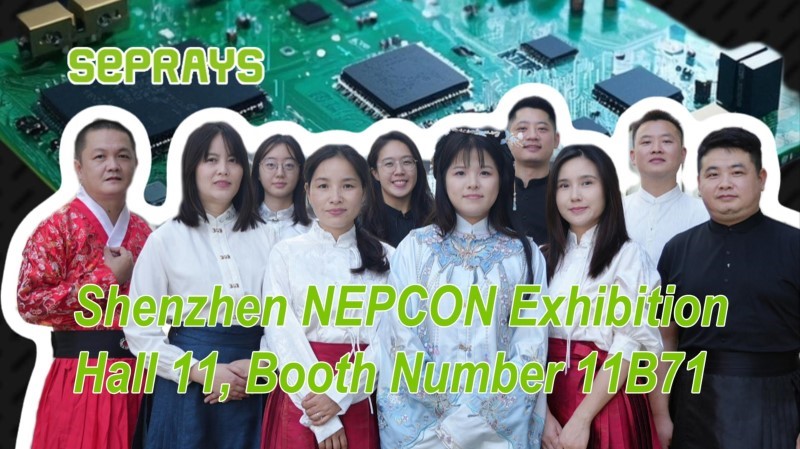
SEPRAYS at NEPCON Shenzhen 2025: Shaping the Future of Smart PCB Depaneling
🚀 SEPRAYS at NEPCON Shenzhen 2025! In SMT production, precision and efficiency define success — and that’s where SEPRAYS leads the way. With 30+ years of expertise in PCB/FPC depaneling, we deliver advanced router, laser, V-cut, and punching solutions, fully integrated with automated tray handling and intelligent manufacturing systems. From R&D to service, SEPRAYS empowers global manufacturers with high-speed, stress-free, and precise depaneling performance. 📅 Join us at NEPCON ASIA 2025📍 Shenzhen World Exhibition & Convention Center (Hall 11, Booth 11B71)🗓 October 28–30, 2025 💡 Discover how SEPRAYS is shaping the future of PCB depaneling and smart automation. 📩 For more information, please contact us: 📱 WhatsApp: +86 189 2926 6433 📧 E-mail: sales@seprays.com

Is Your PCB Depaneling Still Causing Cracks and Stress? Discover the Power of Laser Depaneling Machines
PCB depaneling remains a critical step in modern electronics manufacturing. PCB depaneling issues, such as cracks, delamination, or stress-induced warping, can disrupt production schedules, increase scrap rates, and drive up costs. Traditional depaneling methods—like mechanical routing or punching—often struggle with these challenges, especially when dealing with high-density boards or delicate components. This is where laser depaneling machines come in, offering precision, speed, and reliability. ✨ Understanding PCB Depaneling Challenges Depaneling is more than just cutting boards into manageable sizes. It involves maintaining component integrity and ensuring that electrical connections remain intact. Common challenges include: Many manufacturers underestimate the impact of these issues until they notice increased board failure rates during functional testing. By addressing these pain points upfront, companies can save significant time and resources. ⚙️ How Laser Depaneling Machines Solve Cracks and Stress Laser depaneling machines use focused laser beams to precisely cut PCBs without physical contact. This approach minimizes mechanical stress and heat damage. Key benefits include: By integrating laser depaneling, manufacturers can maintain high yield rates even on challenging boards, ensuring both quality and efficiency. 💡 Cost and ROI Analysis Many companies hesitate to adopt laser depaneling due to perceived upfront costs. However, a closer look at


