.png)
 Chinese
  English
  Spanish
  Japanese
  Korean
  Russian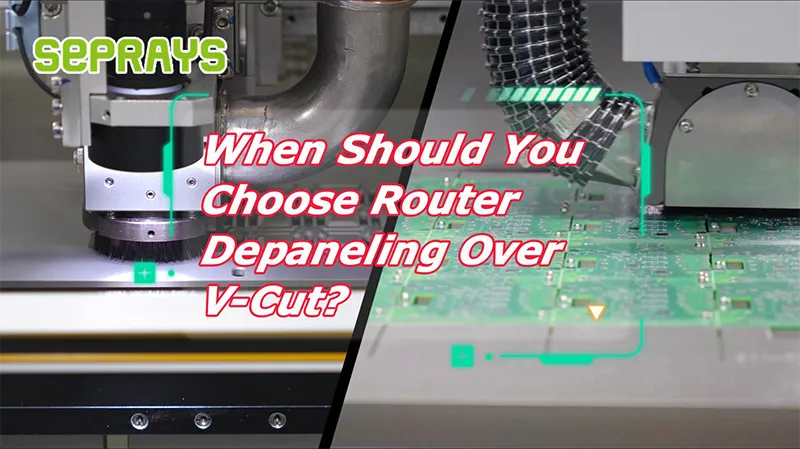
When Should You Choose Router Depaneling Over V-Cut?
Router depaneling over V-cut is a decision many PCB engineers face sooner or later. At first glance, V-cut looks simple and fast. It works well for many standard panels. But once board designs become more complex, or when component placement moves closer to the edge, router depaneling often becomes the safer choice. This is not about one process being universally better. In real manufacturing environments, the choice usually depends on PCB design constraints, component layout, and long-term yield stability. Let’s walk through the situations where router depaneling makes more sense. 🔍 Understanding the Two Processes Before deciding, it helps to understand how the two methods separate PCBs. V-cut depaneling Router depaneling Both processes are common in SMT production. The difference lies mainly in design freedom and mechanical stress control. ⚠️ The Hidden Stress Problem The biggest concern with V-cut depaneling is the breaking force used to separate boards. When panels are snapped apart: For boards where components are placed very close to the edge, this stress can lead to issues such as: Router depaneling avoids this snapping force because the board is cut rather than broken apart. 📏 When PCB Layout Limits V-Cut PCB layout often determines whether V-cut is
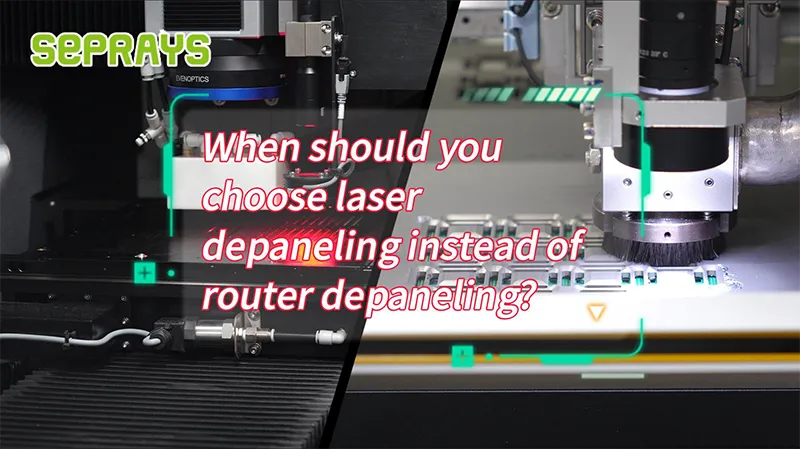
When Should You Choose Laser Depaneling Instead of Router Depaneling?
Laser depaneling instead of router depaneling is a question many engineers ask when PCB designs start getting smaller and more complex. In early production stages, router cutting may work well. But as component density increases and reliability requirements tighten, manufacturers often evaluate laser solutions. This article shares practical insights from real production environments—looking at design limitations, cost considerations, and real-world manufacturing challenges. 🔍 Understanding the Two Depaneling Methods Before deciding which one to choose, it’s important to understand how the two processes differ. Router depaneling separates PCBs using a high-speed rotating cutting bit. It physically mills the board along a programmed path. Laser depaneling uses a focused laser beam to cut the PCB without mechanical contact. Both technologies are widely used across the electronics manufacturing industry. The difference lies mainly in mechanical stress, cutting precision, and flexibility for complex designs. ⚠️ The Hidden Problem — Mechanical Stress One of the main reasons manufacturers move toward laser depaneling is the mechanical stress generated during router cutting. When the router bit contacts the PCB, it produces vibration and cutting force. For traditional boards with enough edge clearance, this is usually acceptable. However, modern PCBs often place components extremely close to the board
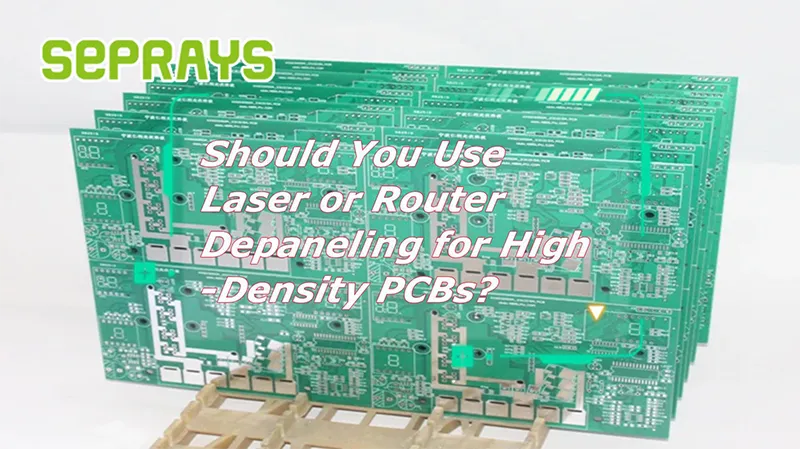
Should You Use Laser or Router Depaneling for High-Density PCBs?
Laser or router depaneling for high-density PCBs? This question appears frequently when engineers design compact boards with tight component spacing. As PCBs become smaller and more complex, choosing the right depaneling method directly affects product reliability, yield rate, and long-term manufacturing cost. Many teams initially choose based on equipment price alone. In practice, the real decision often comes down to board structure, component distance to edge, stress tolerance, and production scale. 🔍 The Core Question Behind Depaneling Choice High-density PCBs usually place components close to the board edge. This makes mechanical stress during separation a critical concern. Two common solutions exist: Both methods are widely used in electronics manufacturing. The key question is not which is better overall, but which fits your specific PCB design. ⚙️ Router Depaneling — Reliable and Cost-Effective Router depaneling has been a standard process in the PCB industry for years. It works well for many production environments. Typical advantages include: However, router cutting introduces mechanical vibration and cutting force. When components sit very close to the PCB edge, this stress can sometimes lead to: For boards with larger edge clearance, router depaneling remains an efficient and practical option. ⚡ Laser Depaneling — Precision for Sensitive

Inline or Offline Laser PCB Depaneling — Which to Choose?
This is a common question when manufacturers start using laser depaneling seriously, not just as a lab tool. Both options work. The real issue is where they fit best in your production flow. This article shares practical experience from real SMT lines, not ideal diagrams. 🔍 What “Inline” and “Offline” Really Mean Before comparing, it helps to be clear. Inline laser depanelingThe depaneling system is connected directly to the SMT line. Panels move automatically from upstream processes and continue downstream without manual handling. Offline laser depanelingPanels are loaded manually or via a standalone loader. The machine works independently of the SMT line. The laser technology may be similar. The production logic is not. ⚠️ The Real Pain Points Behind This Decision Most teams don’t ask this question without pressure.Common triggers include: Choosing inline or offline is usually about risk control, not just automation level. 🧠 When Inline Laser Depaneling Makes Sense Typical inline use cases: Inline systems reduce: They also make depaneling part of the controlled production chain, rather than a side process. 💰 Inline Systems: The Cost Reality Inline laser depaneling requires: But it saves on: For stable, long-running projects, the cost per board often drops over time. 🧩
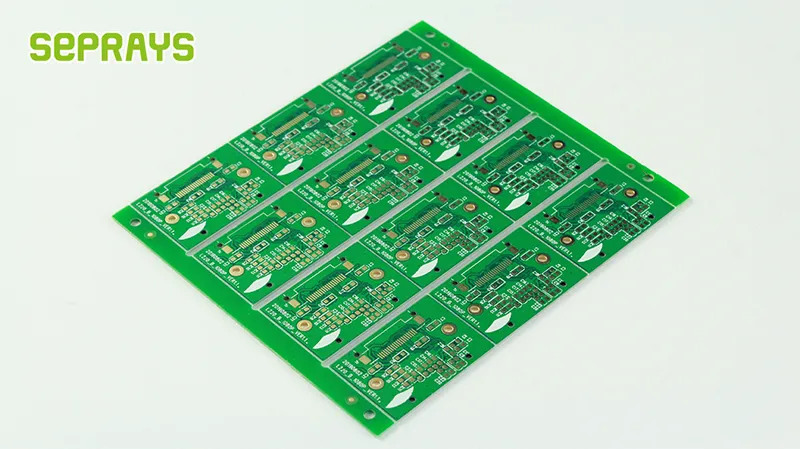
When Is V-Cut PCB Depaneling Not Recommended?
V-cut depaneling is fast, simple, and cost-effective—but it is not a universal solution. In real SMT production, many quality issues appear not because V-cut is “bad,” but because it is used in the wrong situations. This article focuses on where V-cut starts to fail, based on production experience rather than theory. ⚠️ The Core Limitation of V-Cut Depaneling V-cut depaneling works by applying mechanical force along a pre-scored groove.That means: When boards or components cannot tolerate that stress, V-cut becomes risky. 🧩 High-Density PCBA: A Common Problem Area V-cut is not recommended when components are placed close to the board edge. Typical risk scenarios: In these cases, depaneling stress can cause: These issues often appear weeks later, not during depaneling. 📉 Thin or Flexible PCBs Thin PCBs (≤1.0 mm) and flexible or rigid-flex boards are poor candidates for V-cut. Why? Even if separation “looks fine,” internal damage may already exist. 🔍 Irregular Board Shapes and Internal Cutouts V-cut requires straight, continuous lines. It is not suitable for: Trying to adapt V-cut to these designs usually leads to: At that point, the speed advantage disappears. 💥 Applications with High Reliability Requirements V-cut depaneling is often avoided in: In these industries, latent
Can PCB Milling Depaneling Be Automated?
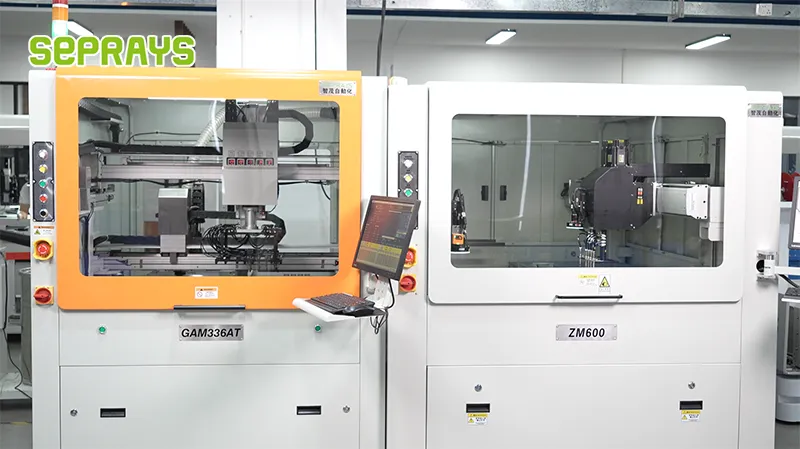
This question comes up frequently when manufacturers move from manual or semi-automatic separation toward higher throughput and more stable quality. The short answer is yes—PCB milling depaneling can be automated. The more useful answer is how far automation really goes, and when it actually pays off. 🤖 What “Automation” Means in PCB Milling Depaneling Automation does not mean just adding a conveyor. In real production, automated PCB milling depaneling usually includes: The goal is not speed alone, but repeatability and reduced human dependency. 🧩 Why Manual Milling Still Exists Many factories still rely on manual or semi-automatic milling depaneling because: Manual systems offer flexibility, but they also introduce operator-to-operator variation, which becomes a bottleneck as volumes rise. ⚠️ Pain Points That Push Teams Toward Automation Engineers usually start considering automation when they face: Automation is often driven by stability needs, not just efficiency. ⚙️ What an Automated PCB Milling System Actually Solves Key improvements automation brings: In milling depaneling, process control matters as much as machine precision. 💰 Cost Analysis: Automation vs. Manual Operation Automation increases: But it reduces: For medium-to-high volume production, many plants find that the total cost per unit drops after automation, even if the upfront cost


