.png)
 English
  Spanish
  Japanese
  Korean
  Russian
  Chinese
This question comes up frequently as electronics move toward higher density, thinner materials, and stricter reliability requirements. Laser depaneling is often associated with precision and flexibility—but can it really keep up with volume manufacturing?
The short answer: yes, but only under the right conditions. This article looks at where laser depaneling works well in mass production, where it struggles, and how manufacturers are using it today.
⚡ Why Manufacturers Are Even Considering Laser Depaneling
Laser PCB depaneling wasn’t originally developed for high-volume lines. It gained traction because traditional mechanical methods introduced stress, vibration, and design limitations.
Today, the drivers are clear:
- Smaller and denser PCBAs
- More fragile components (MLCCs, fine-pitch ICs)
- Tighter edge tolerances
- Higher reliability expectations
For many engineers, the question isn’t about precision anymore—it’s about throughput and cost control.
🧠 What Laser Depaneling Actually Does Differently
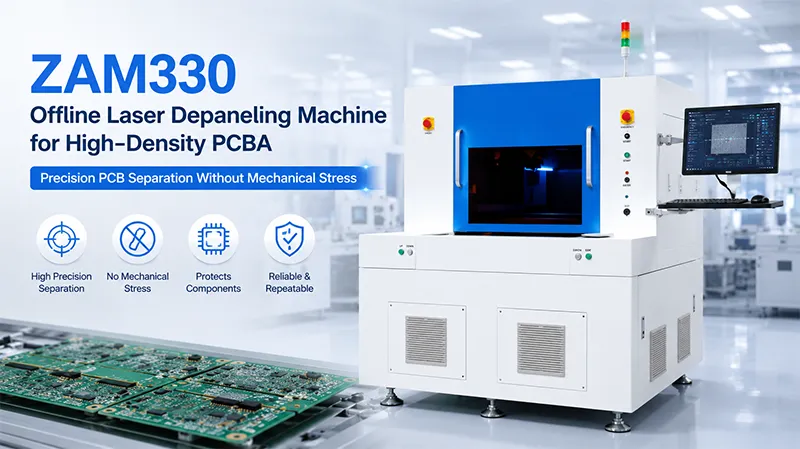
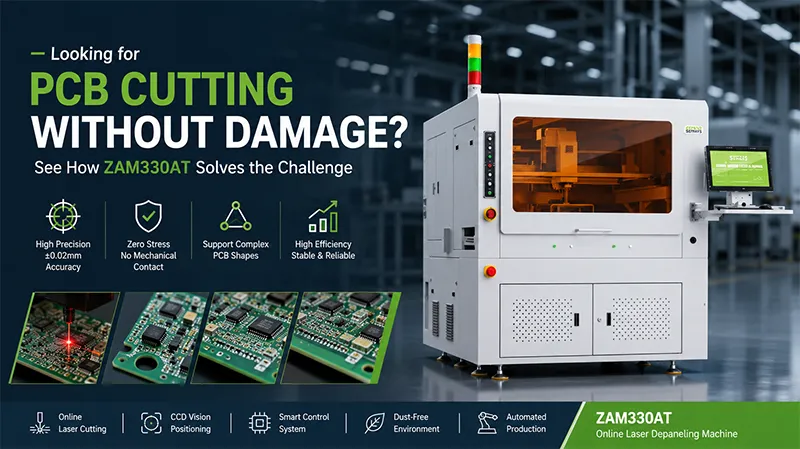
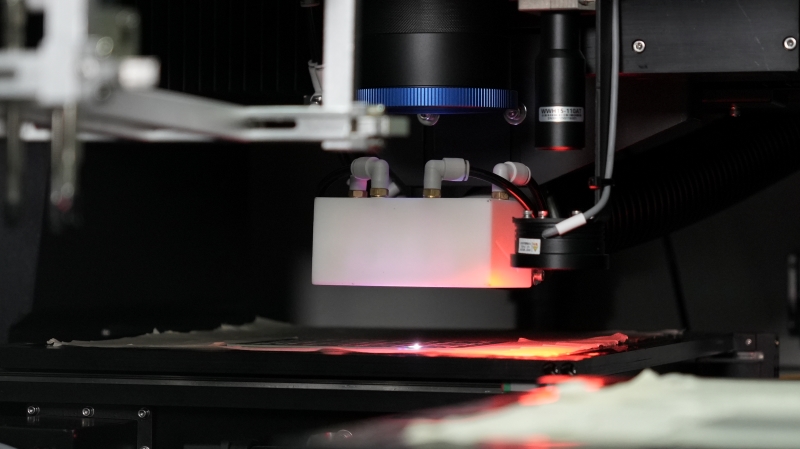
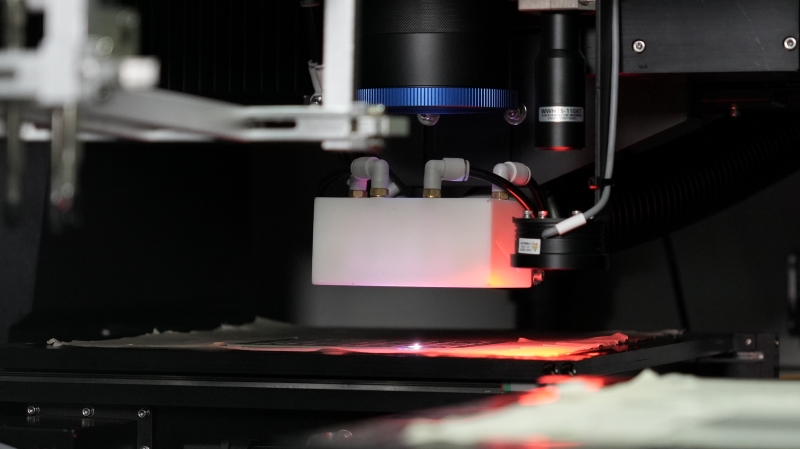
Unlike mechanical cutting, laser depaneling removes material using focused energy rather than force.
Key technical advantages include:
- Repeatability < 2 μm
- No mechanical stress or vibration
- Ultra-narrow kerf width (< 25 μm), increasing usable board area
- Free-form cutting without design constraints
- No blades, tools, or molds
- Clean process with no burrs or debris
- Fast scanning speeds on optimized paths
From a quality standpoint, this eliminates many root causes of latent failures seen in mechanical depaneling.
⚠️ Common Pain Points in Mass Production
Despite its advantages, laser depaneling isn’t a universal solution.
Manufacturers often worry about:
- Cycle time per panel
- Initial equipment investment
- Material response to laser energy
- Fume extraction and thermal management
In early evaluations, some lines reject laser depaneling because they compare single-pass speed, rather than overall line efficiency.
This is where context matters.
💰 Cost Analysis: Looking Beyond Cycle Time
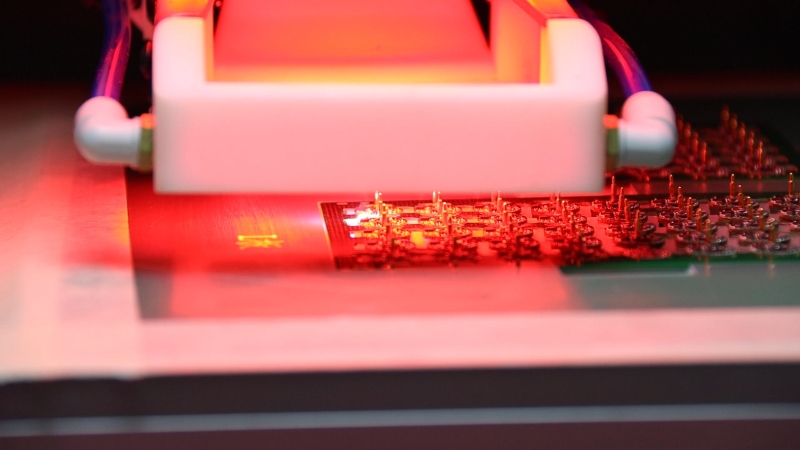
Laser depaneling equipment typically costs more upfront than saw or router systems. However, cost-per-unit changes when you factor in:
- Zero tool wear or blade replacement
- Reduced scrap from stress-related defects
- Higher panel utilization due to narrow kerf
- Lower rework and reliability failures
For high-value or high-density products, these savings often offset the initial investment within production cycles.
In mass production, yield stability often matters more than raw speed.
🧪 A Production Case from Seprays Collaboration
In one wearable electronics project supported by Seprays, the customer initially relied on router depaneling for volume production.
As component density increased, stress-related failures appeared during drop testing. Switching fully to laser depaneling seemed risky due to throughput concerns.
Instead, the line was reconfigured:
- Optimized laser paths for parallel cutting
- Panelized designs adjusted for scanning efficiency
- Inline laser depaneling synchronized with SMT output
The result was stable mass production with reduced defect rates and no tool-related downtime.
The takeaway: laser depaneling scaled when the process was engineered—not simply swapped in.
🔧 When Laser Depaneling Works Best at Scale
Laser depaneling is particularly effective in mass production when:
- PCBAs are thin or flexible
- Components are close to the board edges
- Reliability testing is strict
- Design changes are frequent
- Mechanical stress is unacceptable
It is already widely used in:
- Consumer electronics
- Medical devices
- Automotive modules
- Wearables and FPC-based products
🤔 Does Laser Depaneling Truly Meet Mass Production Demands?
Yes—but not as a drop-in replacement for every line.
Laser depaneling meets mass production demands when manufacturers value:
- Long-term yield stability
- Design freedom
- Reduced process variability
- Lower hidden quality costs
When evaluated only by cutting speed, it can seem slower. When evaluated by total manufacturing performance, it often proves competitive or superior.
⭐ Why Choose Seprays Group?
Seprays Group works with manufacturers to evaluate whether laser depaneling truly fits their production goals, rather than promoting one method for all cases. With experience across laser, router, and saw blade depaneling systems, Seprays focuses on practical, production-ready solutions.
If you’re assessing whether laser PCB depaneling can meet your mass production requirements, please feel free to contact us.
WhatsApp: +8618929266433
E-mail: sales@seprays.com