.png)
 English
  Spanish
  Japanese
  Korean
  Russian
  Chinese
What Problems Can Saw Blade PCB Depaneling Solve in SMT Manufacturing? It’s a question that often comes up when production lines start pushing for higher output but run into bottlenecks at the depaneling stage. In real factory environments, the issue is rarely about technology alone—it’s about stability, cost, and keeping the line moving.
🔍 The Hidden Bottleneck in SMT Lines
In SMT manufacturing, most attention goes to placement accuracy and reflow quality. But once boards come off the line, depaneling becomes the next critical step.
Common issues include:
- Slow separation speed is affecting throughput
- Inconsistent cut quality
- Operator dependency
- Production interruptions
Saw blade depaneling addresses these problems with a straightforward approach.
It keeps things predictable.
⚙️ Solving Throughput Pressure
High-volume SMT lines don’t wait.
If depaneling can’t keep up, everything backs up.
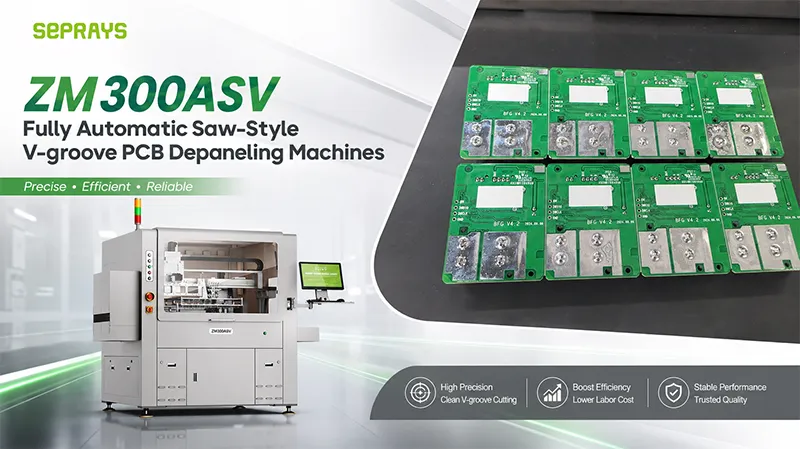
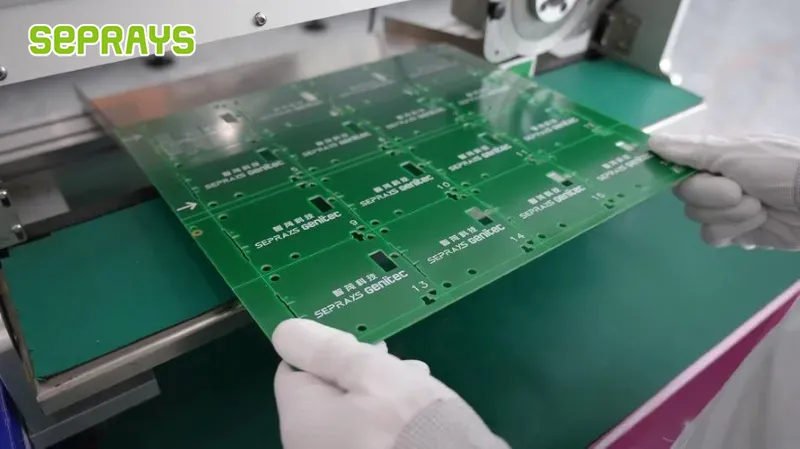
Saw blade PCB depaneling is designed for speed:
- Continuous cutting along straight lines
- Minimal setup time
- Easy integration into inline systems
For standard V-groove boards, it delivers stable, high-speed separation without complex adjustments.
This is why many SMT factories rely on it as a baseline solution.
💰 Reducing Cost Per Board
Cost pressure is constant.
Saw blade PCB depaneling helps reduce expenses in several ways:
- Lower equipment investment compared to laser systems
- Simple operation, fewer skilled operators required
- Long tool life with proper maintenance
- High output reduces the cost per unit
Short cycles.
Lower labor input.
Predictable maintenance.
All of these contribute to better cost control in SMT production.
🧩 Addressing Consistency and Yield Issues
Yield loss is often underestimated.
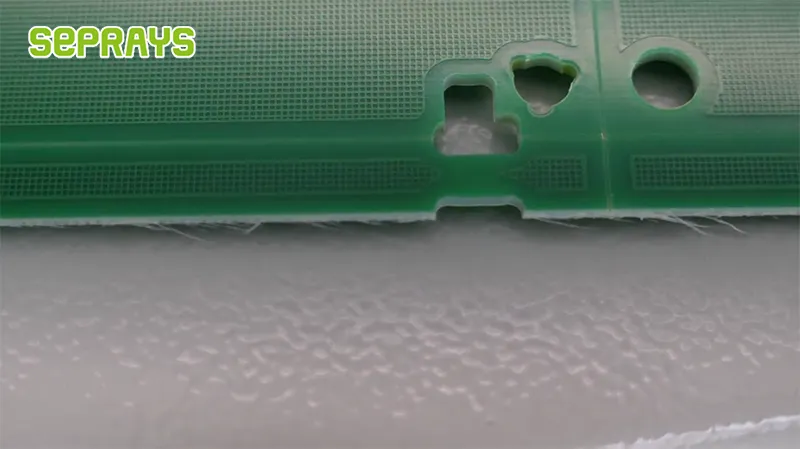
Small inconsistencies in depaneling can lead to:
- Micro-cracks on PCB edges
- Stress on solder joints
- Cosmetic defects
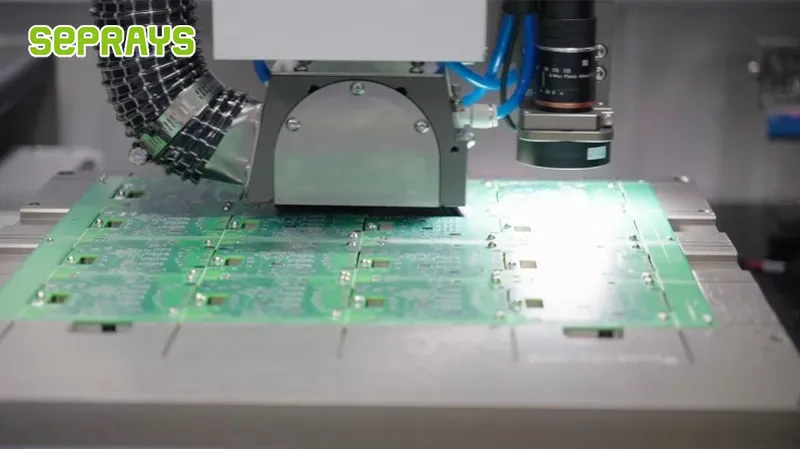
Saw blade depaneling improves consistency when parameters are controlled:
- Stable spindle speed
- Controlled feed rate
- Proper blade selection
It may not eliminate mechanical stress, but it keeps it within acceptable limits for most standard designs.
🚧 Common Pain Points and How They’re Managed
No method is perfect.
Engineers often raise concerns such as:
- Dust generation during cutting
- Blade wear over time
- Limited flexibility for complex shapes
These are real challenges.
But they are manageable:
- Dust extraction systems reduce contamination
- Scheduled blade replacement maintains quality
- Process matching ensures the right application
In practice, success comes from optimization—not avoidance.
📊 Case Insight from an SMT Factory
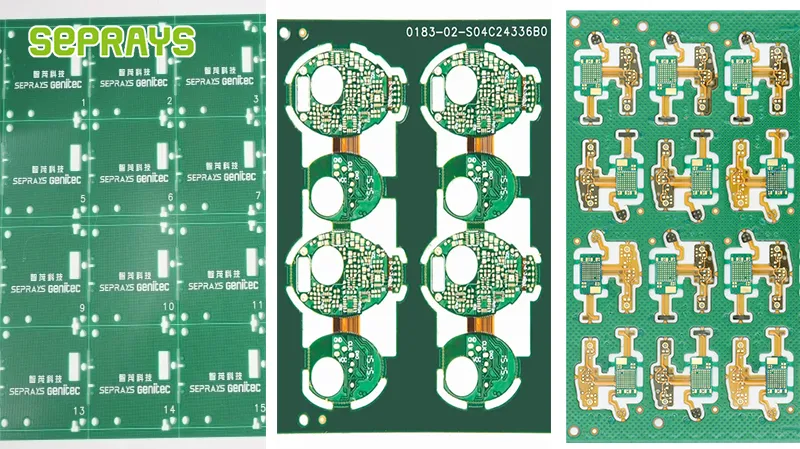
A mid-sized SMT manufacturer producing LED driver boards faced frequent delays after reflow.
Their issues:
- Manual depaneling slowed output
- Inconsistent quality caused rework
- Labor costs were rising
They evaluated multiple solutions, including laser systems.
After analysis, they chose a saw blade depaneling solution from Seprays.
What changed?
- Output increased by over 20%
- Operator dependency dropped significantly
- Defect rates stabilized
The key was not switching to the most advanced method, but choosing the most suitable one for their board design and volume.
🔄 When Saw Blade Depaneling Works Best
It’s not for every scenario.
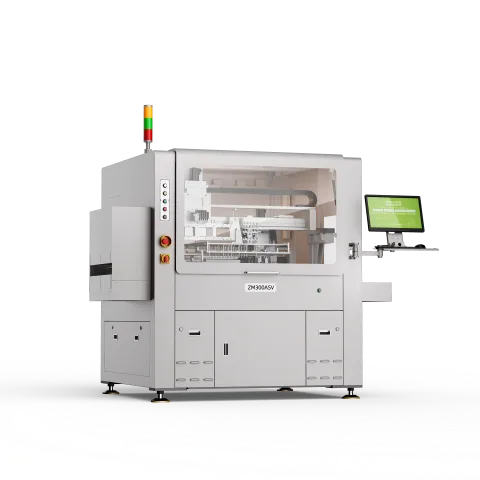
Saw blade PCB depaneling performs best when:
- Boards have straight-line V-grooves
- Component placement near edges is minimal
- Production volume is high
- Cost sensitivity is strong
If your boards are complex or highly sensitive, other methods may be better.
But for standard SMT production, it remains highly effective.
🛠️ Practical Tips from the Shop Floor
From day-to-day operations, a few lessons stand out:
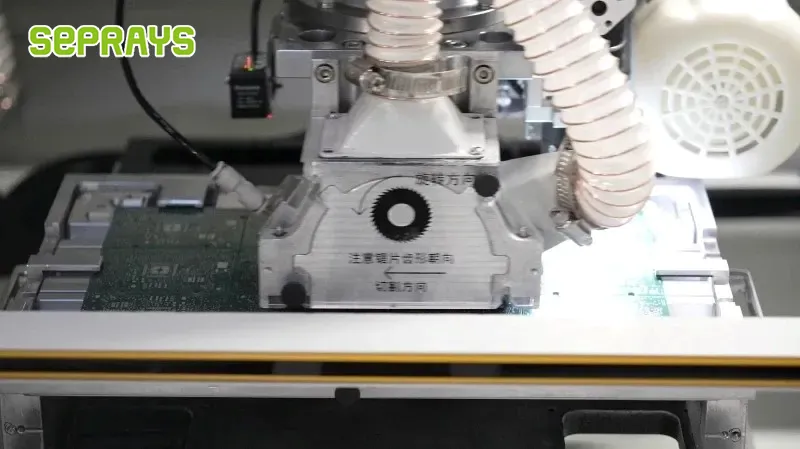
- Keep blade condition under regular inspection
- Match cutting parameters to PCB thickness
- Train operators to identify early defects
- Maintain dust control systems
Simple actions.
Real impact.
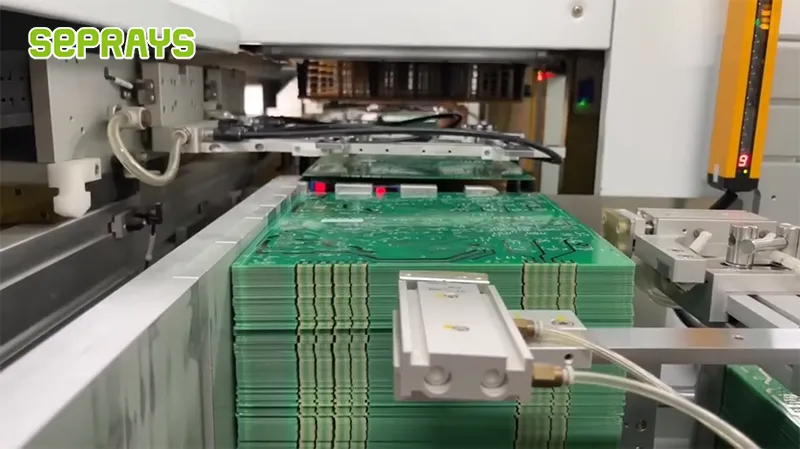
🚀 Why Choose Seprays Group?
Seprays Group has built its expertise around real manufacturing challenges, especially in high-volume PCB and FPC depaneling environments.
Seprays Group has been dedicated to PCB/FPC depaneling technology, providing a full range of solutions — including milling cutter depanelers, laser depanelers, V-groove depanelers, punching depanelers, and automated handling systems.
Their equipment is trusted by leading global manufacturers such as Foxconn, Flextronics, State Grid, Luxshare, Compal, Wistron, China Electronics, Quanta, CRRC, China Aerospace, OPPO, ZTE, and Bosch. These partnerships reflect proven performance across diverse industries and production scales worldwide.
Whether the requirement is speed, cost efficiency, or process stability, Seprays focuses on matching the right solution to the actual production need.
If you are evaluating depaneling options, feel free to contact us for practical advice and solutions.
WhatsApp: +8618929266433
E-mail: sales@seprays.com
❓ FAQ
1. What types of PCBs are suitable for saw blade depaneling?
Boards with straight V-groove lines and low edge component density are ideal.
2. Does it affect SMT solder joints?
It can introduce mechanical stress, but proper parameter control minimizes the impact.
3. How does it compare to laser depaneling?
It is more cost-effective and faster for standard designs, but less flexible for complex shapes.
4. Is dust a major issue in SMT environments?
It can be, but modern systems include dust extraction to maintain cleanliness.
5. Can it be used in fully automated SMT lines?
Yes. Inline saw blade depaneling systems are widely used for high-volume production.