.png)
 English
  Spanish
  Japanese
  Korean
  Russian
  Chinese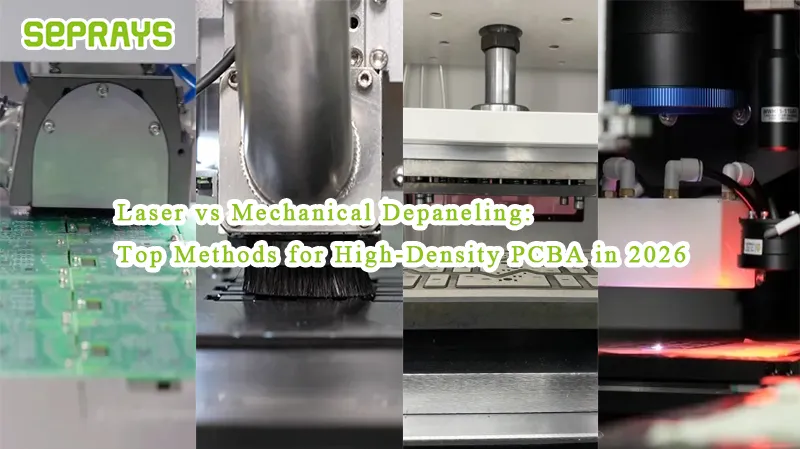
Laser vs mechanical depaneling has become a key discussion among PCB assembly engineers in 2026. With PCBs getting denser and components smaller, selecting the right depaneling method directly affects yield, cost, and reliability. Understanding the trade-offs between laser and mechanical approaches can save manufacturers from costly defects.
🔹 Why Depaneling Choice Matters
Depaneling is not just cutting boards.
It affects:
- Component integrity
- Solder joint reliability
- Production throughput
High-density PCBA, especially for EVs, medical devices, and advanced consumer electronics, demands precise handling. Mistakes here can ripple downstream.
⚡ Mechanical Depaneling — Saw, Router, and Punch
Mechanical depaneling remains widely used due to:
- Low initial equipment cost
- Familiarity for operators
- High throughput for simple boards
Common Issues:
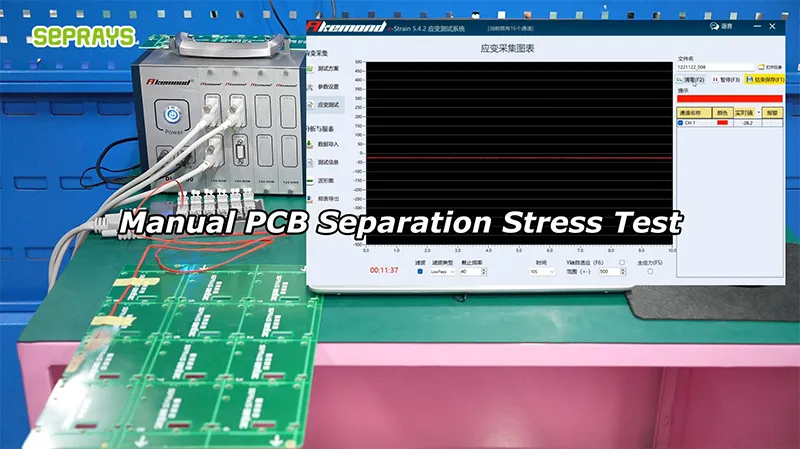
- Stress-induced micro-cracks
- Edge chipping and burrs
- Component proximity restrictions
Optimization Tips:
- Use low-stress routing for sensitive areas
- Maintain blade sharpness
- Implement consistent fixtures
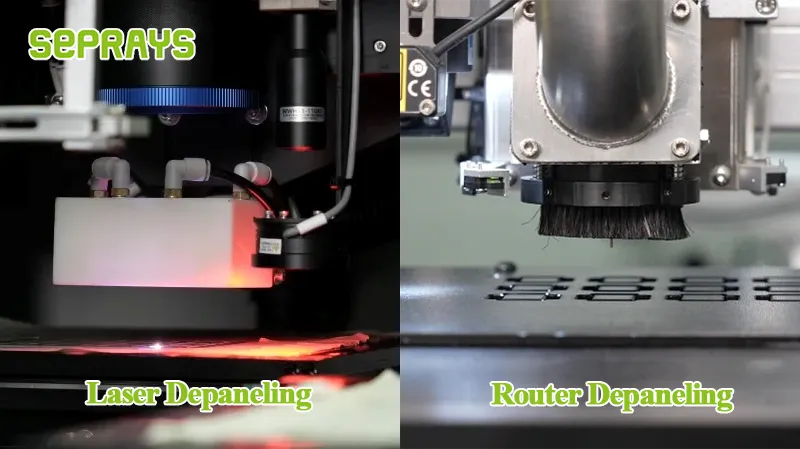
Mechanical methods work well for standard PCBs but struggle with fragile or flexible substrates.

🔬 Laser Depaneling — Precision without Contact
Laser depaneling excels where mechanical methods create risk.
Advantages:
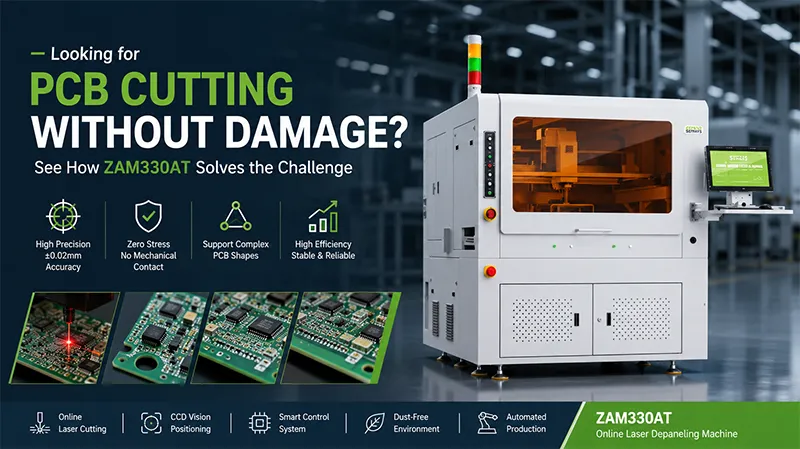
- Non-contact process reduces mechanical stress
- Can cut complex geometries
- Minimal dust generation
Considerations:
- Higher initial cost
- Requires proper fume extraction
- Slower throughput on thick boards
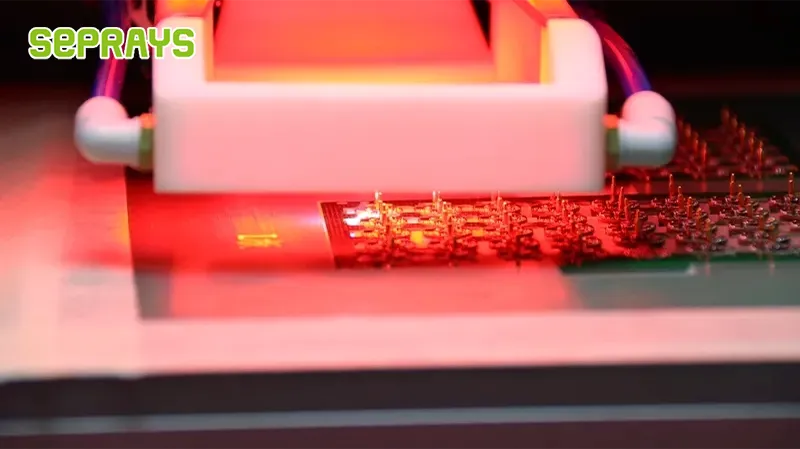
In real-world cases, laser depaneling has saved manufacturers from excessive rework in high-density assemblies.
🧩 Case Study — Seprays in Action
A high-volume consumer electronics manufacturer faced micro-cracks on high-density boards.
Challenges:
- Components were too close to the cutting lines
- Mechanical saw blades caused frequent defects
Seprays Solution:
- Introduced laser depaneling for critical areas
- Retained routing for non-sensitive sections
- Standardized fixture setup and parameters
Results:
- 40% reduction in defects
- Yield improved across batches
- The cost of scrap and rework decreased
Seprays’ hybrid approach balances speed and precision.
📊 Comparing Laser vs Mechanical Depaneling
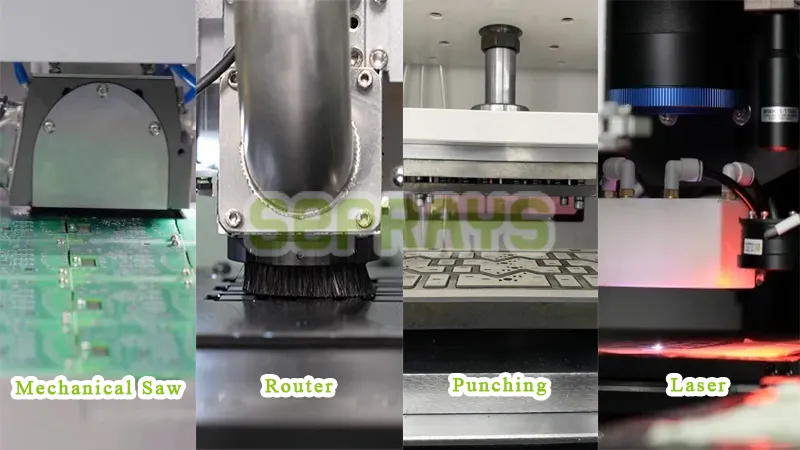
| Method | Pros | Cons | Best Use Case |
|---|---|---|---|
| Mechanical Saw | High speed, low cost | Stress, chipping | Standard PCBs |
| Router | Flexible, controllable stress | Tool wear, slower | Medium-density, fragile boards |
| Punching | Simple, fast | Limited to straight cuts | Simple, large boards |
| Laser | Contact-free, precise | Higher capex, slower | High-density, flexible, medical |
This table shows how method selection aligns with design complexity and production priorities.
💰 Cost Analysis and Considerations
Many manufacturers hesitate about lasers due to the upfront cost.
But the real cost includes:
- Rework and scrap reduction
- Consistent yield
- Reduced inspection and labor
Mechanical methods may save on equipment but add hidden costs from defects and downtime.
🛠️ Practical Tips for High-Density Depaneling
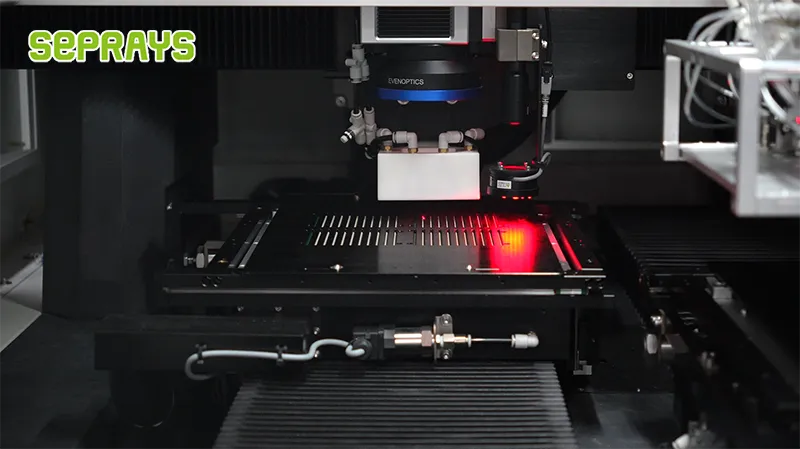
- Analyze PCB design for edge clearance
- Select hybrid processes for mixed-density boards
- Monitor tool wear and process parameters
- Consider automation for inline SMT lines
- Evaluate long-term total cost, not just capex
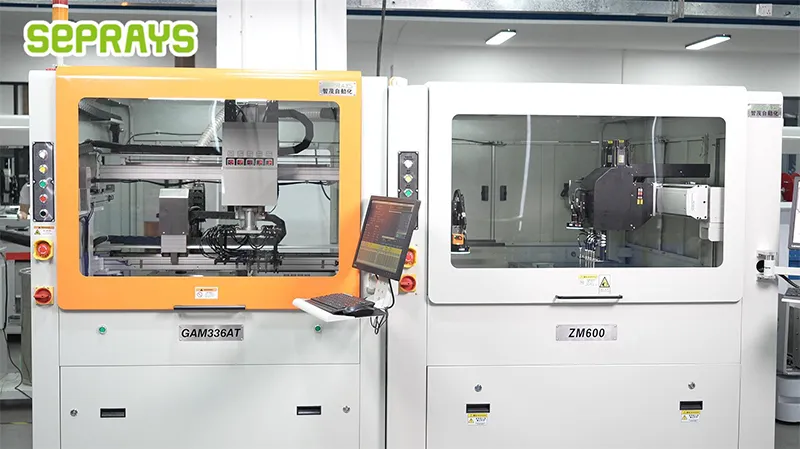
🚀 Why Choose Seprays Group?
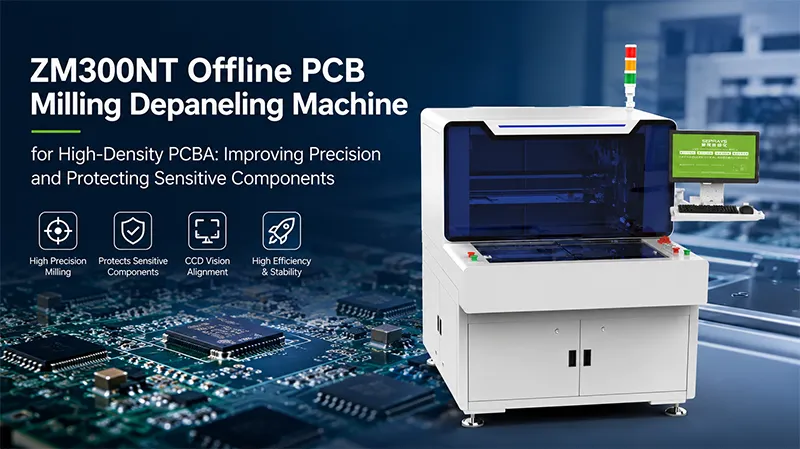
Seprays Group has been dedicated to PCB/FPC depaneling technology, providing a full range of solutions—milling-cutter depanelers, laser depanelers, V-groove depanelers, punching depanelers, and automated handling systems.
Their equipment is trusted by leading global manufacturers, including Foxconn, Flextronics, State Grid, Luxshare, Compal, Wistron, China Electronics, Quanta, CRRC, China Aerospace, OPPO, ZTE, and Bosch, serving factories across China and worldwide.
With Seprays, manufacturers get not just equipment but practical expertise in hybrid depaneling solutions, reducing defects, improving yield, and achieving reliable high-density production.
If you are facing challenges in high-density PCB depaneling, contact Seprays for consultation and solutions.
WhatsApp: +8618929266433
E-mail: sales@seprays.com
❓ FAQ
1. Which is better for high-density PCBA, laser or mechanical depaneling?
Laser is ideal for fragile and dense boards; mechanical methods suit simple, robust PCBs.
2. Can hybrid depaneling improve yield?
Yes. Using a laser for sensitive areas and a mechanical for standard sections balances cost and precision.
3. Is laser depaneling more expensive?
Initial cost is higher, but total production cost often decreases due to lower scrap and rework.
4. How do I prevent component damage during mechanical depaneling?
Optimize feed rates, tool sharpness, and fixture stability; consider low-stress routing.
5. Does automation benefit depaneling on SMT lines?
Yes. Automation ensures consistent parameters, reduces operator error, and improves yield.