.png)
 Spanish
  English
  Japanese
  Korean
  Russian
  Chinese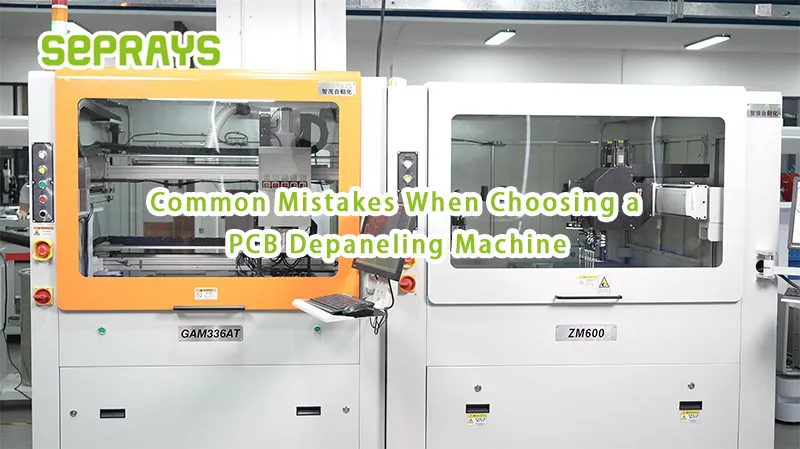
Common mistakes when choosing a PCB depaneling machine often don’t show up during evaluation. They appear later—on the production floor, during peak orders, or worse, in product failures.
At that point, switching is expensive.
And sometimes too late.
🔍 Why These Mistakes Keep Happening
Most decisions are made under pressure:
- Tight budgets
- Urgent delivery timelines
- Limited testing time
So teams focus on what is easy to compare:
- Price
- Velocidad
- Basic specs
But real performance depends on something else.
Application fit.
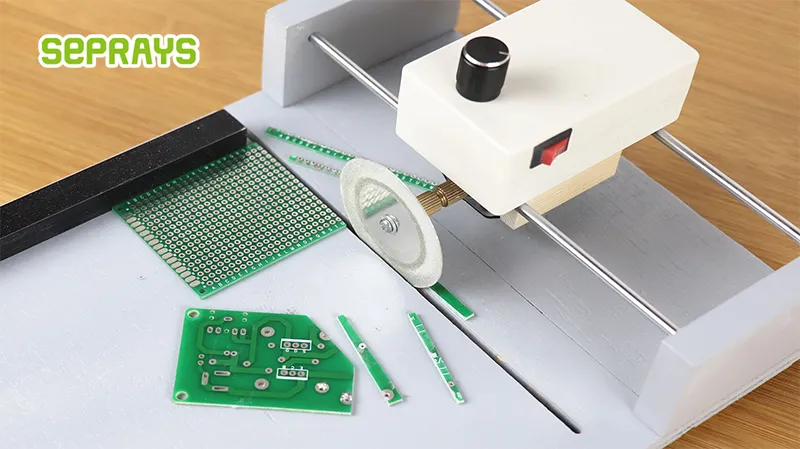
⚙️ Mistake #1 — Choosing Based on Price Alone
This is the most common—and most costly.
Low-cost machines may seem attractive, but often lead to:
- Higher defect rates
- More maintenance downtime
- Limited process flexibility
Counterintuitive insight:
The cheapest machine can become the most expensive one over time.
Because cost is not just the purchase price.
It’s the total cost of ownership.

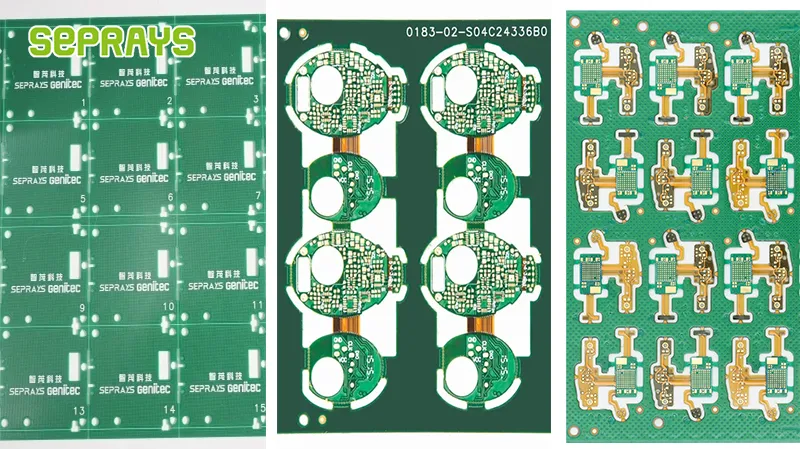
⚡ Mistake #2 — Ignoring PCB Design Complexity
Not all PCBs are equal.
Factors that matter:
- Component proximity to edges
- Board thickness and material
- Shape complexity
A machine that works for simple boards may fail on:
- High-density PCBs
- Flexible circuits
- Rigid-flex designs
Choosing without considering these leads to rework.
🧩 Mistake #3 — Overlooking Stress Impact
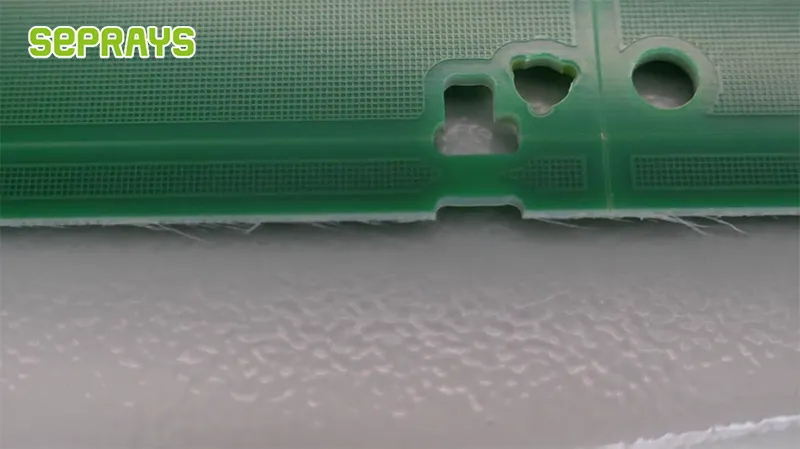
Depaneling is not just cutting.
It introduces mechanical or thermal stress.
This can cause:
- Micro-cracks
- Solder joint damage
- Latent failures
Especially critical in:
- Automotive electronics
- Medical devices
Many factories realize this only after reliability testing fails.
📉 Mistake #4 — Focusing on Speed Over Stability
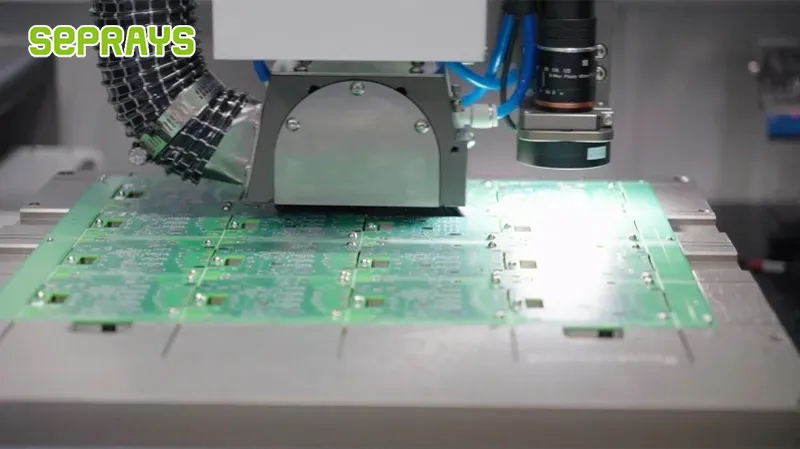
Fast cycle time looks impressive.
But in real production:
- Inconsistent output slows the line
- Rework cancels speed advantage
- Downtime reduces overall efficiency
Reality check:
Stable production is often faster than fast machines.
🔄 Mistake #5 — Ignoring Future Production Needs
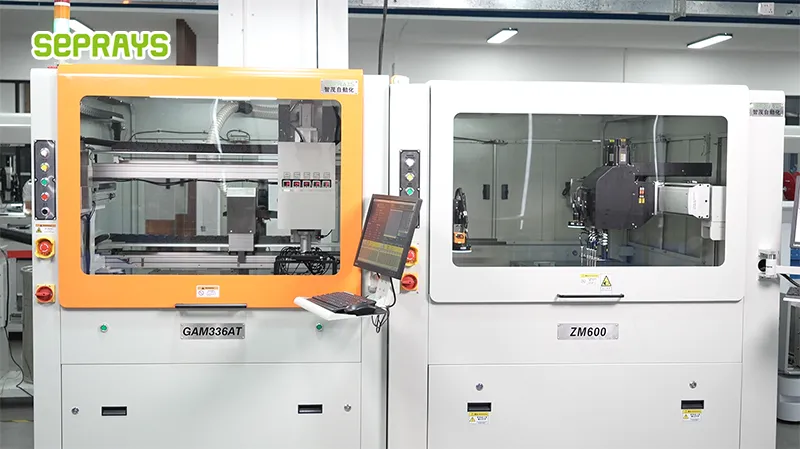
Production evolves:
- More product variants
- Smaller batch sizes
- Higher automation requirements
A machine that fits today may not fit tomorrow.
Common issues:
- No inline integration capability
- Difficult program switching
- Limited flexibility
Planning only for current needs creates future bottlenecks.
🛠️ Mistake #6 — Underestimating After-Sales Support
Even the best machines need support.
Without it:
- Small issues become major downtime
- Spare parts delays stop production
- Debugging takes too long
Support quality is rarely visible during purchase.
But critical after installation.
📊 Quick Comparison — Good vs Risky Decision
| Factor | Risky Choice | Smart Choice |
|---|---|---|
| Price Focus | Lowest cost | Total cost of ownership |
| PCB Compatibility | General assumption | Application-specific |
| Stress Control | Not evaluated | Tested and validated |
| Velocidad | Maximum | Balanced with stability |
| Scalability | Ignored | Future-ready |
| Support | Not verified | Proven response capability |
💥 Real Factory Feedback
Engineers often say:
- “We didn’t test with real boards.”
- “The machine works, but the yield is unstable.”
- “Switching products is too slow.”
- “Support response is too late.”
These are not random issues.
They come from early decision mistakes.
🧪 Case Example — Avoiding Costly Rework
A factory producing communication PCBs selected a depaneling machine based mainly on price.
Initial results looked fine.
But soon:
- Edge quality became inconsistent
- Component stress caused failures
- Rework increased
After working with Seprays, they:
- Re-evaluated PCB characteristics
- Switched to a more suitable depaneling method
- Optimized cutting parameters
Results:
- Improved product quality
- Reduced defect rate
- Stabilized production
The key lesson:
Correct selection matters more than fast selection.
💡 Practical Tips Before You Decide
- Test with real PCB samples
- Evaluate stress impact, not just cutting quality
- Consider future production changes
- Verify supplier support capability
- Look beyond specifications
These steps take time.
But save much more later.
🚀 Final Insight — There Is No Universal Best Machine
Each method has its place:
- Router → flexible, widely used
- Laser → high precision, low stress
- Saw → high-speed, simple boards
- V-groove → low-cost, limited use
The best choice depends on your application.
Not on market trends.
🚀 Why Choose Seprays Group?
Seprays Group focuses on helping manufacturers avoid these common mistakes by providing application-driven depaneling solutions rather than one-size-fits-all equipment.
Seprays Group has been dedicated to PCB/FPC depaneling technology, providing a full range of solutions—milling-cutter depanelers, laser depanelers, V-groove depanelers, punching depanelers, and automated handling systems. Our equipment is trusted by leading manufacturers, including Foxconn, Flextronics, State Grid, Luxshare, Compal, Wistron, China Electronics, Quanta, CRRC, China Aerospace, OPPO, ZTE, and Bosch, and is used in factories across China and worldwide.
With strong industry experience, Seprays supports customers in selecting the right process, optimizing performance, and ensuring long-term production stability.
If you want to avoid costly mistakes in PCB depaneling machine selection, feel free to contact us.
WhatsApp: +8618929266433
Correo electrónico: sales@seprays.com
❓ FAQ
1. What is the biggest mistake when choosing a depaneling machine?
Focusing only on price instead of total cost and application fit.
2. Why is stress important in depaneling?
Because it can cause hidden damage that affects long-term reliability.
3. Should I prioritize speed?
Not always. Stability and consistency are often more important.
4. How can I verify machine suitability?
By testing with real PCB samples and evaluating actual production conditions.
5. Is after-sales support really critical?
Yes. Fast and reliable support reduces downtime and protects production efficiency.