.png)
 Spanish
  English
  Japanese
  Korean
  Russian
  Chinese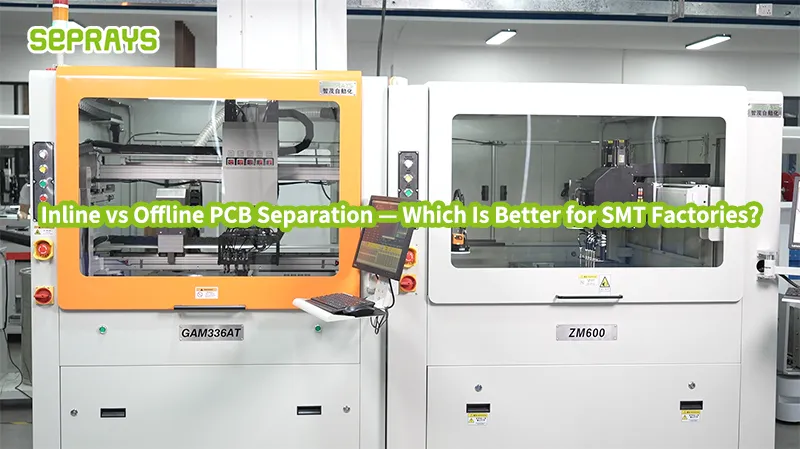
Inline PCB separation is becoming a hot topic among SMT manufacturers in 2026.
Not because offline depaneling has disappeared.
In fact, many successful factories still rely on offline systems every day.
The real question is different:
Which solution creates the best balance between productivity, flexibility, quality, and long-term operating costs?
The answer depends on your production environment.
A factory producing millions of identical automotive PCBs may need a completely different approach from an EMS provider handling dozens of product changes every week.
This article explores the practical differences between inline and offline PCB separation from an engineer’s perspective.
🏭 Why More SMT Factories Are Re-Evaluating Their Depaneling Process
Over the past few years, electronics manufacturing has changed significantly.
Factories are facing:
- Rising labor costs
- Higher quality requirements
- Shorter delivery schedules
- More product variants
- Increased traceability demands
At the same time, PCB assemblies are becoming more complex.
More components.
Smaller spacing.
Higher board values.
As a result, depaneling is no longer viewed as a simple cutting process.
It has become a critical part of overall manufacturing efficiency.
⚙️ What Is Inline PCB Separation?
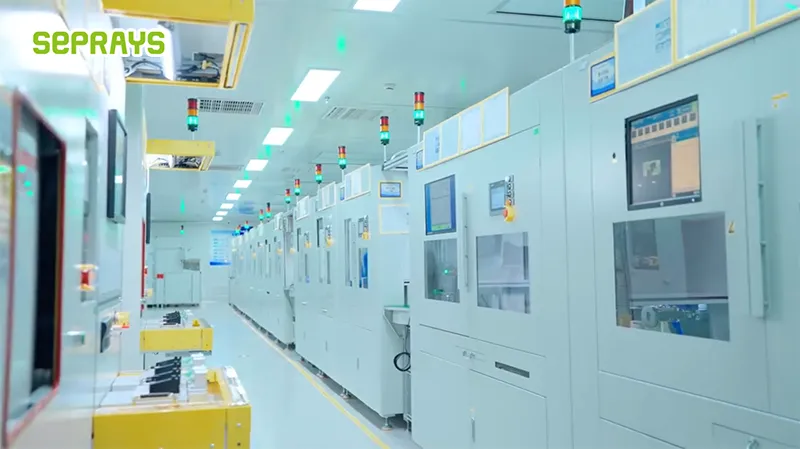
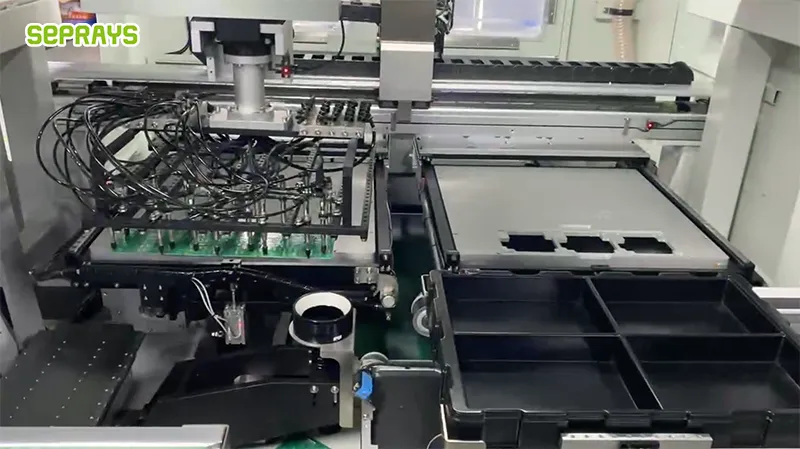
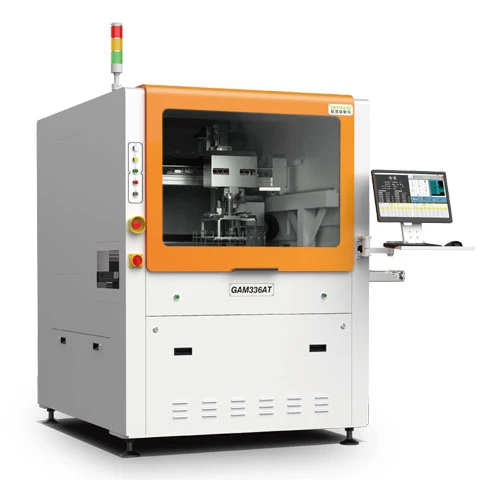
Inline PCB separation refers to depaneling equipment directly connected to the SMT production line.
Boards move automatically from upstream processes into the depaneling system without manual intervention.
The separated PCBs then continue to the downstream processes.
Typical inline features include:
- Conveyor integration
- Automatic loading and unloading
- Barcode tracking
- MES communication
- Automated sorting
- Vision inspection
The goal is continuous production flow.
Minimal operator involvement.
Maximum consistency.
🔧 What Is Offline PCB Separation?
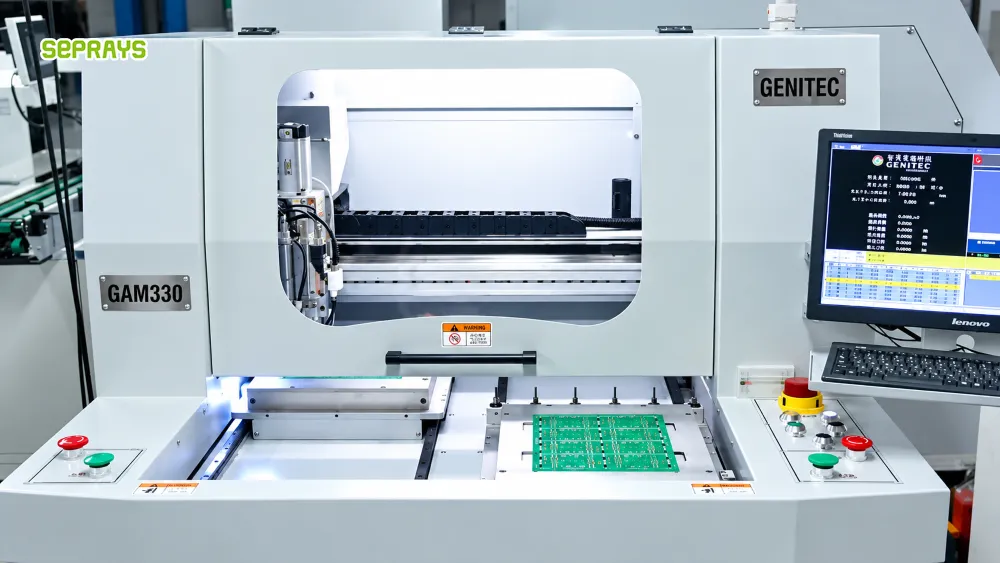
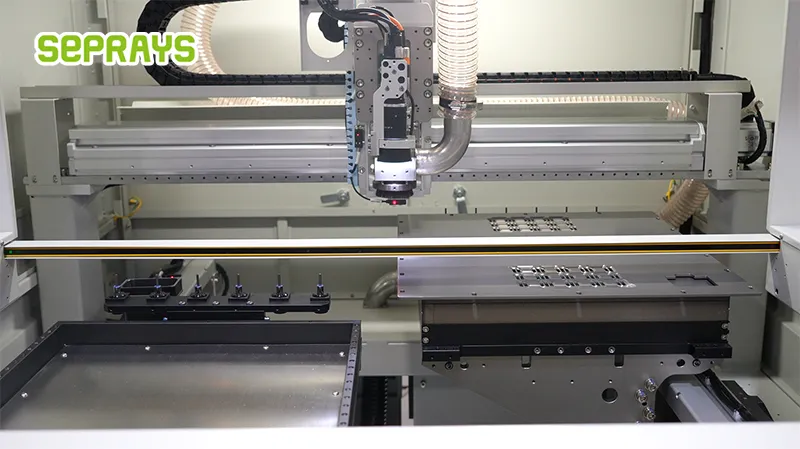
Offline systems operate independently from the SMT line.
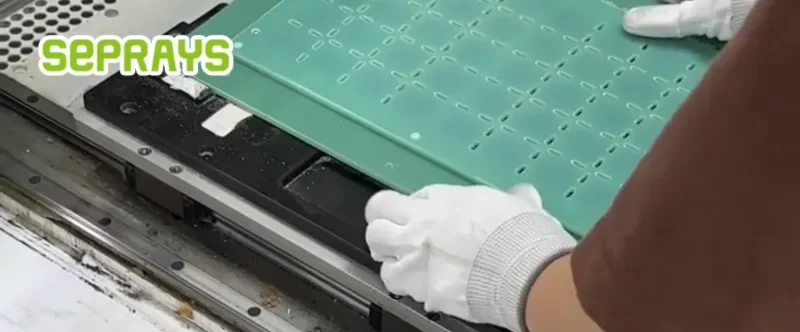
Operators load PCB panels manually or semi-automatically.
After depaneling, the boards are transferred separately to the next process.
Offline systems remain widely used because they offer:
- Lower initial investment
- High flexibility
- Easier installation
- Simpler maintenance
For many manufacturers, offline depaneling remains a practical and effective solution.
📊 Inline vs Offline PCB Separation Comparison
| Comparison Item | Inline Separation | Offline Separation |
|---|---|---|
| Initial Investment | Higher | Lower |
| Labor Requirement | Low | Moderado |
| Production Throughput | Very High | Medium to High |
| Changeover Flexibility | Good | Excellent |
| Factory Automation | High | Limited |
| Traceability Integration | Excellent | Basic to Moderate |
| Floor Space Requirement | Larger | Smaller |
| Suitable for Mass Production | Excellent | Good |
| Suitable for High-Mix Production | Good | Excellent |
One important observation:
The fastest solution is not always the most profitable solution.
This surprises many factory managers.
🚨 A Common Misconception About Automation
Many people assume:
More automation = Better production.
Reality is more nuanced.
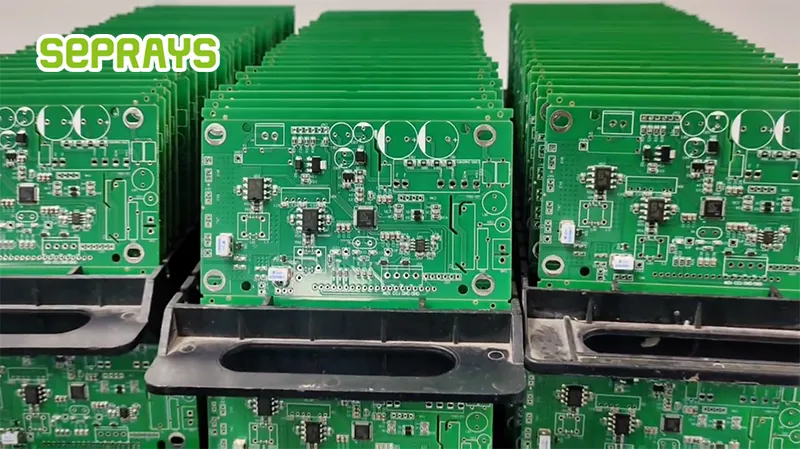
Imagine a factory producing:
- 50 PCB models
- Small batch quantities
- Frequent engineering changes
In this environment, an expensive inline system may not deliver the expected ROI.
Why?
Because changeovers become the dominant factor.
Production flexibility becomes more valuable than absolute speed.
This is where many offline solutions continue to perform extremely well.
🔍 When Inline Separation Makes Sense
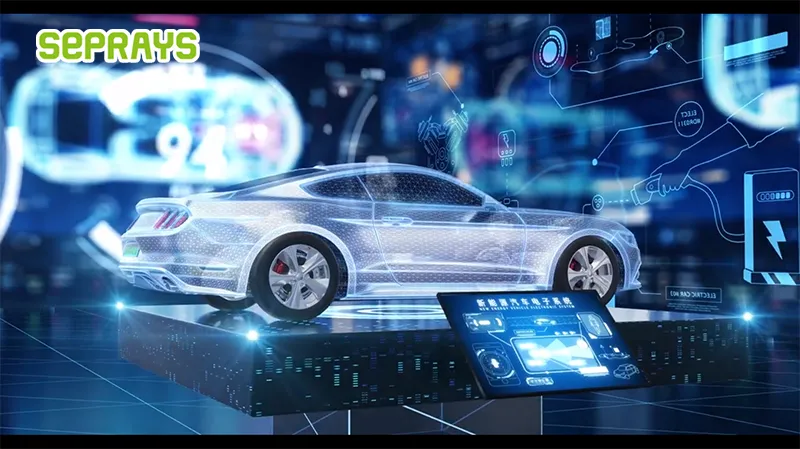
Inline systems are often ideal when production involves:
- Automotive electronics
- Consumer electronics mass production
- Communication equipment
- Industrial control modules
- EV power electronics
Typical characteristics include:
- Stable product mix
- High daily output
- Continuous production schedules
- Strong traceability requirements
For these factories, removing manual handling can significantly improve overall equipment effectiveness (OEE).
💡 When Offline Separation Is the Better Choice
Offline depaneling often works best for:
- EMS providers
- Prototype production
- Medical electronics
- Aerospace electronics
- High-mix manufacturing
In these environments:
- Product changes occur frequently
- PCB designs vary significantly
- Setup flexibility matters more than automation
Interestingly, some highly profitable factories intentionally choose offline systems because they prioritize adaptability over maximum speed.
📈 Real Production Example
A contract manufacturer producing industrial and automotive electronics evaluated a full inline depaneling upgrade.
Management expected immediate productivity improvements.
However, after reviewing six months of production data, a different picture emerged.
Nearly 40% of production time is involved:
- Product changeovers
- Program adjustments
- Material switching
The bottleneck was not cutting speed.
It was production flexibility.
After implementing a combination of offline routing systems and selective inline automation, the factory achieved better efficiency without overspending on unnecessary equipment.
The lesson?
Data should guide automation decisions.
Not trends.
🛠️ The Hidden Costs Most Factories Ignore
When evaluating inline versus offline solutions, machine price is only part of the equation.
Consider:
Labor Cost
Inline systems reduce operator dependency.
Maintenance Cost
More automation may increase maintenance complexity.
Downtime Cost
Integrated systems can affect the entire line if issues occur.
Changeover Cost
Frequent product switching may reduce automation benefits.
Future Expansion Cost
Scalable systems often provide greater long-term value.
Many ROI calculations overlook these factors.
That can lead to expensive purchasing mistakes.
🔬 How Smart Factories Are Making Decisions in 2026
The most successful manufacturers are no longer asking:
“Which machine is better?”
Instead, they ask:
“Which solution fits our production model?”
That distinction matters.
Today’s purchasing decisions are increasingly based on:
- OEE performance
- Yield stability
- Product mix
- Labor availability
- Traceability requirements
- Future automation plans
The best depaneling solution is the one that aligns with actual factory conditions.
Not theoretical maximum performance.
🚀 Emerging Trend: Hybrid Manufacturing Strategies
An interesting trend is appearing across global SMT factories.
Many manufacturers are combining:
- Inline depaneling for high-volume products
- Offline depaneling for high-mix products
This hybrid strategy provides:
- Better equipment utilization
- Greater production flexibility
- Lower overall investment risk
In many cases, it delivers a stronger return than relying on a single approach.
🌎 Looking Ahead
As Industry 4.0 adoption accelerates, inline systems will continue to grow.
However, offline depaneling is far from obsolete.
Both technologies will remain important.
The winning strategy depends on:
- Production volume
- Product complexity
- Factory goals
- Budget constraints
There is no universal answer.
Only the right answer for your specific operation.
Factories that evaluate their entire workflow—not just depaneling speed—usually achieve the best long-term results.
Why Choose Seprays Group?
For more than 30 years, Seprays Group has helped electronics manufacturers optimize PCB depaneling processes across automotive, medical, industrial, semiconductor, communication, and consumer electronics industries.
Seprays Group has been dedicated to PCB/FPC depaneling technology, providing a comprehensive range of solutions—including milling-cutter depanelers, laser depanelers, V-groove depanelers, punching depanelers, hybrid depaneling systems, and fully automated handling solutions.
Our equipment is trusted by globally recognized manufacturers, including Foxconn, Flextronics, State Grid, Luxshare, Compal, Wistron, China Electronics, Quanta, CRRC, China Aerospace, OPPO, ZTE, and Bosch. These solutions are widely deployed in factories across China and around the world.
Beyond machine supply, Seprays supports customers with:
- Process evaluation
- Depaneling method selection
- Automation planning
- Inline integration
- High-mix production optimization
- Long-term technical support
Whether you are considering an inline, offline, or hybrid depaneling solution, our engineering team can help identify the most suitable approach for your production goals.
If you would like to discuss your application, please feel free to contact us.
WhatsApp: +8618929266433
Correo electrónico: sales@seprays.com
Preguntas frecuentes
1. Is inline PCB separation always better than offline separation?
No. The best choice depends on production volume, product mix, automation goals, and ROI requirements.
2. Which industries benefit most from inline PCB separation?
Automotive electronics, EV electronics, consumer electronics, and high-volume industrial manufacturing often benefit most from inline systems.
3. Is offline PCB separation still relevant in 2026?
Absolutely. Offline depaneling remains widely used in EMS, medical electronics, aerospace, and high-mix manufacturing environments.
4. What is the biggest advantage of inline depaneling?
Reduced manual handling, improved traceability, and higher production throughput.
5. Can a factory use both inline and offline depaneling systems?
Yes. Many manufacturers adopt a hybrid strategy, using inline systems for high-volume products and offline systems for flexible, high-mix production.