.png)
 Spanish
  English
  Japanese
  Korean
  Russian
  Chinese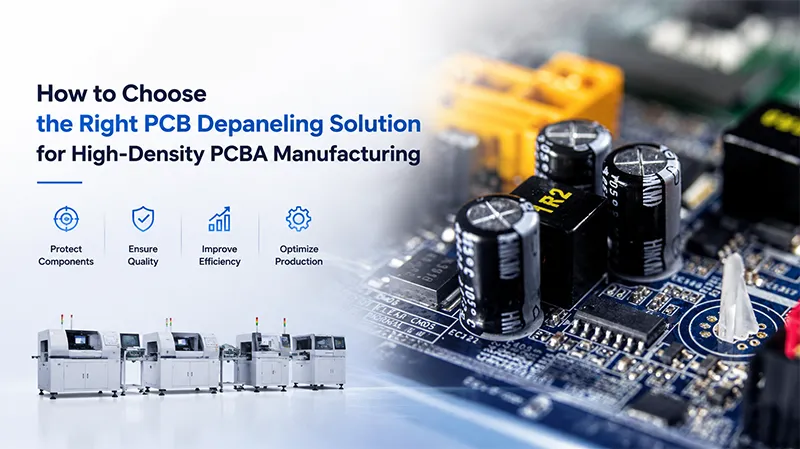
Choosing the right PCB Depaneling Solution has become a more important decision for electronics manufacturers as PCBA designs continue to become smaller, denser, and more complex.
Many engineers discover that the cutting process itself is not the biggest challenge.
The real challenge is maintaining stable quality when production volume increases.
For high-density PCBA manufacturing, factors such as component protection, process consistency, production efficiency, and future automation capability often determine whether a solution can support long-term manufacturing goals.
A method that works well for prototype production may not always perform well in mass production.
🔍 Why High-Density PCBA Manufacturing Creates New Depaneling Challenges
Modern electronic products are becoming more integrated.
AI devices, automotive electronics, medical equipment, communication systems, and industrial controllers all require PCBs with:
- Higher component density
- Smaller spacing between components
- More complex circuit layouts
- More sensitive electronic parts
In these applications, PCB separation is no longer a simple mechanical process.
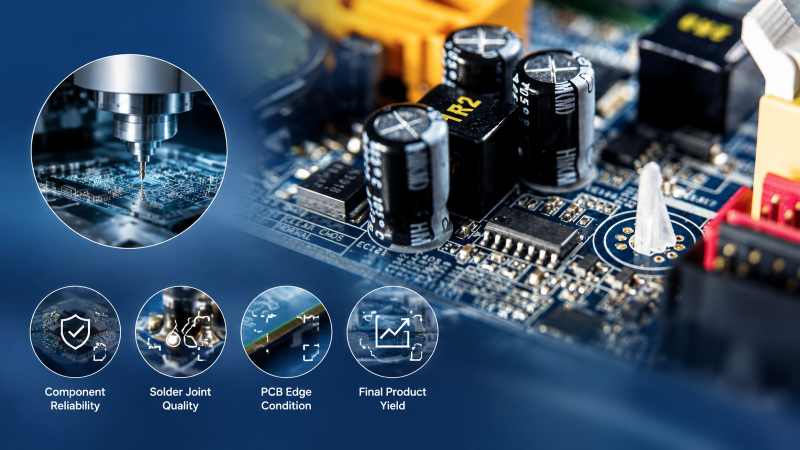
A small amount of stress during cutting may affect:
- Component reliability
- Solder joint quality
- PCB edge condition
- Final product yield
For example, a consumer electronics board with large spacing may tolerate a traditional separation method.
However, a high-density control module with components close to the cutting path requires much stricter process control.
This is why many manufacturers now evaluate depaneling equipment based on stability rather than only cutting speed.
⚠️ Common Problems with Traditional PCB Depaneling Methods
Many factories experience production issues only after increasing output.
During small-batch production, manual operations may appear acceptable.
But when production reaches thousands of PCB assemblies per month, hidden limitations become visible.
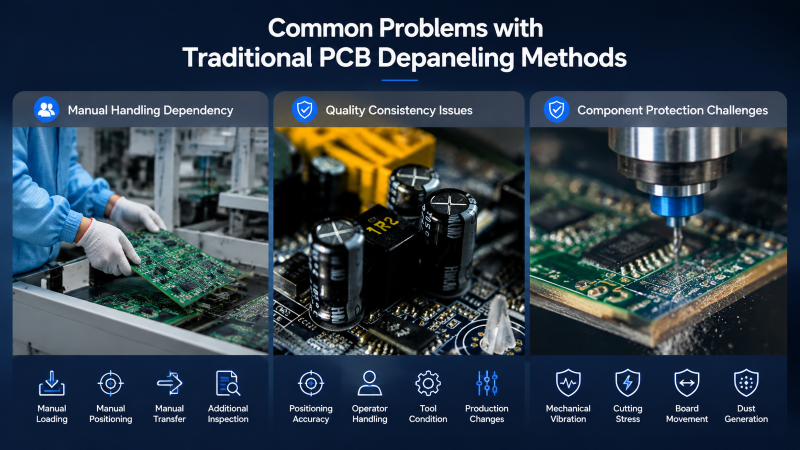
Manual Handling Dependency
Traditional processes may involve:
- Manual loading
- Manual positioning
- Manual transfer
- Additional inspection
Each operation may only take a few seconds.
However, repeated thousands of times, these small actions increase labor requirements and reduce production efficiency.
Quality Consistency Issues
High-volume electronics manufacturing requires repeatable results.
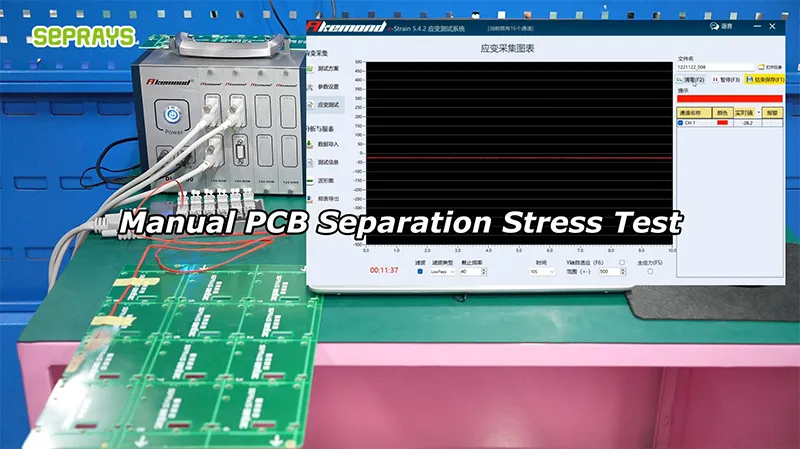
Human operation differences may influence:
| Production Factor | Possible Impact |
|---|---|
| Positioning accuracy | Cutting deviation |
| Operator handling | Process variation |
| Tool condition | Edge quality changes |
| Production changes | Longer setup time |
The goal is not producing one perfect PCB.
The goal is producing stable results every day.
Component Protection Challenges
High-value PCB assemblies require careful processing.
Manufacturers need to control:
- Mechanical vibration
- Cutting stress
- Board movement
- Dust generation
A suitable solution should protect the finished product throughout the entire process.
⚙️ How to Evaluate Different PCB Depaneling Technologies
There is no single technology suitable for every application.
Engineers usually compare solutions based on product requirements.
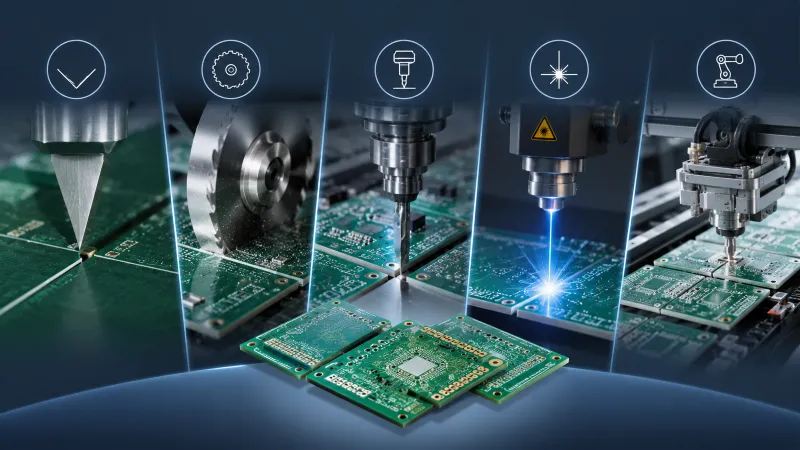
| Method | Advantages | Limitations | Suitable Applications |
| V-Groove Separation | Low cost and simple operation | Limited design flexibility | Basic PCB panels |
| Saw Blade Cutting | Good for straight cuts | Higher mechanical stress | Standard PCB separation |
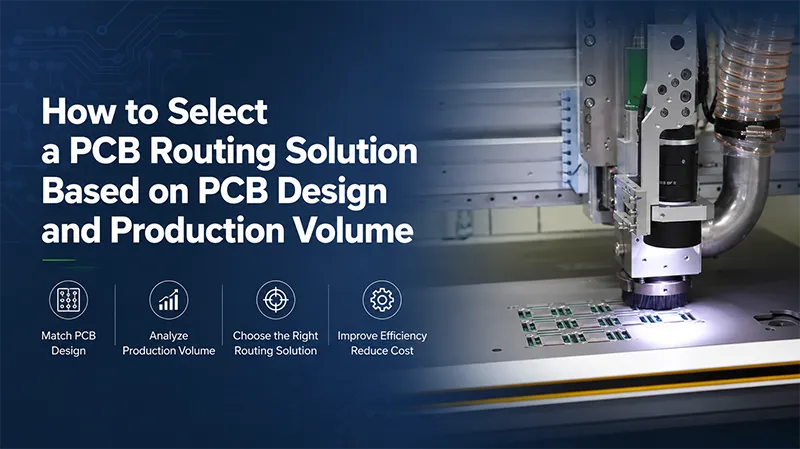
| Router Depaneling | Flexible and accurate | Requires stable positioning | Complex PCB designs |
| Láser Depaneling | Very low mechanical stress | Higher investment | Ultra-sensitive PCBA |
| Automated Router Systems | Stable production and automation capability | Requires production planning | High-volume manufacturing |
The important point is:
The most advanced equipment is not always the best choice.
The best solution is the one matching the actual production environment.
🏭 Real Manufacturing Example: Improving High-Density PCBA Production Stability
A semiconductor-related electronics manufacturer overseas was producing communication and industrial control modules.
During early production stages, the existing process appeared acceptable.
However, after increasing monthly output, the engineering team noticed several challenges:
- More inspection requirements
- Increasing operator workload
- Different results between production batches
- Longer process adjustment time
After reviewing the production workflow, the team found that PCB handling stability during separation was affecting consistency.
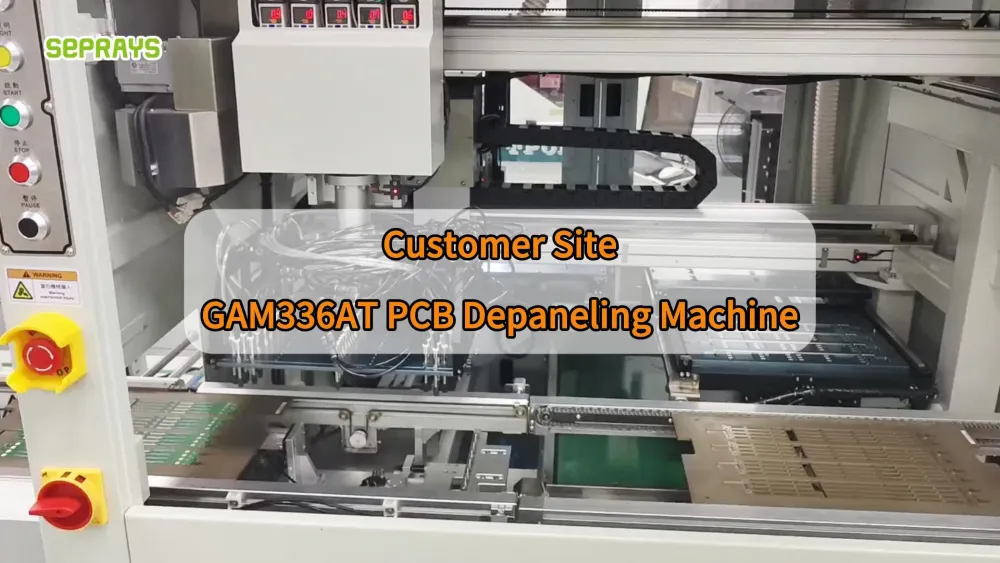
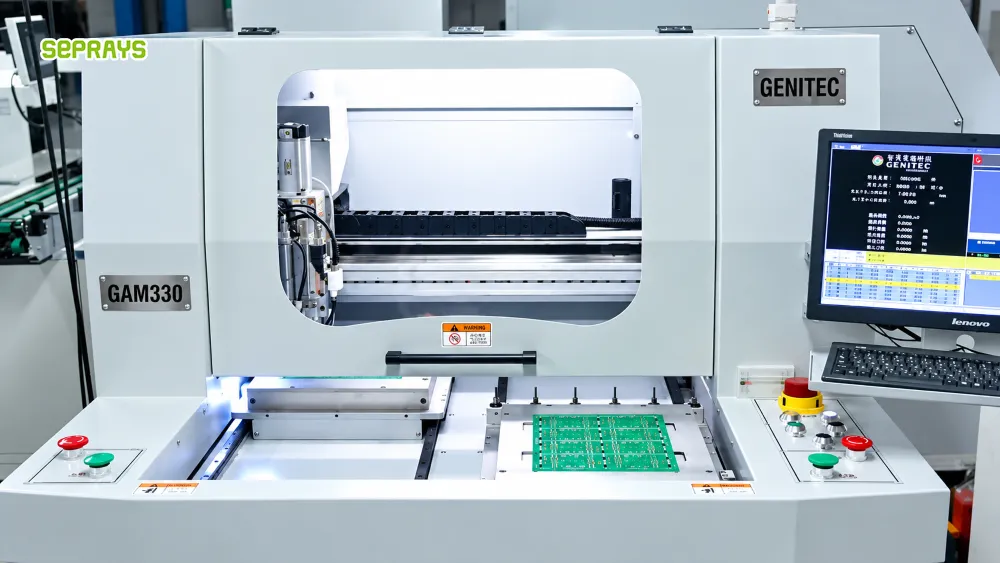
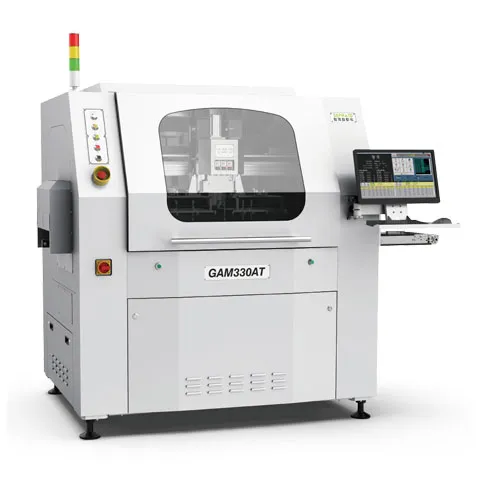
The manufacturer evaluated different technologies and introduced a Seprays automated depaneling solution for selected production lines.
After process optimization:
- PCB positioning became more consistent
- Manual intervention was reduced
- Production flow became smoother
- Quality variation was easier to control
The key lesson was not simply choosing a faster machine.
It was selecting equipment that matched the production requirements.
💰 Understanding the Real Cost of Depaneling Equipment
Many purchasing decisions focus mainly on equipment price.
However, experienced manufacturing teams evaluate the total production cost.
Hidden costs may include:
| Cost Factor | Potential Impact |
| Manual operation | Higher labor expenses |
| Production waiting | Lower equipment utilization |
| Quality variation | Additional inspection work |
| Rework | Increased manufacturing cost |
| Downtime | Delivery risks |
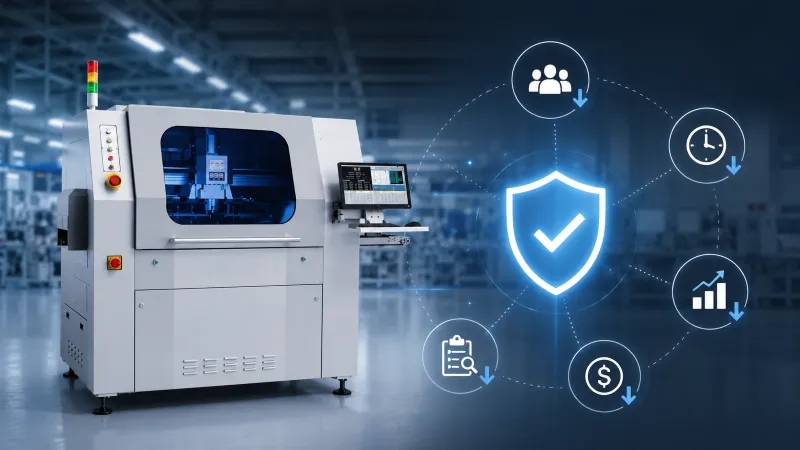
For high-density PCBA production, reducing process instability often creates more value than saving on initial equipment investment.
A stable process helps manufacturers improve predictability.
🧠 Questions Engineers Should Ask Before Choosing a Solution
Before investing in a new depaneling system, manufacturers should evaluate several practical questions.
What type of PCBA products are being processed?
Different products have different requirements.
A simple PCB panel and a high-density automotive control board should not be evaluated using the same criteria.
How large is the production volume?
High-volume production usually benefits more from automation.
For smaller production quantities, manual processes may still be practical.
Are future automation upgrades planned?
Modern factories increasingly consider:
- MES integration
- Automatic loading systems
- Intelligent material handling
- Production data monitoring
Equipment selection should support future expansion.
Where is the actual bottleneck?
Sometimes the cutting process is not the problem.
Material transfer, inspection waiting time, or manual handling may create larger production limitations.
🚀 Building a More Reliable Future for High-Density PCBA Manufacturing
The electronics industry continues moving toward:
- Smaller product designs
- Higher component integration
- Faster product cycles
- More demanding quality requirements
For manufacturers producing advanced electronics, depaneling has become part of the overall quality control process.
A reliable solution should not only separate PCB panels.
It should help create a stable manufacturing system.
The right choice depends on:
- PCB structure
- Component sensitivity
- Production volume
- Automation requirements
- Long-term manufacturing plans
🌍 Why Choose Seprays Group?
Seprays Group has been dedicated to PCB/FPC depaneling technology for more than 30 years, focusing on providing reliable separation solutions for global electronics manufacturers.
The company offers a complete range of solutions, including milling-cutter depanelers, laser depanelers, V-groove depanelers, punching depanelers, and automated handling systems.
Seprays equipment has been trusted by leading manufacturers, including Foxconn, Flextronics, State Grid, Luxshare, Compal, Wistron, China Electronics, Quanta, CRRC, China Aerospace, OPPO, ZTE, and Bosch. These solutions are used in production facilities across China and worldwide.
With decades of manufacturing experience, Seprays continues to work with electronics companies to develop practical depaneling solutions based on real production challenges.
If you are evaluating a PCB depaneling solution for high-density PCBA manufacturing, please contact us. Our engineers can help analyze your PCB structure and production requirements and recommend a suitable approach.
WhatsApp: +8618929266433
Correo electrónico: sales@seprays.com
❓ FAQ
1. What is the best PCB depaneling method for high-density PCBA?
The best method depends on PCB design, component sensitivity, production volume, and automation requirements. Router, laser, and automated solutions each have different advantages.
2. Why is PCB depaneling important for high-density electronics?
High-density PCBA products contain sensitive components and complex layouts. A stable separation process helps reduce mechanical stress and improve production consistency.
3. Is faster cutting always better for PCB production?
Not necessarily. Higher speed may increase output, but unstable processing can create more quality issues and additional costs.
4. When should manufacturers consider automated depaneling equipment?
Automation is usually valuable when production volume increases, labor costs rise, or manufacturers need better process repeatability.
5. How can Seprays help choose the right depaneling solution?
Seprays engineers can evaluate PCB structure, production requirements, and manufacturing goals to recommend a suitable depaneling approach.