.png)
 Spanish
  English
  Japanese
  Korean
  Russian
  Chinese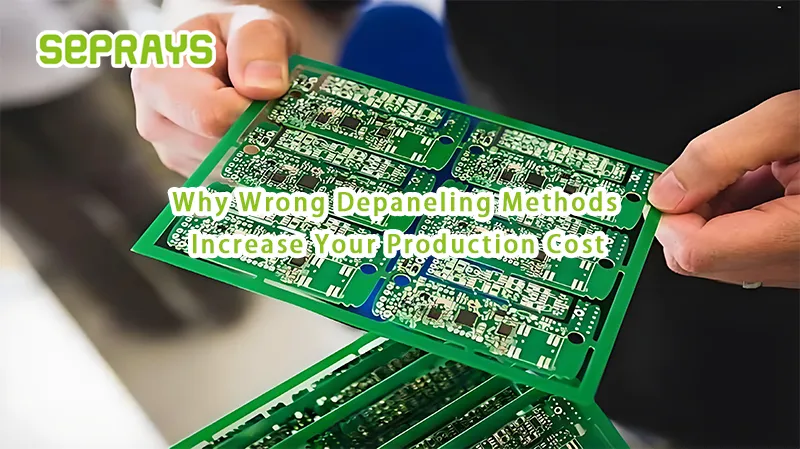
Why Wrong Depaneling Methods Increase Your Production Cost
Why wrong depaneling methods increase your production cost is something many factories only realize after problems start appearing on the line. At first, everything seems fine. The boards are cut. Output looks normal. But over time, hidden costs begin to surface. Not from the machine itself.From the method behind it. 🔍 The Hidden Nature of Depaneling Costs Depaneling is often treated as a simple final step. Cut the board. Move on. But in reality, it affects: The wrong method doesn’t always fail immediately. It fails quietly. ⚙️ Where the Extra Costs Actually Come From Most cost increases are indirect. They appear in areas like: These are harder to measure. But they accumulate quickly. 💥 Common Cost Triggers Caused by Wrong Methods 1. Mechanical Stress Damage High-stress cutting methods can cause: These issues may pass inspection. But fail later in use. 2. Edge Quality Problems Poor cutting leads to: This increases post-processing work. And reduces consistency. 3. Low Precision in Complex Designs Using a simple method for complex boards causes: Especially critical for high-density PCBs. 4. Frequent Setup and Changeover Delays If the method lacks flexibility: In high-mix production, this becomes a major cost driver. 📊 Cost Comparison — Right vs
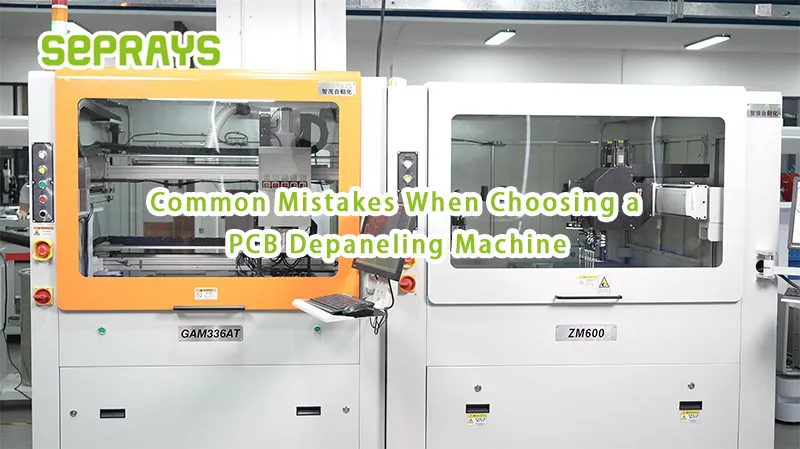
Common Mistakes When Choosing a PCB Depaneling Machine
Common mistakes when choosing a PCB depaneling machine often don’t show up during evaluation. They appear later—on the production floor, during peak orders, or worse, in product failures. At that point, switching is expensive.And sometimes too late. 🔍 Why These Mistakes Keep Happening Most decisions are made under pressure: So teams focus on what is easy to compare: But real performance depends on something else. Application fit. ⚙️ Mistake #1 — Choosing Based on Price Alone This is the most common—and most costly. Low-cost machines may seem attractive, but often lead to: Counterintuitive insight:The cheapest machine can become the most expensive one over time. Because cost is not just the purchase price.It’s the total cost of ownership. ⚡ Mistake #2 — Ignoring PCB Design Complexity Not all PCBs are equal. Factors that matter: A machine that works for simple boards may fail on: Choosing without considering these leads to rework. 🧩 Mistake #3 — Overlooking Stress Impact Depaneling is not just cutting. It introduces mechanical or thermal stress. This can cause: Especially critical in: Many factories realize this only after reliability testing fails. 📉 Mistake #4 — Focusing on Speed Over Stability Fast cycle time looks impressive. But in real

How to Choose a PCB Depaneling Supplier for Your Factory
How to choose a PCB depaneling supplier for your factory is not just a procurement task. It’s a long-term production decision. The wrong choice doesn’t only affect cutting quality—it impacts yield, efficiency, and even delivery schedules. Many factories realize this too late.Usually, after problems start showing up on the line. 🔍 Why Supplier Choice Matters More Than You Think At first glance, most depaneling machines look similar. But in real production, differences appear quickly: The supplier is not just selling equipment.They are shaping your process capability. ⚙️ Start from Your Production Reality (Not the Machine) Before comparing suppliers, define your own conditions: Without this, even the best machine may not fit. A common mistake: Choosing based on specs, not application. ⚡ Key Evaluation Criteria (What Actually Matters) 1. Application Experience Does the supplier understand your industry? Ask: Experience reduces trial and error. 2. Process Capability (Not Just Equipment) Good suppliers don’t just sell machines. They provide: This directly affects yield. 3. Equipment Stability Over Time Short-term performance is easy. Long-term consistency is harder. Check: Ask for data, not promises. 4. Integration Ability (Industry 4.0 Readiness) Modern factories need connected systems. Evaluate: A machine that cannot integrate will limit future upgrades.
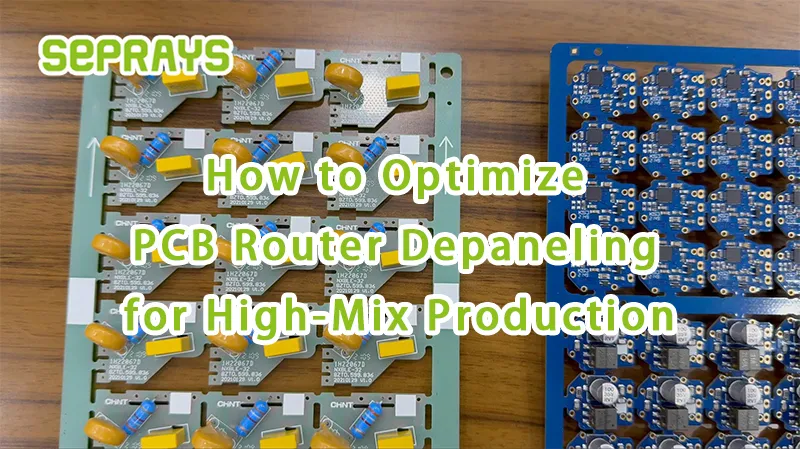
How to Optimize PCB Router Depaneling for High-Mix Production
How to optimize PCB router depaneling for high-mix production is becoming a daily question in many SMT factories. Not because machines are slow, but because product changeovers are getting more frequent than ever. One line. Multiple products. Constant switching.And every switch costs time. 🔍 Why High-Mix Production Slows Down Your Line High-mix PCB manufacturing is not just a production model—it is a scheduling challenge. Most engineers face the same problems: The real issue is not cutting speed.It is setup inefficiency. Even a few minutes lost per changeover quickly becomes hours per day. ⚙️ The Hidden Bottleneck — Manual Setup In many router depaneling lines, setup still depends heavily on manual work. Operators must: This creates variation. And variation creates instability. When production mix increases, this becomes even more visible. 📷 CCD Vision Alignment — Reducing Setup Time in Real Production One of the most effective improvements is CCD vision alignment. Instead of manual positioning, the system: The result is simple: Less setup time.More consistent accuracy. In high-mix environments, this alone can significantly reduce changeover losses. 🧩 Fixture-Less Design — Removing Mechanical Limitations Traditional fixtures are one of the biggest slowdowns. Every product change often requires: A fixture-less approach changes this
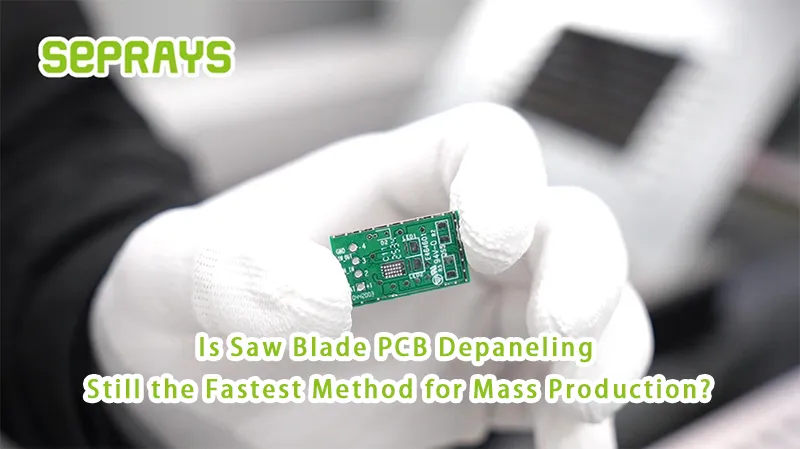
Is Saw Blade PCB Depaneling Still the Fastest Method for Mass Production?
In the fast-paced world of PCB (Printed Circuit Board) manufacturing, speed is of the essence. As production lines demand faster and more efficient processes, PCB depaneling methods must keep up. Saw blade depaneling has long been a go-to method, but is it still the fastest in 2026? Let’s dive into how saw blade depaneling stacks up against newer techniques and explore whether it’s still the best choice for mass production. 🛠️ What Is Saw Blade PCB Depaneling? Saw blade PCB depaneling is a mechanical method used to separate individual PCBs from a larger panel. This process involves using a rotating saw blade to cut through the panel, making it a fast and straightforward way to divide the board into smaller pieces. 🔄 Speed in PCB Depaneling: Is Saw Blade Still King? When it comes to mass production, speed is a critical factor. But speed isn’t the only thing that matters—reliability, precision, and quality also play a role. Let’s compare saw blade depaneling to other methods to determine whether it’s still the fastest in terms of overall efficiency. 1. Saw Blade Depaneling 2. Laser Depaneling 3. Router Depaneling 4. V-Groove Depaneling ⚙️ Advantages and Disadvantages of Saw Blade Depaneling ✅ Advantages

Is PCB Router Depaneling Still the Most Cost-Effective Method in 2026?
As the demand for faster, more precise, and cost-effective PCB production rises, the question of whether PCB router depaneling remains the most cost-effective method in 2026 has become increasingly relevant. In this post, we’ll explore how the PCB router depaneling method holds up in the current manufacturing landscape and compare it with newer technologies, helping you make an informed decision for your production line. 🔍 What is PCB Router Depaneling? PCB router depaneling involves using a high-speed rotating cutter to separate individual PCBs from the larger panel. It’s been a staple in the industry for decades because of its versatility and cost-effectiveness for various applications, from low to medium-volume production runs. ⚙️ The Cost-Effectiveness of PCB Router Depaneling in 2026 As we move into 2026, PCB router depaneling is still considered cost-effective, but the key question is, “Is it the most cost-effective?” Let’s break down its costs and compare it to other methods. 1. Initial Investment Costs 2. Operational Costs 3. Labor Costs ⚡ Advantages of PCB Router Depaneling in 2026 Although newer methods like laser depaneling are growing in popularity, PCB router depaneling still holds several advantages: 1. Flexibility 2. Proven Reliability 3. Affordable for Small to Medium Runs