.png)
 Spanish
  English
  Japanese
  Korean
  Russian
  Chinese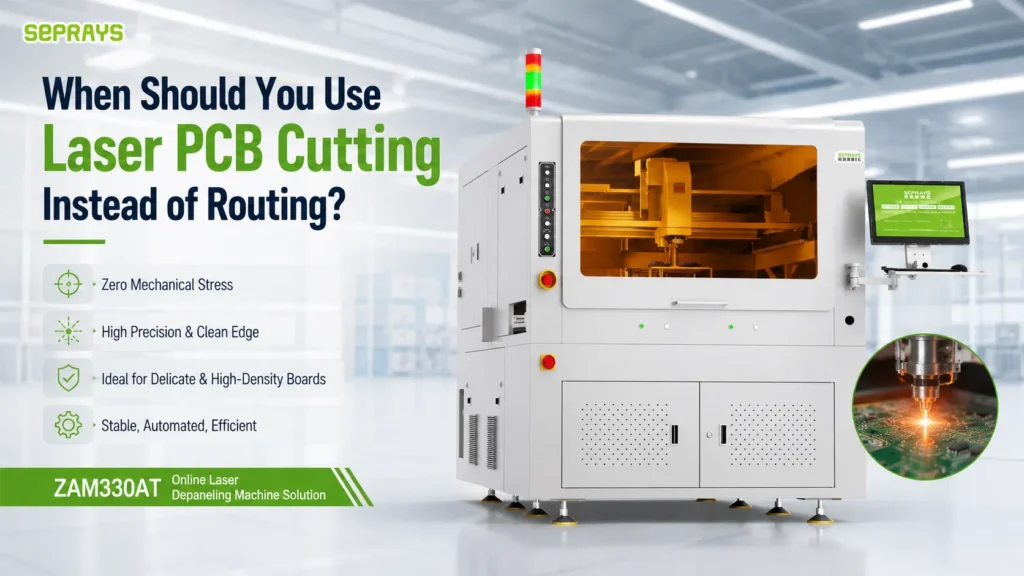
Laser PCB Cutting has become a topic of growing interest among electronics manufacturers in 2026. As PCB designs become smaller, denser, and more complex, many engineers are asking the same question: should they continue using traditional routing, or is laser technology now the better choice?
The answer is not as simple as choosing the newest technology. In many production environments, routing remains highly effective. However, there are specific situations where laser depaneling can significantly improve product quality, yield, and long-term manufacturing efficiency.
This article explores when laser cutting makes sense, where routing still excels, and how manufacturers can make a practical decision based on their actual production requirements.
🔍 Why More Manufacturers Are Evaluating Laser Depaneling in 2026
Several trends are pushing factories to reconsider traditional PCB separation methods.
Electronic devices continue to shrink.
Components are placed closer to the board edges.
Flexible circuits are becoming more common.
Medical and semiconductor applications require lower mechanical stress.
At the same time, manufacturers face increasing pressure to reduce defects and improve first-pass yield.
The challenge is that routing physically removes material using a spinning cutter. While highly effective for many applications, mechanical contact can introduce vibration and stress. For standard PCBs, this may not be an issue. For delicate assemblies, it can become a hidden source of quality problems.
⚙️ Understanding the Difference Between Laser and Routing
Before comparing the two technologies, it’s important to understand how they work.
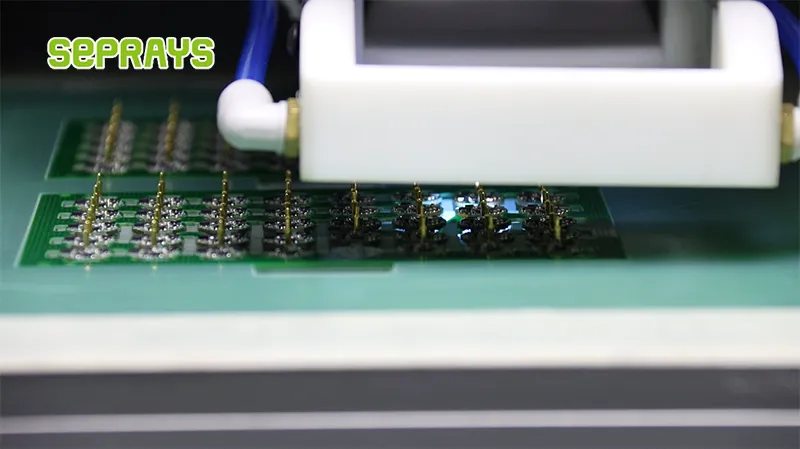
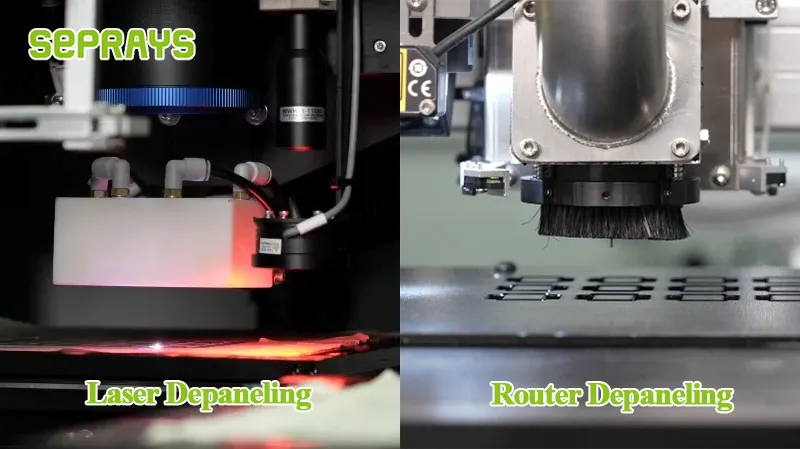
PCB Router Depaneling
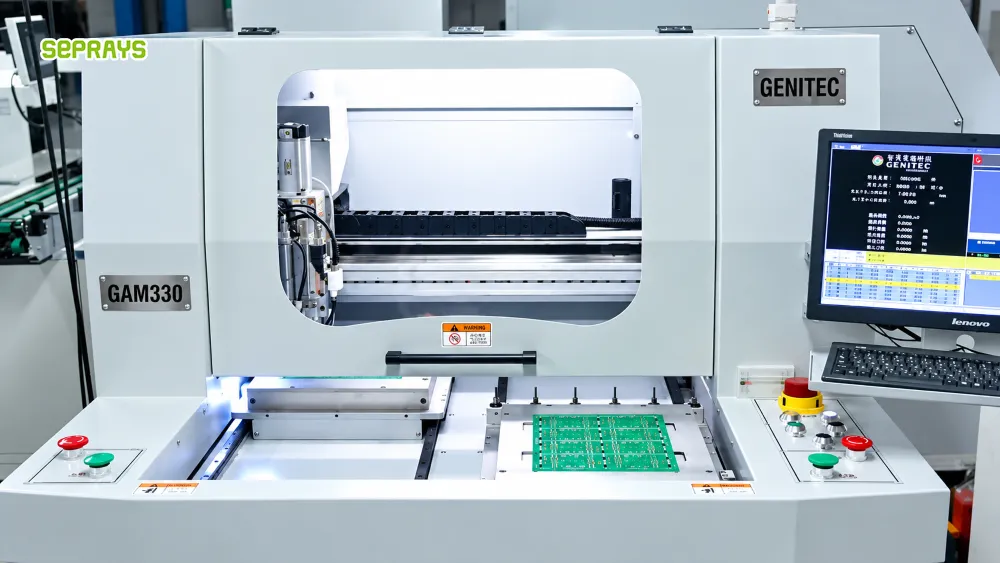
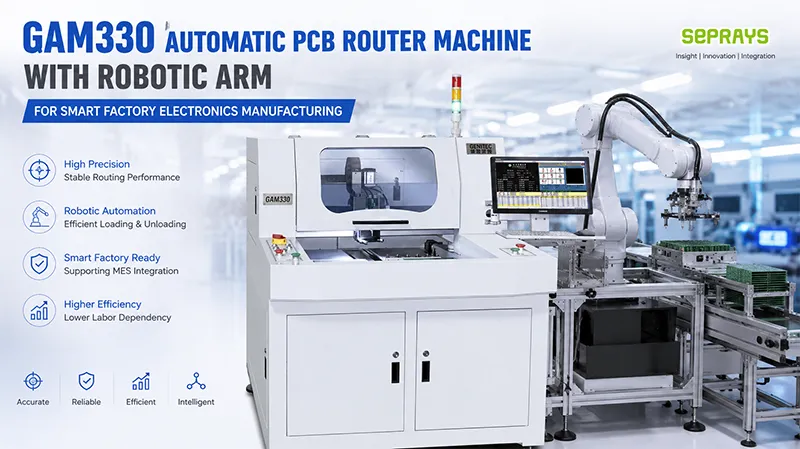
A router machine uses a high-speed spindle and cutting bit to mechanically separate PCB panels.
Advantages include:
- Lower equipment investment
- High throughput for many applications
- Suitable for thicker PCB materials
- Proven and widely adopted technology
Potential limitations:
- Mechanical stress during cutting
- Tool wear and replacement costs
- Difficulty with extremely small geometries
Láser Depaneling
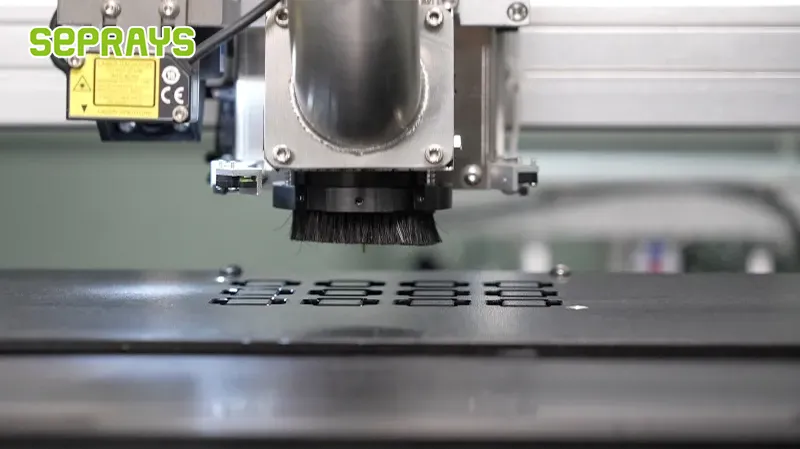
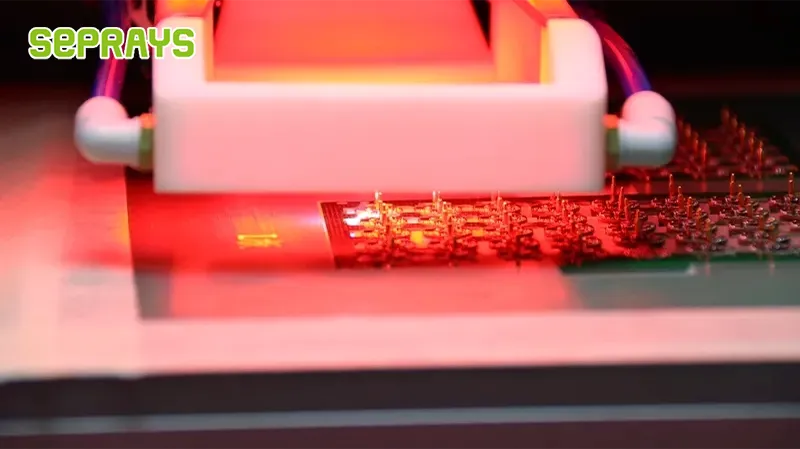
Laser systems use focused laser energy to separate PCB material without physical contact.
Advantages include:
- Near-zero mechanical stress
- Exceptional cutting precision
- No cutting tool wear
- Ideal for miniature and fragile assemblies
Potential limitations:
- Higher initial investment
- Material-dependent processing speeds
- Not always necessary for standard PCB designs
📊 Laser vs Routing Comparison
| Factor | Láser Depaneling | Router Depaneling |
|---|---|---|
| Mechanical Stress | Extremely Low | Moderado |
| Cutting Precision | Excellent | Very Good |
| El Desgaste De La Herramienta | None | Requires Replacement |
| La Calidad De Los Bordes | Excellent | Good |
| Flexible PCB Compatibility | Excellent | Limited |
| Thick PCB Capability | Moderado | Excellent |
| Initial Investment | Higher | Lower |
| Operating Cost Over Time | Stable | Tool Cost Required |
| Semiconductor Applications | Ideal | Limited |
| Automotive Applications | Adecuado | Widely Used |
The important takeaway is that neither technology is universally better.
The best choice depends on the product being manufactured.
🏭 When Laser Cutting Is Clearly the Better Option
Based on industry projects completed during the last few years, several scenarios consistently favor laser technology.
Ultra-Compact Consumer Electronics
Wearables, earbuds, smart sensors, and miniaturized modules often contain components positioned very close to the board edge.
Mechanical routing may require larger safety margins.
Laser systems can maintain tighter tolerances without introducing vibration.
Flexible and Rigid-Flex Circuits
FPCs are becoming increasingly common in automotive electronics, medical devices, and consumer products.
Traditional cutting methods can deform flexible materials.
Laser processing offers cleaner edges and better dimensional consistency.
Medical Electronics
Medical manufacturers prioritize reliability above almost everything else.
Small cracks invisible during production can become major field failures.
Reducing mechanical stress during separation helps protect sensitive assemblies.
Semiconductor Packaging Applications
Semiconductor-related PCBs often feature extremely fine structures.
Even slight stress can impact performance.
This is one reason laser depaneling adoption continues to grow in semiconductor manufacturing environments.
💡 A Counterintuitive Lesson from Production Lines
Many engineers assume laser cutting automatically improves every production process.
That is not always true.
For example:
A factory producing large industrial controller boards may see no measurable yield improvement after switching from routing to laser.
Why?
Because the boards are mechanically robust.
Components are located far from cutting lines.
The existing routing process already meets quality requirements.
In such cases, the higher capital investment may not generate meaningful ROI.
The best technology is not necessarily the most advanced one.
It is the one that solves a specific manufacturing problem.
📈 Cost Analysis: Looking Beyond Equipment Price
One common mistake is comparing only machine purchase prices.
A more accurate analysis includes:
- Scrap reduction
- Rework reduction
- Tool replacement costs
- Labor efficiency
- Product warranty risk
- Yield improvement
For high-value products, a small yield improvement can justify a laser system surprisingly quickly.
For commodity electronics, routing often remains the more economical option.
The key is calculating total production cost rather than equipment cost alone.
🚗 Real-World Example from an Automotive Electronics Project
A manufacturer producing automotive sensing modules faced recurring issues after PCB separation.
The boards passed electrical testing but occasionally failed reliability testing.
Investigation showed that mechanical stress generated during separation was contributing to microscopic defects.
After evaluating multiple solutions, the engineering team introduced a laser depaneling process for selected product lines.
Yield consistency improved.
Post-process inspection results became more stable.
The project demonstrated that the depaneling method itself can influence downstream quality performance.
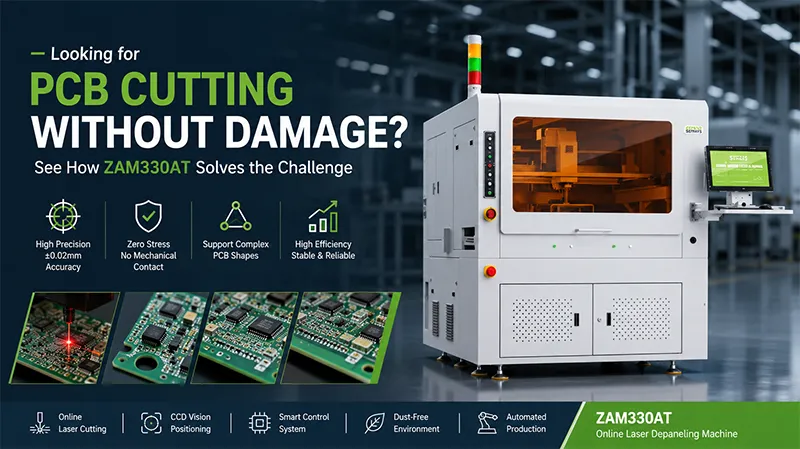
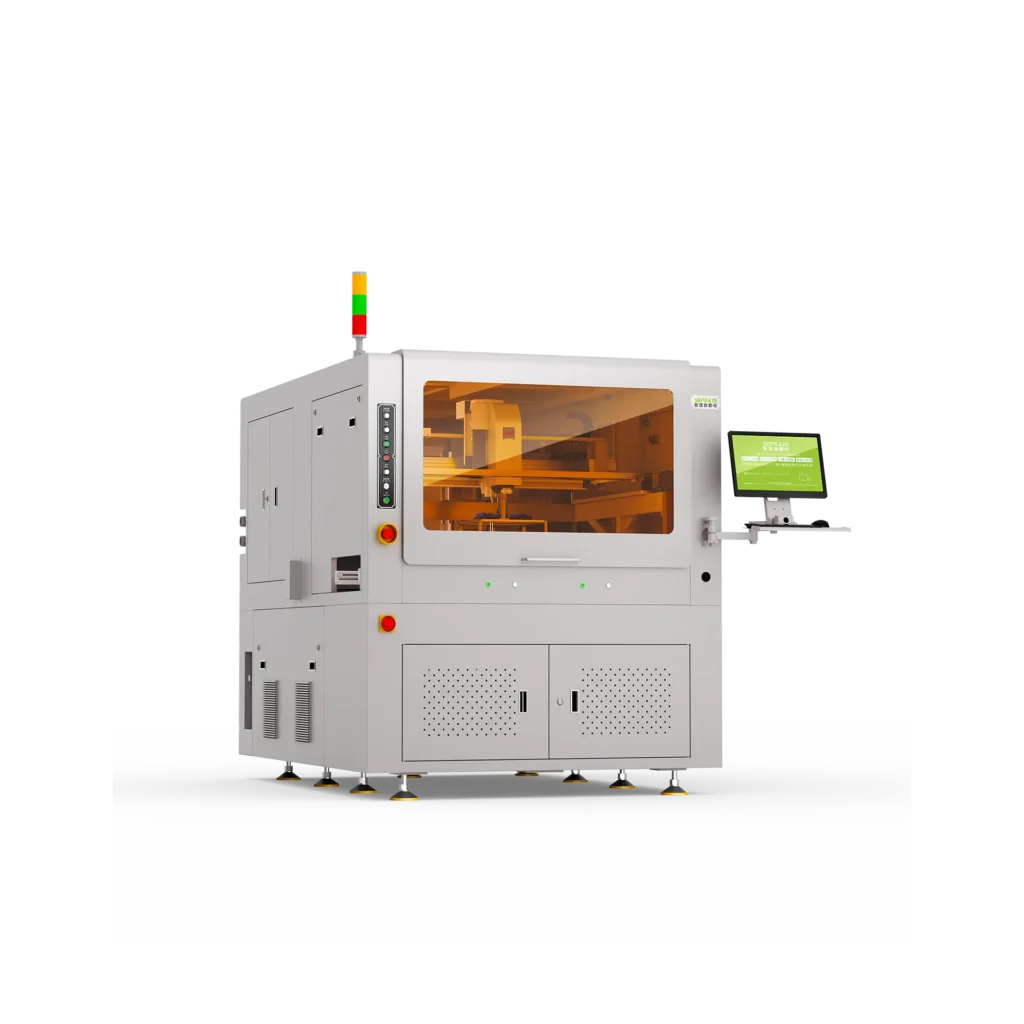
For applications requiring high precision and low stress, solutions such as the Seprays ZAM330AT Online Laser Depaneling Machine provide automated laser processing while supporting integration into modern SMT production environments.
🔧 How to Decide Which Technology Fits Your Factory
Consider these questions:
- ✔ Are components located within a few millimeters of the cutting path?
- ✔ Are you manufacturing flexible or rigid-flex circuits?
- ✔ Is mechanical stress causing hidden yield issues?
- ✔ Are product reliability requirements extremely high?
- ✔ Is tool wear becoming a significant operating expense?
If the answer is yes to several of these questions, laser technology deserves serious consideration.
If not, routing may continue delivering excellent performance at a lower cost.
🎯 The Future Is Not Laser or Routing—It’s Application Matching
One of the biggest trends in 2026 is not replacing routing entirely.
It is selecting the right technology for each product family.
Many advanced factories now operate multiple depaneling technologies simultaneously.
Routing handles standard products.
Laser systems process high-value or sensitive assemblies.
This hybrid strategy often delivers the best balance between quality and cost.
Manufacturing success rarely comes from following industry trends blindly.
It comes from matching process capability to actual product requirements.
Why Choose Seprays Group?
With more than 30 years of experience in PCB and FPC depaneling technology, Seprays Group continues to help manufacturers improve productivity, quality, and automation efficiency across diverse industries.
Seprays Group has been dedicated to PCB/FPC depaneling technology, offering a complete portfolio of solutions including milling-cutter depanelers, laser depanelers, V-groove depanelers, punching depanelers, and fully automated handling systems. Our technologies are trusted by globally recognized manufacturers such as Foxconn, Flextronics, Bosch, Luxshare, Compal, Wistron, Quanta, China Electronics, CRRC, China Aerospace, OPPO, ZTE, and State Grid. Today, Seprays equipment operates in factories throughout China, Europe, Southeast Asia, and other global manufacturing hubs.
Why manufacturers choose Seprays:
- ✔ Over 30 years of industry expertise
- ✔ Complete PCB depaneling solution portfolio
- ✔ Advanced automation integration capabilities
- ✔ Proven experience in automotive, medical, semiconductor, and consumer electronics industries
- ✔ Global technical support and application engineering assistance
If you are evaluating laser depaneling, routing, or hybrid PCB separation solutions, please feel free to contact Seprays Group for professional recommendations tailored to your production requirements.
WhatsApp: +8618929266433
Correo electrónico: sales@seprays.com
Preguntas frecuentes
1. Is laser PCB cutting always better than routing?
No. Laser cutting is ideal for sensitive, high-precision applications, while routing remains highly effective and cost-efficient for many standard PCB products.
2. What types of PCBs benefit most from laser depaneling?
Flexible PCBs, rigid-flex boards, medical electronics, semiconductor-related products, and assemblies with components near board edges often benefit most.
3. Does laser depaneling eliminate mechanical stress?
Laser processing is considered a near-zero mechanical stress method because no physical cutting tool contacts the PCB.
4. Is laser depaneling suitable for automotive electronics?
Yes. Many automotive sensors, BMS modules, and advanced electronic control systems can benefit from low-stress laser separation processes.
5. How can I determine whether laser or routing is right for my application?
The best approach is to evaluate PCB material, component placement, board thickness, production volume, quality requirements, and total manufacturing cost before selecting a depaneling method.