.png)
 English
  Spanish
  Japanese
  Korean
  Russian
  Chinese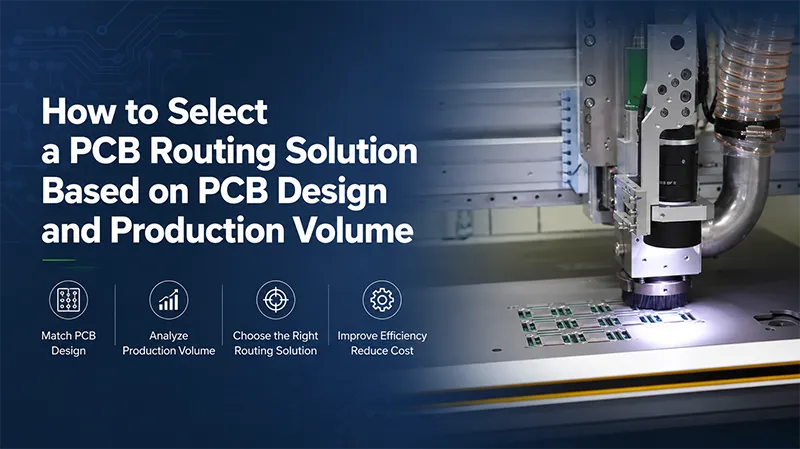
PCB routing solution selection often starts with a machine quotation. That is understandable. Purchasing teams want to know the price, cutting speed, and delivery time.
But engineers usually discover something else during production: the right machine depends much more on the PCB itself and how many boards the factory needs to process.
A routing system that works well for a 500-panel monthly production may be completely different from one running several thousand panels per day.
So, before comparing models, start with two questions:
What does the PCB look like? And how much production does it need to handle?
🔍 Start With the PCB Design
PCB geometry should be the first filter.
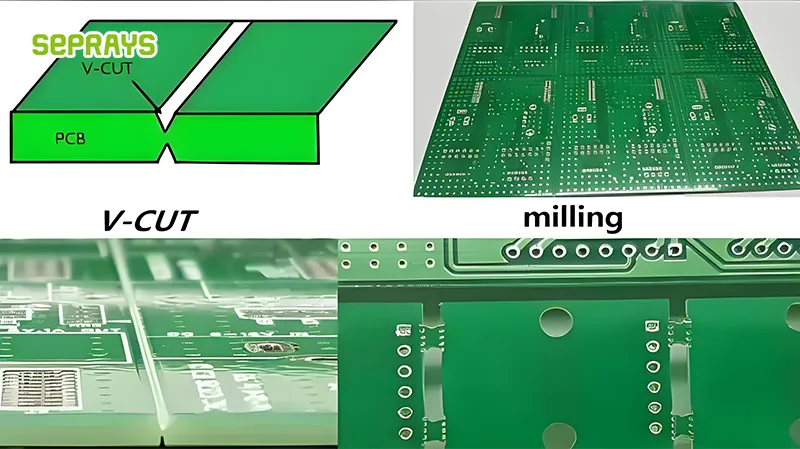
If the panel has irregular outlines, internal cutouts, narrow tabs, or components positioned close to the edge, routing can offer more flexibility than simple V-groove separation.
For straight, predictable V-grooves, however, a V-groove solution may be more economical.
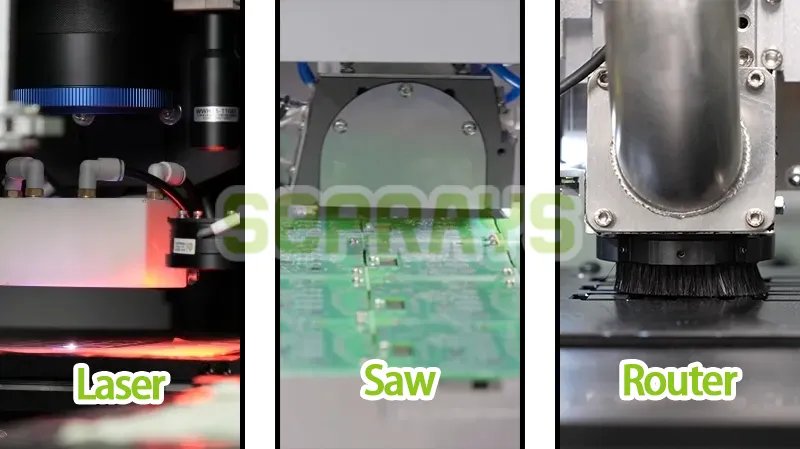
For very sensitive or high-value boards where mechanical stress is a major concern, laser processing may deserve evaluation.
A practical first check includes:
- PCB and panel dimensions
- Board thickness and material
- Cutting path
- Edge-component clearance
- Required edge quality
- Component sensitivity
- Panelization method
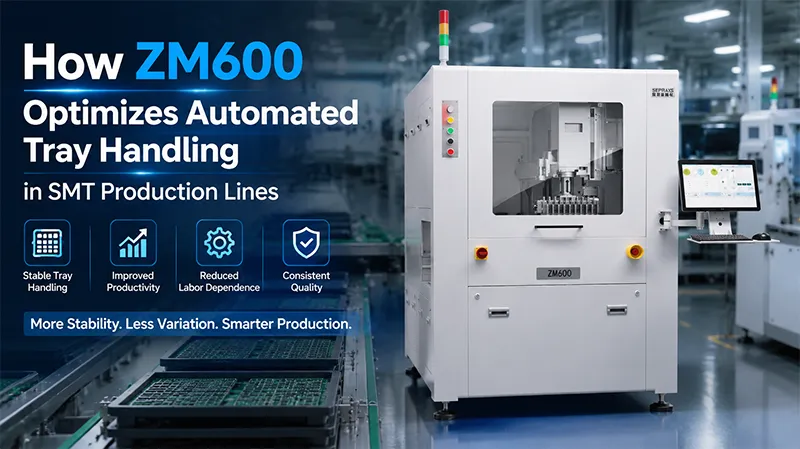
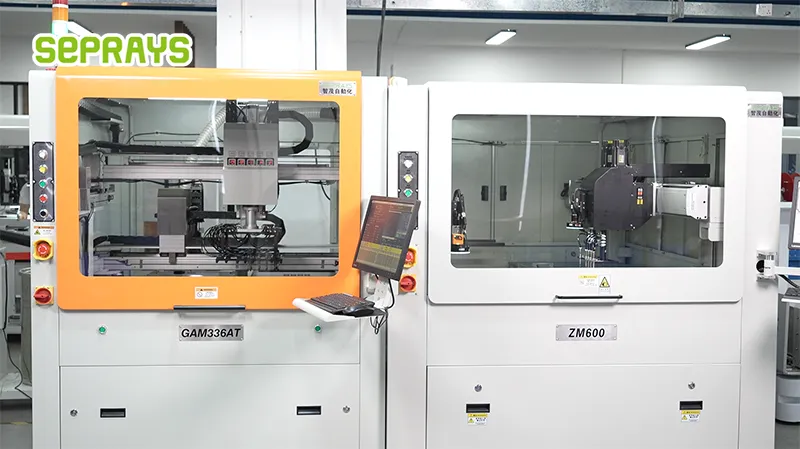
The important point is that not every PCB needs the same separation technology. Seprays’ current portfolio reflects this difference, covering routing, laser, V-groove, punching, and automated handling solutions.
📊 Match the Process to Production Volume
Production volume changes the economics.
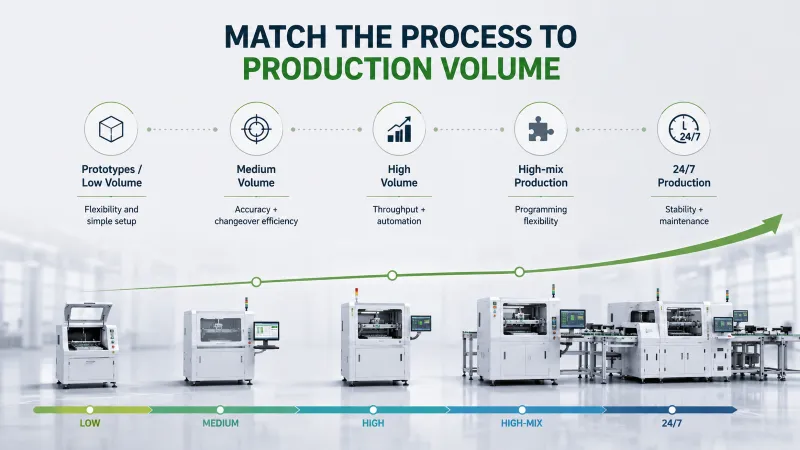
For low-volume production, an offline machine with manual loading may be perfectly reasonable. The priority is often flexibility and easy product changeover.
For high-volume production, the priorities shift toward cycle time, repeatability, automation, and line integration.
| Production Situation | What to Prioritize |
|---|---|
| Prototypes / low volume | Flexibility and simple setup |
| Medium volume | Accuracy + changeover efficiency |
| High volume | Throughput + automation |
| High-mix production | Programming flexibility |
| 24/7 production | Stability + maintenance |
One common mistake is buying for today’s output.
If production is expected to double over the next two years, a machine already operating near its limit may become the next bottleneck.
⚙️ Don’t Confuse Cutting Speed With Throughput
A router’s feed speed is useful information, but it is not the same as production capacity.
The real cycle may look like:
Loading → positioning → routing → board handling → unloading
A machine with a fast spindle can still have poor overall throughput if loading, alignment, or unloading takes too long.
This is why it is worth asking suppliers for a complete cycle-time test using your actual panel.
In 2026, this has become increasingly relevant as electronics manufacturers look beyond individual machine performance to line balance, automation compatibility, and overall production flow.
💰 Calculate Cost Per Board, Not Just Machine Price
The purchase price is only the beginning.
A more useful calculation is:
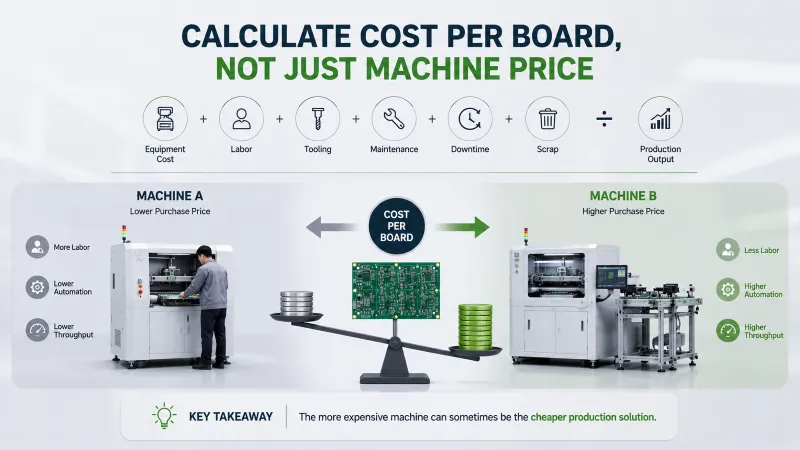
Cost per board = equipment cost + labor + tooling + maintenance + downtime + scrap ÷ production output
Imagine two machines.
Machine A is cheaper but requires more operator intervention.
Machine B costs more but can automatically position, route, unload, and communicate with the next process.
For a small workshop, Machine A may be the better investment.
For a three-shift semiconductor electronics factory, Machine B may produce a lower total cost per board.
The counterintuitive lesson is simple:
The more expensive machine can sometimes be the cheaper production solution.
But only when the factory actually uses the automation.
🧪 Test the PCB Before Making the Decision
A specification sheet cannot tell you everything.
Ask for a sample test with your own PCB.
Check:
- Cutting accuracy
- Edge quality
- Burrs and dust
- Board movement
- Component clearance
- Repeatability
- Tool wear
- Cycle time
- Operator involvement
This is especially important for semiconductor-related electronics, automotive electronics, medical devices, and other high-value PCBAs.
A small amount of edge damage may be acceptable on one product but unacceptable on another.
Likewise, a 0.1-second cycle-time improvement is not valuable if it increases tool wear or scrap.

🏭 A Practical Overseas Semiconductor Example
Consider an overseas semiconductor equipment manufacturer producing several PCB assemblies in different panel formats.
The factory initially looked for a high-speed router because production demand was increasing.
During evaluation, the engineering team found that speed was not the only issue.
Some boards had complex contours. Others had components close to the cutting path. Production also changed between several models during the week.
Instead of selecting one machine based purely on speed, the team evaluated the complete process: PCB geometry, routing path, changeover, dust extraction, operator workload, and downstream handling.
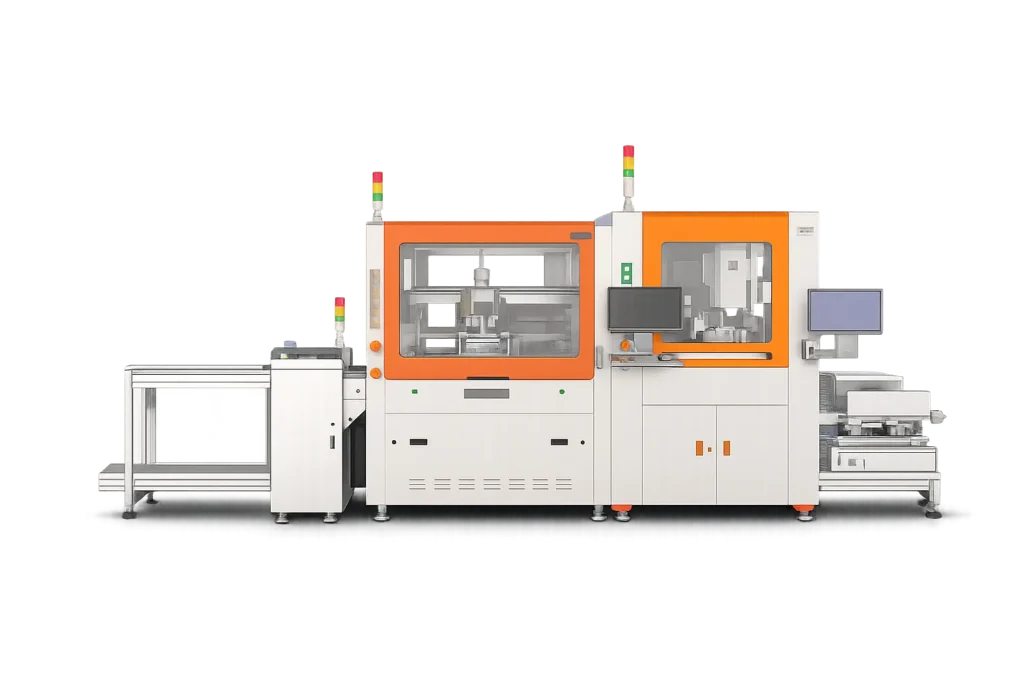
A Seprays routing solution was included in the evaluation because its portfolio covers both offline and in-line router systems, including models designed for automated production environments.
This is an illustrative scenario rather than a claim about a specific semiconductor customer.
The broader lesson is useful: production volume tells you how much automation you may need; PCB design tells you what kind of process you need.
🧠 When Should You Choose Routing?
Routing is often worth considering when you have:
- Irregular PCB outlines
- Internal cutouts
- Mixed PCB designs
- Tight edge requirements
- Higher-value boards
- A need for flexible cutting paths
It may be less suitable when the boards have simple straight V-grooves and very high-volume production, where dedicated V-groove equipment can be more efficient.
For highly sensitive applications, a laser should also be evaluated rather than assuming mechanical routing is always the answer.
In practice, many manufacturers use more than one depaneling method for different product families.
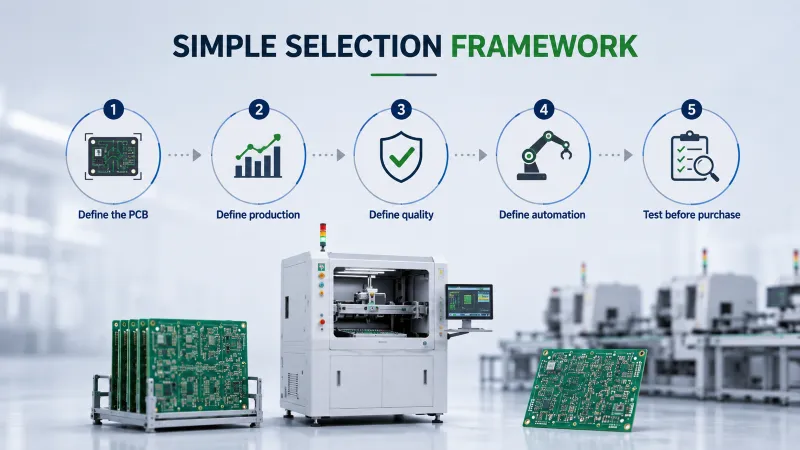
🛠️ A Simple Selection Framework
Before requesting a final quotation, work through these five steps:
1. Define the PCB.
Shape, thickness, material, components, and cutting path.
2. Define production.
Panels per day, shifts, peak demand, and expected growth.
3. Define quality.
Accuracy, edge quality, allowable stress, and scrap tolerance.
4. Define automation.
Offline, semi-automatic, or full in-line production.
5. Test before purchase.
Use representative PCB samples and measure the complete cycle.
This approach usually produces a more useful comparison than simply asking, “Which router is fastest?”
🌍 Why Choose Seprays Group?
Seprays Group has been dedicated to PCB/FPC depaneling technology for more than 30 years, beginning in Taiwan in 1993. Today, its solutions cover milling-cutter depanelers, laser depanelers, V-groove depanelers, punching depanelers, and automated loading, unloading, and handling systems.
Seprays’ equipment has been trusted by leading manufacturers and organizations, including Foxconn, Flextronics, State Grid, Luxshare, Compal, Wistron, China Electronics, Quanta, CRRC, China Aerospace, OPPO, ZTE, and Bosch. Its equipment and complete depaneling solutions are used in factories across China and worldwide.
With more than three decades of manufacturing and application experience, Seprays takes a process-first approach: understand the PCB, production volume, quality requirements, and automation goals before matching the equipment.
If you are unsure which routing or depaneling method fits your PCB, contact Seprays Group and share your panel drawing, PCB specifications, and expected production volume for a practical evaluation.
WhatsApp: +8618929266433
E-mail: sales@seprays.com
❓ FAQ
1. What is the most important factor when selecting a PCB routing machine?
PCB design should come first. Board shape, thickness, material, cutting path, component clearance, and required edge quality determine whether routing is appropriate.
2. Is a PCB router suitable for high-volume production?
Yes, especially when the PCB has complex outlines or when automated loading, routing, and unloading are required. The complete production cycle should be evaluated rather than cutting speed alone.
3. When is V-groove better than routing?
V-groove can be more economical for boards with simple, straight scored separation lines and stable high-volume production. Routing provides greater flexibility for irregular contours.
4. Should I choose an offline or an inline router?
Offline systems are often practical for flexible or lower-volume production. In-line systems become more attractive when throughput, labor reduction, and SMT-line integration are priorities.
5. Can Seprays test my PCB before recommending a machine?
Yes. Providing PCB drawings or representative samples allows the application to be evaluated based on cutting requirements, production volume, quality expectations, and automation needs.