.png)
 Japanese
  English
  Spanish
  Korean
  Russian
  Chinese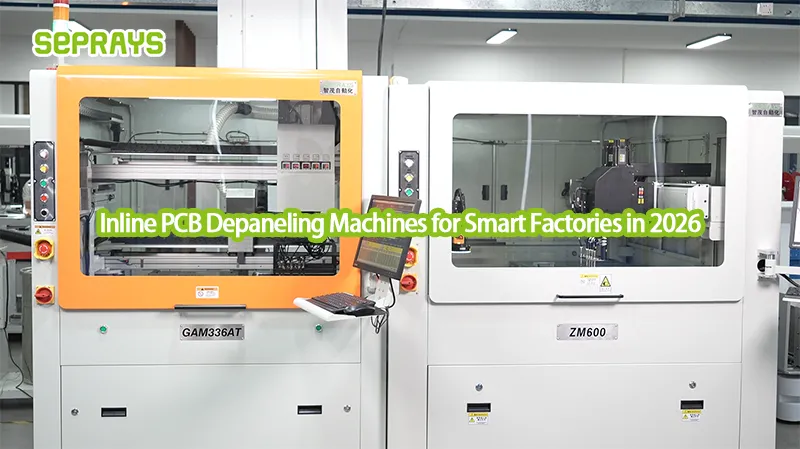
Inline PCB Depaneling Machines are becoming a serious topic inside modern SMT factories.
Not because they look more advanced.
Not because “Industry 4.0” sounds impressive.
But because many production lines in 2026 are reaching a point where manual depaneling is becoming the bottleneck.
A factory may already have:
- High-speed SMT placement
- Automated AOI
- MES systems
- Smart warehousing
Yet the depaneling process still relies on operators to load and unload panels manually.
That mismatch creates hidden inefficiencies.
And as labor costs rise and product designs become more complex, more manufacturers are rethinking how depaneling fits into the entire production flow.
🔍 What Is an Inline PCB Depaneling Machine?
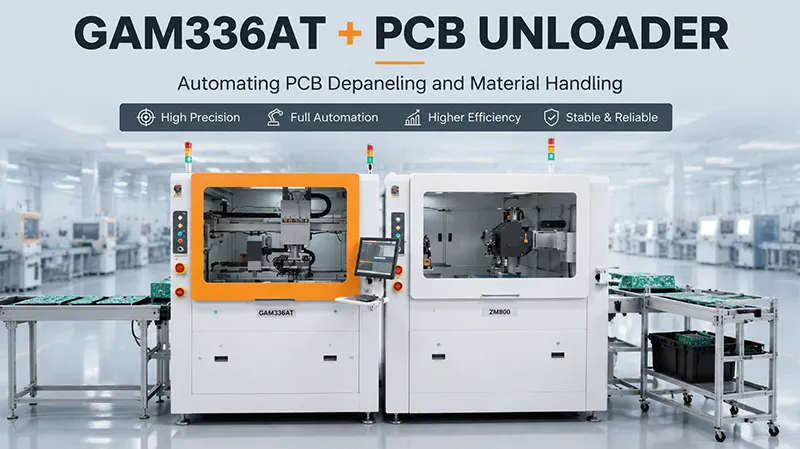
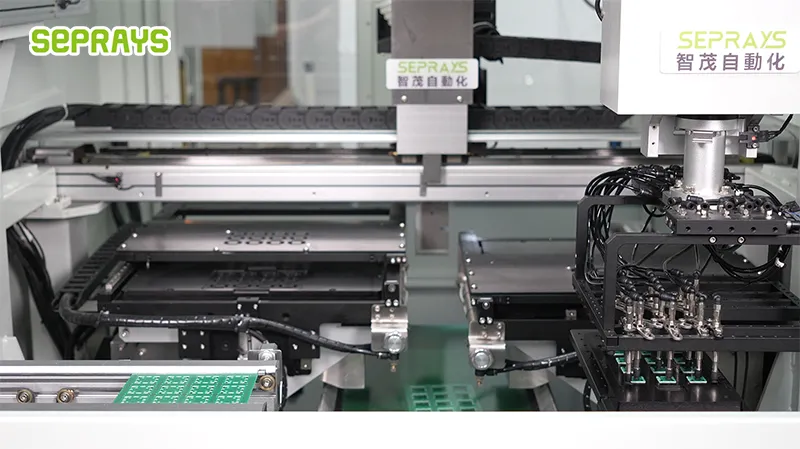
An inline depaneling system connects directly with the SMT production line.
Instead of separating boards offline at a separate workstation, the PCB moves automatically through the depaneling process as part of continuous production.
Typical inline configurations include:
- Conveyor loading
- CCD vision alignment
- Automatic board positioning
- Robotic unloading
- MES data integration
In simple terms:
The depaneling machine becomes part of the smart factory ecosystem rather than operating in isolation.
⚠️ Why Traditional Offline Depaneling Starts Creating Problems
Offline systems still work well in many factories.
Especially for:
- Low-volume production
- Flexible prototyping
- Budget-limited operations
But in high-volume SMT environments, several problems appear over time.
Common pain points:
- Operator fatigue
- Inconsistent loading positions
- Longer WIP waiting time
- Increased handling damage
- Higher labor dependency
Interestingly, many factories do not notice these losses immediately.
The SMT line still runs.
Production still ships.
But small inefficiencies accumulate every day.
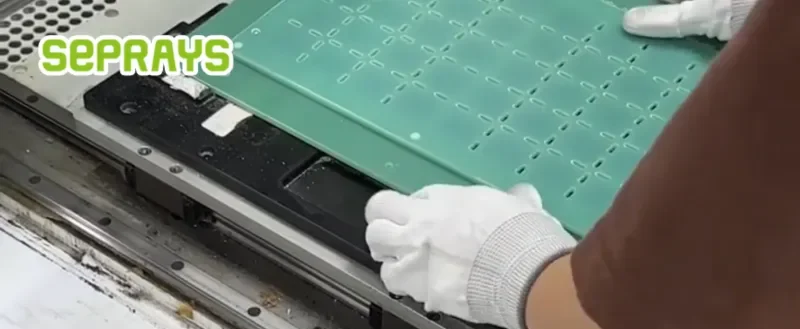
🏭 Smart Factories Need Continuous Production Flow
In 2026, manufacturers are focusing more on production continuity.
The goal is no longer just machine speed.
It is a stable flow.
An inline depaneling machine helps reduce interruptions between processes.
That becomes especially important for:
- Automotive electronics
- High-density PCBA
- BMS boards
- Semiconductor modules
- Medical electronics
These industries require tighter process consistency.
Manual handling introduces variation.
Automation reduces it.
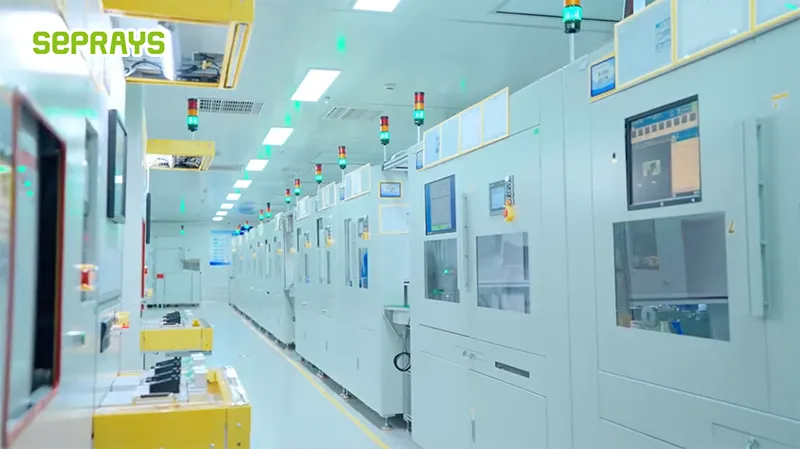
📊 Inline vs Offline Depaneling Comparison
| Factor | Inline Depaneling | Offline Depaneling |
|---|---|---|
| Labor Dependency | Low | Higher |
| Automation Compatibility | Excellent | Limited |
| Production Continuity | High | 緩やかな |
| Initial Investment | Higher | Lower |
| Flexibility for Small Batches | 緩やかな | Strong |
| Handling Damage Risk | Lower | Higher |
| SMT Line Integration | Excellent | Weak |
| Best for High-Volume Production | あり | Depends |
🔧 What Engineers Are Actually Looking for in 2026
Many buyers assume inline depaneling decisions are mainly about speed.
That is only partially true.
Process engineers today usually focus more on:
- Yield stability
- Fast model changeover
- Traceability
- Low-stress cutting
- Integration flexibility
One interesting shift is the growing demand for CCD vision systems.
Why?
PCB alignment accuracy becomes more critical as board density increases.
A small positional deviation may create:
- Edge damage
- Burrs
- Stress cracks
- Component collision
Especially when components are placed very close to the board edge.
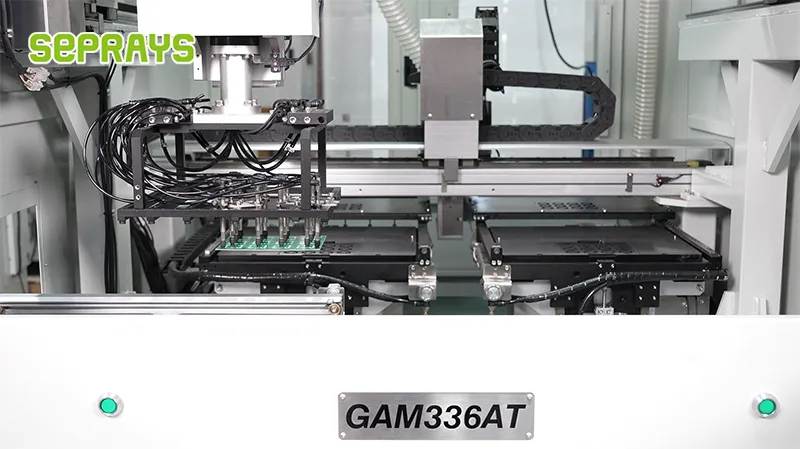
👀 CCD Vision Systems Are Becoming Standard
A few years ago, some factories considered CCD alignment optional.
That is changing quickly.
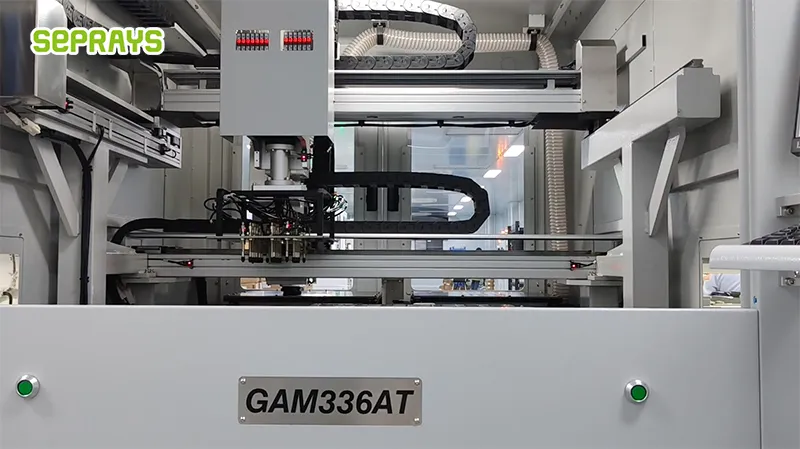
Modern inline systems increasingly use vision positioning to improve:
- Cutting accuracy
- Repeatability
- Changeover speed
This becomes valuable in high-mix production.
Instead of manually adjusting fixtures repeatedly, operators can switch products faster using vision-guided alignment and offline programming.
That saves more time than many factories initially expect.
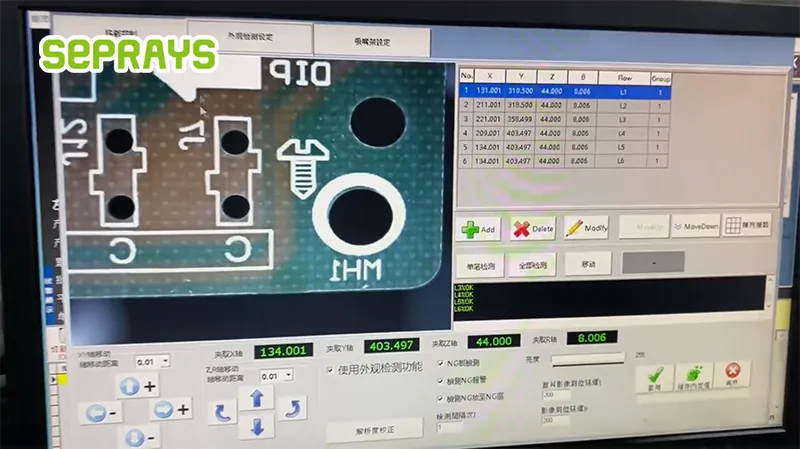
💡 The Hidden Cost of Manual Changeovers
One of the biggest production killers is not cutting speed.
It is setup time.
Especially in mixed PCB production.
Many factories still struggle with:
- Frequent fixture replacement
- Manual positioning
- Programming delays
This is where inline smart depaneling systems create real value.
Features like:
- Fixture-less designs
- CCD alignment
- Automatic width adjustment
- オフライング
can significantly reduce downtime between products.
That matters more in 2026 because production cycles are shorter than before.
🚗 Which PCB Types Benefit Most from Inline Depaneling?
Not every PCB needs full inline automation.
But certain products benefit much more than others.
Typical examples:
🔹 Automotive Electronics
Large production volume.
Strict reliability standards.
High traceability requirements.
🔹 BMS and Power Control Boards
Heavy boards.
Complex structures.
Higher handling risk.
🔹 High-Density Consumer Electronics
Small spacing.
Components close to edges.
Sensitive solder joints.
🔹 Semiconductor and AI Hardware
Precision-sensitive products.
Tighter dimensional tolerances.
🧪 A Real Production Scenario
A manufacturer producing automotive control boards faced increasing pressure from customers in 2025.
The issue was not SMT placement.
It was downstream handling.
Their offline depaneling process created:
- Production congestion
- Inconsistent unloading
- Extra operator workload
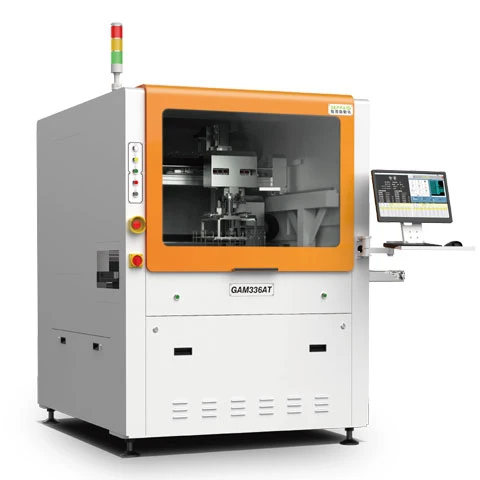
After reviewing the process flow, the company worked with Seprays Group to introduce an inline router depaneling system with:
- CCD vision positioning
- Automatic loading/unloading
- MES connectivity
- Low-stress routing
The improvement was not only higher throughput.
The bigger gain came from production consistency.
Operators spent less time managing board movement, while the SMT line maintained a more stable flow.
🔄 Inline Automation Is Not Always the Right Choice
This may sound surprising.
But full inline automation is not always necessary.
For example:
- Small-batch prototyping
- Frequent engineering revisions
- Low-volume flexible production
may still benefit from offline systems.
This is why experienced manufacturers evaluate:
- Product mix
- Future production plans
- Changeover frequency
- Labor availability
- Available floor space
before choosing equipment.
The best solution depends on the production reality — not marketing trends.
💰 Is Inline Depaneling Worth the Investment?
For many factories in 2026, the answer is increasingly yes.
But ROI depends heavily on production conditions.
Inline systems usually make more sense when factories face:
- Rising labor cost
- Large production volume
- Continuous SMT operation
- High product consistency requirements
The biggest financial advantage often comes from:
- Reduced labor dependency
- Lower handling damage
- Better production continuity
- Reduced bottlenecks
Not just faster cutting.
🌍 Smart Factories Need Smarter Depaneling
As SMT production becomes more intelligent, depaneling can no longer remain disconnected from the rest of the line.
Modern factories increasingly expect:
- Data connectivity
- Automated process control
- Predictable quality
- Flexible changeovers
Depaneling equipment is becoming part of the digital manufacturing strategy.
Not just a standalone cutting machine.
🚀 Final Thoughts
Inline PCB depaneling machines are not replacing every offline system.
But in high-volume smart factories, they are becoming increasingly important.
Especially where manufacturers need:
- Stable throughput
- Reduced labor dependency
- Better traceability
- Consistent product quality
The real question in 2026 is no longer:
“Should we automate?”
It is:
“Which level of automation actually matches our production model?”
That is where careful process evaluation matters most.
🚀 Why Choose Seprays Group?
With more than 30 years of industry experience, Seprays Group continues to help electronics manufacturers optimize PCB/FPC depaneling processes for modern smart factories.
Seprays Group has been dedicated to PCB/FPC depaneling technology, providing a full range of solutions—including milling-cutter depanelers, laser depanelers, V-groove depanelers, punching depanelers, inline automation systems, and intelligent handling equipment. Our solutions are trusted by globally recognized manufacturers such as Foxconn, Flextronics, State Grid, Luxshare, Compal, Wistron, China Electronics, Quanta, CRRC, China Aerospace, OPPO, ZTE, and Bosch. Seprays equipment is widely used in factories across China and worldwide.
By combining low-stress cutting technology, CCD vision systems, MES integration, and smart automation capabilities, Seprays helps customers improve production efficiency, process consistency, and long-term manufacturing reliability.
If you are evaluating inline PCB depaneling solutions for your SMT production line, please feel free to contact us. Our engineering team can help assess the most suitable setup for your factory.
WhatsApp: +8618929266433
Eメール: sales@seprays.com
❓ FAQ
1. What is the biggest advantage of inline PCB depaneling?
The main advantage is continuous automated production with reduced manual handling and improved consistency.
2. Are inline depaneling systems suitable for high-mix production?
Yes, especially when equipped with CCD vision systems, offline programming, and fast changeover functions.
3. Do inline systems reduce PCB damage?
In many cases, yes. Automated positioning and reduced manual handling can lower the risk of stress and handling damage.
4. Is inline depaneling only for large factories?
Not necessarily. Mid-sized manufacturers with growing SMT volumes also benefit from inline automation.
5. How do manufacturers decide between inline and offline depaneling?
It depends on production volume, product mix, labor cost, floor space, and automation goals.