.png)
 Korean
  English
  Spanish
  Japanese
  Russian
  Chinese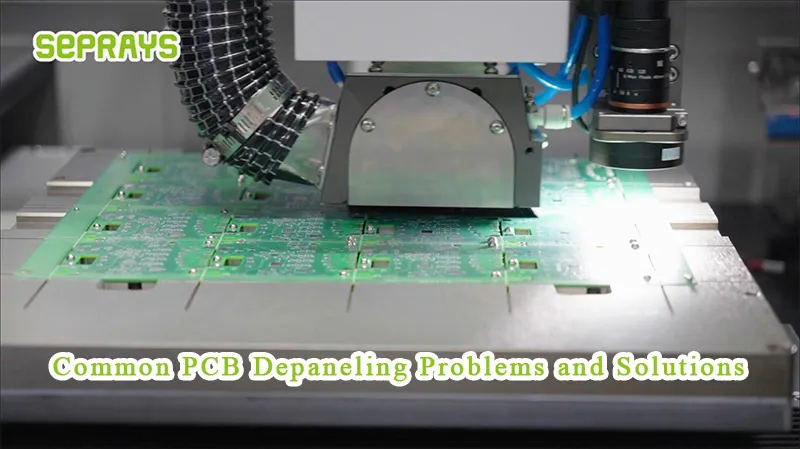
Common PCB depaneling problems and solutions often come into focus only after yield starts to drop. At first, everything looks fine—SMT runs smoothly, inspection passes. Then small issues begin to appear. Edge cracks. Component failures. Inconsistent quality.
Depaneling is usually the last step.
But it can undo everything done before.
🔍 Why Depaneling Problems Are Often Overlooked
Depaneling doesn’t always show immediate defects.
Many issues are:
- Invisible at first
- Triggered later during testing
- Amplified in real-world use
This makes troubleshooting difficult.
And often, the root cause points back to how the PCB was separated.
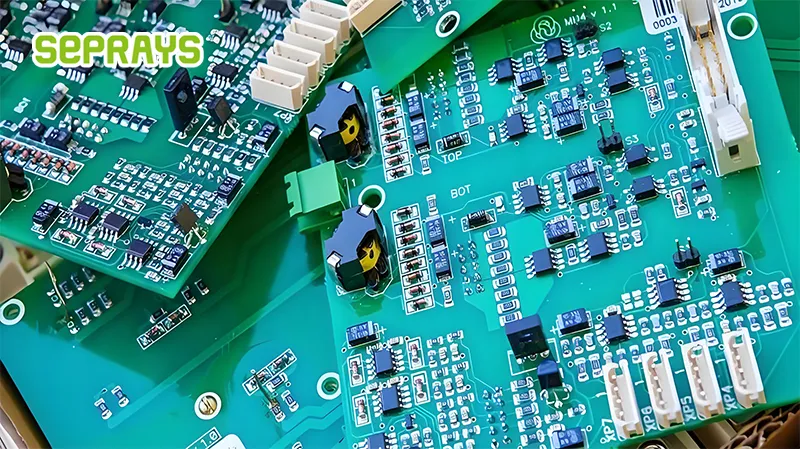
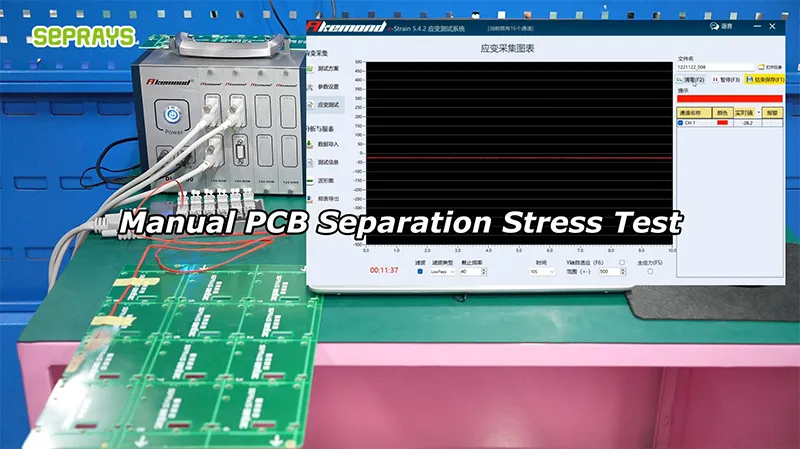
⚙️ Problem 1 — Mechanical Stress Damage
One of the most common issues.
Symptoms include:
- Cracked solder joints
- Damaged capacitors near the edges
- Internal PCB layer stress
Cause:
- Excessive cutting force
- Poor parameter settings
- Inappropriate depaneling method
Solution:
- Reduce cutting speed and optimize feed rate
- Improve fixture stability
- Switch to lower-stress methods (e.g., router or laser)
Stress cannot be eliminated.
But it can be controlled.
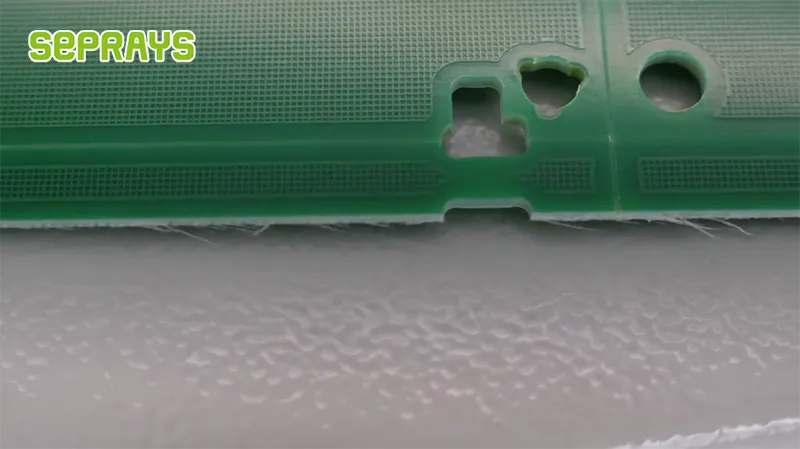
💥 Problem 2 — Edge Chipping and Burrs
Edge quality matters more than it seems.
Poor edges can lead to:
- Assembly misalignment
- Cosmetic defects
- Reliability issues over time
Cause:
- Worn tools
- Incorrect blade selection
- Improper cutting parameters
Solution:
- Use high-quality, sharp tools
- Adjust cutting parameters
- Perform regular maintenance
Consistency in tooling is key.
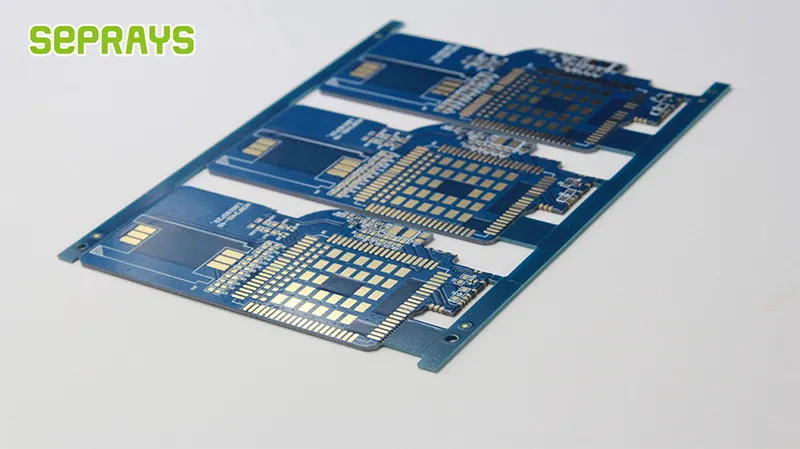
🧩 Problem 3 — Component Damage Near Edges
High-density PCBs are especially vulnerable.
Common issues:
- Lifted components
- Cracked MLCCs
- Solder joint fractures
Cause:
- Components placed too close to cutting lines
- Mechanical vibration during depaneling
Solution:
- Adjust PCB design (increase edge clearance)
- Use non-contact methods like laser depaneling
- Optimize fixture support
Design and process must work together.
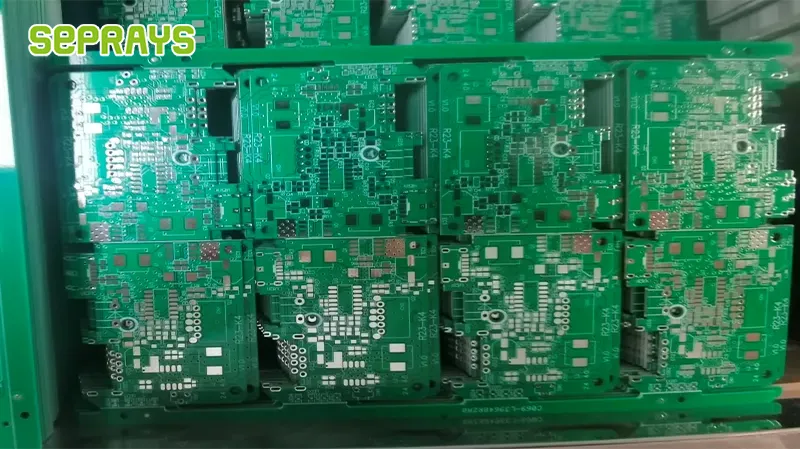
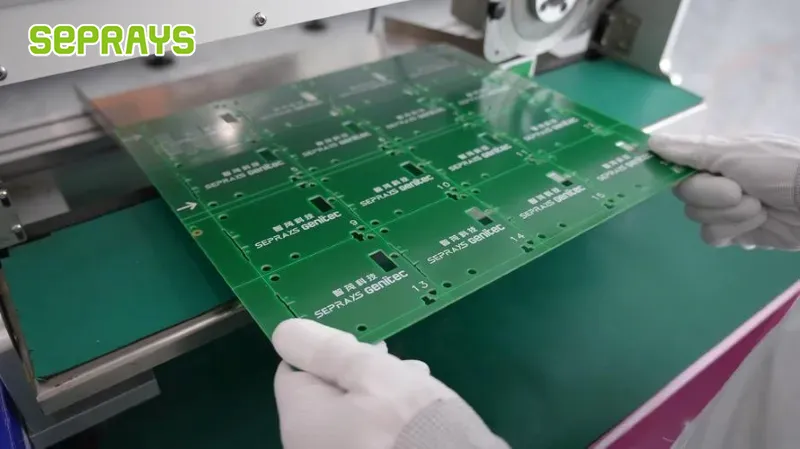
🔄 Problem 4 — Low Yield and Inconsistent Quality
Yield fluctuations are often linked to depaneling.
Signs include:
- Variation between batches
- Unstable defect rates
- Increased rework
Cause:
- Inconsistent machine settings
- Tool wear
- Operator variability
Solution:
- Standardize process parameters
- Implement regular maintenance schedules
- Automate depaneling where possible
Stability improves yield.
🚧 Problem 5 — Dust and Contamination
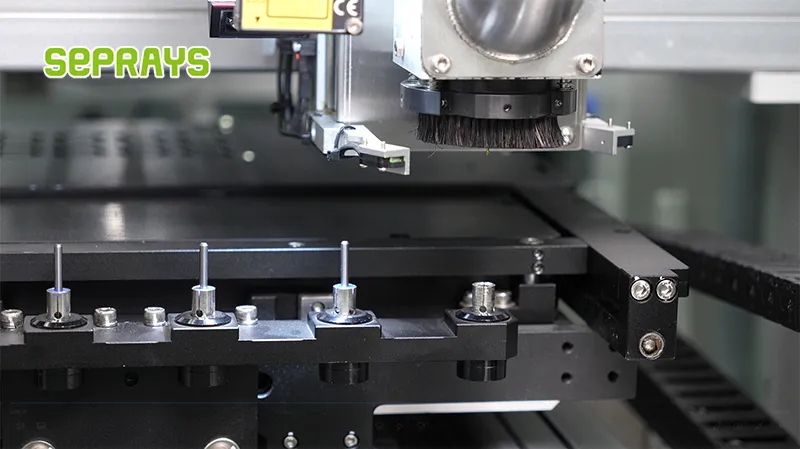
Often underestimated.
Dust can:
- Contaminate sensitive components
- Affect downstream processes
- Reduce product reliability
Cause:
- Mechanical cutting processes
- Lack of proper extraction systems
Solution:
- Install dust collection systems
- Use cleaner cutting methods (e.g., laser)
- Maintain a clean production environment
Cleanliness is part of quality.
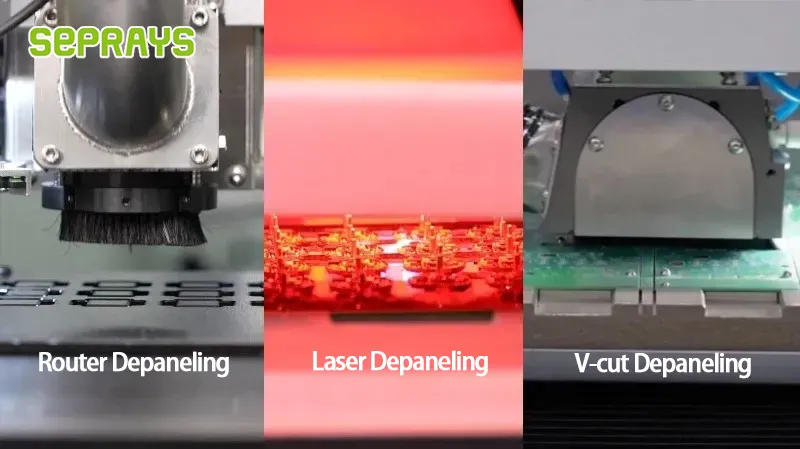
📊 Comparison of Depaneling Methods and Common Issues
| Method | Main Issue | Risk Level | Typical Solution |
|---|---|---|---|
| Saw Blade | Mechanical stress | 중소 | Optimize parameters |
| Router | Tool wear | 중소 | Regular maintenance |
| Laser | Thermal control | Low | Parameter optimization |
| V-Groove | Break stress | 낮은 중소 | Design optimization |
| Punching | Impact force | 중소 | Limited to simple boards |
Understanding the trade-offs helps prevent problems before they occur.
🧪 Case Study — Reducing Defects in Production
A manufacturer producing consumer electronics boards faced increasing defect rates.
Issues included:
- Edge cracks
- Component failures
- Inconsistent output
They worked with Seprays to analyze their depaneling process.
Actions taken:
- Switched from a saw blade to a router for complex boards
- Introduced laser depaneling for sensitive products
- Standardized process parameters
Results:
- Defect rates have reduced significantly
- Yield improved
- Production became more stable
The solution was not one change—but a combination of improvements.
💰 Cost Impact of Depaneling Problems
Paneling issues are expensive.
They lead to:
- Scrap and rework
- Increased inspection time
- Production delays
- Potential field failures
Investing in the right process often reduces total cost.
Not just equipment cost, but overall production cost.
🛠️ Practical Tips for Avoiding Depaneling Problems
From real production experience:
- Match the depaneling method to the PCB design
- Keep tools in optimal condition
- Monitor process parameters regularly
- Improve fixture design
- Consider automation for consistency
Small improvements.
Big impact.
🚀 Why Choose Seprays Group?
Seprays Group focuses on helping manufacturers solve real depaneling challenges through practical and reliable solutions.
Seprays Group has been dedicated to PCB/FPC depaneling technology, providing a full range of solutions — including milling cutter depanelers, laser depanelers, V-groove depanelers, punching depanelers, and automated handling systems.
Their equipment is trusted by leading global manufacturers such as Foxconn, Flextronics, State Grid, Luxshare, Compal, Wistron, China Electronics, Quanta, CRRC, China Aerospace, OPPO, ZTE, and Bosch. These partnerships reflect strong performance in high-volume, high-reliability production environments.
With deep application experience, Seprays helps manufacturers reduce defects, improve yield, and achieve stable production.
If you are facing PCB depaneling issues, feel free to contact us for practical solutions.
WhatsApp: +8618929266433
이메일: sales@seprays.com
❓ FAQ
1. What is the most common PCB depaneling problem?
Mechanical stress, causing micro-cracks and component damage, is the most common issue.
2. How can edge quality be improved?
By using sharp tools, optimizing parameters, and maintaining equipment.
3. Is laser depaneling always the best solution?
Not always, but it is ideal for sensitive and high-density PCBs.
4. How to reduce depaneling-related defects?
Match the method to the PCB design and maintain process consistency.
5. Does automation help reduce problems?
Yes. Automation improves consistency and reduces operator-related variability.