.png)
 Korean
  English
  Spanish
  Japanese
  Russian
  Chinese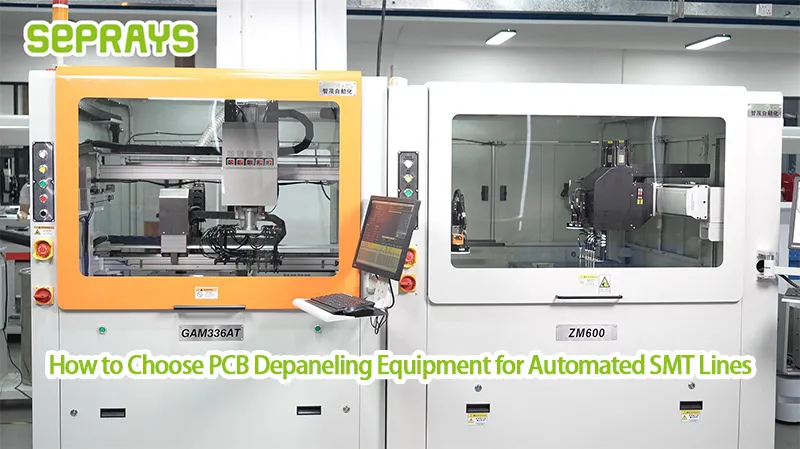
How to choose PCB depaneling equipment for automated SMT lines—this is usually not the first question engineers ask. It comes later, when the SMT line is already running fast, but something downstream can’t keep up.
Boards pile up.
Operators step in.
Consistency drops.
That’s when depaneling becomes a real decision point, not just a supporting process.
⚙️ Start from the SMT Line, Not the Machine
A common mistake is choosing equipment based on specs alone.
In automated SMT lines, what matters more is:
- Line balance
- Throughput matching
- Integration capability
Depaneling is not isolated.
It must fit into the full production flow.
Ask first:
- What is the line speed?
- Inline or offline requirement?
- What is the acceptable cycle time?
Without this, even the best machine won’t solve the problem.
🔍 Understand Your PCB Characteristics
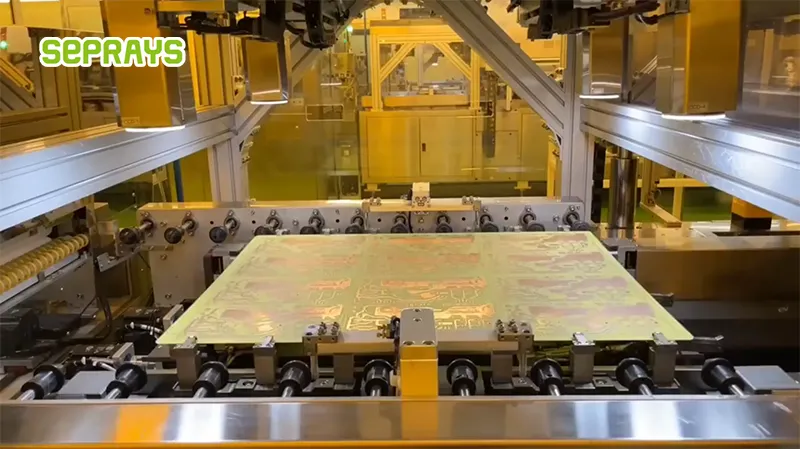
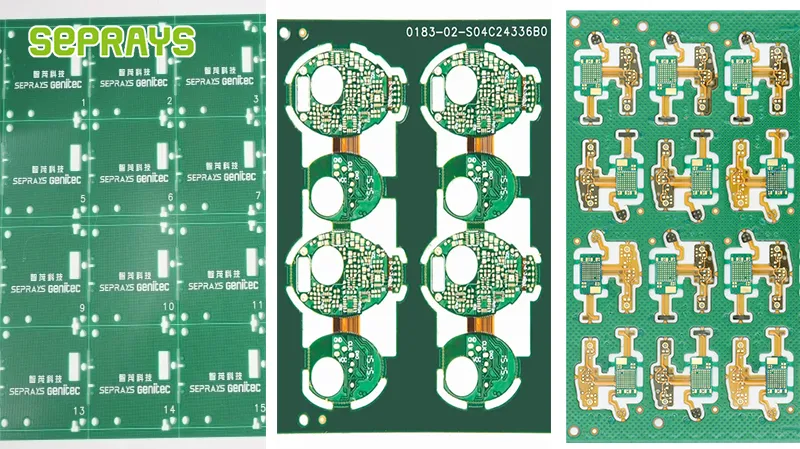
Different boards require different depaneling methods.
Key factors include:
- PCB thickness
- Material type (FR4, aluminum, ceramic)
- Component proximity to edges
- Board shape complexity
For example:
- Straight V-groove panels → simpler solutions
- Irregular shapes → more flexible systems
- Sensitive components → low-stress methods
The board design defines the process.
Not the other way around.
🧩 Matching Depaneling Methods to Applications
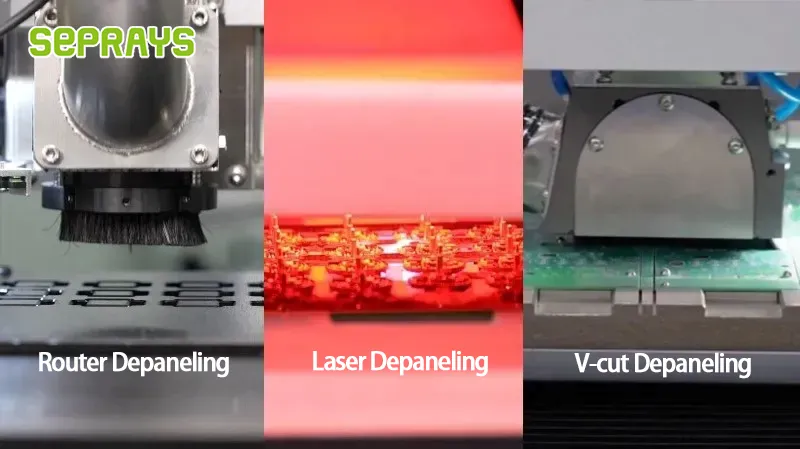
Here’s a practical comparison for automated SMT environments:
| Method | Stress Level | Flexibility | Automation Fit | Typical Use |
|---|---|---|---|---|
| Saw Blade | 중소 | Low | High | Straight-line, high-volume boards |
| Router | 낮은 중소 | High | High | Complex shapes, mixed production |
| Laser | Very Low | Very High | Medium-High | High-density, sensitive PCBs |
| V-Groove | Low | 중소 | High | Pre-scored panels |
| Punching | 중소 | Low | Very High | Standardized mass production |
Each method can be automated.
But not every method fits every product.
🚧 Common Pain Points in Automated Lines
From real factory setups, these issues often appear:
- Bottlenecks after reflow
- Manual intervention breaks automation
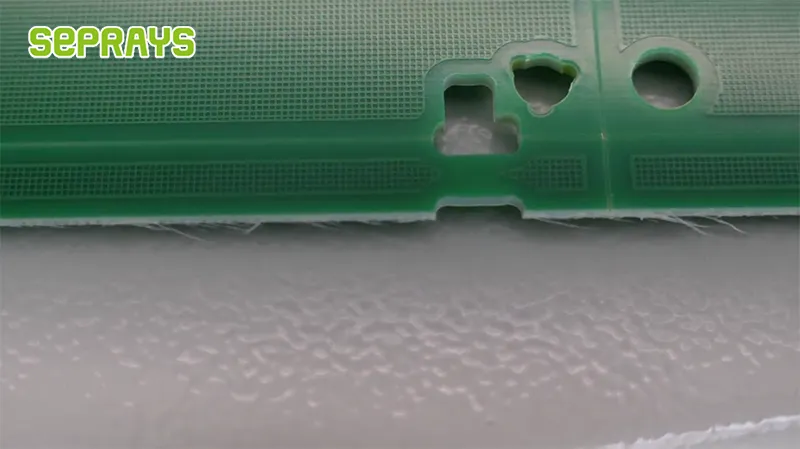
- Inconsistent depaneling quality
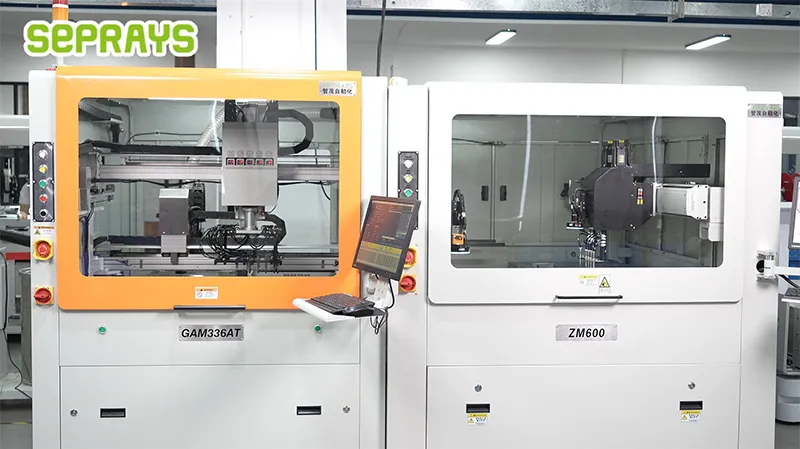
- Equipment not synchronized with the conveyors
These are not machine problems alone.
They are system problems.
💰 Cost Is More Than Equipment Price
Initial investment is only part of the story.
In automated SMT lines, consider:
- Labor reduction
- Yield improvement
- Maintenance frequency
- Downtime impact
A cheaper machine that slows the line costs more over time.
A more suitable system often delivers better ROI.
🧪 Case Study — From Bottleneck to Balance
A high-volume electronics manufacturer running automated SMT lines faced a familiar issue:
Their placement and reflow were fully automated.
Depaneling was still semi-manual.
Problems:
- Throughput mismatch
- Increased labor costs
- Quality variation
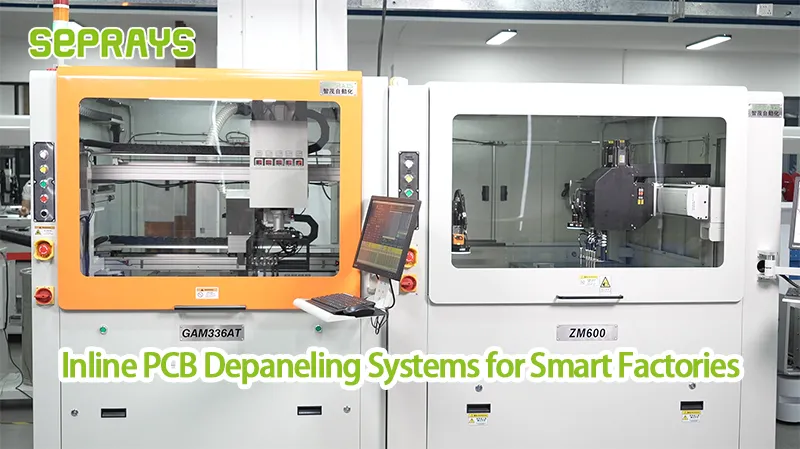
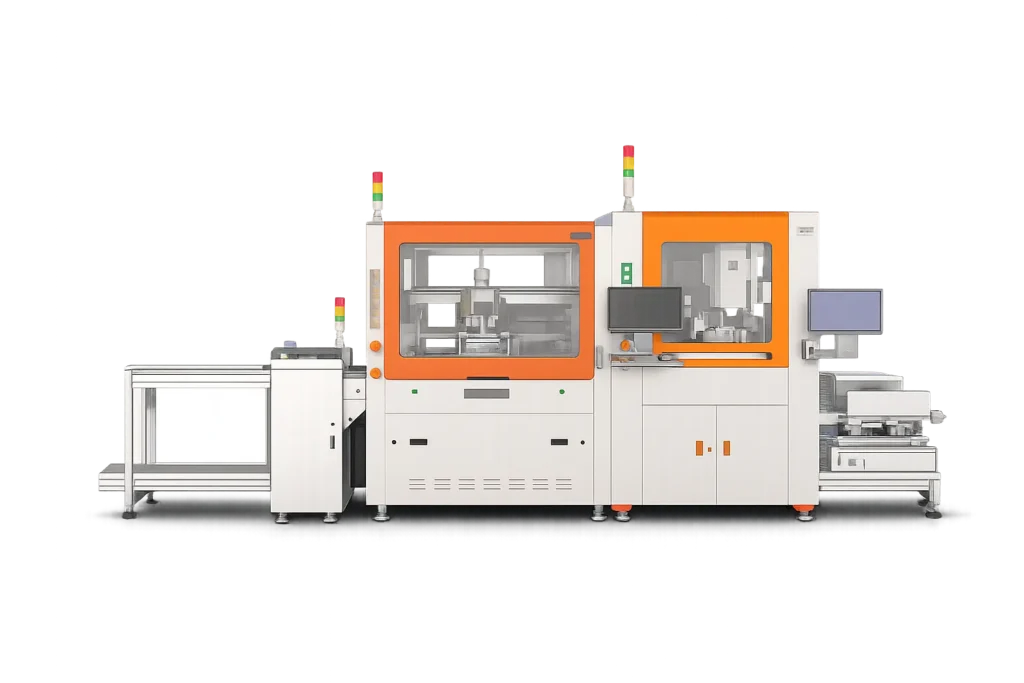
They partnered with Seprays to implement an inline router depaneling system.
After optimization:
- Line balance improved
- Labor reduced significantly
- Output consistency increased
The key was not just automation—but proper integration.
🔄 Inline vs Offline — Which to Choose?
This decision matters.
Inline depaneling:
- Best for high-volume, stable production
- Fully integrated with the SMT line
- Minimal manual handling
Offline depaneling:
- More flexible for mixed production
- Lower initial investment
- Easier to adapt to different products
There is no universal answer.
It depends on production scale and variability.
🛠️ Practical Selection Checklist
Before choosing equipment, review:
- Does it match the SMT line speed?
- Can it integrate with conveyors and MES?
- Is the stress level suitable for your PCB?
- What is the maintenance requirement?
- Can it scale with future production?
Short questions.
Long-term impact.
🚀 Future Trends in Automated Depaneling
Automation is moving forward quickly.
Trends include:
- Fully inline laser systems for high-end applications
- Smart monitoring and predictive maintenance
- Integration with factory data systems
Depaneling is becoming part of a connected ecosystem.
Not just a standalone step.
🚀 Why Choose Seprays Group?
Seprays Group focuses on delivering depaneling solutions that work in real automated SMT environments—not just in theory.
Seprays Group has been dedicated to PCB/FPC depaneling technology, providing a full range of solutions — including milling cutter depanelers, laser depanelers, V-groove depanelers, punching depanelers, and automated handling systems.
Their equipment is trusted by leading global manufacturers such as Foxconn, Flextronics, State Grid, Luxshare, Compal, Wistron, China Electronics, Quanta, CRRC, China Aerospace, OPPO, ZTE, and Bosch. These partnerships reflect strong performance across high-volume and high-reliability production lines worldwide.
With experience across different industries and applications, Seprays helps manufacturers select the right equipment based on actual production needs—not assumptions.
If you are planning to upgrade or optimize your SMT line, feel free to contact us.
WhatsApp: +8618929266433
이메일: sales@seprays.com
❓ FAQ
1. What is the best depaneling method for automated SMT lines?
It depends on PCB design. Router and inline systems are commonly used for flexibility and integration.
2. Should I choose inline or offline depaneling?
Inline for high-volume stable production, offline for flexibility.
3. How important is stress control in depaneling?
Very important, especially for high-density or sensitive PCBs.
4. Can depaneling equipment integrate with MES systems?
Yes. Modern systems support data integration and traceability.
5. How to avoid bottlenecks in SMT lines?
Match depaneling speed with SMT output and ensure full process integration.