.png)
 Korean
  English
  Spanish
  Japanese
  Russian
  Chinese
V-groove PCB depaneling is a common method used to separate pre-scored PCBs.
Choosing the right machine can significantly impact product quality, production speed, and equipment longevity.
In this article, we’ll break down the main types of V-groove PCB depaneling machines and what to consider when choosing the right one for your factory.
⚙️ Common Types of V-Groove PCB Depaneling Machines
🛠️ Moving-Blade Type
- Uses a rotary upper blade and a linear lower blade
- Produces very low stress, ideal for protecting solder joints
- Clean, burr-free edges—suitable for FR4 or component-loaded PCBs
- Comes with infrared safety curtains for operator protection
This is one of the most commonly used models across small to mid-volume electronics manufacturing.

✂️ Guillotine-Type (Straight-Blade)
- Dual pneumatic straight-blade design
- Cuts only short distances (≤2mm), reducing mechanical strain
- Ultra-low stress levels (down to 600μST)
- Works well with aluminum or copper-based boards
- Easy to operate, no training required
Perfect for high-hardness substrates and environments that prioritize simplicity.

💡 Multi-Blade Depaneling (for LED Strips)
- Equipped with six grouped blades for simultaneous multi-line cutting
- Reduces internal stress by 80%
- Prevents warping in aluminum-core PCBs
- Blade wobble <0.02mm, ensuring smooth, clean edges
A great choice for LED manufacturers or large-format light panel producers.

🧠 Seprays Featured Machines (For V-Scored Panels)
🔧 ZM30ASV / ZM300SV: Full-Automatic Online V-Groove Saw Depanelers
- Dual-direction cutting (X/Y axis)
- In-line conveyor system for unmanned operation
- Equipped with dust collection and quick-change blade modules
Ideal for high-throughput SMT lines that demand flexibility and cleanliness.

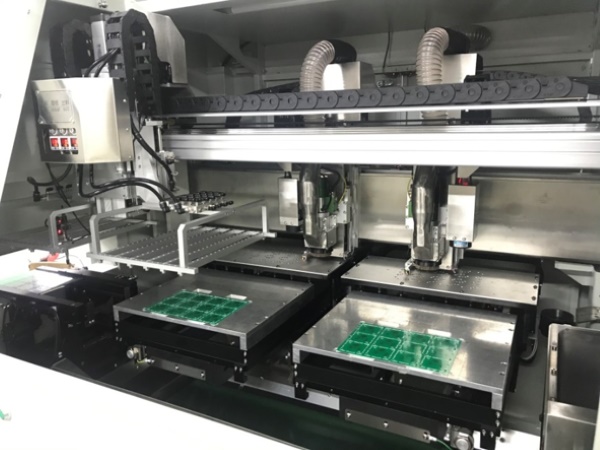
🎯 Vision-Based V-Groove Depaneling Machines
- Uses CCD vision correction for cutting accuracy (±0.05mm)
- Dual-table design enables simultaneous cutting and loading
- Great for applications that require tight tolerances and camera-based feedback
Recommended for precision electronics, such as mobile devices or automotive boards.
🔍 Other Depaneling Methods (For Comparison)
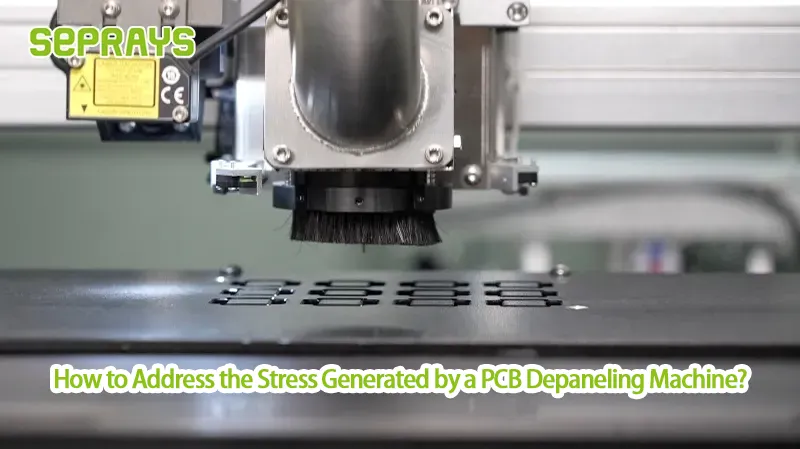
🌀 Router-Based Depaneling
- Seprays GAM386 represents this class
- Uses bottom-up milling, producing stress levels 1/100 that of manual snapping
- Best suited for boards with non-linear shapes or component-dense zones
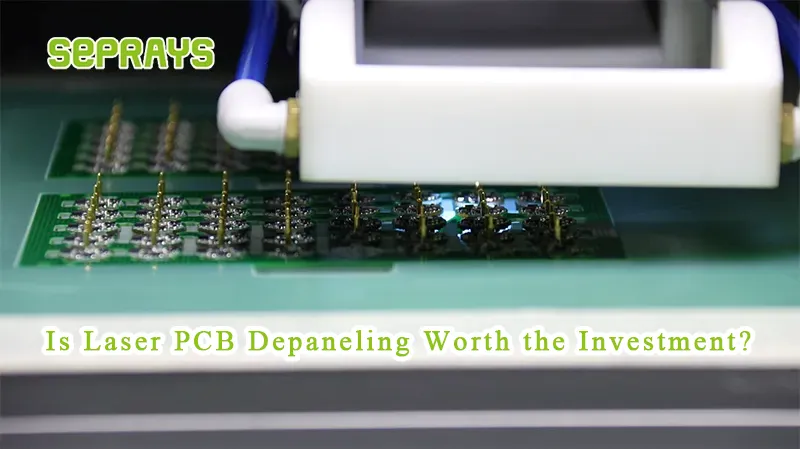
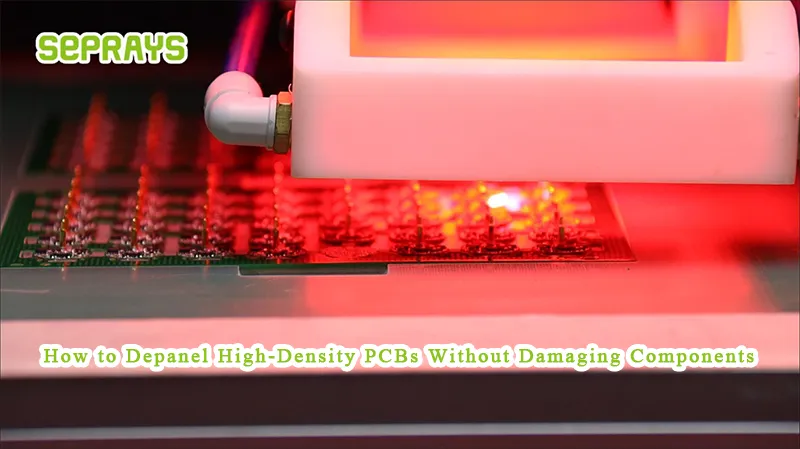
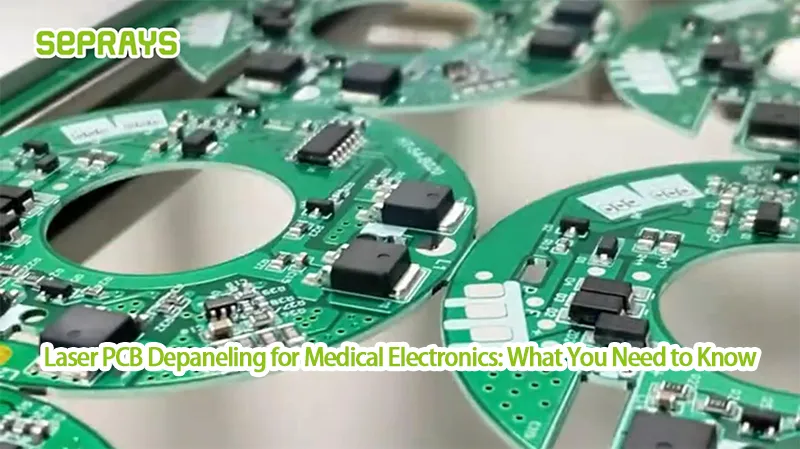
🔬 Laser Depaneling
- High-end solution from Seprays
- Non-contact, zero-stress cutting
- No mechanical wear or blade changes required
- Ideal for ultra-thin or flexible PCBs

📌 How to Choose the Right Depaneling Machine
When selecting a V-groove PCB separator, consider:
- Board type: FR4, aluminum, copper, or flex
- Required throughput: Manual, semi-auto, or fully automated
- Stress sensitivity: Will you be cutting near BGA, QFN, or LEDs?
- Budget and scale: Consider long-term value, not just upfront cost
- Precision level: Some applications require CCD-guided systems
- Safety and cleanliness: Does your workspace need dust collection or noise reduction?
Still not sure? Reach out to our team—we’re here to help.
🌟 Why Choose Seprays Group?
Seprays has over 30 years of mechanical design and PCB process expertise.
We specialize in V-groove depaneling solutions tailored to every industry—from consumer electronics to automotive and LED lighting.
Here’s what makes us different:
✅ Global service network with 24/7 support
✅ Free equipment consultation and process matching
✅ In-house R&D with continuous software upgrades
✅ Competitive pricing without compromising on quality
Need help selecting the best V-groove depaneling machine for your needs?
Contact us today—we’ll provide you with expert guidance and a free quote.