.png)
 English
  Spanish
  Japanese
  Korean
  Russian
  Chinese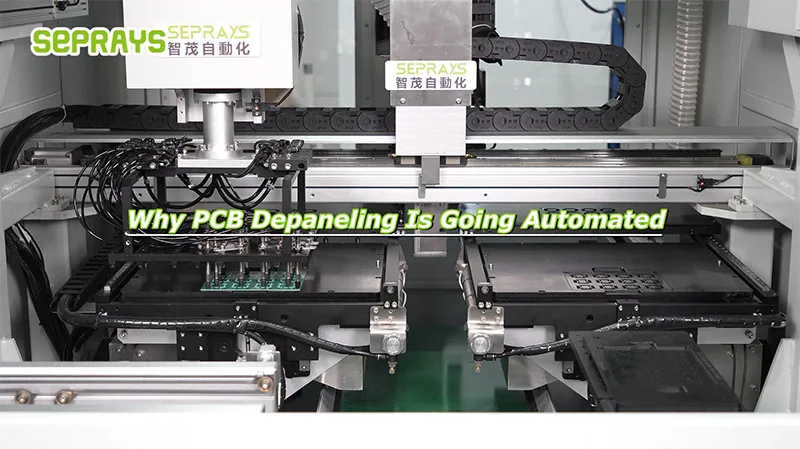
Why More Electronics Manufacturers Are Switching to Automated PCB Depaneling
Automated PCB depaneling is becoming a serious topic in electronics manufacturing circles in 2026. Not because it is “new,” but because production realities have changed. Labor costs are rising.PCB designs are getting denser.SMT lines are running faster.And manual separation methods are starting to create bottlenecks. Many factories that once relied on manual routing or standalone cutting stations are now rethinking the entire depaneling process. Especially in automotive electronics, communication devices, medical PCBA, and consumer electronics production. The shift is not only about speed.It is about consistency, yield, and long-term manufacturing stability. 🔍 Why Manual PCB Depaneling Is Becoming a Problem A common issue in many SMT factories looks like this: Orders increase.Placement machines run continuously.But depaneling still depends on operators loading and unloading boards manually. That creates several hidden costs. Typical production problems: These problems become more obvious in: One factory manager described it simply: ⚙️ What Automated PCB Depaneling Actually Changes Fully automated systems do more than replace manual loading. They connect the depaneling directly into the production flow. Modern inline depaneling systems can include: The result is not just fewer operators. It is a more stable production. 📉 The Hidden Cost of Semi-Manual Processing Many factories compare equipment

Best PCB Depaneling Machines for High-Density PCBA in 2026
Best PCB Depaneling Machines are becoming a much bigger discussion in 2026 — especially for manufacturers working with high-density PCBA. A few years ago, many factories mainly focused on: Today, the situation is different. Modern PCBAs are becoming: That changes the entire depaneling equation. In some cases, a cutting process that worked perfectly five years ago may now create hidden reliability risks. And many manufacturers only discover those problems after products enter real-world use. 🔍 Why High-Density PCBA Is Harder to Depanel High-density PCBAs pose several challenges simultaneously. Typical boards now include: This means even small mechanical stress can affect product reliability. The difficult part? Damage is not always visible immediately. A board may pass functional testing, but later develop: That is why depaneling quality matters more than many factories initially expect. ⚠️ The Hidden Cost of Using the Wrong Machine One common mistake is choosing equipment based only on initial cost. On paper, a lower-cost system may look attractive. But for high-density PCBA, hidden costs appear quickly: In many factories, the actual production loss is not caused by machine downtime. It is caused by unstable cutting quality. 🧩 What Engineers Really Want in 2026 Interestingly, most engineers are no
Why Flexible PCB Depaneling Is Growing Fast in 2026
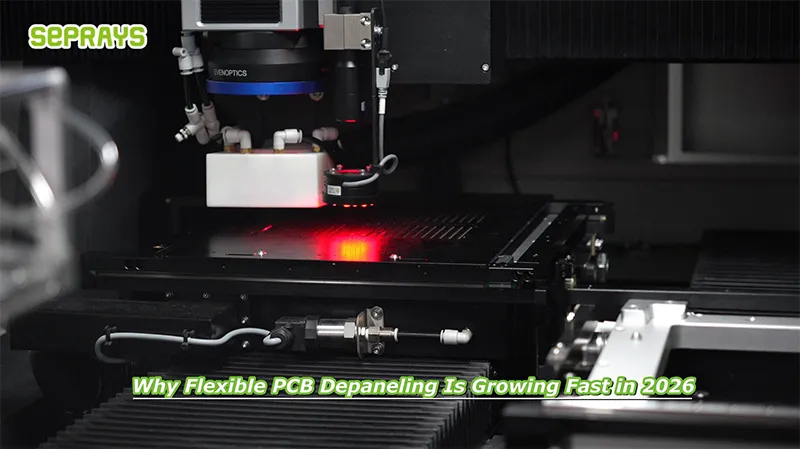
Flexible PCB Depaneling is becoming one of the fastest-growing topics in electronics manufacturing. Not because factories suddenly want new equipment.But because the products themselves are changing. In 2026, more devices are becoming: And that shift is pushing flexible PCB and rigid-flex PCB production much further than before. The challenge? Traditional depaneling methods were originally designed for rigid boards. Flexible materials behave very differently during cutting. That is why many manufacturers are rethinking their entire depaneling process. 🔍 Why Flexible PCBs Are Expanding So Quickly A few years ago, flexible PCBs were mostly associated with smartphones and wearable devices. Now they are appearing everywhere. Including: The reason is simple. Flexible boards help manufacturers save: At the same time, they improve product integration. But as production volume increases, depaneling becomes much more difficult. ⚠️ Why Flexible PCB Depaneling Is More Challenging Than Rigid Boards This is where many factories encounter problems. Flexible PCB materials are: Traditional mechanical cutting methods can create issues such as: Even handling itself can become risky. A flexible board may move slightly during cutting, causing alignment deviation or inconsistent results. 🧩 The Real Problem Is Not Just Cutting Many engineers initially focus only on separation quality. But in
Inline PCB Depaneling Machines for Smart Factories in 2026
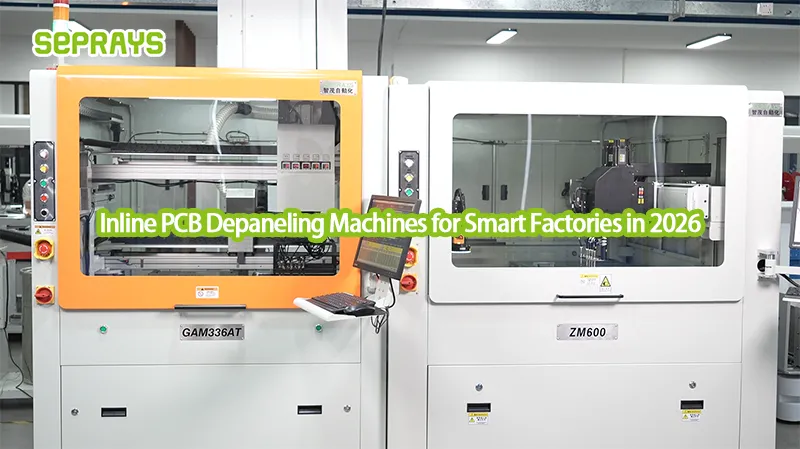
Inline PCB Depaneling Machines are becoming a serious topic inside modern SMT factories. Not because they look more advanced.Not because “Industry 4.0” sounds impressive. But because many production lines in 2026 are reaching a point where manual depaneling is becoming the bottleneck. A factory may already have: Yet the depaneling process still relies on operators to load and unload panels manually. That mismatch creates hidden inefficiencies. And as labor costs rise and product designs become more complex, more manufacturers are rethinking how depaneling fits into the entire production flow. 🔍 What Is an Inline PCB Depaneling Machine? An inline depaneling system connects directly with the SMT production line. Instead of separating boards offline at a separate workstation, the PCB moves automatically through the depaneling process as part of continuous production. Typical inline configurations include: In simple terms: The depaneling machine becomes part of the smart factory ecosystem rather than operating in isolation. ⚠️ Why Traditional Offline Depaneling Starts Creating Problems Offline systems still work well in many factories. Especially for: But in high-volume SMT environments, several problems appear over time. Common pain points: Interestingly, many factories do not notice these losses immediately. The SMT line still runs. Production still ships.
Laser vs Saw vs Router PCB Depaneling: Which Is Better in 2026?
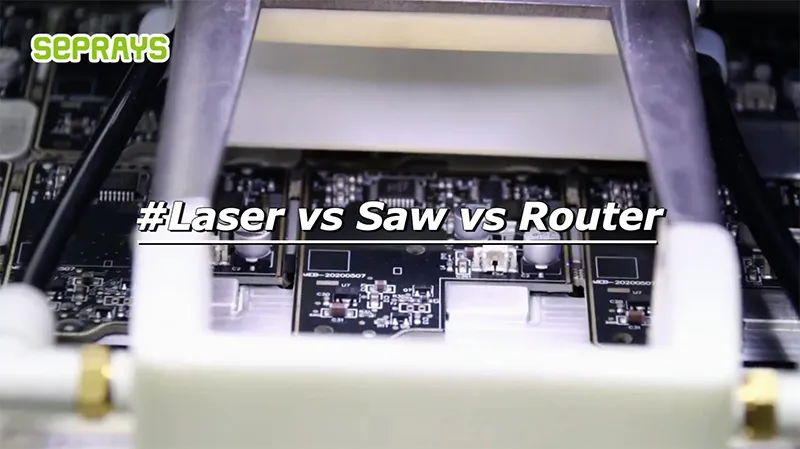
Laser vs Saw vs Router PCB Depaneling is no longer just a technical comparison for process engineers. In 2026, it will directly affect: And here’s the interesting part: There is no single “best” depaneling method anymore. What works perfectly for consumer electronics may fail in automotive production.What saves cost in high-volume manufacturing may create problems in high-mix environments. That’s why more manufacturers are evaluating depaneling from a process perspective — not just machine specifications. 🔍 Why Choosing the Wrong Depaneling Method Gets Expensive Fast A surprising number of production issues start after SMT assembly. Not during soldering. Not during testing. But during depaneling. Factories often experience: The difficult part? These problems are sometimes blamed on PCB design or assembly quality. But the real issue may simply be the wrong depaneling process. ⚙️ Understanding the Three Main Depaneling Methods Before comparing performance, it helps to understand what each method actually does best. 🔹 Laser Depaneling Uses focused laser energy to separate PCB boards without physical contact. Best known for: 🔹 Saw Depaneling Uses high-speed circular blades for straight-line cutting. Best known for: 🔹 Router Depaneling Uses milling cutters to follow programmed cutting paths. Best known for: 📊 Laser vs Saw vs
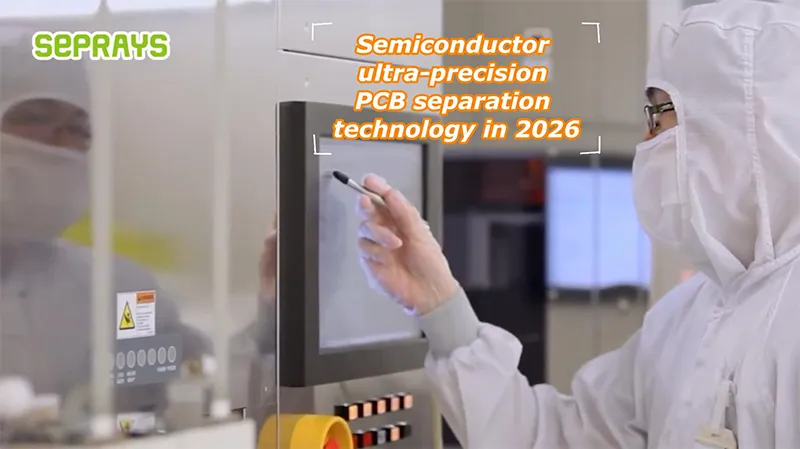
Why Semiconductor Manufacturers Need Ultra-Precision PCB Depaneling in 2026
Ultra-Precision PCB Depaneling is becoming a serious topic of discussion within semiconductor manufacturing facilities in 2026. Not because it sounds advanced.But because the margin for error is shrinking fast. A semiconductor customer once shared something surprisingly simple during a factory visit: “One tiny cutting deviation can ruin an entire high-value board.” That statement stayed with many engineers in the room. Today’s semiconductor PCBAs are: And the depaneling process — once considered a minor production step — is now directly tied to product reliability. 🔍 Why Semiconductor PCBAs Are More Difficult to Depanel Today Five years ago, many depaneling systems could tolerate small process variations. In 2026? Not anymore. Semiconductor-related PCBAs increasingly include: Some components are positioned extremely close to the board edge. That changes everything. Even minor vibration or cutting stress may lead to: The difficult part? Most defects are not immediately visible. ⚠️ The Hidden Cost of “Good Enough” Depaneling One common misconception is: “If the board looks fine after cutting, the process is acceptable.” But semiconductor manufacturing rarely works that way. A board can pass visual inspection while still containing: These problems may only appear later during: For semiconductor applications, delayed failure is often far more expensive than