.png)
 English
  Spanish
  Japanese
  Korean
  Russian
  Chinese
Depaneling for Automotive Electronics: Stress Comparison Across Different Cutting Technologies
Depaneling for Automotive Electronics has become a critical discussion point as vehicle electronics move toward higher integration, longer service life, and stricter reliability standards. In automotive SMT production, depaneling is no longer viewed as a simple mechanical step, but as a process that directly influences component integrity and field performance. This article compares stress behavior across common cutting technologies based on shared industry experience. 🚗 Why Stress Control Matters in Automotive PCBs Automotive electronics are exposed to vibration, thermal cycling, humidity, and long operating hours. Engineers consistently point out that stress introduced during depaneling can remain hidden until later validation stages—or worse, after deployment has occurred. Typical risks include: Because these failures often appear late, depaneling-related stress is treated as a preventive quality concern rather than a visible defect. 🪚 V-Cut Depaneling — Efficiency with Mechanical Trade-Offs V-cut depaneling remains a common practice in automotive production when board designs are stable, and edge clearance is sufficient. Observed characteristics: However, engineers frequently note that the snapping force concentrates stress along the score line. In automotive applications, this requires conservative design rules, controlled separation speed, and strict blade maintenance to reduce variability. ⚙️ Router Depaneling — Balanced Stress Distribution Router-based depaneling is

SMT Line PCB Depaneling Solution: Router, Laser, or V-Cut — Which Fits Best?
SMT Line PCB Depaneling Solution selection has become a recurring discussion point as production lines handle thinner boards, higher component density, and stricter reliability requirements. Rather than chasing a single “best” technology, experienced engineers increasingly ask a more practical question: which solution fits the SMT line’s real operating conditions? This article summarizes lessons shared across global production environments. ⚙️ Router Depaneling — Process Flexibility for Mixed Production Router-based depaneling is often chosen when SMT lines encounter frequent product changes or complex PCB layouts. Its main strength lies in adaptability. Engineers typically value: However, real-world experience shows that routing performance depends heavily on mechanical rigidity, spindle quality, and dust control. Without these, accuracy can drift over long production cycles. 🔥 Laser Depaneling — Stress-Free Cutting with Trade-Offs Laser depaneling attracts attention in high-density and thin-board applications where mechanical force must be minimized. Observed advantages include: That said, SMT teams often mention limitations such as higher capital cost, thermal influence on certain materials, and stricter safety requirements. As a result, laser solutions are commonly reserved for high-value or highly sensitive products. 🪚 V-Cut Depaneling — Efficiency in High-Volume Lines V-cut depaneling remains widely used in high-volume SMT lines with standardized panel designs.

Best PCB Depaneling Machine: Common Mistakes Buyers Make During Selection
Best PCB Depaneling Machine selection is often treated as a purchasing task, but in reality, it is an engineering decision that affects product quality, yield stability, and long-term operating cost. Based on feedback from global SMT lines, many buyers encounter similar mistakes—not due to lack of effort, but due to incomplete evaluation criteria. ⚠️ Mistake 1: Focusing on Cutting Speed Instead of Board Stress One of the most common misconceptions is equating higher speed with higher productivity. While cycle time matters, engineers frequently report that excessive cutting force or vibration leads to hidden stress on components and solder joints. In high-density or thin PCB designs, stress-related microcracks may only appear after thermal cycling or field operation. The lesson shared by experienced SMT managers is clear: controlled force and stability often outweigh raw speed. 🧩 Mistake 2: Underestimating Long-Term Durability Initial performance during factory acceptance tests can be misleading. Buyers sometimes overlook spindle lifespan, mechanical rigidity, or dust management design. Over time, wear-related drift in accuracy leads to inconsistent results between shifts. From an industrial quality perspective, durability is not about how a machine performs on day one—but how predictably it performs after thousands of operating hours. 💰 Mistake 3: Incomplete
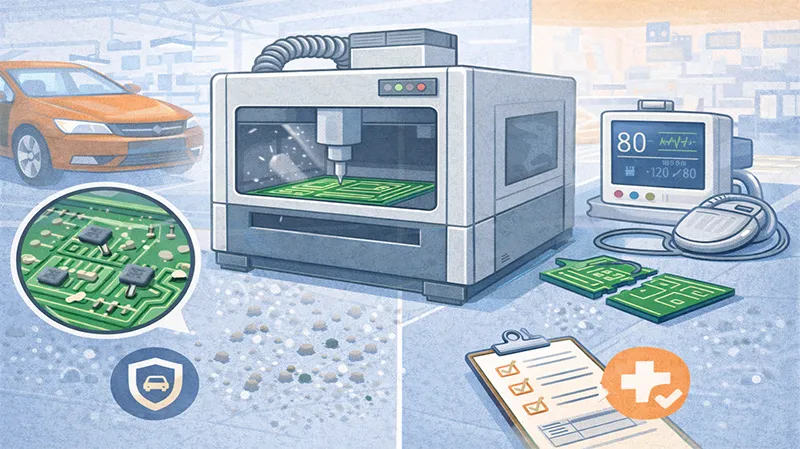
Dust-Free PCB Depaneling Machine: Lessons from Automotive and Medical PCB Assembly
Dust-free PCB Depaneling Machine solutions have become a critical topic in high-reliability electronics manufacturing, especially in automotive and medical PCB assembly. In recent years, global SMT lines have increasingly recognized that depaneling is no longer a “last step,” but a quality-defining process that directly affects reliability, compliance, and long-term product performance. ⚙️ Understanding Why Dust Control Matters in Critical Electronics In automotive and medical applications, even microscopic contamination can cause long-term risks. PCB dust generated during depaneling may appear harmless, but it can introduce conductive particles, weaken solder joints, or compromise insulation resistance. From discussions with Tier-1 automotive suppliers and medical OEMs, one common concern emerges: dust is difficult to detect immediately, yet its impact often appears months or years later in the field. This shifts the depaneling from a productivity topic to a lifecycle reliability issue. 🧪 User Pain Points Observed on Production Floors Manufacturing teams often raise similar challenges: In medical PCB assembly, compliance teams frequently require evidence that dust exposure is minimized and controlled. Traditional open depaneling methods make this difficult to document. 🧩 Cost Analysis: Prevention vs. Correction A dust-free depaneling approach does require higher upfront investment. Enclosed structures, vacuum extraction systems, and sealed cutting zones
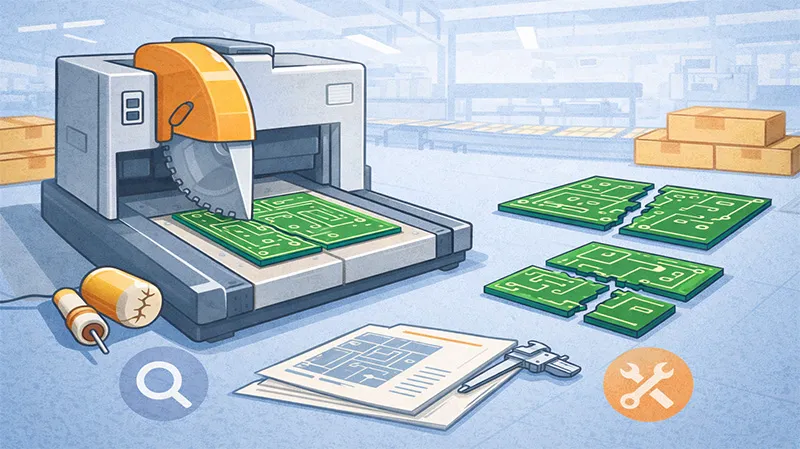
PCB V-Cut Depaneling Machine: Practical Insights from High-Volume SMT Production
PCB V-Cut Depaneling Machine usage remains widespread in high-volume SMT production, particularly where board designs are standardized, and cost efficiency is critical. Despite the rise of routing and laser solutions, V-cut depaneling continues to play an important role in consumer electronics, power modules, and industrial products. This article shares practical insights from real SMT production lines rather than promotional comparisons. 🧱 Why V-Cut Still Matters in Mass Production In high-volume environments, simplicity and predictability are often valued over flexibility. Engineers working with V-cut depaneling emphasize that when PCB layout allows sufficient edge clearance, the process can be highly efficient. Key advantages frequently mentioned: For stable product designs with long production life cycles, these benefits remain attractive. ⚠️ Stress Behavior — The Primary Engineering Concern Mechanical stress is the most discussed limitation of V-cut depaneling. In practice, the separation force applied along the groove can affect solder joints and ceramic components. Common pain points reported: As component density increases, controlling break force becomes essential. Many SMT teams adjust scoring depth, blade angle, and separation speed to reduce stress concentration. ⚙️ Machine Durability in 24/7 Production In high-output factories, machines operate continuously. Engineers often evaluate V-cut equipment based on durability rather than

PCB Depaneling Machine Supplier: Router, Laser, or Blade Solutions Compared
PCB Depaneling Machine Supplier evaluation has become more complex as global SMT lines face increasing product diversity, thinner boards, and higher reliability expectations. Rather than asking which technology is “best,” engineers now compare router, laser, and blade solutions based on stress behavior, long-term stability, and total production cost. This article summarizes real-world insights shared across SMT production environments. ⚙️ Router Depaneling — Flexibility with Mechanical Control Router systems remain widely used due to their adaptability to complex PCB outlines and mixed production. Engineers commonly highlight: Pain points include vibration management, tool wear, and dust control. In long-term operation, machine rigidity and spindle stability largely determine whether routing remains consistent over months rather than weeks. 🔥 Laser Depaneling — Precision with Thermal Considerations Laser depaneling is increasingly applied in high-density and thin PCB applications where mechanical stress must be minimized. Key advantages discussed: However, engineers also point out limitations: As a result, laser solutions are often reserved for high-value electronics rather than general-purpose SMT lines. 🪚 Blade Depaneling — Strength for Rigid Applications Blade and saw-based systems are still relevant, particularly for thick or metal-core PCBs. Typical use cases include: While durable, blade systems introduce higher mechanical force and require careful