.png)
 Russian
  English
  Spanish
  Japanese
  Korean
  Chinese
PCB router depaneling is one of the most widely used PCB separation methods in electronics manufacturing. But engineers rarely choose it automatically. In many projects, the decision is made only after reviewing PCB design details, production requirements, and reliability risks.
Some boards work perfectly with V-cut separation. Others require laser cutting. In many cases, router depaneling is the most balanced option.
So how do engineers actually make that decision in real production environments?
🔍 The First Question Engineers Ask — How Is the PCB Designed?
The PCB layout usually determines the depaneling method.
Engineers start by checking several key design factors:
- Are components placed near the PCB edge?
- Does the board have irregular shapes or slots?
- Is the PCB thin or mechanically sensitive?
- Does the design allow straight V-cut lines?
If the board outline includes curves, internal slots, or complex contours, router depaneling is often necessary because routers can follow programmable cutting paths.
Unlike V-cut separation, router systems are not limited to straight lines.
⚠️ When Edge Components Become a Risk
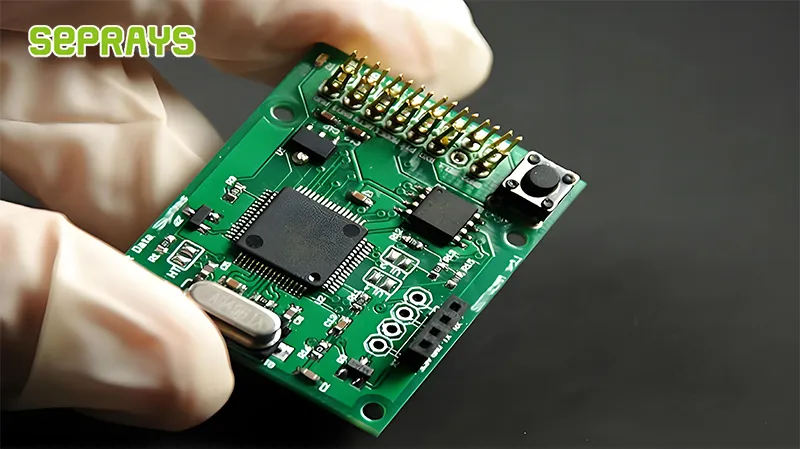
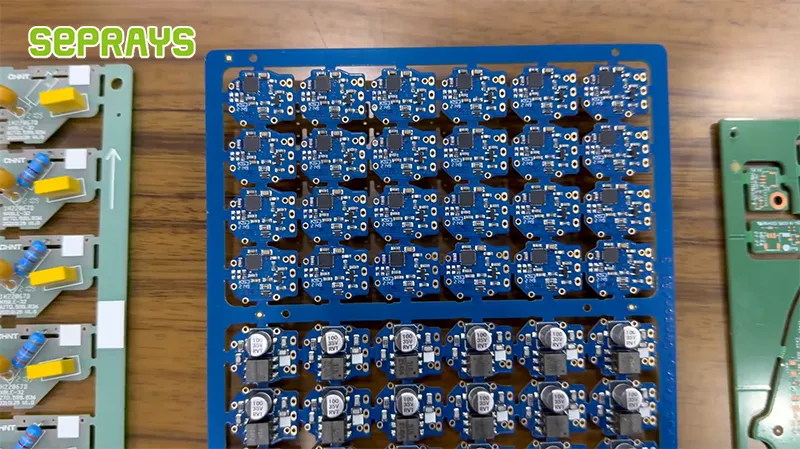
Modern PCBA designs are getting more compact. Components are frequently placed closer to the board edge to save space.
This creates a common engineering concern.
When boards are separated using V-cut breaking, mechanical stress can propagate through the PCB during snapping. If sensitive components sit too close to the edge, the risk increases.
Possible issues include:
- Cracked MLCC capacitors
- Weakened solder joints
- Slight PCB bending
- Hidden reliability problems
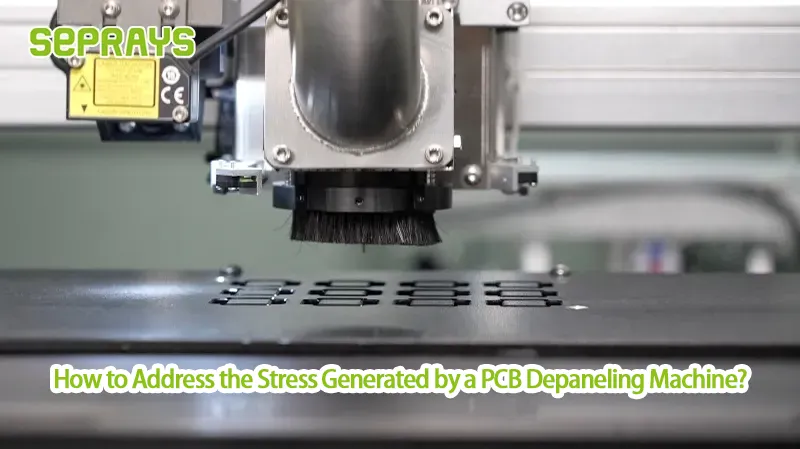
Router depaneling reduces this risk because the board is cut gradually instead of snapped apart.
📏 Shape Complexity Also Matters
Another factor engineers evaluate is board outline complexity.
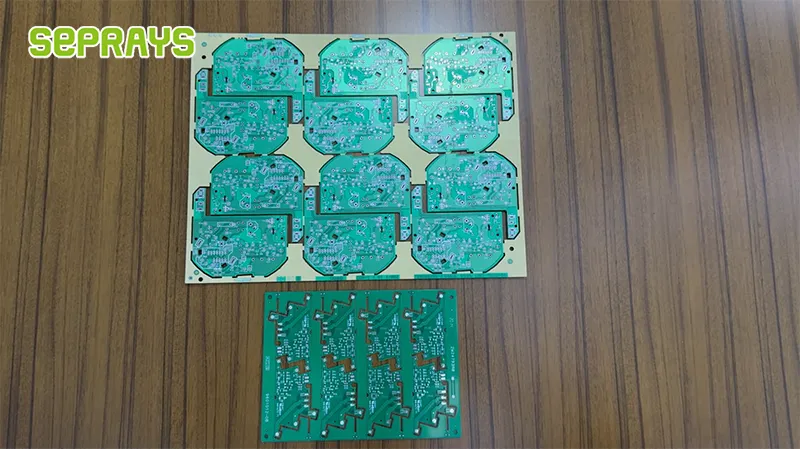
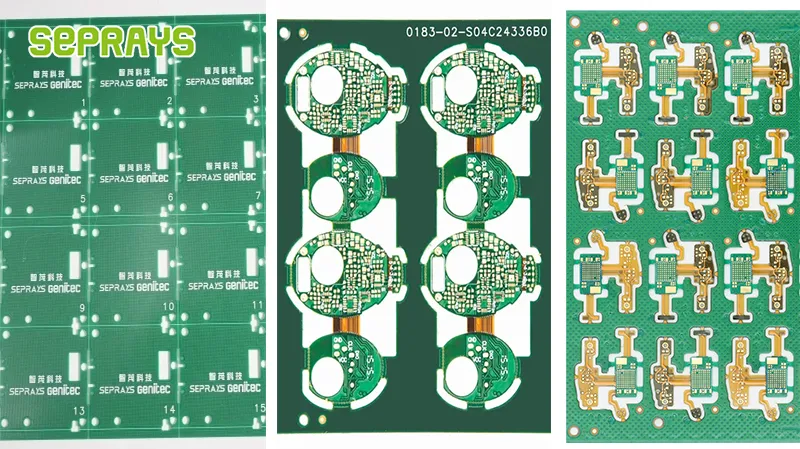
Many modern products require non-standard PCB shapes, such as:
- Curved edges
- Internal cutouts
- Small connector openings
- Irregular product outlines
V-cut depaneling works best for straight panel lines. When designs include complex shapes, router depaneling offers much greater flexibility.
This is why router systems are common in products like wearable devices, communication modules, and industrial control boards.
📊 Comparing Common Depaneling Methods
In many design meetings, engineers review depaneling options with a simple comparison.
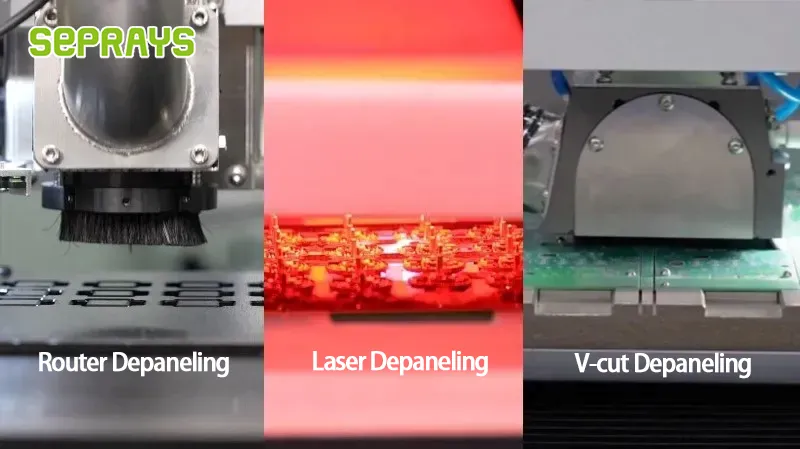
| Factor | V-cut Depaneling | Router Depaneling | Laser Depaneling |
|---|---|---|---|
| Cutting method | Breaking along scored line | Mechanical milling | Laser beam cutting |
| Suitable shapes | Straight lines only | Complex outlines | Complex outlines |
| Mechanical stress | Higher | Moderate | Minimal |
| Equipment cost | Low | Medium | Higher |
| Tool wear | None | Milling tools required | None |
Each method solves a different manufacturing problem.
Router depaneling often sits in the middle — balancing flexibility, cost, and cutting stability.
💰 Cost Is Not Just About Machine Price
In early discussions, production managers often focus on equipment cost. But engineers usually look deeper.
Several hidden factors influence the real cost of depaneling:
- PCB yield stability
- Component damage risk
- Tool replacement cost
- Maintenance downtime
- Production speed
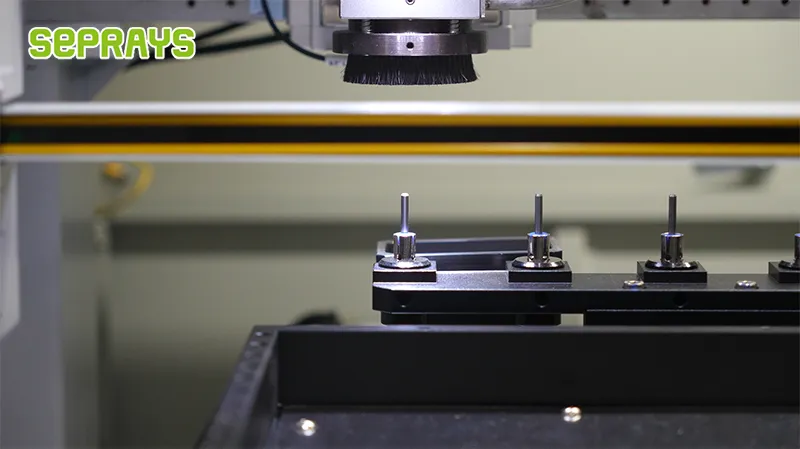
Router depaneling machines require cutting tools and deliver stable, predictable cuts across a wide range of board designs.
For many manufacturers, this balance makes router depaneling a practical long-term solution.
🏭 A Production Example
A manufacturer producing industrial control boards encountered a design challenge. The new PCB version included several curved edges and small connector openings.
Originally, the factory used V-cut separation. But the new board design made straight-line depaneling impossible.
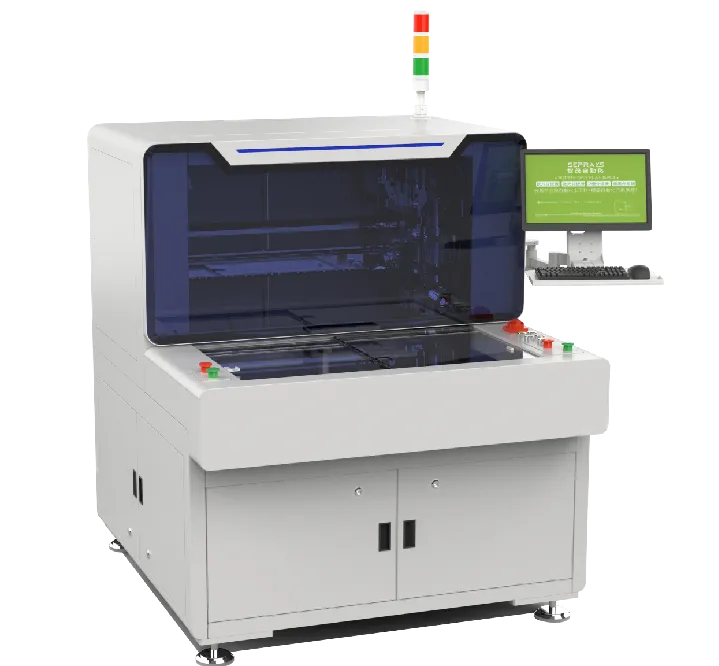
After evaluating options, the engineering team tested a router depaneling system from Seprays Group.
During trial production, the team observed several benefits:
- Accurate cutting around complex board outlines
- Stable edge quality
- Smooth integration with existing SMT workflow
The factory eventually adopted router depaneling for this product series, while continuing to use V-cut for simpler boards.
🧠 Practical Guidelines Engineers Often Use
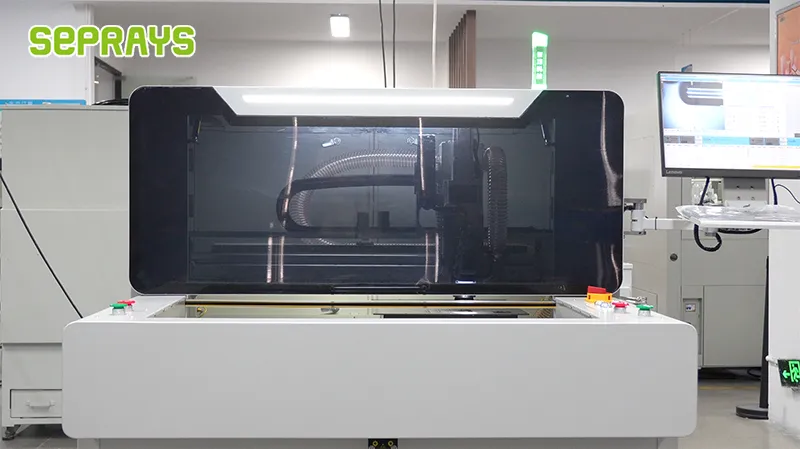
Based on real manufacturing experience, engineers usually consider router depaneling when:
- PCB outlines are complex
- Edge components require lower separation stress
- Product reliability requirements are high
- V-cut panelization is not possible
- Design flexibility is needed
In many factories, router depaneling becomes the default solution for medium-complexity PCBs.
🔧 Combining Multiple Depaneling Methods
Modern electronics factories rarely rely on a single depaneling technology.
A common strategy looks like this:
- V-cut depaneling for simple rectangular boards
- Router depaneling for complex outlines
- Laser depaneling for high-density or fragile PCBs
This combination allows manufacturers to optimize both production efficiency and product reliability.
⭐ Why Choose Seprays Group?
Seprays Group focuses on PCB depaneling technologies used in modern electronics manufacturing. The company provides solutions such as:
- PCB router depaneling machines
- Laser depaneling systems
- Saw blade depaneling equipment
- Inline and offline depaneling automation
With experience across consumer electronics, industrial control systems, and automotive electronics, Seprays works closely with engineers to identify the most suitable depaneling method for each PCB design.
Since 1993, Seprays Group has specialized in PCB and FPC depaneling technologies, offering router, laser, and V-groove depanelers, punching systems, and automation equipment. Our machines are used by manufacturers such as Foxconn, Flex, Luxshare, Compal, Wistron, Quanta, CRRC, OPPO, ZTE, and Bosch in production facilities worldwide.
If you are evaluating PCB depaneling solutions, please feel free to contact us for a technical discussion.
WhatsApp: +8618929266433
Электронная почта: sales@seprays.com
❓ FAQ
1. When is PCB router depaneling necessary?
Router depaneling is usually necessary when PCB designs include complex shapes, curved outlines, or components placed close to the board edge.
2. Is router depaneling better than V-cut separation?
Not always. V-cut is faster and cheaper for simple boards. Router depaneling is preferred when designs require flexible cutting paths or reduced mechanical stress.
3. Does router depaneling damage PCB components?
When parameters are properly controlled, router depaneling produces stable results and is widely used in electronics manufacturing.
4. Can router depaneling handle irregular PCB shapes?
Yes. Router systems are specifically designed to follow complex cutting paths and are suitable for boards with curves, slots, and unique outlines.
5. Do factories use multiple depaneling methods together?
Yes. Many manufacturers combine V-cut, router, and laser depaneling depending on the PCB design and production requirements.