.png)
 Russian
  English
  Spanish
  Japanese
  Korean
  Chinese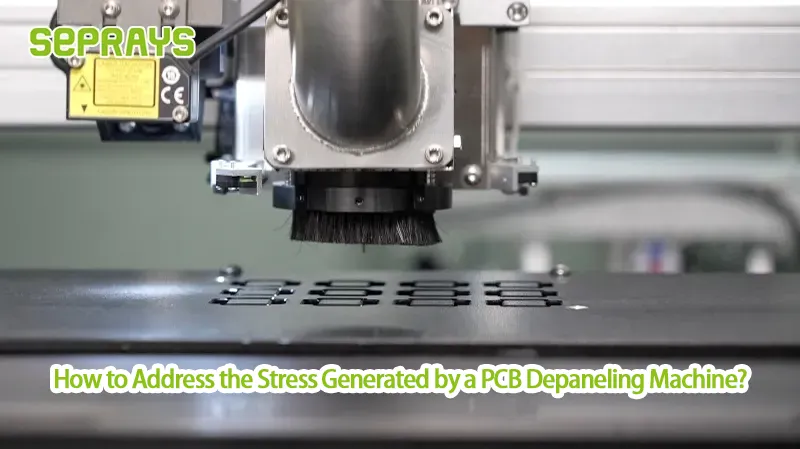
How to address the stress generated by a PCB depaneling machine? It’s a question many engineers don’t ask—until defects start showing up. Cracked edges. Intermittent failures. Reduced yield with no obvious root cause.
In many cases, the issue isn’t assembly.
It starts with depaneling.
🔍 Where Does Depaneling Stress Come From?
Stress is introduced during the separation process.
Different sources include:
- Mechanical force from blades or tools
- Vibration during cutting
- Improper fixture support
- Thermal impact (in some processes)
Even small forces can affect:
- Solder joints
- Internal PCB layers
- Edge components
The challenge is not eliminating stress—but controlling it.
⚙️ How Different Depaneling Methods Affect Stress
Not all machines behave the same.
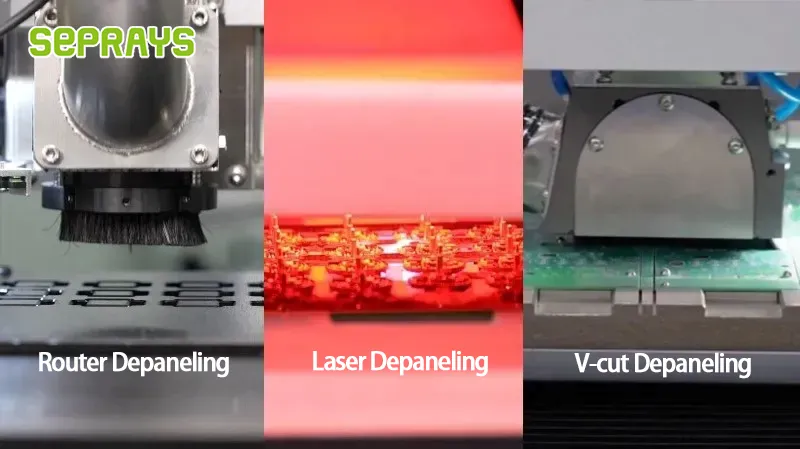
Here’s a simplified comparison:
| Method | Stress Level | Key Characteristics |
|---|---|---|
| Saw Blade | Medium | High speed, mechanical contact |
| Router | Low-Medium | Controlled cutting, flexible paths |
| Laser | Very Low | Non-contact, minimal mechanical impact |
| V-Groove | Low | Controlled breaking along pre-scored lines |
| Punching | Medium | High force, fast operation |
Understanding this is the first step.
Choosing the right method already solves part of the problem.
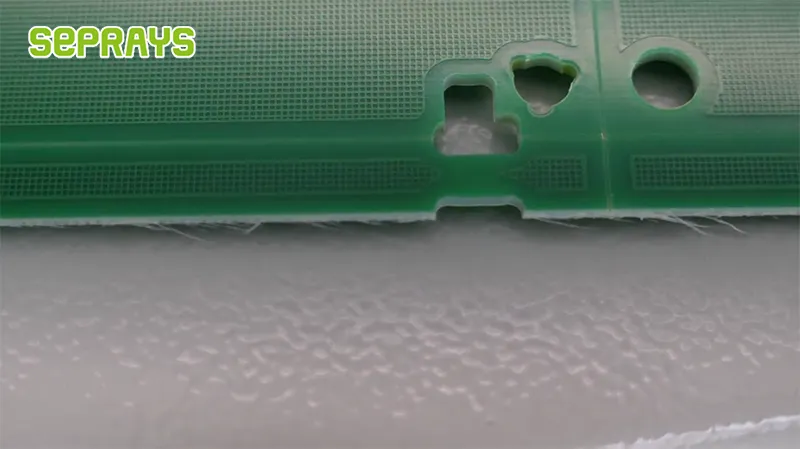
💥 Common Signs of Stress Damage
Stress doesn’t always show immediately.
Watch for:
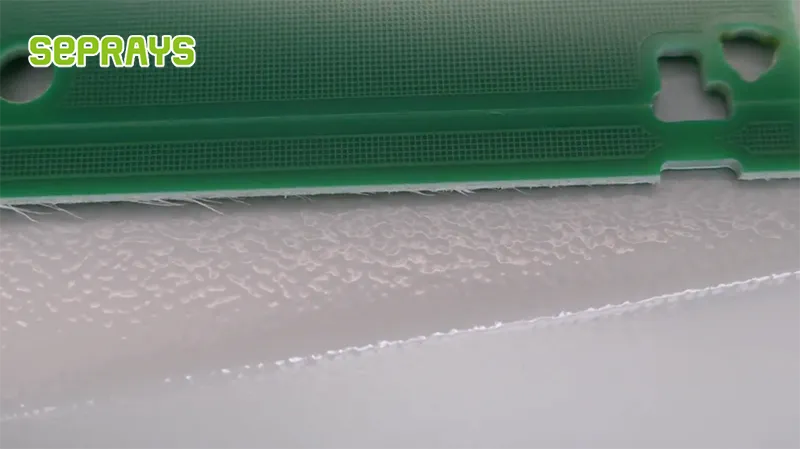
- Micro-cracks at PCB edges
- Component misalignment
- Solder joint fractures
- Delamination after thermal cycling
These issues often appear later in testing or in the field.
That makes them harder—and more expensive—to fix.
🧩 Design-Level Solutions
Stress control starts before production.
PCB design plays a key role.
Consider:
- Keep components away from cutting edges
- Use proper V-groove depth and spacing
- Avoid placing sensitive parts near break lines
- Reinforce critical areas if needed
Good design reduces risk before the process even begins.
🛠️ Process Optimization Strategies
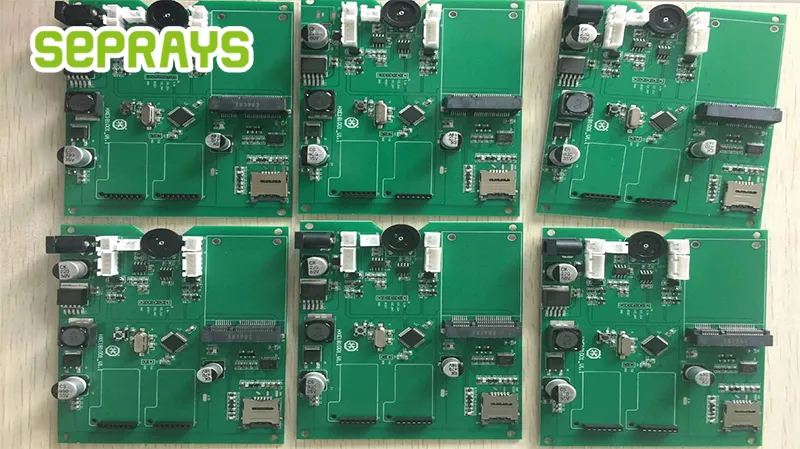
On the production floor, small adjustments matter.
Key actions include:
- Optimize cutting speed and feed rate
- Use sharp, high-quality tools
- Maintain stable fixtures to reduce vibration
- Regularly inspect equipment condition
Consistency is more important than speed.
A stable process reduces hidden damage.
🔄 Choosing the Right Method for Stress Reduction
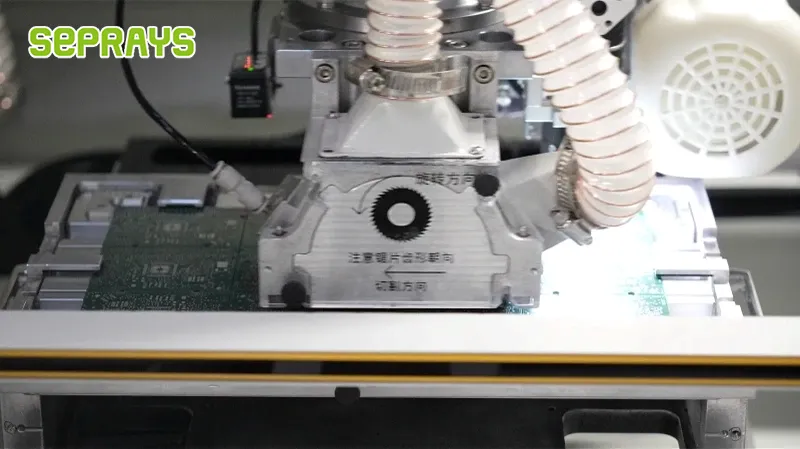
Sometimes optimization is not enough.
You may need to switch methods.
1. When to consider laser depaneling:
- Ultra-thin PCBs
- High-density layouts
- Sensitive components near edges
2. When router depaneling is suitable:
- Complex shapes
- Moderate stress tolerance
3. When the saw blade or V-groove works:
- Straight-line boards
- High-volume production
- Less sensitive designs
The goal is to match the method to the application.
💰 Cost vs Risk — A Practical Perspective
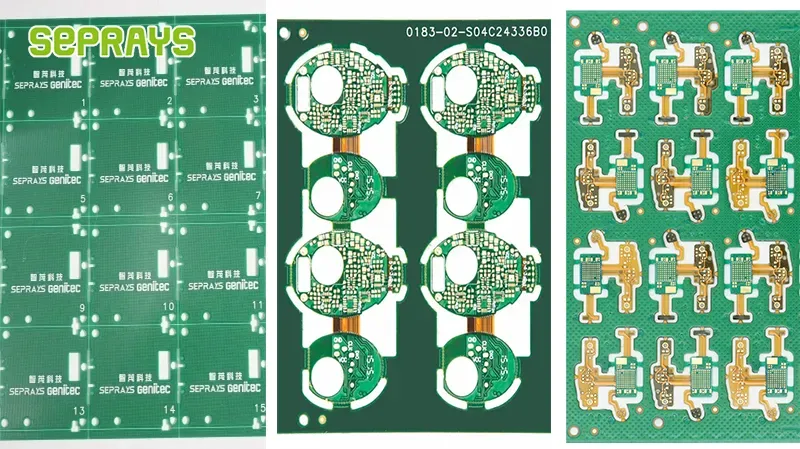
Reducing stress often means higher equipment cost.
But consider the trade-off:
- Lower defect rates
- Reduced rework
- Improved product reliability
- Fewer field failures
In many cases, the cost of defects exceeds the cost of better equipment.
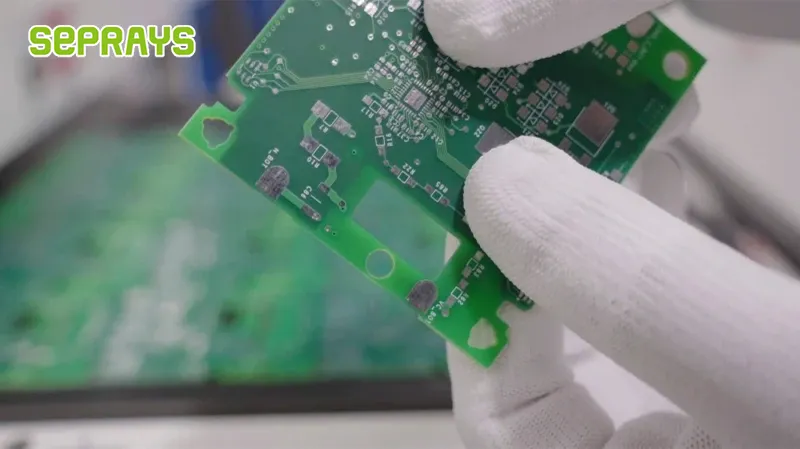
🧪 Case Study — Reducing Stress in Production
A manufacturer producing automotive control boards faced recurring micro-cracks.
Issues included:
- Mechanical stress from the saw blade cutting
- Edge defects affecting reliability
- Increasing rejection rates
They worked with Сепреи to optimize their process.
Solution:
- Switched critical sections to router depaneling
- Adjusted cutting parameters
- Improved fixture stability
Results:
- Significant reduction in edge damage
- Improved yield
- More stable production output
The improvement came from both method selection and process control.
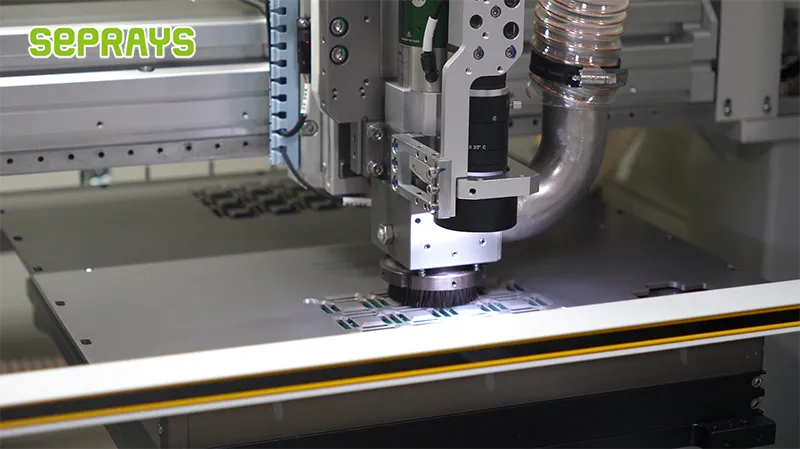
🚀 The Role of Automation and Monitoring
Modern depaneling systems offer better control.
Features include:
- Real-time parameter adjustment
- Tool wear monitoring
- Integration with MES systems
This helps:
- Detect issues early
- Maintain consistent quality
- Reduce human error
Automation doesn’t remove stress—but it helps manage it.
🛠️ Practical Checklist for Engineers
Before finalizing your depaneling process, ask:
- Is the stress level acceptable for this PCB design?
- Are cutting parameters optimized?
- Is the fixture stable enough?
- Is tool wear monitored regularly?
- Should a lower-stress method be considered?
These questions prevent long-term issues.
🚀 Why Choose Seprays Group?
Seprays Group focuses on helping manufacturers address real production challenges, such as depaneling stress.
Seprays Group has been dedicated to PCB/FPC depaneling technology, providing a full range of solutions — including milling cutter depanelers, laser depanelers, V-groove depanelers, punching depanelers, and automated handling systems.
Their equipment is trusted by leading global manufacturers such as Foxconn, Flextronics, State Grid, Luxshare, Compal, Wistron, China Electronics, Quanta, CRRC, China Aerospace, OPPO, ZTE, and Bosch. These partnerships reflect strong performance in high-volume, high-reliability production environments.
With deep application knowledge, Seprays helps manufacturers reduce stress-related defects and improve long-term product quality.
If you are dealing with depaneling stress issues, feel free to contact us for practical solutions.
WhatsApp: +8618929266433
Электронная почта: sales@seprays.com
❓ FAQ
1. What causes stress in PCB depaneling?
Mechanical force, vibration, and improper process parameters are the main causes.
2. Which depaneling method produces the least stress?
Laser depaneling produces the lowest mechanical stress.
3. Can stress damage be eliminated?
Not entirely, but it can be minimized with proper design and process control.
4. How to detect stress-related defects?
Through inspection, reliability testing, and monitoring edge quality.
5. Is switching equipment always necessary?
Not always. Sometimes, parameter optimization and better fixtures are enough.