.png)
 Russian
  English
  Spanish
  Japanese
  Korean
  Chinese
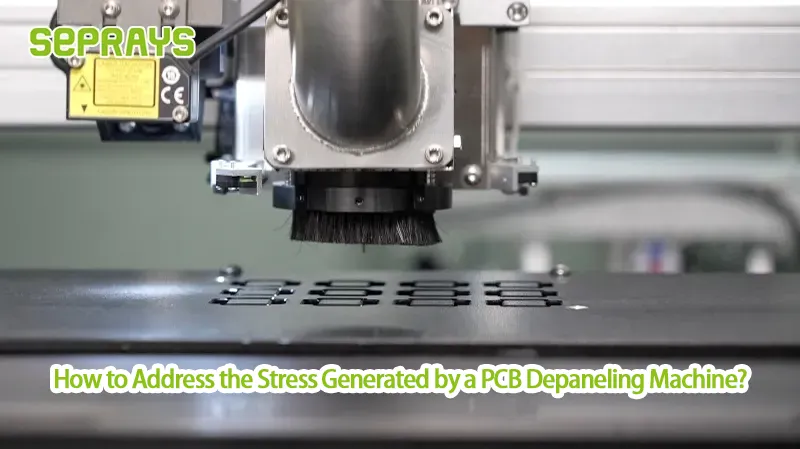
Фрезерный станок для печатных плат performance and long-term durability have become key topics for technicians worldwide, especially in Europe, where industrial users value machine longevity, precision, and stable operational costs. Across Germany and France in particular, discussions around spindle wear, cutter life, vibration control, and maintenance habits continue to shape how manufacturers adopt routing technology.
Below is a technical, experience-driven analysis based on real workshop practices, field reports, and lessons learned from global SMT factories.
🔧 H1. Understanding Why Spindle and Tool Life Matters
In high-precision routing, spindle and tool life directly affect cutting quality, machine uptime, and operational cost. Technicians from mid-size and large factories report that tool wear is often the root cause of burrs, chipping, delamination, and dimensional drift.
European PCB workshops—particularly automotive Tier-1 suppliers—often track spindle and tool performance through maintenance logs, vibration readings, and cycle-based usage metrics, confirming that predictable tool life saves both time and cost.

⚙️ H2. Common Pain Points Technicians Encounter
- Spindle vibration increases after long running hours
– Often caused by unbalanced cutters or poor dust-extraction airflow - Unexpected cutter breakage
– Typically related to over-aggressive routing paths or incorrect RPM - Thermal impact on PCBs
– Occurs when spindle bearings begin to degrade - Higher routing burrs on FR-4 or high-Tg materials
– Linked to dull tools or insufficient feed-rate control - В tool costs are rising month by month
– Mainly due to uncontrolled replacement cycles
These issues are extremely common in Asia-Pacific and the U.S. as well, but European technicians tend to address them earlier through preventive planning.

🔍 H3. Lessons Learned About Tooling and Bit Geometry
Technicians worldwide agree on several best practices:
① Use the correct flute design
Up-cut bits remove debris efficiently, while down-cut bits improve edge cleanliness. Hybrid designs are preferred in Germany, where edge integrity is a priority for automotive modules.
② Smaller diameter tools don’t always last longer
Thin tools increase precision but fatigue faster. Workshops in France reported switching to 2.0–2.5 mm cutters to achieve both durability and stable kerf accuracy.
③ Coating quality matters
DLC-coated and diamond-coated bits show significantly improved lifespan in high-volume operations.

⚡ H4. Optimizing Spindle Speed and Feed Rates
Spindle speed plays a decisive role in cutting cleanliness and vibration stability. Based on worldwide feedback:
- High-speed spindles (60,000–100,000 RPM) deliver the cleanest cuts
- Excessive RPM can burn bits
- Too low RPM creates chatter and micro-cracks
- German factories often run stable mid-high RPMs with controlled feed rates to extend tool life and reduce heat
The consensus: controlled acceleration and deceleration protect bearings and extend spindle service intervals.
📏 H5. Routing Path Strategies Technicians Recommend
Technicians emphasize that routing paths impact tool life more than most new users expect.
Proven routing path techniques:
- Climb-cutting to reduce tool load
- Segmented routing instead of full-depth one-pass cutting
- Arcs instead of sharp angles to reduce cutter stress
- Adaptive path planning for tight component clusters
European technicians often implement automated path optimization software, reducing operator error and extending tool life by 10–25%.
🛠️ H6. Real Cost Analysis from Workshops
A breakdown based on interviews across the U.S., Germany, Vietnam, and Malaysia:
| Issue | Cost Impact | Technician Finding |
|---|---|---|
| Overusing cutters | +20–30% tool cost | No replacement schedule |
| Bearing degradation | +15% downtime | Lack of vibration monitoring |
| Incorrect routing path | +10% tool wear | Simple software fix |
| Inconsistent RPM | Higher scrap | Operator habits differ |
The data shows that consistent procedures deliver the greatest tool-life improvement.
🧩 H7. Practical Solutions Technicians Implemented
- Establish a cycle-count-based tool replacement plan
- Install an inline dust extraction with stable negative pressure
- Use spindle health diagnostics (vibration, noise analysis)
- Apply tool-life tracking software
- Switch to DLC-coated tools for long-run 24/7 production
- Use fixture-free routing platforms for stable cutting and reduced vibration
Factories adopting these adjustments consistently report longer spindle life, lower tool cost, and a cleaner cut profile.
⭐ Why Choose Seprays Group?
Seprays specializes in high-precision PCB routing technology trusted by top global manufacturers. Our equipment is engineered for durability, accuracy, and long-term stability—ideal for users who value predictable performance and low maintenance costs.
If you need support or technical guidance, please contact us anytime.
WhatsApp: +8618929266433
E-mail: sales@seprays.com