.png)
 English
  Spanish
  Japanese
  Korean
  Russian
  Chinese
 How to Optimize PCB Router Depaneling for High-Mix Production
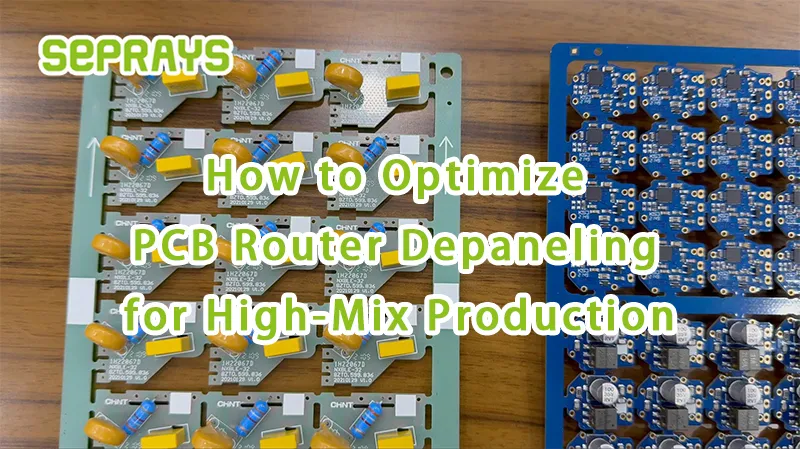
How to optimize PCB router depaneling for high-mix production is becoming a daily question in many SMT factories. Not because machines are slow, but because product changeovers are getting more frequent than ever. One line. Multiple products. Constant switching.And every switch costs time. 🔍 Why High-Mix Production Slows Down Your Line High-mix PCB manufacturing is […]
Is PCB Router Depaneling Still the Most Cost-Effective Method in 2026?

As the demand for faster, more precise, and cost-effective PCB production rises, the question of whether PCB router depaneling remains the most cost-effective method in 2026 has become increasingly relevant. In this post, we’ll explore how the PCB router depaneling method holds up in the current manufacturing landscape and compare it with newer technologies, helping […]
Why PCB Router Depaneling Is Widely Used in Electronics Manufacturing
PCB router depaneling remains one of the most common PCB separation methods in electronics manufacturing. Even with newer technologies like laser cutting, many factories still rely heavily on router systems for daily production. Why? Because router depaneling sits in a practical middle ground. It offers flexibility, stable cutting quality, and reasonable operating cost. For many […]
How Do Engineers Decide If PCB Router Depaneling Is Necessary?

PCB router depaneling is one of the most widely used PCB separation methods in electronics manufacturing. But engineers rarely choose it automatically. In many projects, the decision is made only after reviewing PCB design details, production requirements, and reliability risks. Some boards work perfectly with V-cut separation. Others require laser cutting. In many cases, router […]
PCB Router Depaneling: Advantages, Disadvantages, and Selection Guide

PCB router depaneling is an important process in electronics manufacturing that helps separate individual circuit boards from a larger panel. This method uses a high-speed cutting tool to ensure clean edges and minimize stress on the components, making it ideal for complex designs. As demand for more detailed and high-density PCBs grows, router depaneling becomes a key solution for maintaining quality and improving production efficiency. However, it’s important to consider both the benefits and challenges of this method when choosing the best solution for your needs.
A Guide to PCB Router Depaneling: How It Works and Why It Matters

In the ever-evolving landscape of electronics manufacturing, PCB depaneling is crucial in ensuring quality and efficiency. Among the various depaneling methods, PCB router depaneling has emerged as a preferred choice due to its precision, versatility, and ability to handle complex board designs. This computer-controlled mechanical process utilizes specialized cutting tools to separate individual boards from a panel while maintaining structural integrity and minimizing stress on delicate components. As industries demand higher accuracy and throughput, router depaneling continues to be a key solution for achieving superior results in PCB production.


