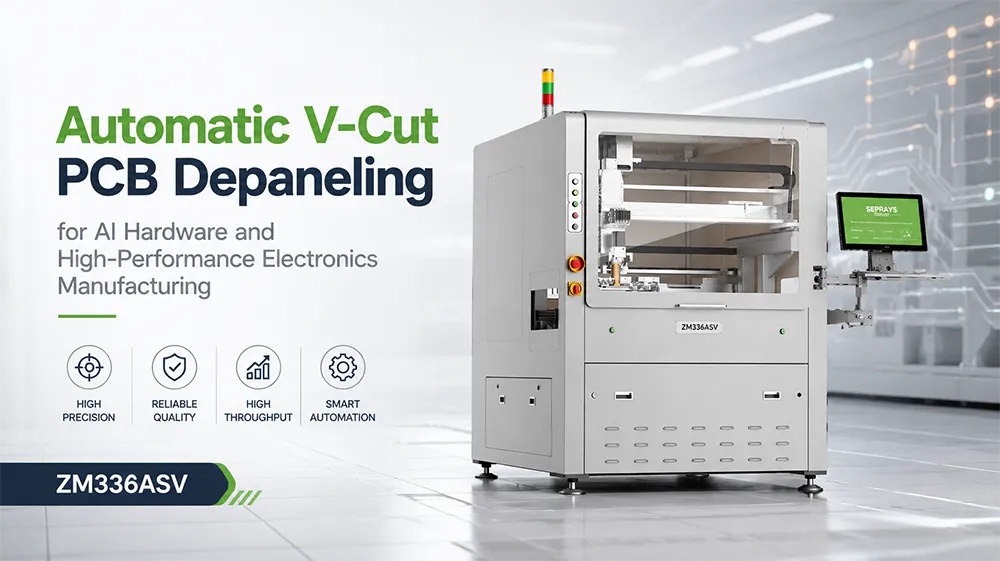
.png)
 Chinese
  English
  Spanish
  Japanese
  Korean
  Russian
A PCB stamping depaneling machine offers speed, precision, and high-volume capacity.
It’s a go-to solution for manufacturers looking to separate PCB panels quickly and cleanly.
But how exactly does it work? And how do you choose the right one?
Let’s break it down.
⚙️ How a PCB Stamping Depaneling Machine Works
The working principle of a PCB stamping depaneling machine is based on custom die punching technology.
No matter if it uses a servo or electric cylinder, the process remains the same.
1. 🧰 Custom Tooling
A custom steel mold is created to match the PCB’s V-cut or stamp-hole layout.
The blade shape matches the board path precisely.
This ensures clean separation without damaging the circuits.

2. 📍 Precise Positioning
Before cutting, the PCB panel is fixed in place.
This is done using mechanical clamps or vacuum suction.
The system uses mechanical holes or optical marks to achieve alignment and ensure a perfect match with the mold.
3. 🧨 High-Force Separation
With a single downstroke, the machine applies tons of pressure.
The connecting sections are sheared instantly—clean and sharp.
A conveyor or robotic arm then removes the separated boards.
📈 Benefits and Limitations of Stamping
✅ Key Advantages:
- 分板速度: One stroke can split an entire panel—ideal for mass production
- 精密: Tolerance up to ±0.05 mm; clean edges, no burrs
- Consistency: Every cycle is identical—reliable for automated lines
⚠️ Things to Consider:
- High tooling cost: Custom molds are expensive and dedicated to specific layouts
- High mechanical stress: May damage delicate components if not carefully designed
- Low flexibility: Not ideal for multi-type or short-run production

🔍 How to Choose the Right PCB Stamping Depaneling Machine
- Confirm Your PCB Design
Does your board use V-cut or tab routing?
Can it handle the stress of stamping? - Evaluate Volume and Variety
If you produce one board type in large quantities, stamping is perfect.
For mixed production, consider router or laser depaneling. - Inspect Tolerance Requirements
Do your boards require ultra-clean edges?
A good mold and high-precision press are essential. - Factor in Tooling Costs
Custom dies aren’t cheap.
Ensure your production volume justifies the investment. - Ask for Samples and Testing
Always run a test on actual boards.
Check for solder cracks, lifted traces, or component damage.
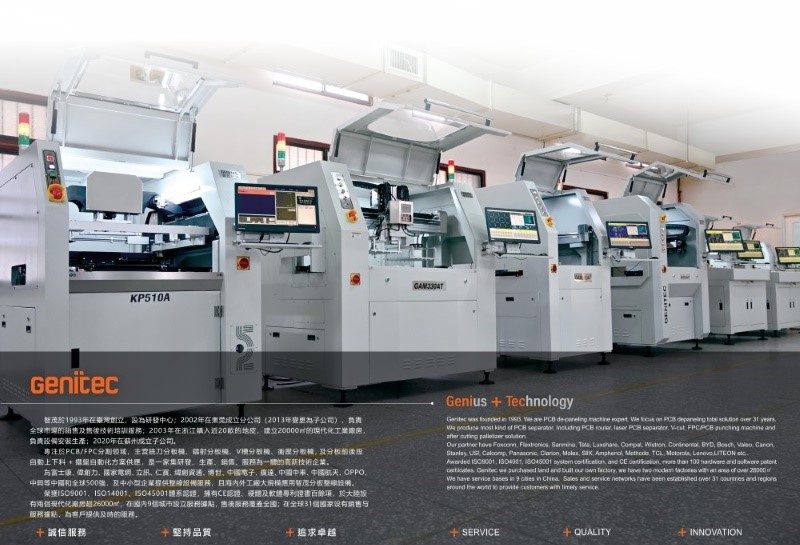
🌟 Why Choose Seprays Group?
At Seprays Group, we specialize in helping manufacturers find the right PCB depaneling solutions.
Whether you’re working with stamp holes, V-cuts, or fragile components—we’ve got you covered.
✅ Precision-engineered stamping machines
✅ Custom mold design and rapid prototyping
✅ Free application evaluation and demo testing
✅ Global support and tailored automation solutions
Not sure which model fits your needs?
Please contact us—our experts will guide you through every step.