.png)
 Chinese
  English
  Spanish
  Japanese
  Korean
  Russian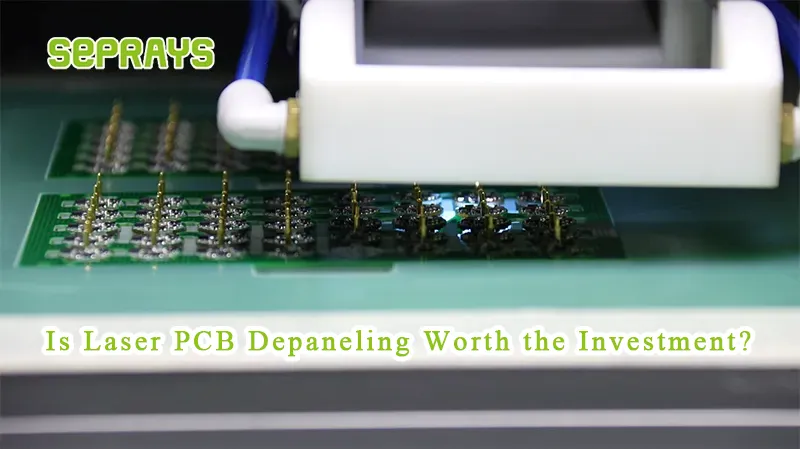
Laser PCB depaneling is a question many manufacturers face when considering process upgrades. Is it really worth the investment? Especially for high-density, flexible, or multi-layer boards, the cost of mechanical damage can be high. Boards cracked during depaneling, components stressed, or rising rework costs all point to hidden losses in the production line.
Investing in laser depaneling isn’t just buying a machine.
It’s about reducing stress, improving yield, and stabilizing quality.
🔍 Why Manufacturers Consider Laser Depaneling
Laser PCB depaneling is gaining popularity because it directly addresses several pain points:
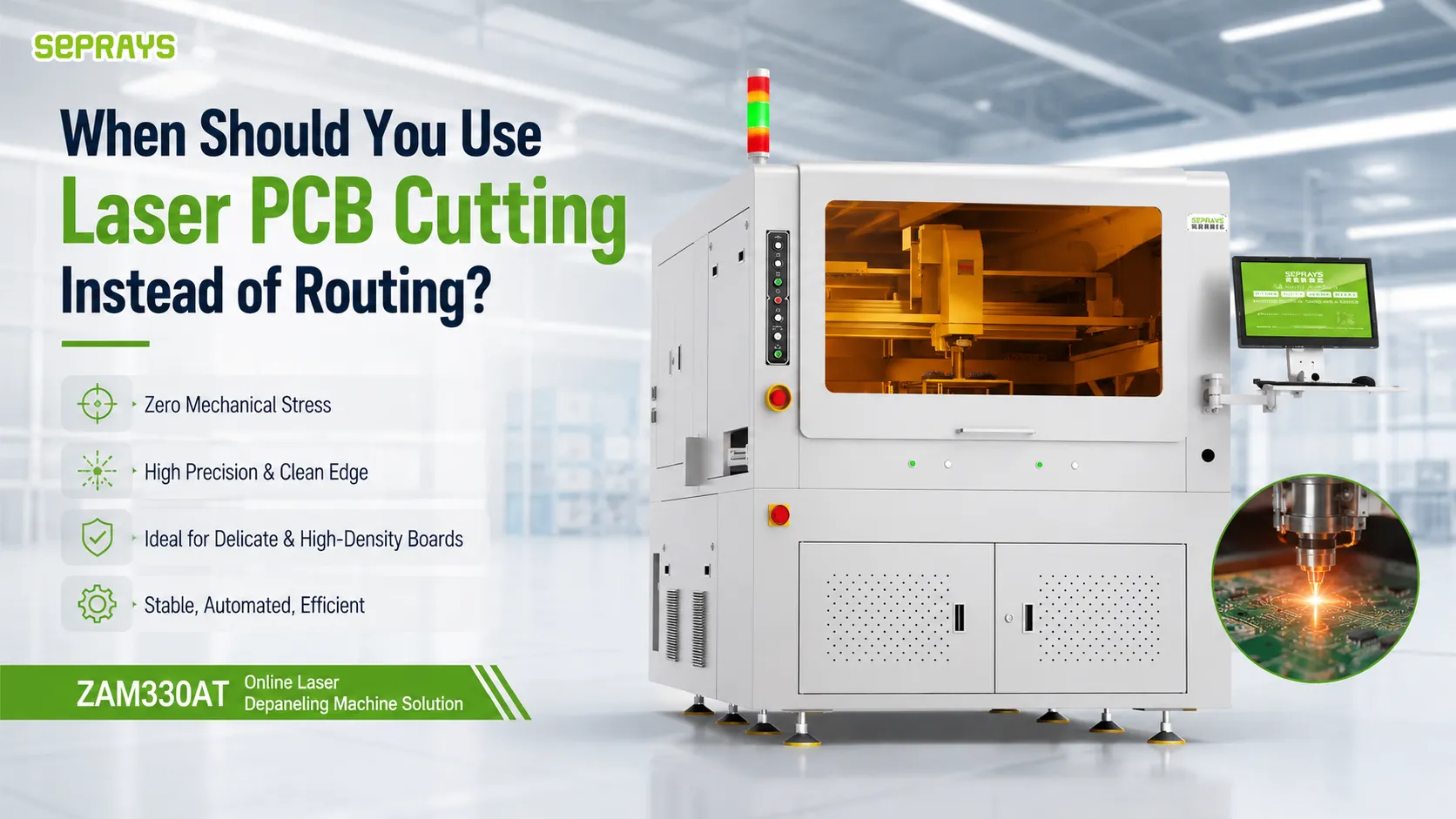
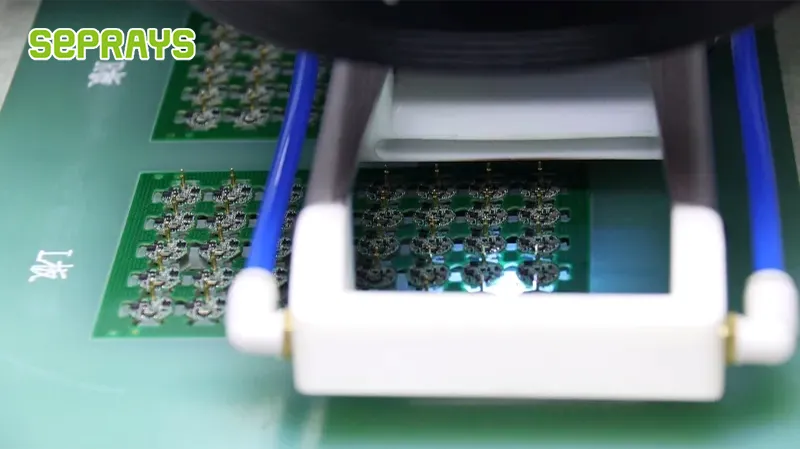
- Non-contact cutting reduces mechanical stress
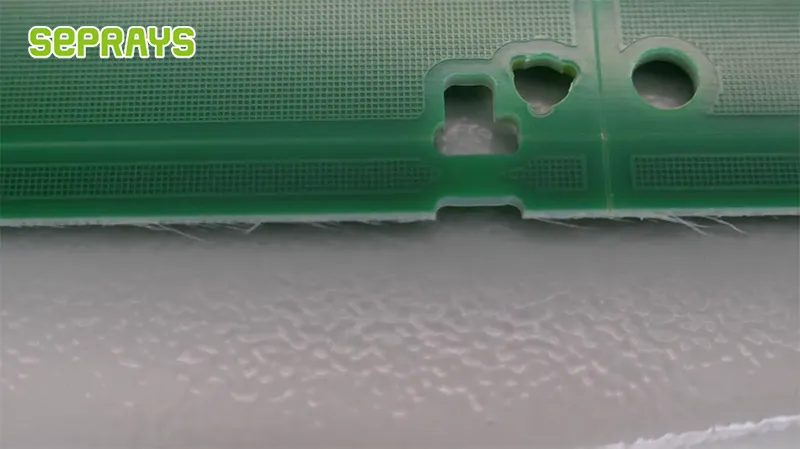
- High precision cuts edges without burrs
- Suitable for flexible and rigid-flex PCBs
- Handles complex board shapes with consistent quality
- Minimizes defects that often occur with saw or router methods
For boards with sensitive components, laser depaneling often prevents costly failures downstream.
⚙️ Hidden Costs of Traditional Methods
Traditional depaneling, such as routers, saws, or manual snapping, carries hidden costs:
- Micro-cracks in ceramic capacitors or BGAs
- Lifted pads and solder joint failures
- High rework and scrap rates
- Inconsistent edge quality
- Production delays due to troubleshooting
These costs can accumulate, sometimes exceeding the initial investment in a laser system.
💡 Key Advantages of Laser Depaneling
Laser depaneling offers multiple tangible benefits:
- ✅ Minimal Stress: No mechanical contact reduces component risk
- ✅ High Precision: Ideal for dense layouts and fine-pitch ICs
- ✅ Flexible Material Support: Works on rigid, flex, and rigid-flex PCBs
- ✅ Reduced Rework: Less scrap and fewer repairs
- ✅ Long-Term Reliability: Less chance of latent defects
These advantages make laser systems especially valuable in high-mix, high-volume production environments.
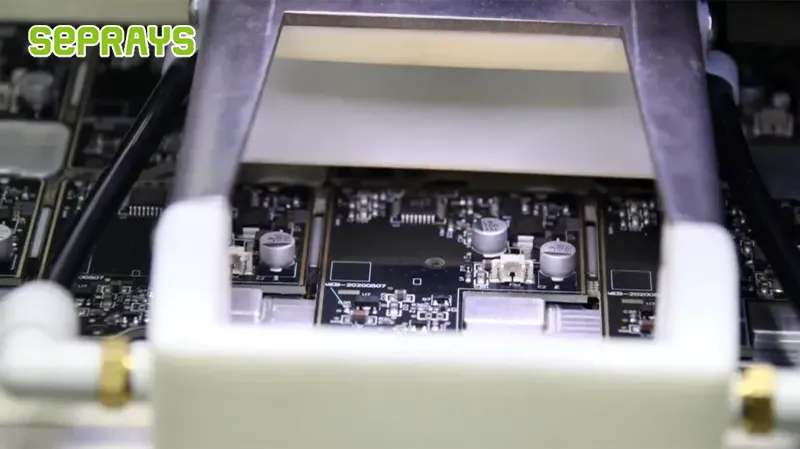
📊 Cost vs ROI Analysis
Initial investment can seem high. But consider:
| Factor | Traditional Methods | 激光分板 |
|---|---|---|
| Initial Equipment Cost | Low | High |
| Yield | 温和的 | High |
| Scrap & Rework Cost | Medium-High | Low |
| Component Stress | Medium-High | Minimal |
| Long-Term Reliability | 温和的 | High |
For many high-value products, laser depaneling pays off through reduced waste, improved yield, and consistent quality.
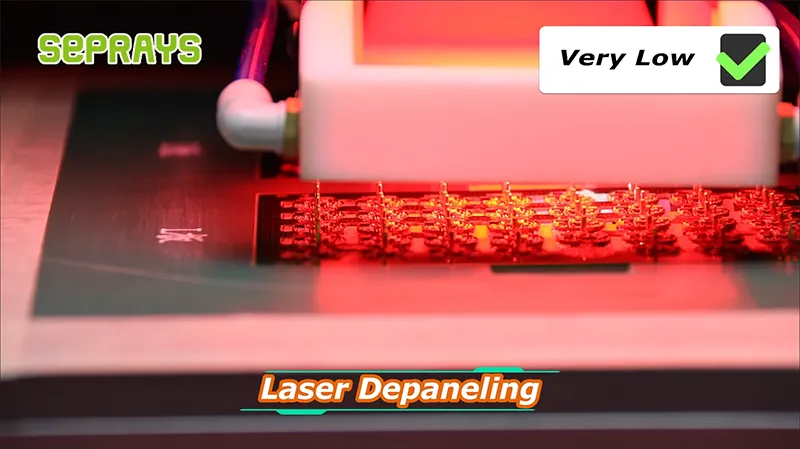
💥 Real-World Case Study — Consumer Electronics
A major electronics manufacturer faced repeated failures with saw depaneling:
- Cracked BGAs on multi-layer boards
- Frayed edges in flexible circuits
- Increasing repair costs
They implemented Seprays laser depaneling solutions for critical boards:
- Introduced a non-contact laser for sensitive areas
- Optimized router for fewer critical sections
- Improved fixture stability
Results:
- Component failures decreased by 80%
- Edge quality became consistent
- Overall yield improved significantly
This demonstrates how targeted laser deployment can justify the investment.
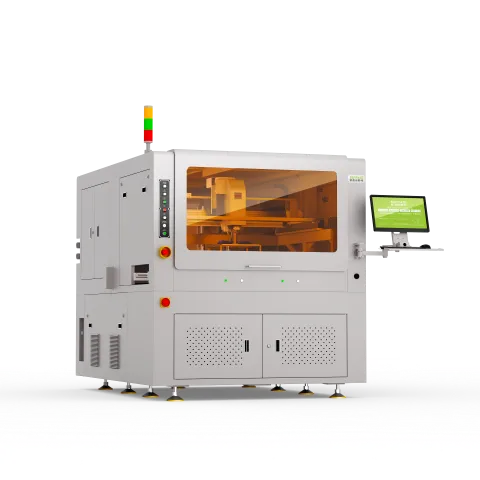
🧩 When Laser Depaneling Is Most Worthwhile
Laser systems are ideal when:
- PCBs are high-density or flexible
- Components are close to the board edges
- High reliability is required
- Rework and scrap costs are high
- Production volume is large
For low-volume or robust, rigid boards, traditional methods may still suffice—but laser remains a future-proof choice.
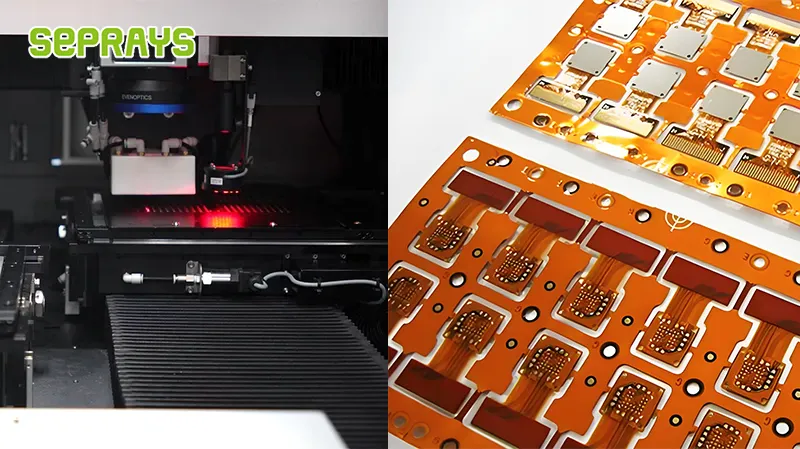
🔧 Optimizing Laser Depaneling
To maximize return:
- Match laser power to material thickness
- Control cutting speed to minimize thermal stress
- Maintain precise focus for clean edges
- Integrate with automated handling to reduce manual error
Optimized setup ensures both quality and efficiency.
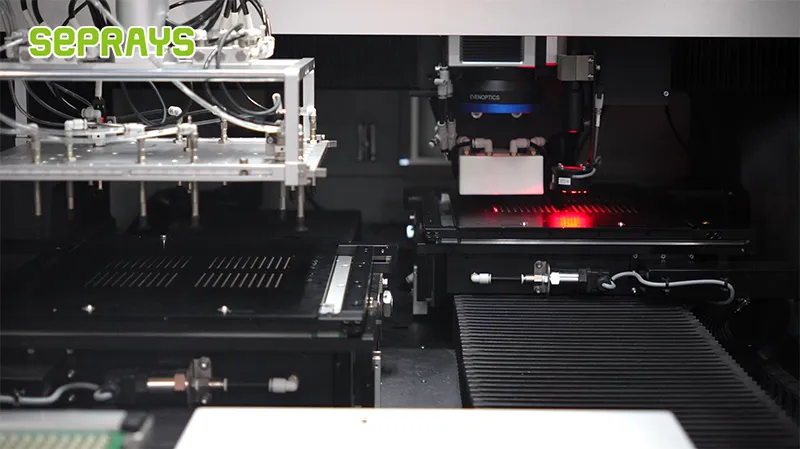
🚀 Why Choose Seprays Group?
Seprays Group has been dedicated to PCB/FPC depaneling technology, providing a full range of solutions — milling cutter depanelers, laser depanelers, V-groove depanelers, punching depanelers, and automated handling systems.
Their equipment is trusted by leading manufacturers worldwide, including Foxconn, Flextronics, State Grid, Luxshare, Compal, Wistron, China Electronics, Quanta, CRRC, China Aerospace, OPPO, ZTE, and Bosch. This demonstrates proven performance across high-density, flexible, and complex PCB production lines.
By partnering with Seprays, manufacturers gain:
- Consistent quality across board types
- Reduced stress and component damage
- Improved yield and lower production costs
- Expert guidance on process optimization
If you are evaluating whether laser PCB depaneling is right for your production, feel free to contact us.
WhatsApp: +8618929266433
❓ FAQ
1. Is laser depaneling always better than mechanical methods?
Not always, but for sensitive or flexible boards, it significantly reduces stress and defects.
2. How long does it take to see ROI from a laser system?
Depending on board complexity and volume, savings from reduced scrap and rework often offset costs within months to a year.
3. Can laser depaneling handle both rigid and flex PCBs?
Yes, it is suitable for rigid, flex, and rigid-flex boards.
4. Does laser depaneling require special fixtures?
Proper fixtures improve consistency, especially for flexible or thin boards.
5. How does Seprays support process optimization?
Seprays provides equipment, setup guidance, and parameter optimization to maximize yield and minimize stress.