.png)
 Chinese
  English
  Spanish
  Japanese
  Korean
  Russian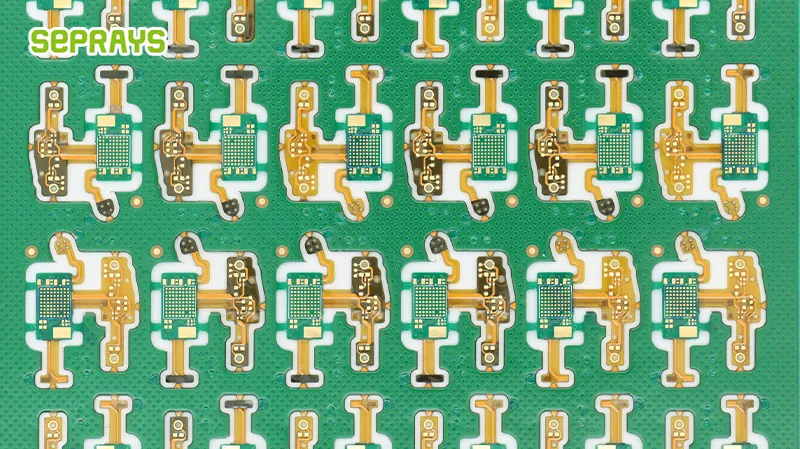
PCB Depaneling Solutions for Flexible and Rigid-Flex Boards are becoming a real challenge for many manufacturers in 2026.
Not because the boards are new.
But because the damage tolerance is now extremely low.
A small crack.
A slight stress mark.
A tiny deformation.
Any of these can lead to field failure later.
🔍 Why Flexible and Rigid-Flex Boards Are Hard to Depanel
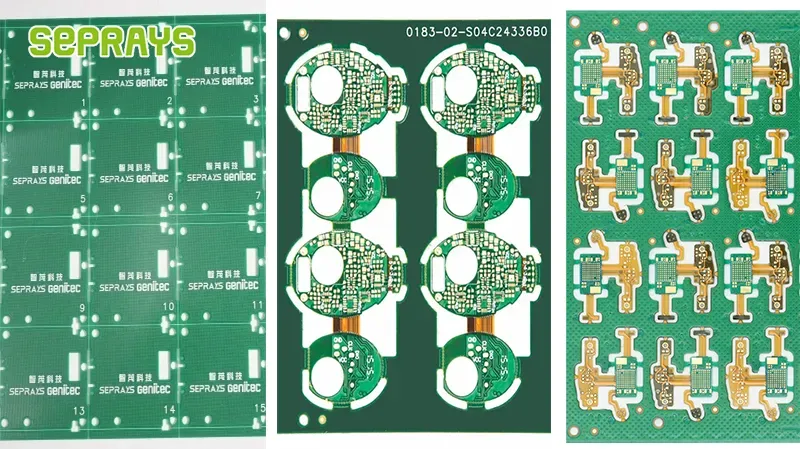
Flexible and rigid-flex PCBs behave very differently from standard FR4 boards.
Key reasons:
- Thin copper layers
- Mixed material structure
- High mechanical sensitivity
- Complex bending zones
These characteristics make traditional depaneling risky.
Even a slight force imbalance can cause hidden damage.
⚙️ Common Problems Seen on Production Lines
From real factory experience, issues often include:
1. Micro-cracks in flexible zones
They are not visible immediately.
But appear during reliability testing.
2. Delamination between layers
Especially in rigid-flex transitions.
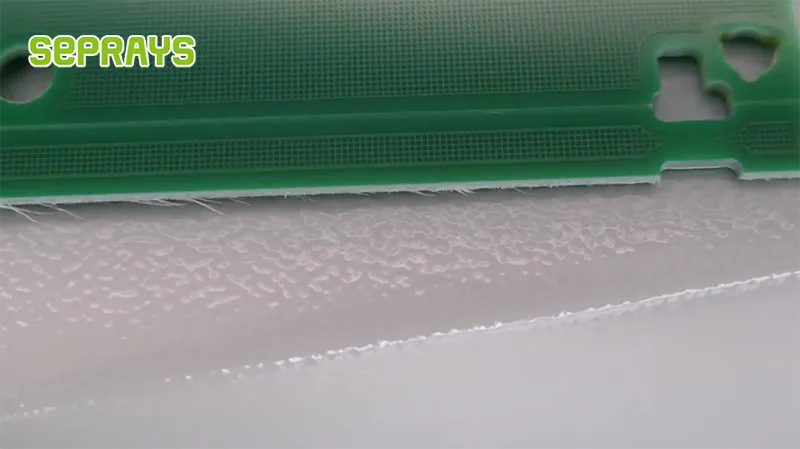
3. Edge deformation
Common when using high-stress cutting methods.
4. Inconsistent results across batches
Due to manual handling differences.
💥 Why Traditional Methods Fail on These Boards
Many factories still try:
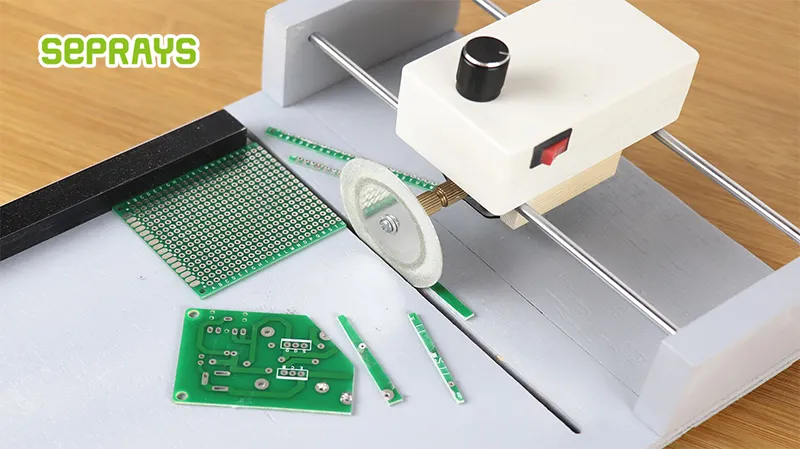
- Saw blade cutting
- Standard routing
- Manual breaking
But flexible boards respond differently:
- They absorb vibration unevenly
- Stress spreads unpredictably
- Fixing stability becomes critical
This is where failures begin.
💡 A Counterintuitive Insight
Many engineers assume:
“Flexible boards need softer cutting only.”
But that is incomplete.
The real issue is not softness.
It is controlled stress distribution.
Too soft → deformation
Too aggressive → cracking
Balance matters more than force reduction.
🧩 Best Depaneling Methods for Flexible and Rigid-Flex PCBs
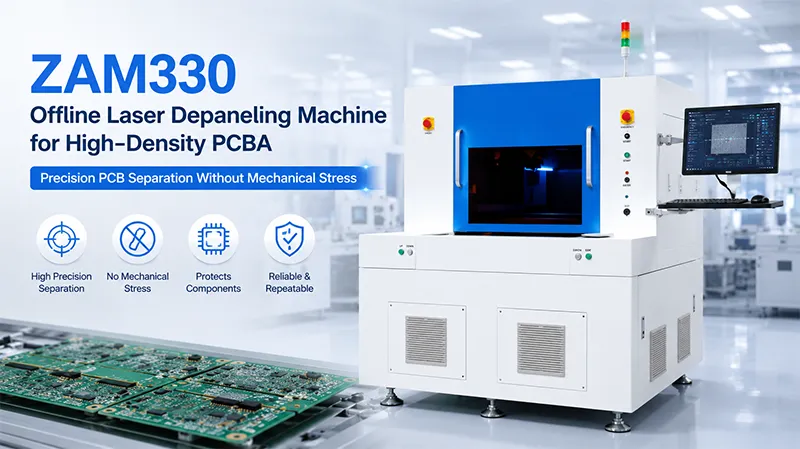
1. Laser Depaneling
Best for:
- Ultra-thin flex circuits
- High-density rigid-flex designs
Advantages:
- No mechanical contact
- Extremely low stress
Limitations:
- Higher investment cost
- Slower for thick sections
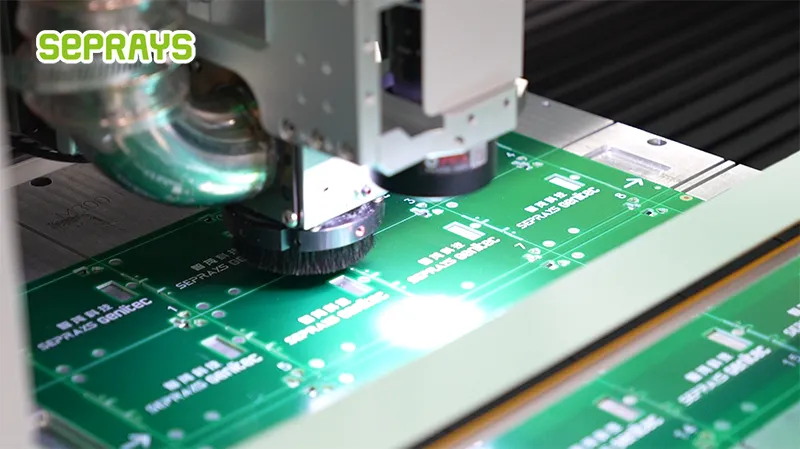
2. Precision Router Depaneling
Best for:
- Mixed rigid-flex structures
- Medium-volume production
Advantages:
- Controlled cutting path
- Adjustable parameters
Key requirement:
- Strong fixture support
- Optimized tool wear management
3. Hybrid Depaneling Approach
Best for:
- Complex layered structures
- Mixed material boards
Example:
- Laser for flex zones
- Router for rigid areas
📊 Method Comparison Table
| Method | Stress Level | 精密 | Cost Level | 最佳的应用程序 |
|---|---|---|---|---|
| Laser | Very Low | Very High | High | Thin flexible PCBs |
| Router | 介质 | High | 介质 | Rigid-flex mixed structures |
| Saw Blade | High | Low | Low | Not recommended |
| Hybrid | Optimized | Very High | 介质 | Complex production environments |
🧪 Case Example — Improving Yield on Rigid-Flex Boards
A medical electronics manufacturer faced:
- High failure rate after assembly
- Micro-cracks in flex sections
- Inconsistent depaneling results
Initial method:
- Standard router cutting
Problems:
- Excess vibration
- Fixture instability
- Edge stress concentration
After working with Seprays, the process was redesigned:
- Laser applied to flexible zones
- Precision routing is used for rigid sections
- Improved fixture stability was introduced
Results:
- Yield significantly improved
- Reduced hidden defects
- More stable production consistency
The key change was not only equipment.
It was process segmentation.
🛠️ Practical Solutions for Engineers
Based on real production experience:
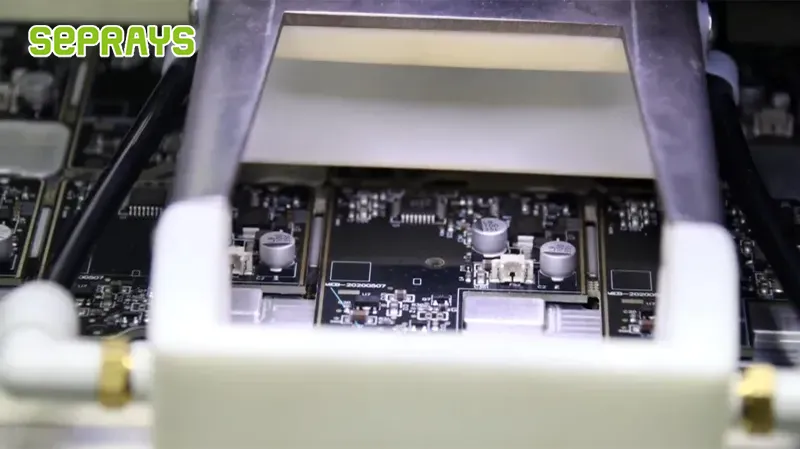
- Separate flex and rigid cutting zones
- Improve fixture support to reduce vibration
- Avoid single-method dependency
- Control cutting path direction
- Regularly validate stress distribution
These adjustments are often more effective than switching machines entirely.
🔄 When Should You Rethink Your Process?
You should evaluate your depaneling method if:
- PCB flex failures appear in testing
- Rigid-flex boards show deformation
- Yield drops after design changes
- New materials are introduced
These are early indicators of a mismatch.
💰 Cost Perspective — Hidden vs Visible Cost
Flexible PCB depaneling costs are not just machine-based.
They include:
- Scrap rate
- Rework after assembly
- Field failure risk
- Customer returns
Sometimes, a cheaper process leads to higher lifecycle cost.
🚀 Industry Trend in 2026
Manufacturers are moving toward:
- Hybrid depaneling systems
- Lower-stress process design
- Higher automation and consistency
- Data-driven parameter control
The focus is shifting from speed → stability → yield quality.
🚀 Final Thought — Matching Method to Material Behavior
Flexible and rigid-flex boards are not just “harder versions” of PCBs.
They require:
- Controlled stress
- Process segmentation
- Material-aware cutting strategies
One method rarely fits all cases.
🚀 Why Choose Seprays Group?
Seprays Group helps manufacturers solve complex depaneling challenges for flexible and rigid-flex PCBs through process-driven engineering and practical production experience.
With over 30 years of experience, Seprays Group has been dedicated to PCB/FPC depaneling technology, providing a full range of solutions—milling-cutter, laser, V-groove, and punching depanelers, as well as automated handling systems. Leading manufacturers, including Foxconn, Flextronics, State Grid, Luxshare, Compal, Wistron, China Electronics, Quanta, CRRC, China Aerospace, OPPO, ZTE, and Bosch, trust our equipment. It is used in factories across China and worldwide.
By combining application expertise with real production feedback, Seprays helps customers reduce stress-related failures and improve yield stability across complex PCB structures.
If you are working with flexible or rigid-flex boards and facing depaneling challenges, feel free to contact us—we’re here to help.
WhatsApp: +8618929266433
❓ FAQ
1. What is the biggest challenge in rigid-flex depaneling?
Stress control between rigid and flexible zones.
2. Is laser depaneling always the best option?
Not always. It depends on the thickness and production speed needs.
3. Can routing be used for flex PCBs?
Yes, but only with optimized parameters and strong fixture support.
4. What causes micro-cracks in flex boards?
Excess mechanical stress or vibration during cutting.
5. What is the best overall solution?
Often, a hybrid approach combining laser and routing methods.