.png)
 Chinese
  English
  Spanish
  Japanese
  Korean
  Russian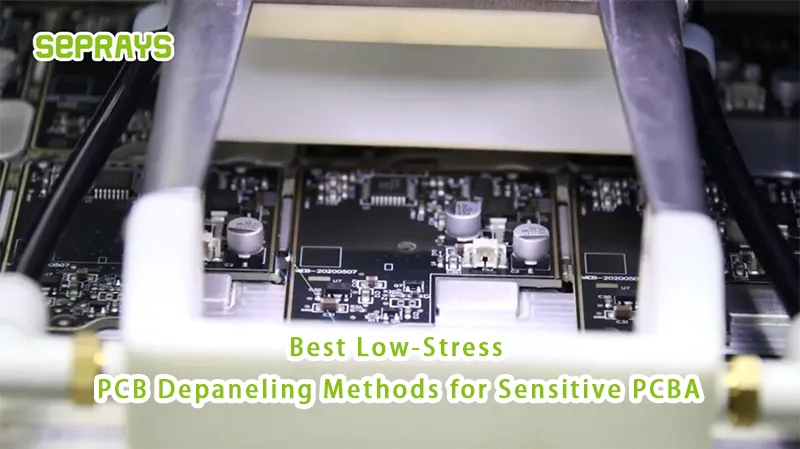
Best low-stress PCB depaneling methods for sensitive PCBA are becoming one of the most discussed topics in electronics manufacturing in 2026.
Not because depaneling is new.
But because PCB assemblies are getting more delicate every year.
Smaller components.
Thinner boards.
Higher-density layouts.
And less tolerance for stress.
A process that worked five years ago may now create hidden reliability risks.
🔍 Why Sensitive PCBA Requires Low-Stress Depaneling
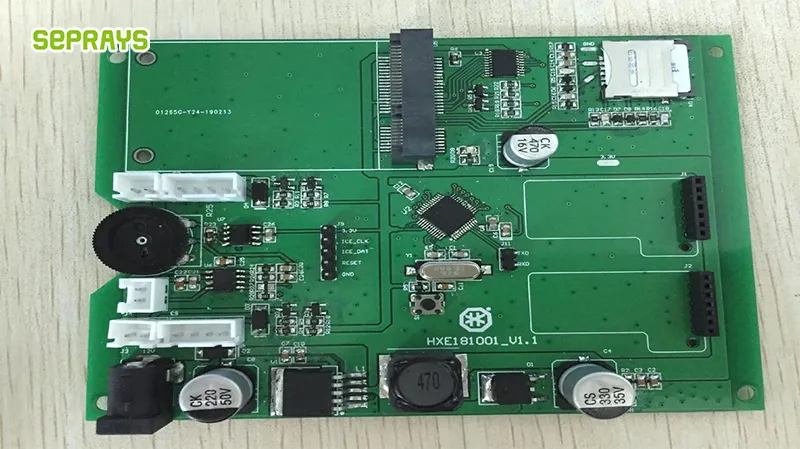
Modern PCBAs often contain:
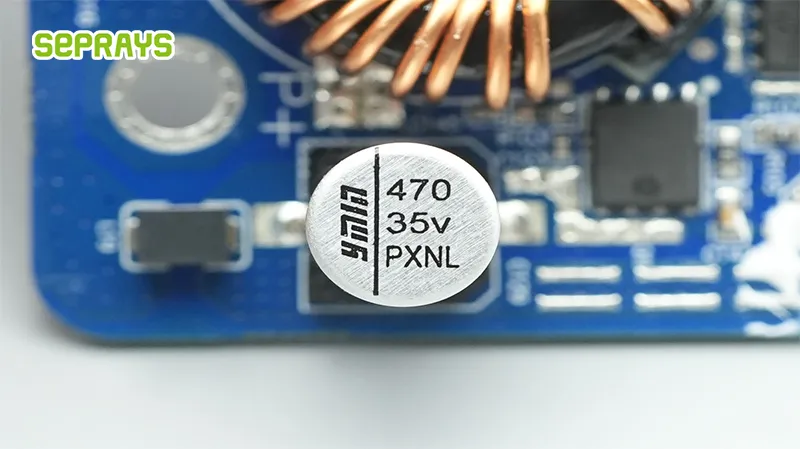
- MLCC capacitors
- BGA packages
- Fine-pitch ICs
- Flexible structures
These components are vulnerable to:
- Mechanical vibration
- Board bending
- Cutting shock
The challenge is that damage is not always visible immediately.
Sometimes failures appear only after:
- Thermal cycling
- Functional testing
- Field operation
⚙️ What Happens When Stress Is Too High?
In real SMT production lines, common issues include:
1. Micro-Cracks in Solder Joints
Especially around BGAs and ceramic capacitors.
2. PCB Warpage
Thin boards deform during cutting.
3. Hidden Reliability Failures
Products pass inspection but fail later in use.
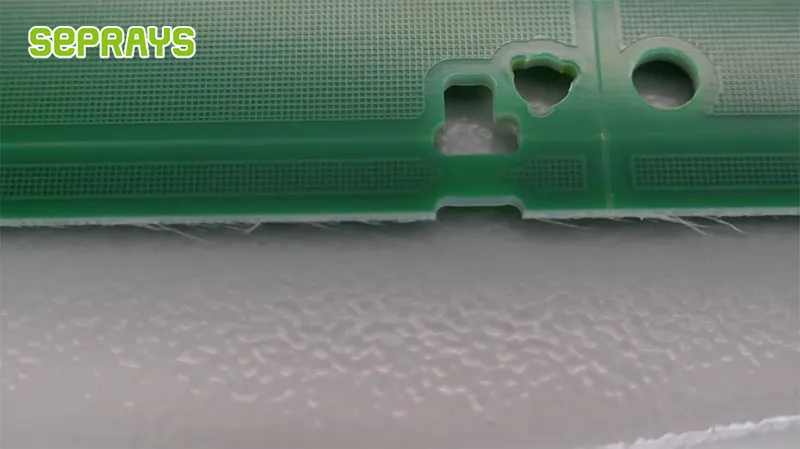
4. Edge Damage and Delamination
More common on multilayer or rigid-flex structures.
💥 Why Traditional Methods Struggle
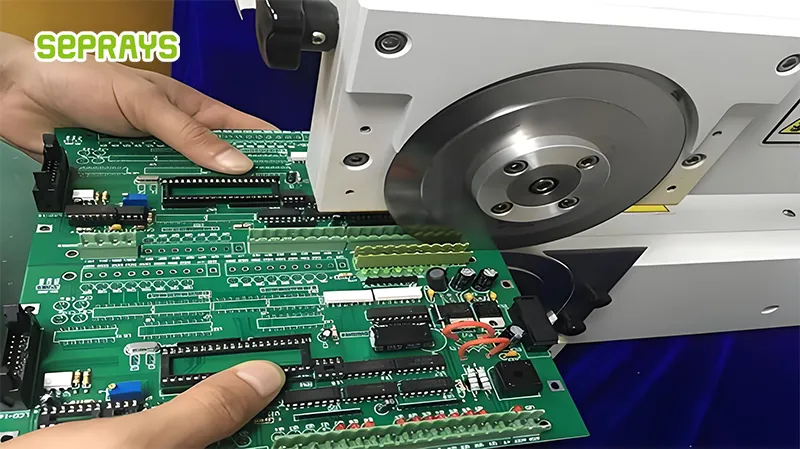
Many factories still rely on:
- Manual breaking
- Standard V-cut separation
- High-speed mechanical cutting
These methods may work for simple boards.
But sensitive PCBA reacts differently.
Even small stress variations can affect yield.
💡 A Counterintuitive Insight
Many engineers focus only on cutting force.
But a lower force alone does not guarantee lower stress.
For example:
- Poor fixture support can increase board flex
- The wrong cutting path creates vibration concentration
- Excessively slow routing can increase heat buildup
The real goal is:
Controlled and balanced stress distribution.
🧩 Best Low-Stress Depaneling Methods in 2026
1. Laser PCB Depaneling
Best for:
- High-density PCBAs
- Medical electronics
- Flexible and rigid-flex boards
Advantages:
- Non-contact process
- Extremely low mechanical stress
- High precision
Limitations:
- Higher initial investment
- Slower for thick materials
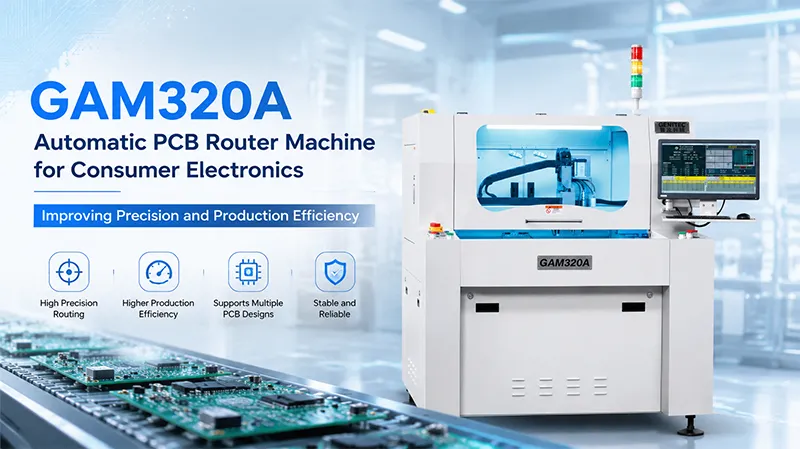
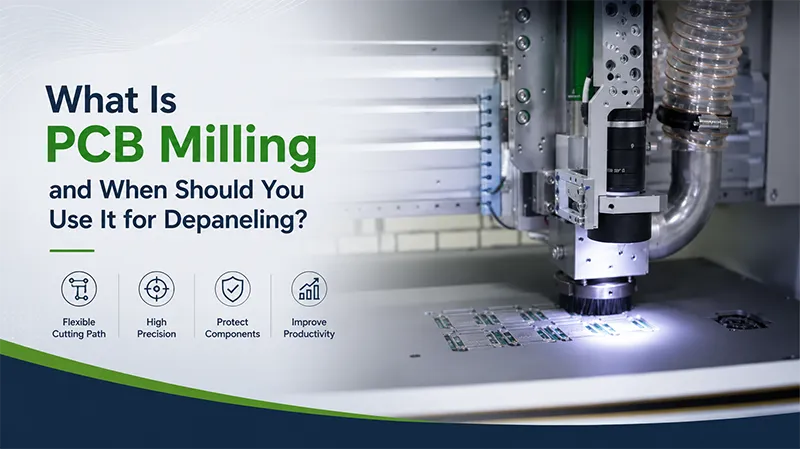
2. Precision Router Depaneling
Best for:
- Complex board outlines
- Mixed production environments
Advantages:
- Good cutting quality
- Flexible programming
Critical conditions:
- Stable fixture support
- Proper spindle parameters
- Regular tool maintenance
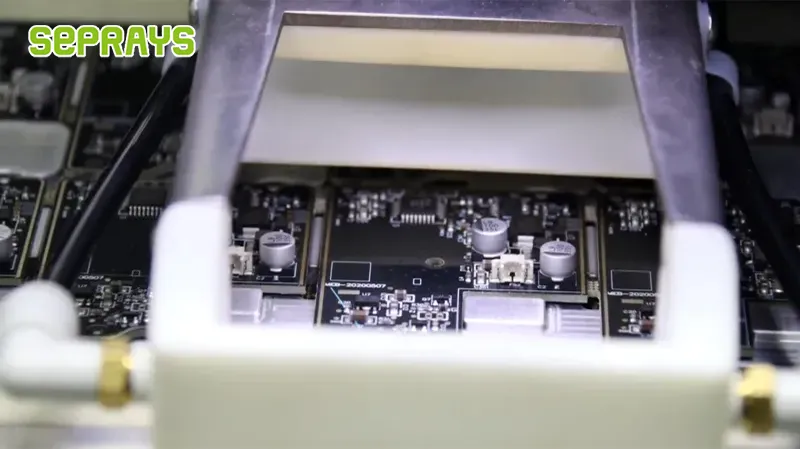
3. Hybrid Depaneling Systems
Best for:
- Boards with mixed requirements
- Sensitive + standard areas on one panel
Example:
- Laser for critical zones
- A router or saw for less sensitive sections
This approach improves both efficiency and quality.
📊 H2: Comparison of Low-Stress Methods
| Method | Stress Level | 精密 | Flexibility | Typical Applications |
|---|---|---|---|---|
| Laser | Very Low | Very High | High | Medical, automotive, HDI PCBA |
| Precision Router | 低中 | High | High | Complex PCB structures |
| Saw Blade | Medium-High | 介质 | Low | Straight-line panels |
| V-Cut | High | Low | Low | Simple pre-scored panels |
| Hybrid | Optimized | Very High | Very High | Advanced mixed production |
🧪 Case Example — Solving Stress Failures in Production
A manufacturer producing automotive control PCBAs experienced:
- Cracked MLCCs after depaneling
- Intermittent electrical failures
- High rework rates
Initial process:
- Standard V-cut separation
Problems:
- Excessive board bending
- Stress is transferred directly to components
After working with Seprays, the customer upgraded to:
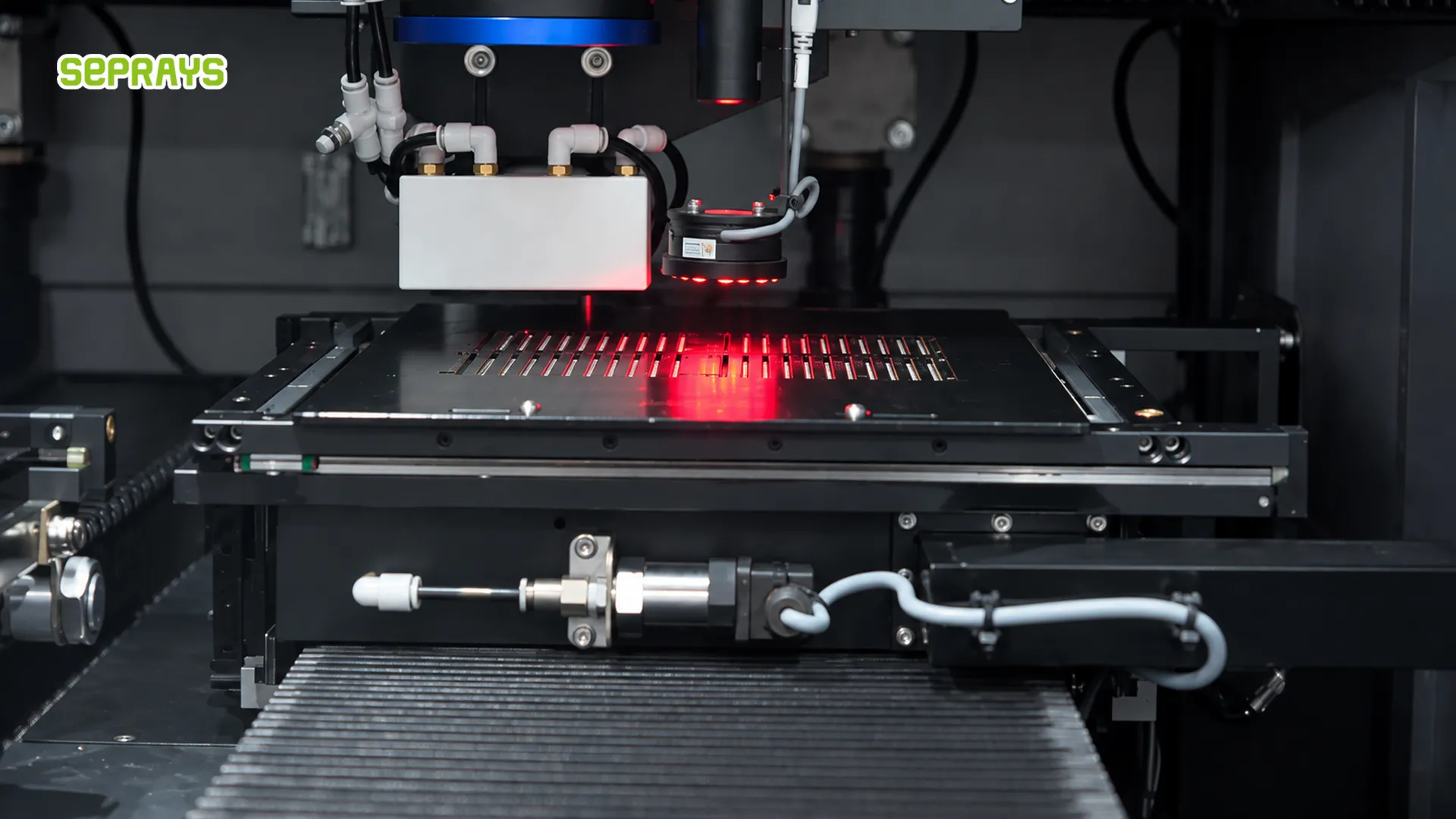
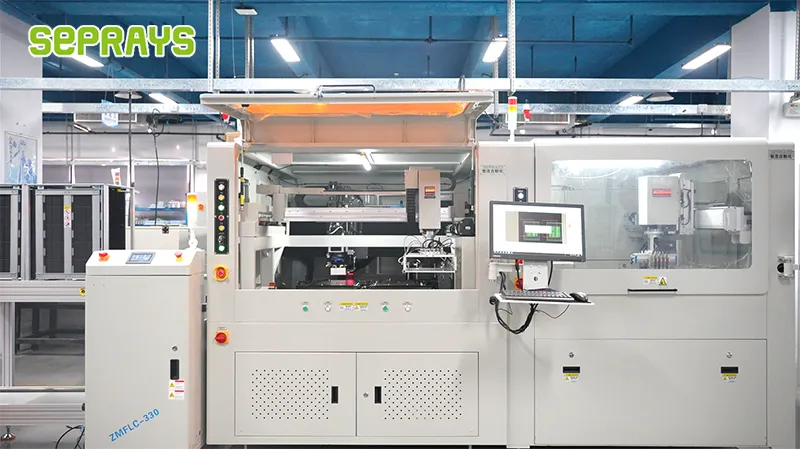
- Precision routing with CCD alignment
- Optimized fixture support
- Low-stress process parameters
For critical products, laser depaneling was added.
Results:
- Significant reduction in stress-related defects
- Improved long-term reliability
- Better production consistency
The biggest improvement?
Failures decreased before final testing even began.
🛠️ Practical Ways to Reduce Depaneling Stress
From real factory experience:
Improve Fixture Design
Proper support reduces PCB flex.
Optimize Cutting Parameters
Speed, depth, and path matter more than many expect.
Match the Method to the PCB Structure
Not every board requires a laser.
Not every board is safe with V-cut.
Monitor Tool Wear
Dull tools increase vibration and stress.
Use Vision Alignment Systems
CCD alignment improves precision and repeatability.
🔄 When Should You Upgrade Your Process?
You should reconsider your depaneling setup if:
- Sensitive components are near the board edges
- Product reliability issues increase
- PCB thickness decreases
- HDI or rigid-flex designs become common
These changes usually require lower-stress processes.
💰 Cost Analysis — Cheap Cutting Can Become Expensive
A low-cost depaneling method may create:
- Hidden defects
- Customer returns
- Warranty claims
- Yield loss
In many cases, investing in low-stress depaneling reduces total production cost over time.
🚀 Industry Trend in 2026
Manufacturers are increasingly prioritizing:
- Reliability over raw speed
- Automation and consistency
- Hybrid depaneling solutions
- Data-driven process optimization
The focus is shifting from “Can it cut?” to:
“Can it cut without risk?”
🚀 Final Thought — Low Stress Means Long-Term Stability
Sensitive PCBA requires more than fast separation.
It requires:
- Stable processes
- Controlled force
- Smart equipment selection
The best depaneling method is the one that protects both yield and long-term reliability.
🚀 Why Choose Seprays Group?
Seprays Group specializes in low-stress PCB depaneling solutions for sensitive PCBA applications, helping manufacturers improve reliability while maintaining production efficiency.
With over 30 years of experience, Seprays Group has been dedicated to PCB/FPC depaneling technology, providing a full range of solutions—milling-cutter depanelers, laser depanelers, V-groove depanelers, punching depanelers, and automated handling systems. Leading manufacturers, including Foxconn, Flextronics, State Grid, Luxshare, Compal, Wistron, China Electronics, Quanta, CRRC, China Aerospace, OPPO, ZTE, and Bosch, trust our equipment. It is used in factories across China and worldwide.
By combining process expertise with real production experience, Seprays helps customers reduce stress-related defects, improve yield stability, and optimize depaneling performance for advanced electronic products.
If you are looking for low-stress depaneling solutions for sensitive PCBA, feel free to contact us—we’re here to help.
WhatsApp: +8618929266433
❓ FAQ
1. What is the lowest-stress PCB depaneling method?
Laser depaneling is generally considered the lowest-stress method.
2. Why is low-stress depaneling important?
It reduces the risk of cracks, solder damage, and hidden reliability failures.
3. Can router depaneling be low-stress?
Yes, with proper fixtures and optimized parameters.
4. Is V-cut suitable for sensitive PCBA?
Usually not, because it generates higher mechanical stress.
5. What industries need low-stress depaneling most?
Automotive, medical, aerospace, and high-density consumer electronics.