.png)
 Chinese
  English
  Spanish
  Japanese
  Korean
  Russian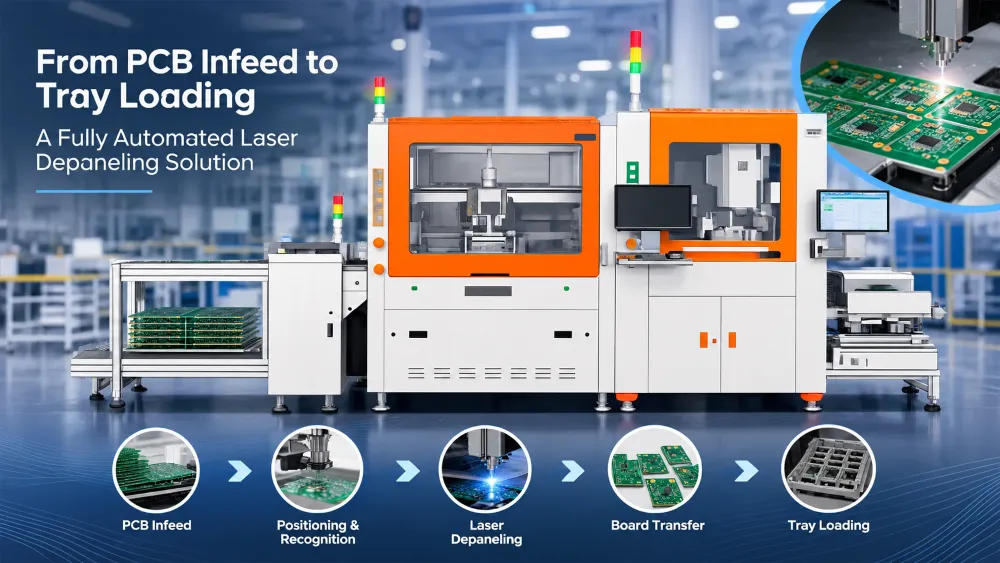
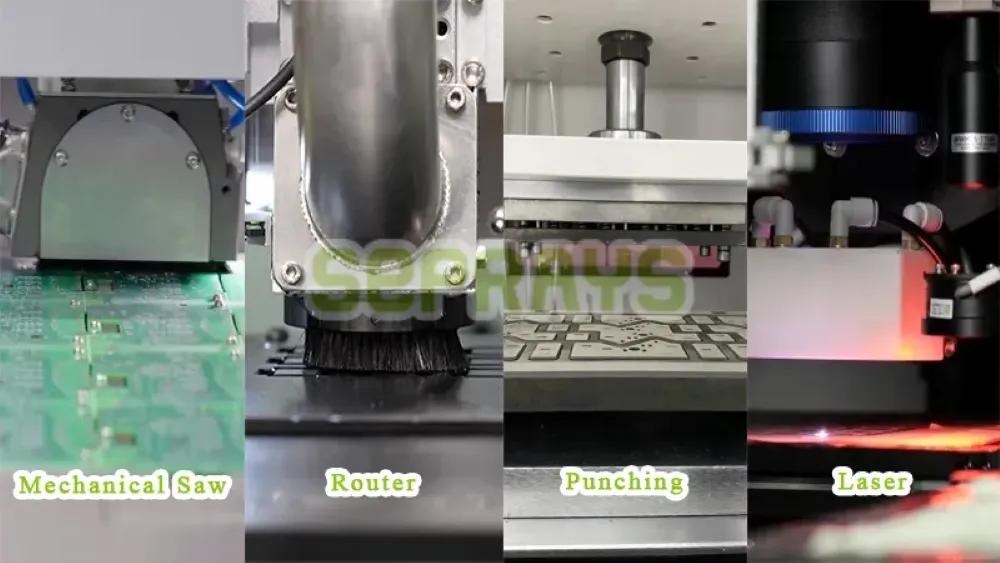
PCB depaneling machine manufacturers serve different needs across the electronics industry. Some focus on routing and milling, while others specialize in laser processing, V-groove separation, or integrated production-line automation.
For international electronics manufacturers, choosing a supplier involves more than comparing machine prices. Cutting quality, production compatibility, technical support, and long-term operating costs all deserve attention.
🔍 Which Manufacturers Should You Evaluate?
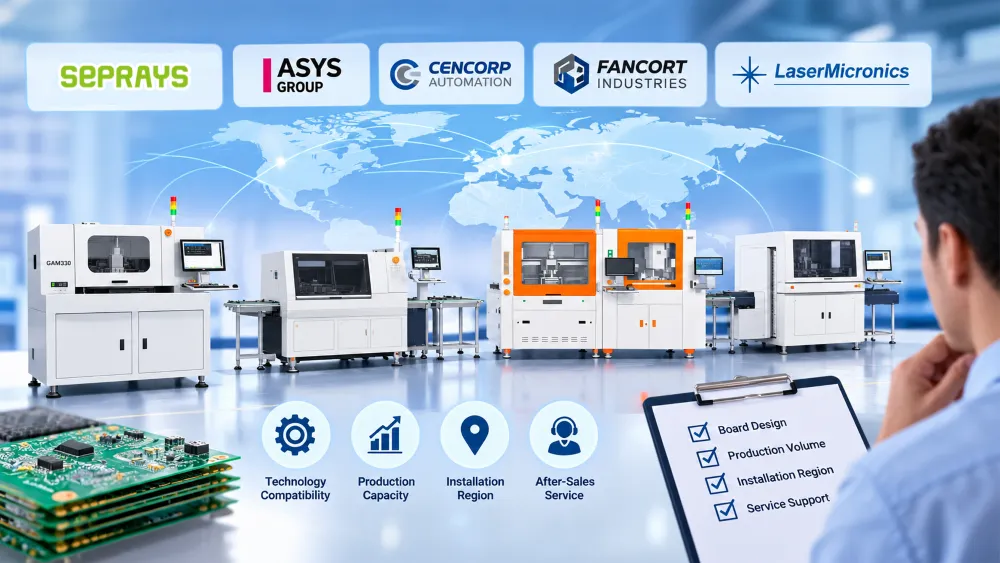
There is no single manufacturer that fits every PCB application. The following companies are starting points for a supplier shortlist, rather than a definitive industry ranking.
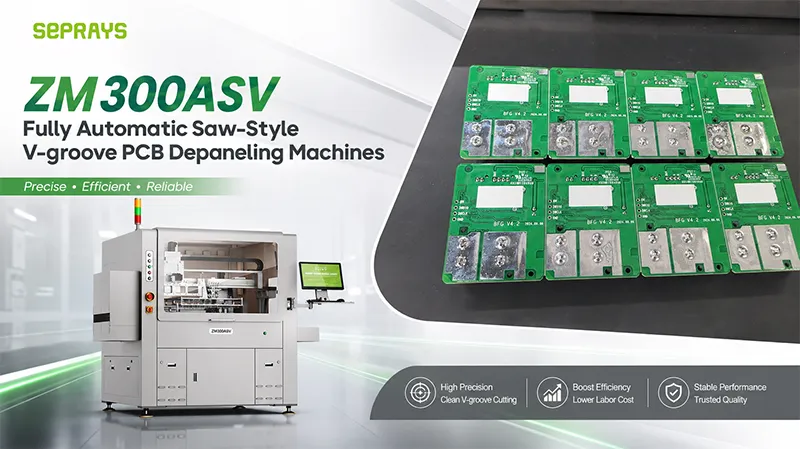
- Seprays Group: Offers milling-cutter, laser, V-groove, and punching equipment, alongside automated loading and unloading solutions.
- ASYS Group: A supplier of electronics manufacturing automation equipment, including PCB depaneling systems.
- Cencorp Automation: Known for automation solutions used in electronics manufacturing, including depaneling applications.
- Fancort Industries: Offers PCB depaneling equipment, including solutions for separating V-scored boards.
- LaserMicronics: Worth evaluating when laser-based PCB processing is relevant to the application.
Before requesting quotations, confirm that each supplier supports your specific board design, production volume, installation region, and service requirements.
⚙️ How Do Their Solutions Differ?
The machine technology often matters more than the supplier’s general reputation.
| Technology | Typical application | What to verify |
|---|---|---|
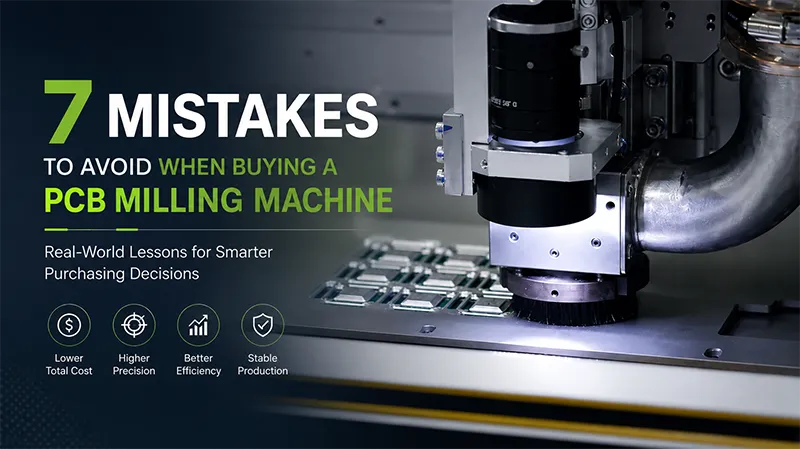
| Router / milling | Complex outlines and curved cutting paths | Edge quality, cutter life, dust extraction |
| Laser | Fine features and reduced mechanical cutting force | Material compatibility, heat effects, fume control |
| V-groove | Panels with pre-scored separation lines | Groove geometry, component clearance |
| Punching | Repetitive designs compatible with dedicated tooling | Tooling cost and product-change flexibility |
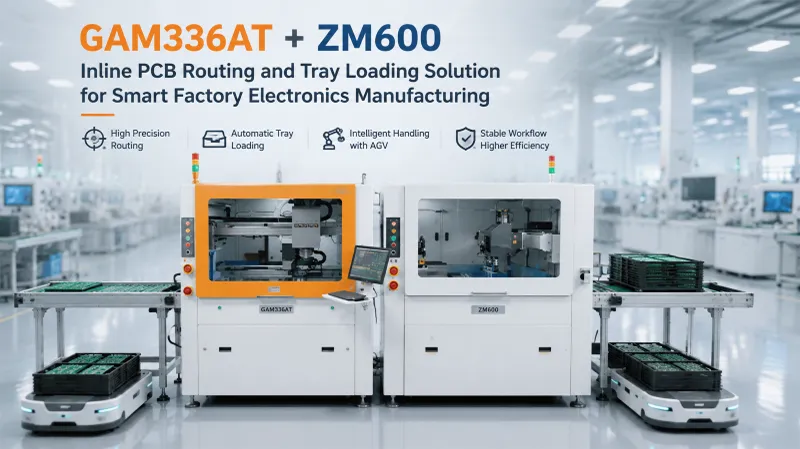
| Inline automation | High-volume, connected production | Transfer accuracy, cycle time, line integration |
A useful correction to a common assumption: laser is not automatically the best choice for every precision application, and milling is not necessarily the cheapest over the machine’s lifetime. The result depends on the board, process settings, quality targets, and production conditions.
🏭 What Should International Buyers Check?
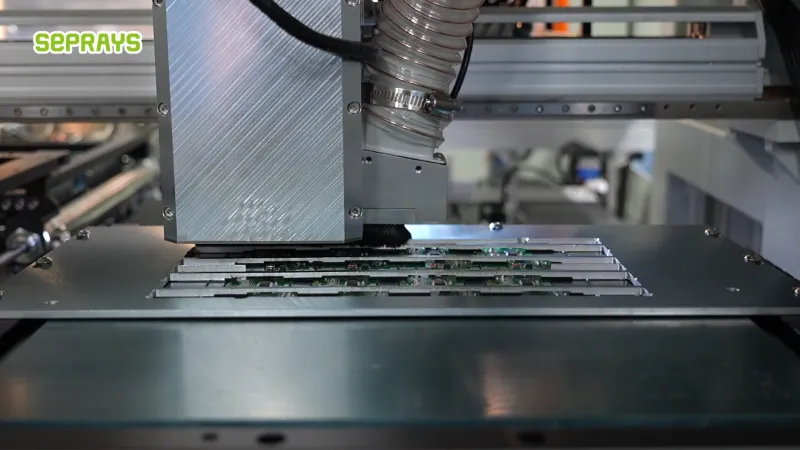
Imagine a semiconductor-related electronics manufacturer operating a production site overseas. Its engineering team needs to separate assembled PCBs while reducing manual handling and maintaining consistent quality.
The team should first review the PCB drawings, panel dimensions, component locations, cutting paths, and required output. It should then test representative boards and inspect the separated edges, component condition, dust or fumes, and repeatability.
For a board with complex outlines, a router may be suitable. For a panel with defined V-grooves, a dedicated V-groove solution may be more practical.
Seprays can be included in this evaluation because its product range covers several separation methods and automated handling options. This is an illustrative selection scenario, not a claim about a specific customer installation.
💰 How Can You Compare the Real Cost?
A low quotation can be attractive, but the purchase price is only one part of the calculation.
Consider equipment cost, tooling, operator time, maintenance, cleaning, rejected boards, rework, installation, and after-sales support.
For a low-volume factory, a standalone machine may offer better value. For a high-volume line, automation may reduce repetitive handling and improve production flow.
Ask every supplier to demonstrate the process using your own PCB samples. Compare measurable results rather than relying on headline speed or brochure specifications.
🌍 Why Choose Seprays Group?
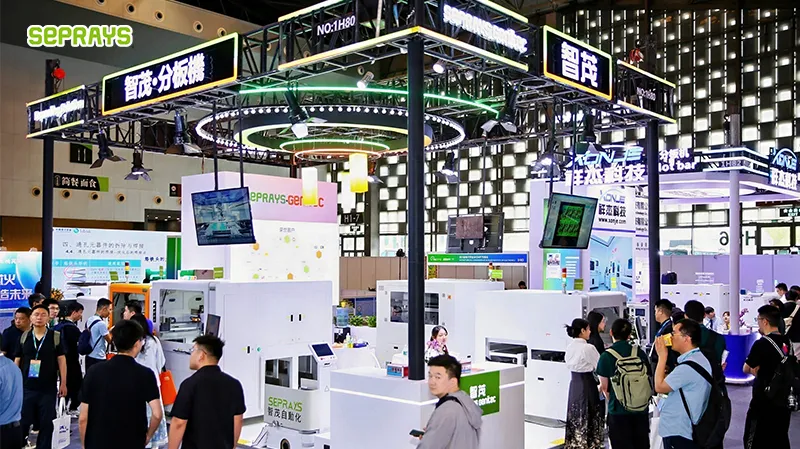
Seprays Group has been dedicated to PCB/FPC depaneling technology for more than 30 years, with its history dating back to 1993. It provides a full range of solutions, including milling-cutter depanelers, laser depanelers, V-groove depanelers, punching depanelers, and automated handling systems.
Its equipment is trusted by leading manufacturers, including Foxconn, Flextronics, State Grid, Luxshare, Compal, Wistron, China Electronics, Quanta, CRRC, China Aerospace, OPPO, ZTE, and Bosch. Seprays equipment is used in factories across China and worldwide.
For international buyers, the practical advantage is the ability to evaluate different depaneling methods with one supplier, rather than starting a separate search for every process. The final recommendation should still be based on sample testing, factory requirements, and confirmed service arrangements.
If you are comparing suppliers for a new line or an equipment upgrade, please contact Seprays Group with your PCB drawings, panel dimensions, material, production volume, and target cutting quality. These details help narrow down the options.
WhatsApp: +8618929266433
❓ FAQ
1. Which manufacturers supply PCB depaneling equipment internationally?
Seprays, ASYS Group, Cencorp Automation, Fancort Industries, and LaserMicronics are examples to investigate. Confirm current product availability and service coverage for your region.
2. Which depaneling technology is best for complex PCB shapes?
Router-based milling is often suitable for complex outlines, but the board material, component layout, and required edge quality should be checked first.
3. Is laser depaneling always more precise than milling?
Not in every application. Precision depends on the process, machine configuration, material, and acceptance criteria. Test samples before making a decision.
4. What should overseas buyers check before purchasing?
Review technical specifications, sample-cutting results, safety documentation, installation requirements, spare parts, training, warranty terms, and local or remote service support.
5. How can I request a suitable solution from Seprays?
Provide PCB drawings, panel dimensions, material and thickness, expected output, and any automation requirements. Seprays can then evaluate which technology and configuration best fit the application.