.png)
 Spanish
  English
  Japanese
  Korean
  Russian
  Chinese
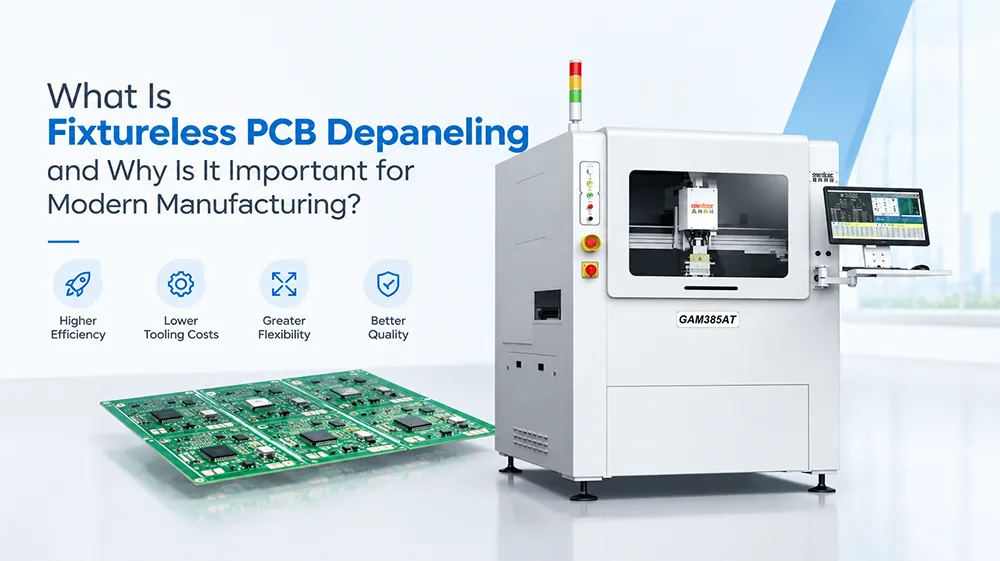
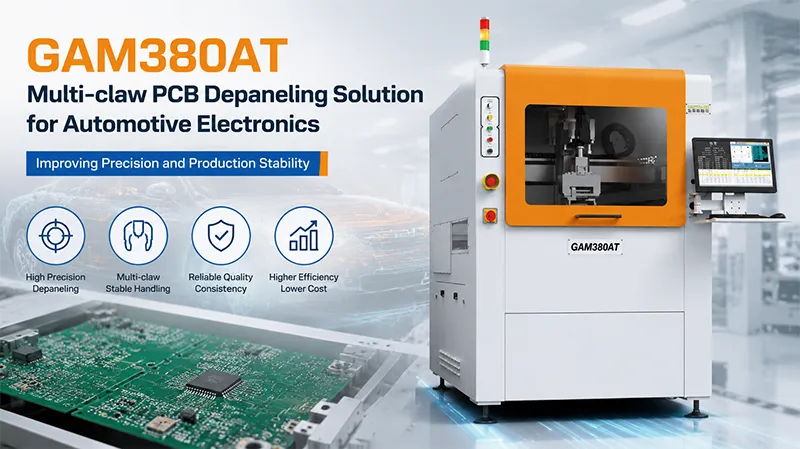
On electronics production lines, complete printed circuit boards (PCBs) often need to be separated into multiple individual boards for different devices. This process is similar to a tailor using scissors to precisely cut fabric. The equipment responsible for this task is the depaneling machine. Using mechanical or laser technology, it separates continuous PCBs into individual units of specified dimensions, making it an indispensable “cutting master” in modern electronics manufacturing.
Core Function: From Continuous Sheets to Individual Boards
In early production stages, PCBs are typically manufactured as continuous sheets, with multiple identical or different boards connected via V-cuts or postage-stamp holes. This approach improves production efficiency and simplifies inspection.
However, the final product requires individual boards. Depaneling machines precisely cut these sheets into units that meet strict specifications, while protecting components and circuitry from damage.
Depaneling machines are widely used in consumer electronics (e.g., smartphones, tablets), automotive electronicsy industrial control systems. For instance, manufacturers must separate multiple functional modules—such as the camera or fingerprint sensor—on a mobile phone motherboard for assembly.
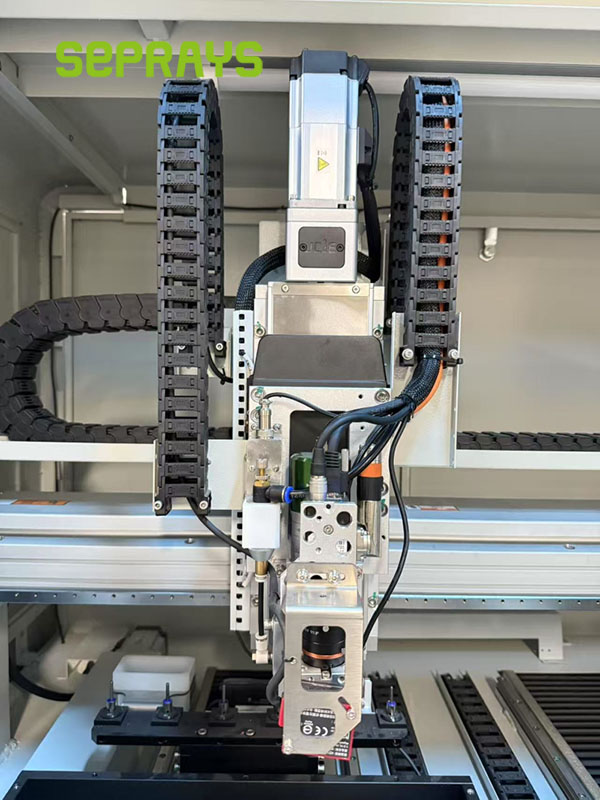
Types of Depaneling Machines
Depaneling machines are categorized based on their cutting method:
1. Mechanical Depaneling Machines
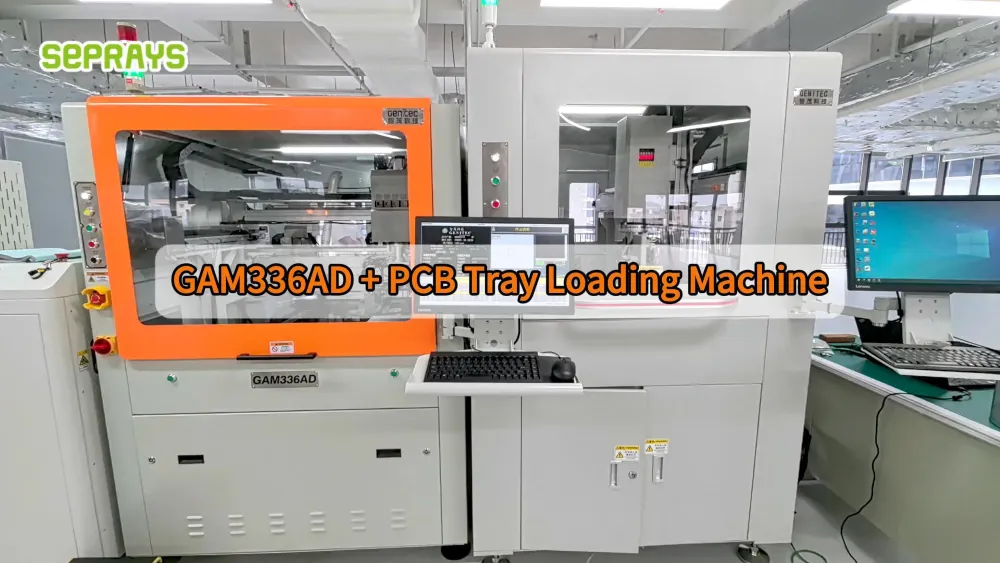
High-speed rotating milling or circular cutters cut along pre-set paths. Mechanical depaneling is cost-effective and versatile, especially for thicker boards or those with metal substrates. Because dust generation poses a concern, operators must use dust removal systems.
2. Laser Depaneling Machines
High-energy lasers melt or vaporize material, enabling contactless cutting. Laser depaneling provides high precision (up to ±0.05mm) and stress-free edges, ideal for thin or delicate PCBs. However, the equipment is more expensive, and reflective metals can affect performance.
3. Stamping Depaneling Machines
Die-stamping machines are suitable for high-volume, fixed-size cutting. They are highly efficient but come with high die costs and limited flexibility.
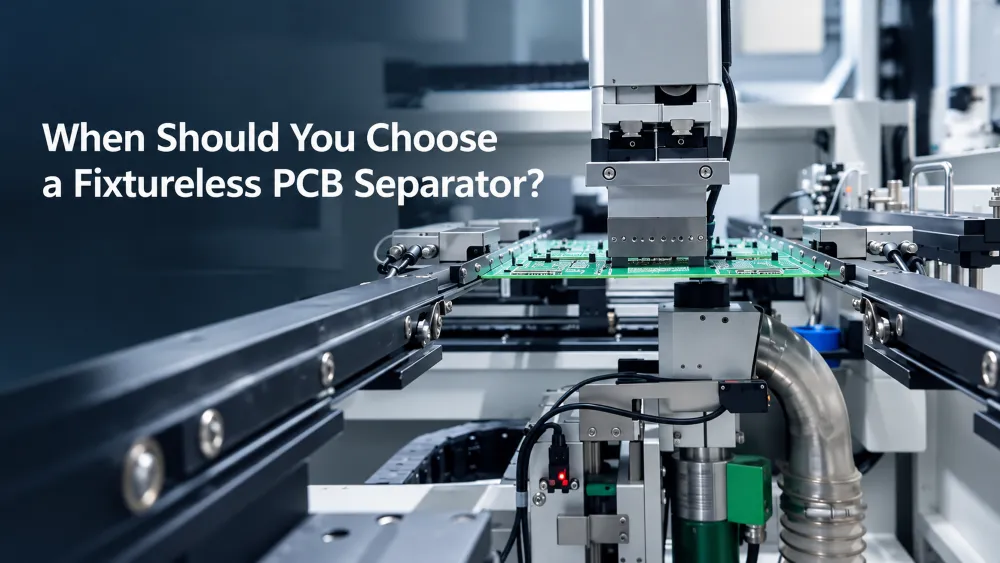
Modern machines often integrate vision positioning systems for accurate automatic path adjustment, and some high-end models support multi-axis linkage for complex shapes.

Advantages and Challenges
Advantages:
- High precision, efficiency, and reliability.
- Laser depaneling machines can achieve several meters per second, with burr-free edges, reducing post-processing.
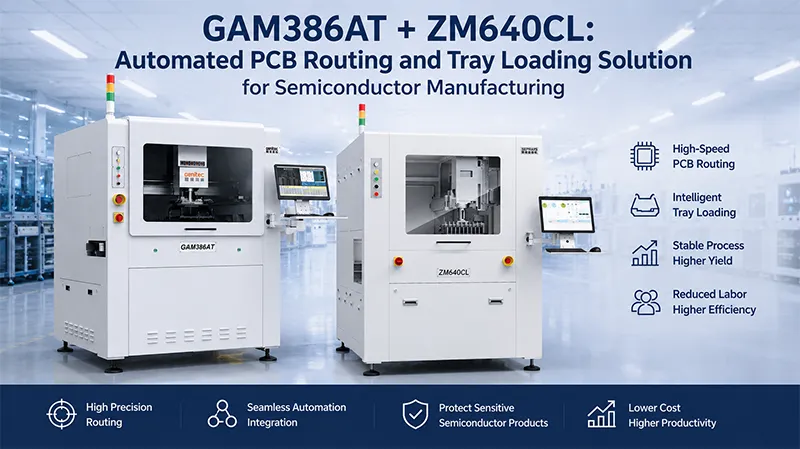
- Highly automated machines can run 24/7, increasing production capacity.
Challenges:
- Cutting stress can deform thin or flexible boards.
- Dust control and maintenance costs must be managed carefully.
Manufacturers address these challenges by adopting low-stress cutting processes, integrated dust removaly intelligent monitoring software to enhance performance and stability.
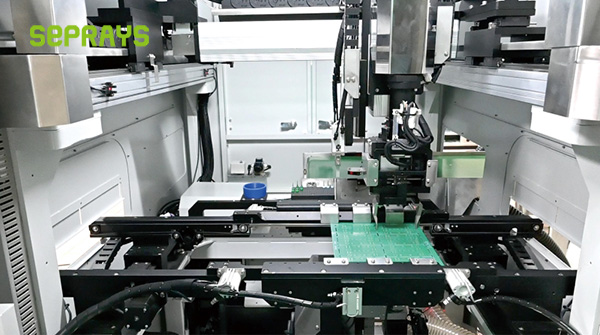
Future Trends in Depaneling Machines
- Higher Precision and Flexibility
With trends like 5G and IoT, micron-level precision is increasingly needed, as well as adaptability to special-shaped and multi-layer PCBs. - Intelligence and Automation
AI integration enables automatic defect detection and path optimization, further reducing manual intervention. - Green Manufacturing
Energy efficiency and reduced dust emissions are becoming key design priorities, supporting sustainable production.
Seprays Insight
Depaneling machines are pivotal in driving modern electronics manufacturing towards greater precision, efficiency, and innovation. From mechanical cutting to laser-assisted separation, and from single-function machines to intelligent integrated systems, every technological upgrade supports faster, safer, and more reliable PCB production.
As materials science and automation evolve, depaneling machines will continue to play a critical role in helping the electronics industry reach new heights.