.png)
 Spanish
  English
  Japanese
  Korean
  Russian
  Chinese
Saw blade depaneling is one of those processes that rarely gets the spotlight, yet it quietly supports high-volume PCB manufacturing every day. If you’ve ever dealt with tight production schedules or cost pressure, you’ve probably seen why this method keeps showing up on factory floors.
🔧 What Makes Saw Blade Depaneling So Widely Used?
In mass production, consistency matters more than anything.
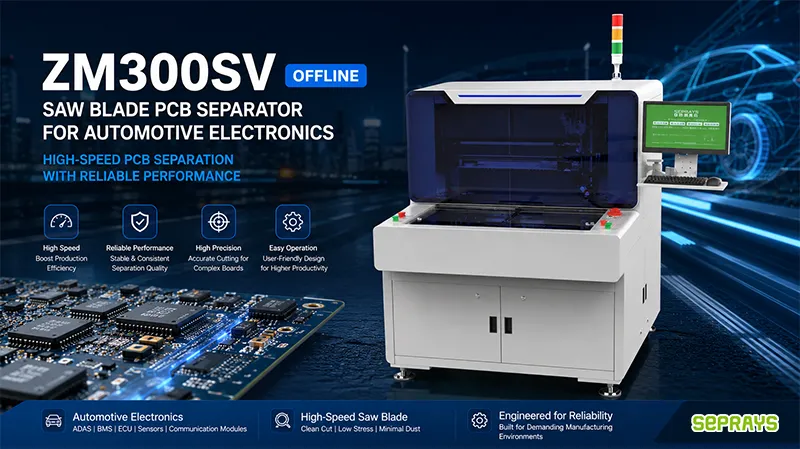
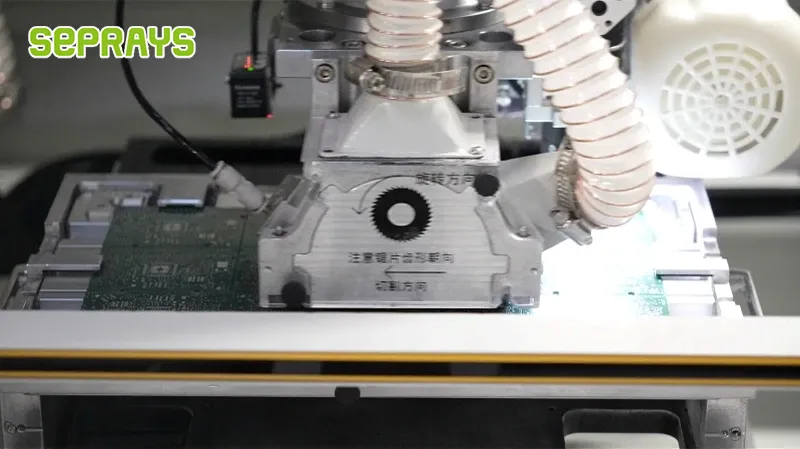
Saw blade depaneling delivers exactly that. It uses a rotating blade to separate PCBs along straight lines, typically V-grooves. The process is simple, repeatable, and fast.
No complex programming.
No expensive setup.
Just stable throughput.
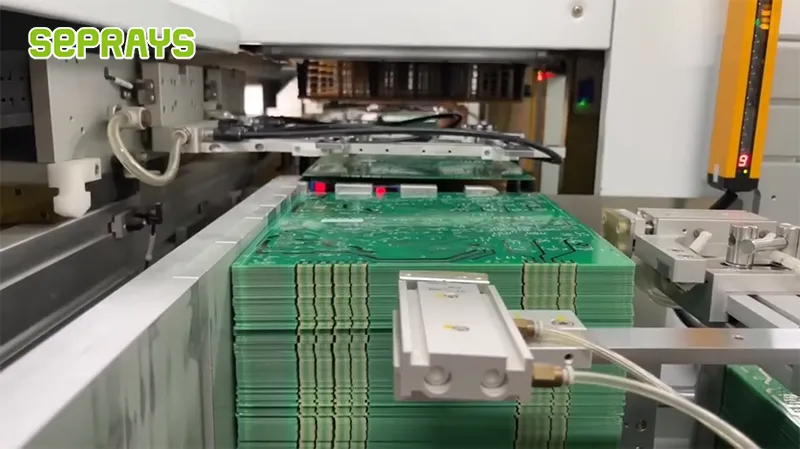
For manufacturers producing thousands—or millions—of identical boards, that reliability becomes a major advantage.
⚙️ Speed vs. Precision — Where It Fits Best
Not every depaneling method needs to be ultra-precise.
Saw blade depaneling works best when:
- PCB shapes are regular
- Cutting paths are straight
- Component density near edges is low
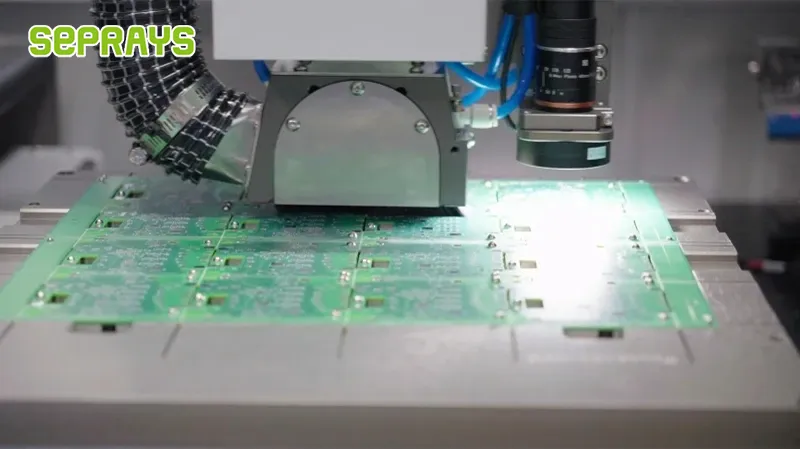
In these scenarios, it achieves high cutting speeds without compromising acceptable quality.
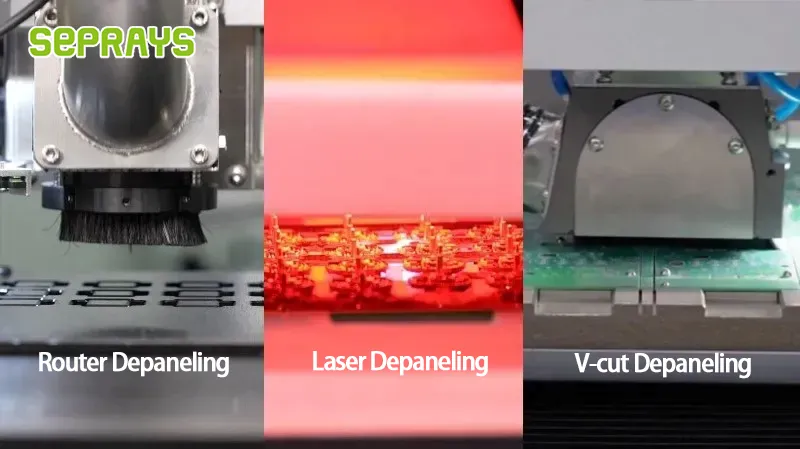
However, if your design includes irregular contours or sensitive edge components, other methods like router or laser depaneling may be more suitable.
💰 Cost Efficiency in High-Volume Production
Let’s talk about what really drives decisions—cost.
Saw blade systems are often chosen because they:
- Have a lower initial investment
- Require minimal operator training
- Offer long blade life with proper maintenance
- Deliver high throughput per hour
For large-scale production, even small savings per unit add up quickly.
Cost Comparison (Typical Scenario)
| Depaneling Method | Initial Cost | Velocidad | Maintenance | Best Use Case |
|---|---|---|---|---|
| Saw Blade | Low | High | Low | Mass production, straight lines |
| Router | Medio | Medio | Medio | Complex shapes |
| Laser | High | Medio | Low | High precision, no stress |
This is why many factories still rely on saw blade depaneling as their baseline process.
🧩 Common Pain Points Engineers Face
Despite its advantages, it’s not perfect.
Some common challenges include:
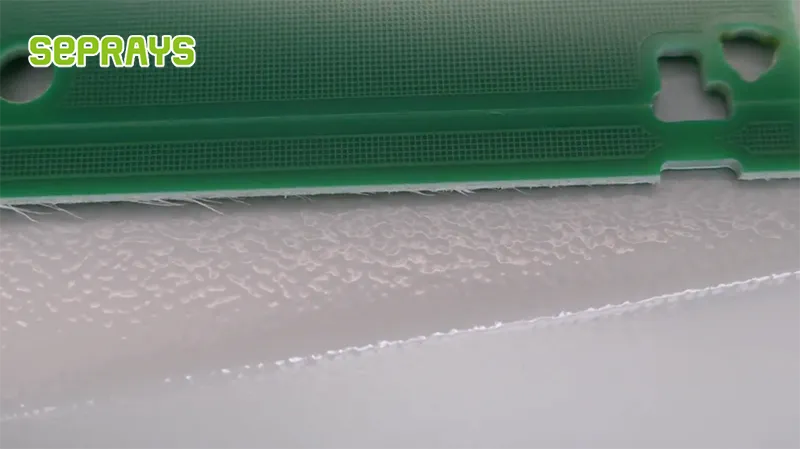
- Mechanical stress on PCB edges
- Dust generation during cutting
- Limited flexibility for complex designs
- Blade wear is affecting cut quality over time
These issues don’t necessarily eliminate the method, but they require proper control.
For example:
- Optimizing the feed rate reduces stress
- Using dust collection systems improves cleanliness
- Regular blade replacement ensures consistent quality
📊 Real-World Application Case
A consumer electronics manufacturer producing standard power control boards faced rising production costs.
They initially considered switching to laser depaneling.
After evaluation, they realized:
- Their PCB design was simple and straight-lined
- Production volume exceeded 500,000 units/month
- Precision requirements were moderate
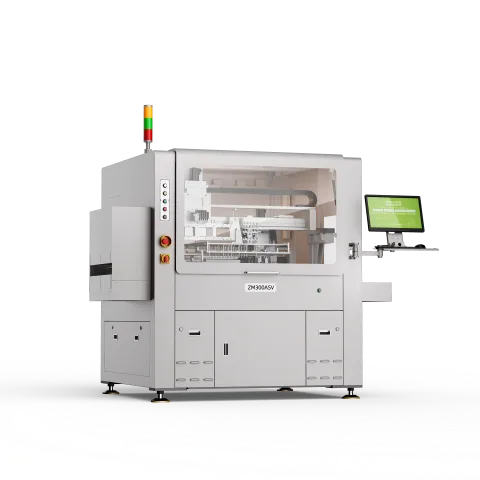
Instead of upgrading to a more expensive solution, they optimized their saw blade depaneling line.
By working with Seprays, they:
- Improved cutting stability
- Reduced blade wear frequency
- Increased throughput by 18%
The result?
Lower cost per unit.
No compromise in delivery timelines.
Sometimes, the best solution isn’t the most advanced—it’s the most appropriate.
🛠️ When Should You Consider Alternatives?
Saw blade depaneling is not a one-size-fits-all solution.
You should consider other methods if:
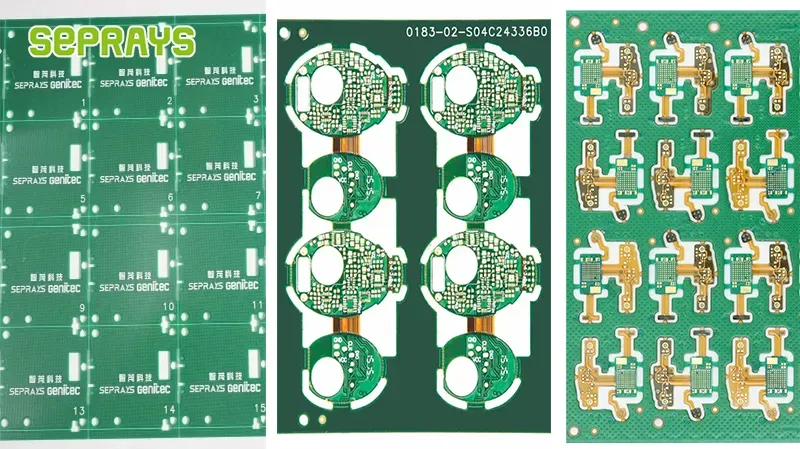
- Your PCB has irregular shapes
- Components are placed very close to the edges
- You need stress-free cutting
- You are working with ultra-thin boards
In those cases:
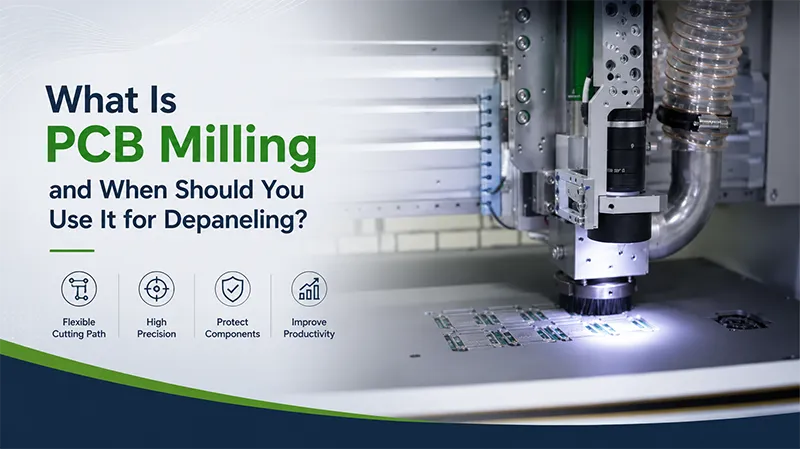
- Router depaneling offers flexibility
- Laser depaneling provides non-contact precision
The key is matching the process to the product—not the other way around.
🔍 Practical Tips from the Production Floor
From experience, a few small adjustments can make a big difference:
- Choose the right blade thickness for your PCB type
- Monitor spindle speed and feed rate carefully
- Schedule preventive maintenance
- Train operators to detect early signs of wear
These are simple steps, but they directly impact yield and efficiency.
🚀 Why Choose Seprays Group?
Seprays Group has been dedicated to PCB/FPC depaneling technology for years, building a full portfolio of solutions that adapt to different manufacturing needs.
From standard processes to advanced applications, they provide:
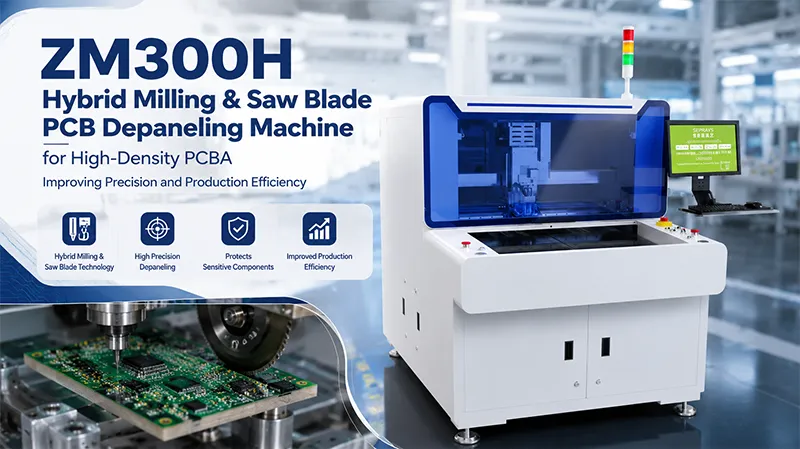
- Milling cutter depanelers
- Laser depaneling systems
- V-groove depaneling machines
- Punching solutions
- Automated handling systems
Their equipment is already trusted by global manufacturers such as Foxconn, Flextronics, State Grid, Luxshare, Compal, Wistron, China Electronics, Quanta, CRRC, China Aerospace, OPPO, ZTE, and Bosch.
This kind of adoption doesn’t happen by accident. It reflects proven performance across different industries and production scales.
If your goal is to balance cost, efficiency, and reliability, it’s worth exploring the right depaneling strategy with an experienced partner.
If needed, feel free to contact us.
WhatsApp: +8618929266433
Correo electrónico: sales@seprays.com
❓ FAQ
1. Is saw blade depaneling suitable for all PCB types?
No. It works best for straight-line cuts and simple board designs. Complex shapes may require router or laser methods.
2. Does saw blade depaneling damage components?
It can introduce mechanical stress, especially near edges. Proper setup and spacing help minimize this risk.
3. How often should blades be replaced?
It depends on usage and material, but regular inspection is essential to maintain cut quality.
4. Is it cheaper than laser depaneling?
Yes. Both initial investment and operational costs are generally lower, especially in high-volume production.
5. Can saw blade depaneling be automated?
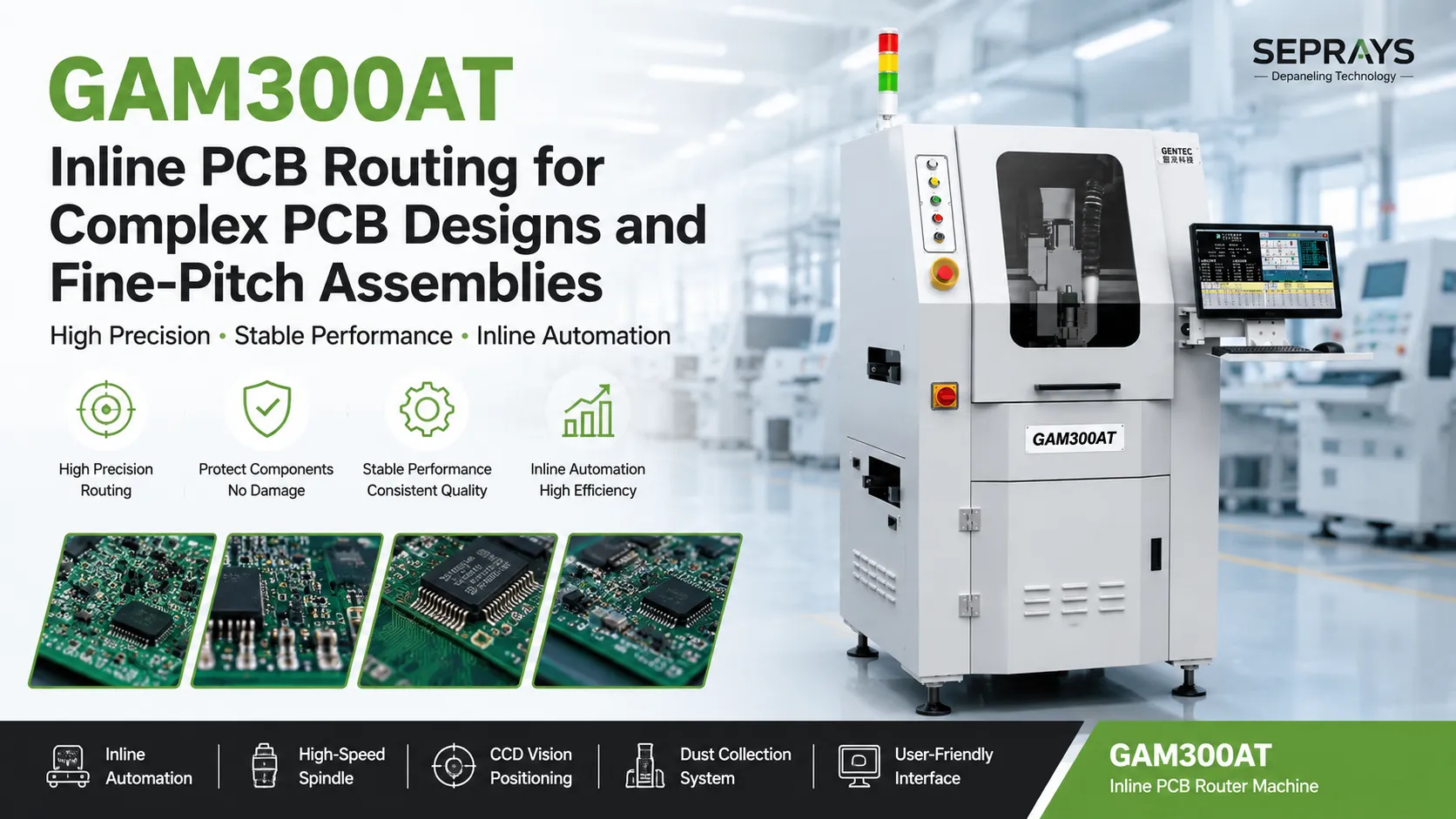
Yes. Many modern systems support inline automation, improving efficiency and consistency.