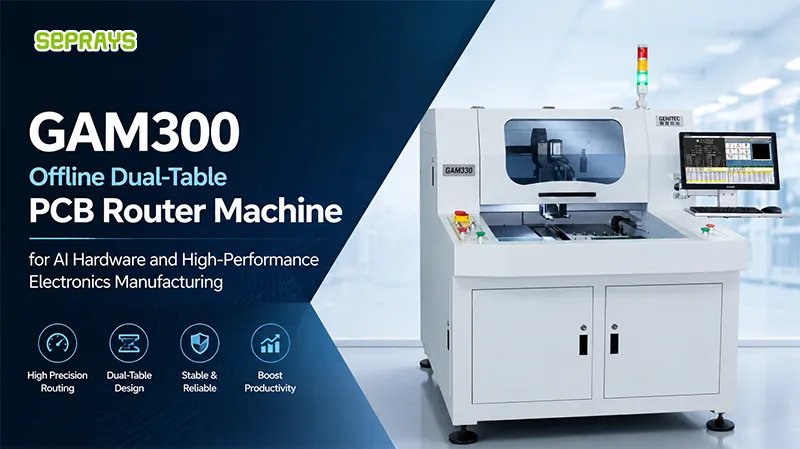
.png)
 Spanish
  English
  Japanese
  Korean
  Russian
  Chinese
PCB Router Machine selection has become far more complicated in 2026 than many manufacturers expected.
A few years ago, buyers mainly compared price and cutting speed.
Today, the conversation is different.
Factories now care about:
- Low-stress depaneling
- Automation compatibility
- CCD vision alignment
- High-mix flexibility
- Long-term maintenance cost
And one important reality is often overlooked:
The “best” router machine depends heavily on your PCB type, production model, and future expansion plans.
A machine that performs well for consumer electronics may not fit automotive, medical, or industrial applications.
🔍 Why PCB Router Machines Still Matter in 2026
Despite the growth of laser depaneling, router depaneling remains one of the most widely used methods in electronics manufacturing.
Why?
Because it offers a practical balance between:
- Precisión
- Cost control
- Production flexibility
- Material compatibility
Especially for:
- FR4 boards
- Multi-layer PCBAs
- Irregular outlines
- Mouse-bite designs
- Medium-to-high volume production
For many factories, router depaneling is still the most economical long-term solution.
⚠️ The Most Common Buying Mistake
Many buyers focus only on machine specifications.
But production problems usually come from process mismatch — not lack of machine power.
For example:
A factory producing sensitive automotive PCBAs purchased a low-cost router with basic fixtures.
The machine technically worked.
But after several months, they experienced:
- Micro-cracks near BGA components
- High operator dependency
- Frequent fixture changes
- Inconsistent alignment accuracy
The issue was not the spindle.
It was the overall process capability.
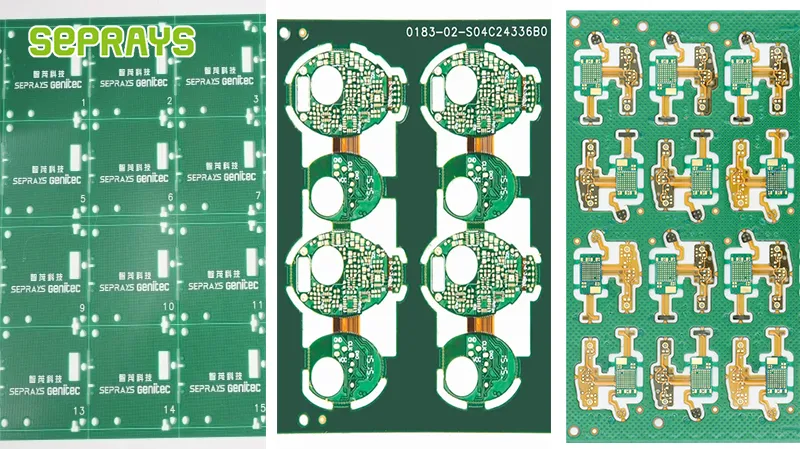
🧩 Start With Your PCB Type First
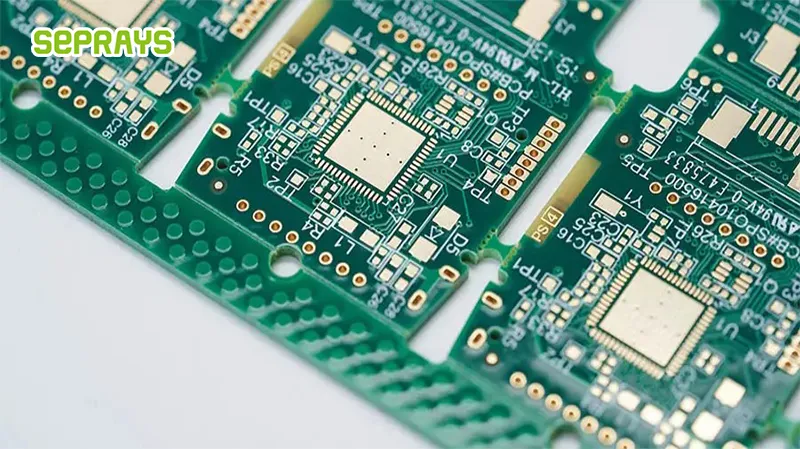
Before comparing brands or prices, manufacturers should evaluate the board itself.
Different PCB types require different routing strategies.
| PCB Type | Key Challenge | Recommended Features |
|---|---|---|
| High-density PCBA | Component proximity | CCD vision alignment |
| Automotive boards | Reliability | Low-stress cutting |
| Flexible PCB | Material movement | Stable vacuum support |
| Thick industrial PCB | Cutting resistance | High-rigidity spindle |
| High-mix production | Frequent changeovers | Fast programming |
This step is often skipped.
But it affects everything afterward.
⚙️ Why CCD Vision Systems Matter More Than Before
In older production environments, manual alignment was acceptable.
In 2026?
Not really.
Modern PCBAs have:
- Smaller spacing
- More compact layouts
- Tighter tolerances
Even tiny alignment deviations can lead to:
- Edge damage
- Poor routing quality
- Scrap increase
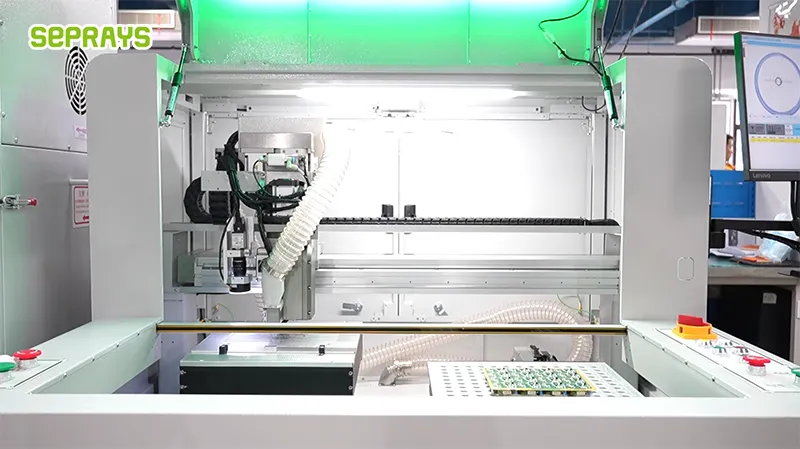
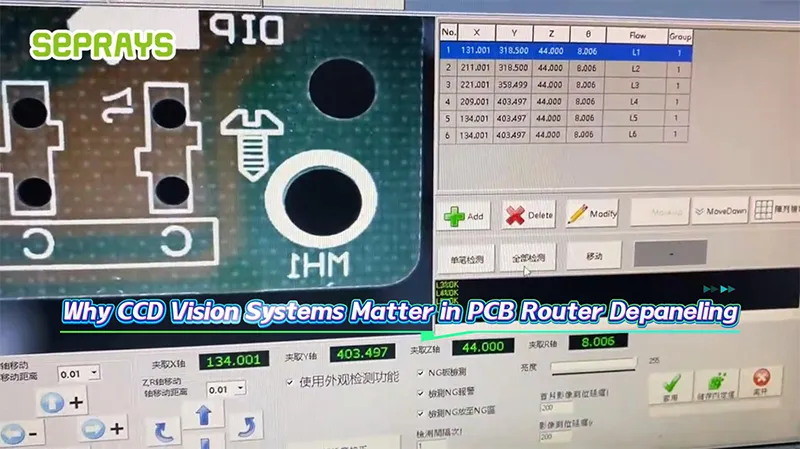
CCD vision systems help solve this by automatically identifying fiducial marks and correcting cutting paths in real time.
Especially valuable for:
- High-density PCBAs
- Automotive electronics
- Medical electronics
- High-mix production lines
💡 A Counterintuitive Finding From Real Factories
Many buyers assume:
“Higher spindle speed always means better performance.”
But experienced process engineers often prioritize:
- Stability
- Vibration control
- Dust management
- Fixture consistency
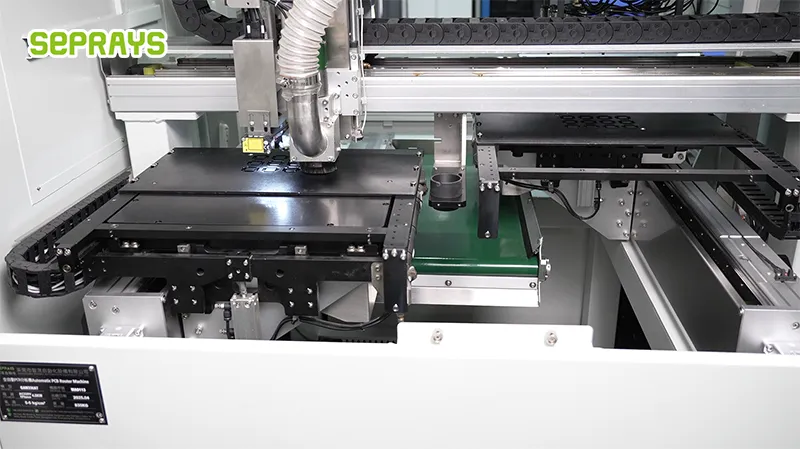
Unstable high-speed cutting can create hidden defects.
Sometimes, a slightly slower but more stable machine produces better long-term yield.
🏭 Inline or Offline Router Machine?
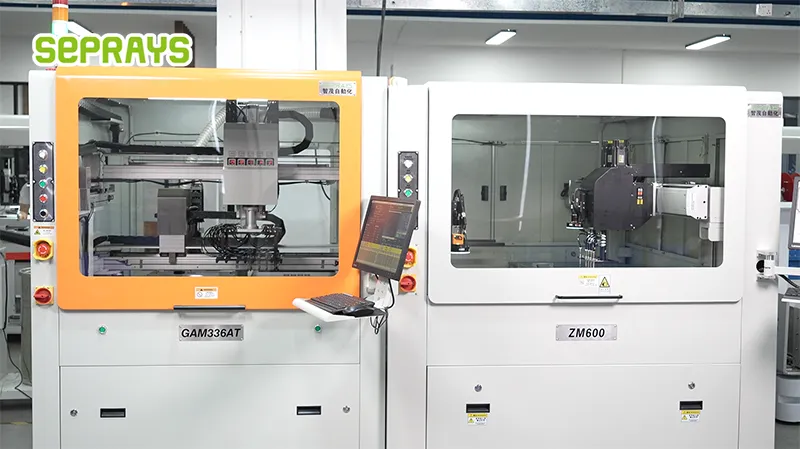
This depends on the production strategy.
Offline Router Machines
Best for:
- Flexible production
- Lower initial investment
- Frequent product switching
Inline Router Machines
Best for:
- High-volume SMT lines
- Automated factories
- Reduced labor dependency
📊 Inline vs Offline Router Depaneling
| Factor | Offline Router | Inline Router |
|---|---|---|
| Investment Cost | Lower | Higher |
| Automation Level | Medio | High |
| Production Speed | Moderado | Continuous |
| Flexibility | Strong | Depends on line setup |
| Labor Requirement | Higher | Lower |
Neither option is universally better.
The correct choice depends on production goals.
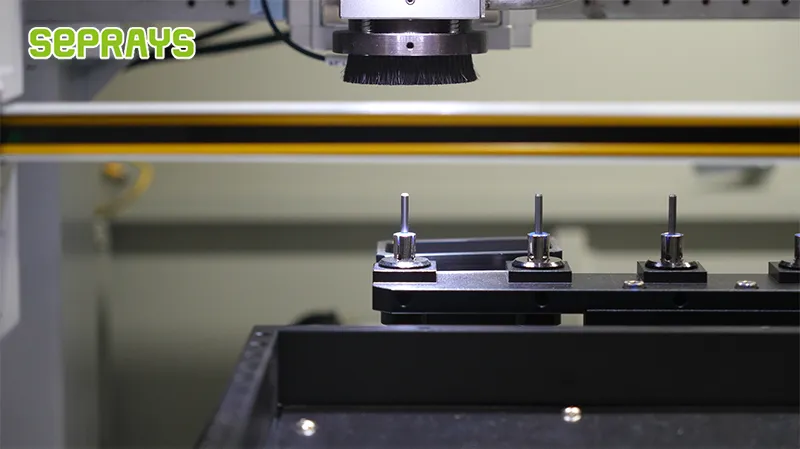
🚨 Hidden Costs Buyers Often Ignore
Machine price is only part of the equation.
Long-term costs may include:
- Fixture replacement
- Router bit consumption
- Maintenance downtime
- Operator training
- Dust collection efficiency
- Production interruption during changeovers
A cheaper machine sometimes becomes more expensive over time.
Especially in high-volume production.
🔄 High-Mix Production Changes the Buying Logic
In 2026, more factories are moving toward:
- Small batch orders
- Faster product iteration
- Mixed PCB designs
This changes router machine requirements significantly.
Manufacturers increasingly look for:
- La programación fuera de línea
- Fast recipe switching
- Fixture-less support
- Intelligent vision systems
The goal is no longer just cutting.
It is production flexibility.
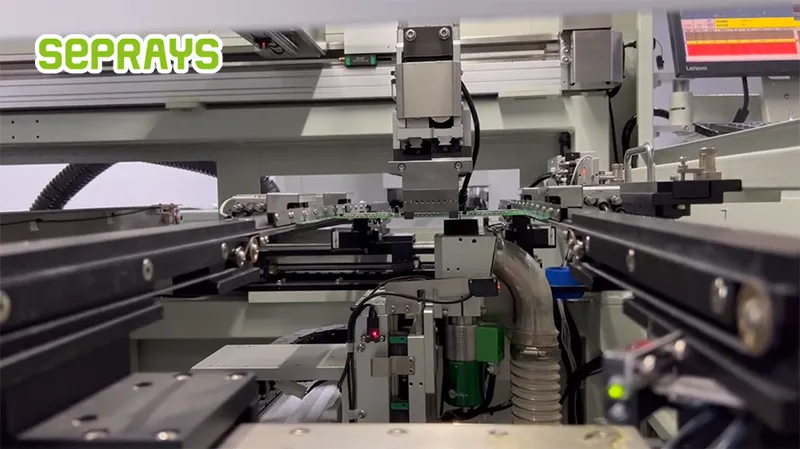
🛠️ Case Example — Reducing Changeover Time
A consumer electronics supplier faced serious delays during product switching.
Their challenges included:
- Manual alignment
- Frequent fixture replacement
- Long operator setup time
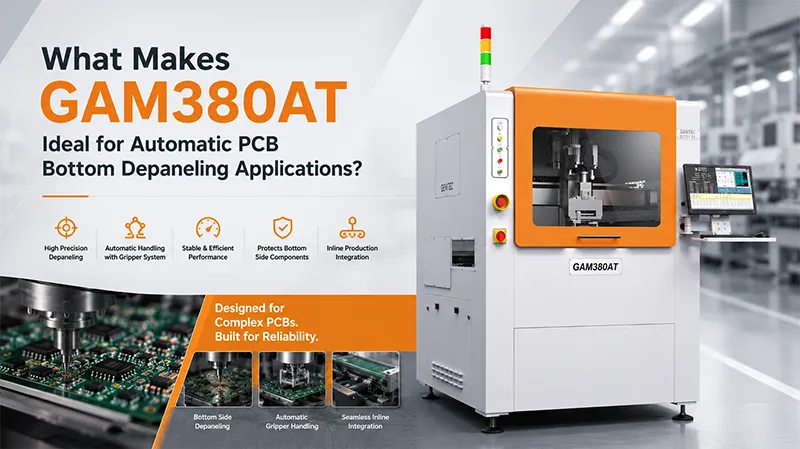
After evaluating several systems, they worked with Seprays to implement:
- CCD vision-guided routing
- La programación fuera de línea
- Flexible fixture design
Results after deployment:
- Faster product changeovers
- Improved routing consistency
- Reduced operator intervention
Most importantly, the SMT line became more stable during mixed production.
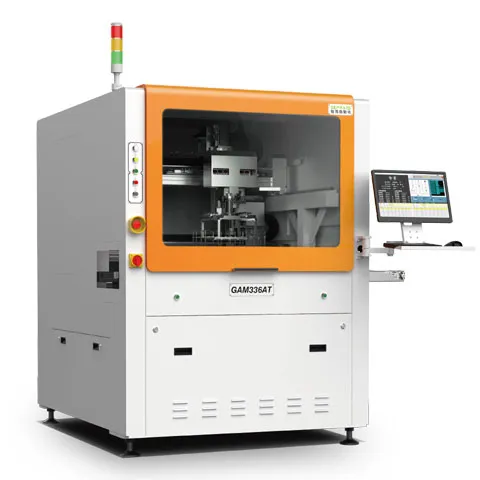
🌍 Why Dust Collection Is More Important Than Many Realize
Router depaneling creates dust.
And poor dust management affects more than cleanliness.
It can impact:
- Machine lifespan
- Vision accuracy
- Product reliability
- Maintenance frequency
This becomes especially critical for:
- Automotive PCBAs
- Medical electronics
- High-reliability applications
A good router system should integrate effective dust extraction from the beginning.
📈 What Electronics Manufacturers Are Prioritizing in 2026
Current purchasing trends show growing demand for:
- Smart factory compatibility
- MES connectivity
- Vision-guided automation
- Lower operator dependency
- Predictive maintenance support
Manufacturers are not simply buying machines anymore.
They are investing in production stability.
🔍 Questions Buyers Should Ask Before Purchasing
Before choosing a PCB router machine, ask:
- What types of PCBs will we produce in 2–3 years?
- How often do we change products?
- Are components close to the cutting edge?
- Do we plan to automate the SMT line later?
- Is low-stress cutting important for reliability?
These questions often reveal the correct solution faster than specification sheets.
🚀 Final Thoughts
A PCB router machine is no longer just a cutting device.
It has become part of the overall manufacturing strategy.
The right system improves:
- Yield
- Efficiency
- Flexibility
- Long-term operating cost
The wrong choice creates ongoing production problems that are difficult to solve later.
That is why experienced manufacturers increasingly evaluate the entire process — not just machine speed.
🚀 Why Choose Seprays Group?
With more than 30 years of experience in PCB/FPC depaneling technology, Seprays Group supports electronics manufacturers with reliable, process-focused depaneling solutions designed for modern SMT production environments.
Seprays Group provides a full range of solutions—including milling-cutter, laser, V-groove, and punching depanelers, as well as automated handling systems. Our equipment is trusted by globally recognized manufacturers such as Foxconn, Flextronics, State Grid, Luxshare, Compal, Wistron, China Electronics, Quanta, CRRC, China Aerospace, OPPO, ZTE, and Bosch. Seprays solutions are widely used across factories in China and worldwide.
Beyond equipment supply, Seprays focuses on helping customers solve real manufacturing challenges:
- High-mix production
- Sensitive PCB depaneling
- Automation integration
- Low-stress routing
- Vision-guided precision cutting
If you are evaluating PCB router machines for your factory, feel free to contact us. Our team can help you assess the most suitable depaneling solution based on your production requirements.
WhatsApp: +8618929266433
Correo electrónico: sales@seprays.com
❓ FAQ
1. What is the biggest factor when choosing a PCB router machine?
The PCB type and production model are usually more important than spindle specifications alone.
2. Are CCD vision systems necessary for router depaneling?
For high-density or high-precision PCBAs, CCD systems significantly improve alignment accuracy and consistency.
3. Is inline router depaneling better than offline?
Not always. Inline systems suit high-volume automation, while offline machines offer stronger flexibility for mixed production.
4. How important is dust collection in router depaneling?
Very important. Poor dust control can affect reliability, maintenance, and machine stability.
5. Can router depaneling handle sensitive PCBAs safely?
Yes, when combined with proper fixtures, stable routing parameters, and low-stress process design.