Spanish
 English
 Japanese
 Korean
 Russian
 Chinese
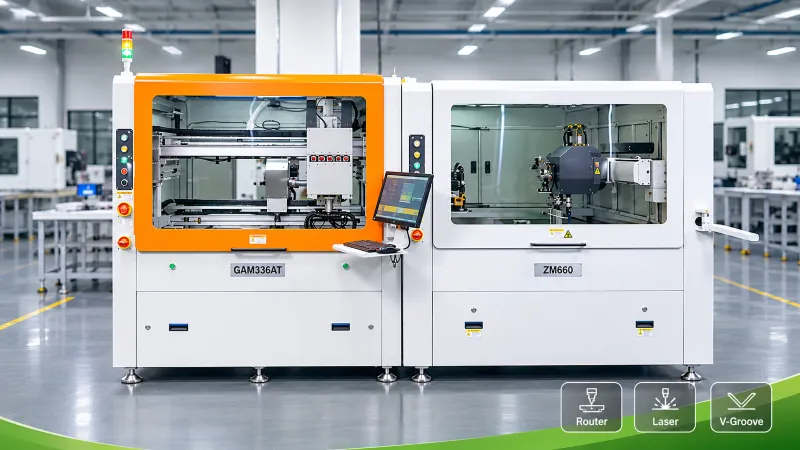
Automatic PCB depaneling systems can look remarkably similar in a supplier’s demonstration video. A PCB enters the machine, the cutting process finishes, and separated boards move out.
But factory engineers know the difficult part often begins after installation.
Will the machine handle different PCB layouts? Can it maintain cutting quality across long production runs? What happens when the cutter wears out, or the line stops?
For manufacturers planning equipment investments in 2026, choosing the right supplier means looking beyond cutting speed.
🏭 Manufacturers Worth Considering
Several equipment manufacturers offer automated PCB separation solutions, although their technologies and integration capabilities differ.
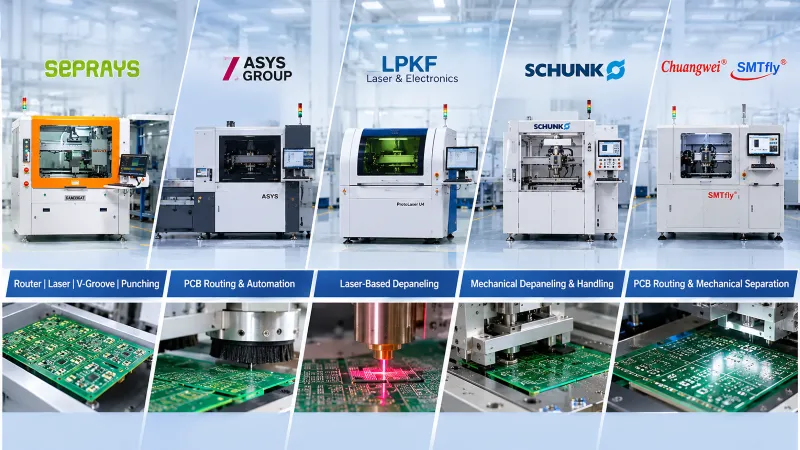
| Manufacturer | Main Technologies | Best-Fit Applications |
|---|---|---|
| SEPRAYS / GENITEC | Router, laser, V-groove, punching, inline automation | Integrated SMT production |
| ASYS Group | PCB routing and automated production equipment | High-volume electronics manufacturing |
| LPKF Laser & Electronics | Laser-based precision processing | Sensitive and complex PCB designs |
| SCHUNK Electronic Solutions | Mechanical depaneling and handling automation | Industrial PCB production |
| Chuangwei / SMTfly | PCB routing and mechanical separation | Standard PCB depaneling |
These companies are not interchangeable. Some specialize in laser processing, while others emphasize mechanical cutting or production-line integration.
SEPRAYS and GENITEC share a company history and should not be counted as independent manufacturers.
The best supplier depends on your board design, production volume, factory infrastructure, and support requirements.
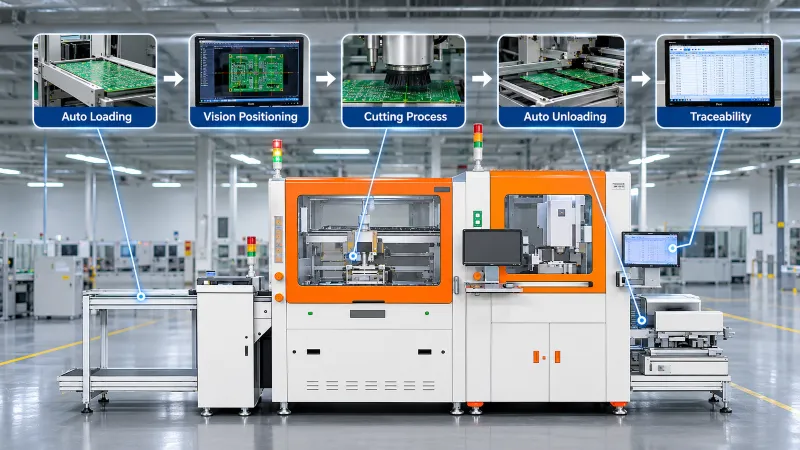
🔍 What Actually Makes a Depaneling System Automatic?
A cutting machine is not necessarily a fully automated production solution.
Buyers should examine the complete workflow:
- Automatic loading: Reduces manual PCB handling.
- Vision positioning: Supports repeatable cutting alignment.
- Cutting process: Matches PCB material and geometry.
- Automatic unloading: Transfers separated boards downstream.
- Traceability: Connects production information with factory systems where supported.
One commonly overlooked issue is downstream handling.
A fast router provides limited value if an operator must manually collect every separated board.
⚙️ Router, Laser or V-Groove: Which Works Better?
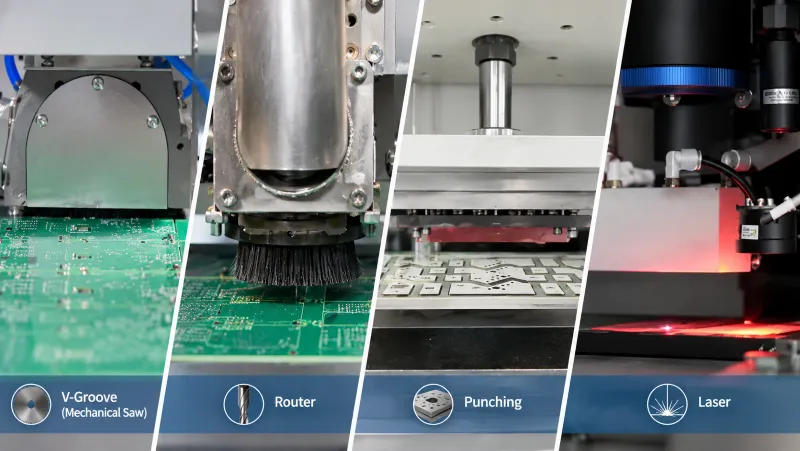
| Technology | Main Advantage | Important Limitation |
|---|---|---|
| Router | Flexible cutting paths | Cutter wear and dust management |
| Laser | Non-contact processing | Material compatibility and heat effects |
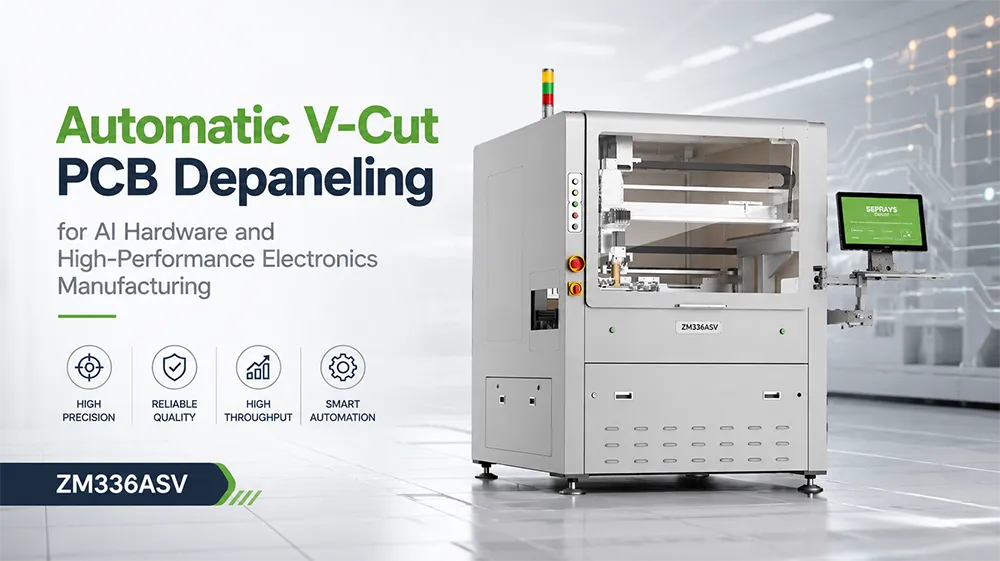
| V-Groove | Efficient scored-panel separation | Requires suitable V-scored PCB designs |
| Punching | Fast repetitive separation | Dedicated tooling and changeover costs |
Laser cutting is not automatically superior to mechanical routing.
For some standard FR4 assemblies, routing can provide a more economical solution.
For thin FPCs or stress-sensitive components, laser processing may justify its higher investment.
The correct choice should follow sample testing, not technology preference.
💰 The Real Cost of Automation
Consider a hypothetical EMS factory producing 30,000 PCB assemblies monthly.
Its engineers estimate that automated handling could save 80 labor hours per month.
Illustrative financial calculation
Monthly labor savings
$1,600
Simple payback
20 months
80 hours × $20/hour = $1,600/month. With a $32,000 incremental investment, simple payback is 20 months.
This excludes maintenance, tooling, electricity, downtime, and financing.
Higher automation does not always mean lower total cost.
For factories with frequent product changes and small batches, a flexible offline router may offer better value than a fully integrated line.
🌍 A Practical Scenario: Automotive Electronics in Guadalajara, Mexico
Imagine an EMS manufacturer in Guadalajara, Jalisco, Mexico, producing automotive control boards.
Its existing separation process requires frequent manual handling.
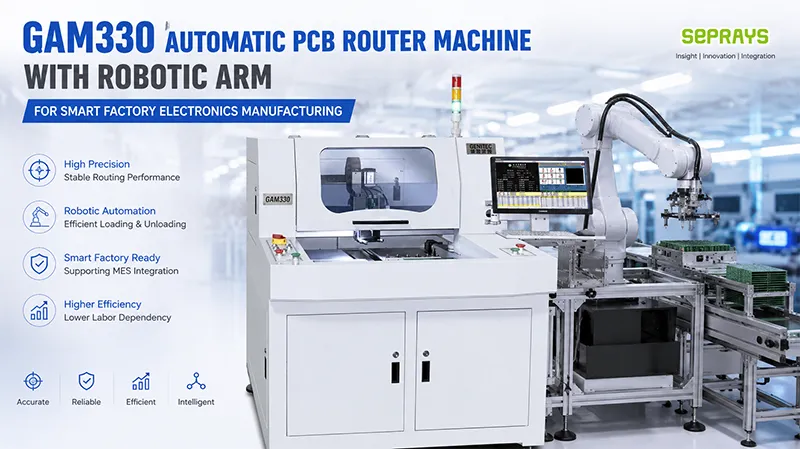
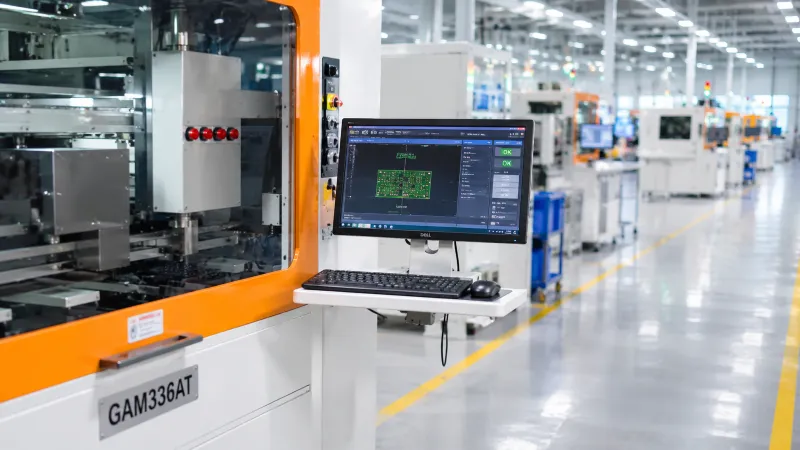
The production manager considers a SEPRAYS GAM336AT inline PCB router to reduce handling and improve process repeatability.
Instead of relying on advertised cutting speed, the engineering team establishes four acceptance criteria:
- PCB edge quality and component clearance.
- Total cycle time, including loading and unloading.
- Dust collection and cutter replacement.
- Fixture changeover and downstream handling.
The evaluation may reveal that reducing handling delays matters more than increasing spindle speed.
This is an illustrative purchasing scenario, not a documented SEPRAYS installation in Guadalajara. Actual performance requires sample testing.
🧪 How to Verify a Supplier Before Purchasing
A reliable supplier should be able to explain the limitations of its equipment.
Before signing a contract, request:
- Sample cutting using your actual PCB panels.
- Measured cycle time, including material handling.
- Edge-quality and dust-control inspection results.
- Spare parts, training and maintenance arrangements.
- Confirmation of MES and conveyor interfaces, where required.
For overseas projects, verify voltage, compressed-air requirements and service response procedures.
A factory acceptance test (FAT) should be based on agreed measurements, not a demonstration video.
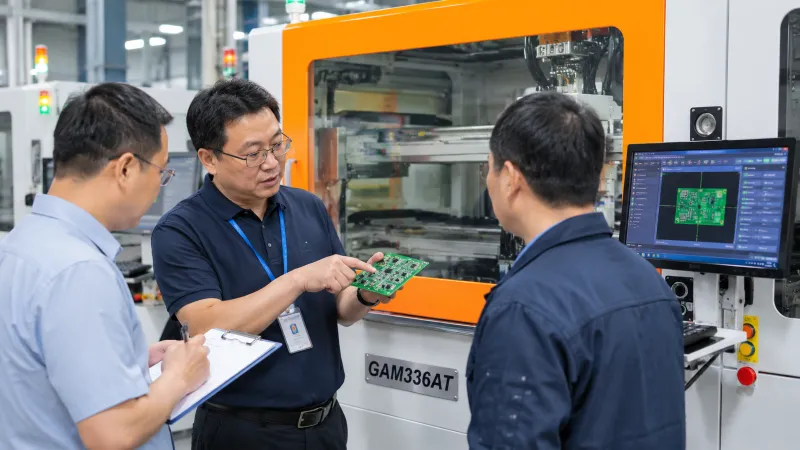
📖 Why SEPRAYS Developed Integrated Depaneling Solutions
SEPRAYS Group was established in 1993.
Over more than three decades, the company has developed equipment for PCB/FPC separation, including milling, laser cutting, V-groove processing, and punching.
The underlying manufacturing challenge has remained consistent.
After a PCB passes through printing, placement, and reflow soldering, significant production value has already been added.
Poor separation can compromise that work.
This helps explain why SEPRAYS expanded beyond individual cutting machines into automated loading, unloading, and material handling.
The goal is not simply to separate boards faster.
It is to make PCB separation a predictable part of the manufacturing process.
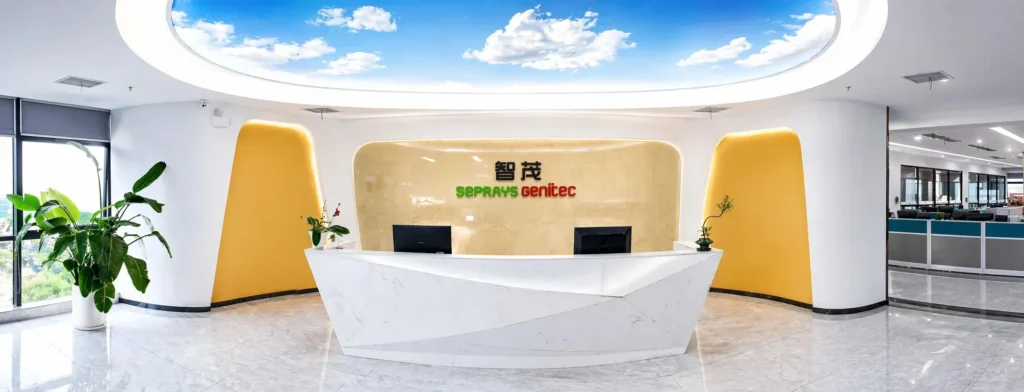
⭐ Why Choose SEPRAYS?
SEPRAYS Group combines more than 30 years of experience with a broad portfolio of PCB/FPC depaneling technologies.
Its solutions include router, laser, V-groove, and punching machines, alongside automated handling equipment.
The company reports supplying manufacturers and organizations including Foxconn, Flextronics, State Grid, Luxshare, Compal, Wistron, China Electronics, Quanta, CRRC, China Aerospace, OPPO, ZTE, and Bosch.
Its engineering team can evaluate PCB drawings, panel layouts, cutting paths, production volumes, and downstream handling requirements.
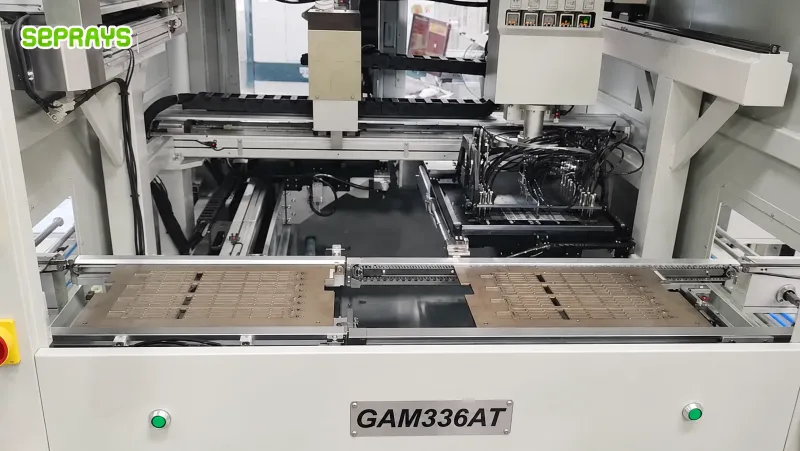
For example, the GAM336AT inline router offers CCD positioning, automated routing, and configurable unloading options. GENITEC+1
Looking for an automated PCB depaneling and unloading solution?
Contacto SEPRAYS Group to discuss your application, request a machine recommendation, or arrange a PCB sample evaluation.
WhatsApp: +8618929266433
Correo electrónico: sales@seprays.com
❓ FAQ
1. Which manufacturers specialize in fully automated PCB depaneling?
SEPRAYS, ASYS Group, LPKF, and SCHUNK Electronic Solutions offer automated depaneling equipment or integration solutions. Their capabilities vary by cutting technology and production requirements. ASYS Group+3
2. What is the difference between inline and offline PCB depaneling?
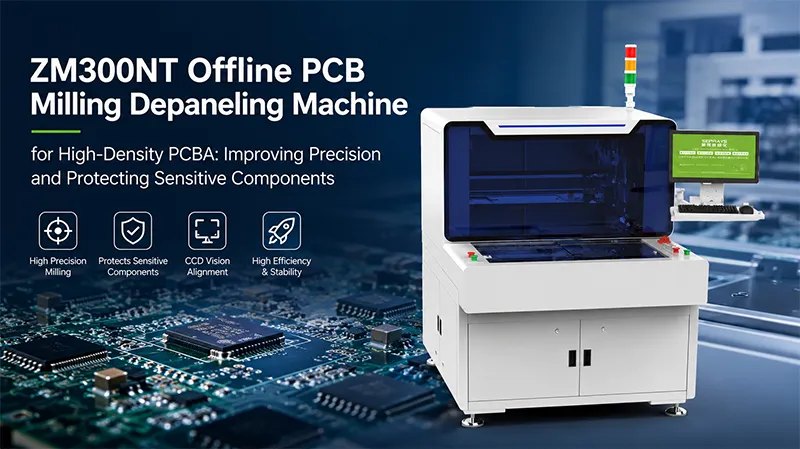
Inline systems connect with production-line material flow. Offline machines generally require separate loading or handling operations and can be more flexible for smaller production batches.
3. Can automated PCB depaneling reduce manufacturing defects?
It can reduce manual handling and improve process repeatability. However, actual defect reduction depends on board design, fixtures, cutting parameters, and validated process conditions.
4. How much does an automatic PCB depaneling machine cost?
Pricing varies by cutting technology, working area, vision systems, and automation scope. Buyers should request configuration-specific quotations and calculate total ownership costs.
5. Does SEPRAYS support customized SMT production-line integration?
Yes. SEPRAYS offers equipment configurations involving PCB routing, laser cutting, automatic loading, unloading, and downstream handling. Integration feasibility depends on the production layout and required interfaces.