.png)
 Spanish
  English
  Japanese
  Korean
  Russian
  Chinese





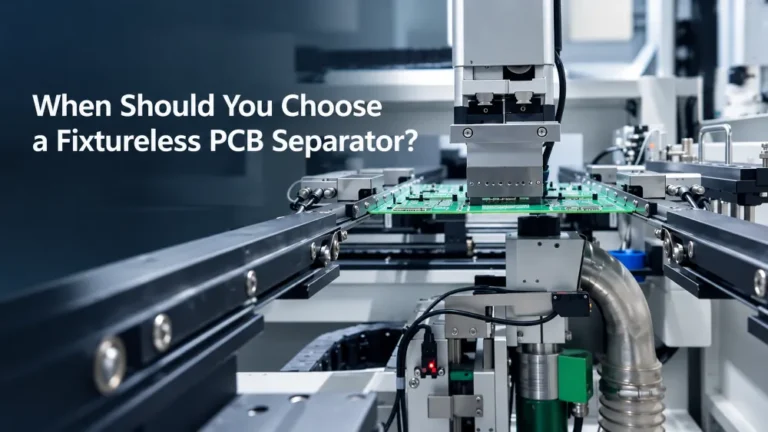
When Should You Choose a Fixtureless PCB Separator?
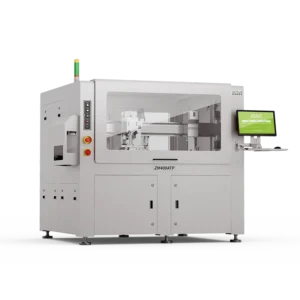
Fixtureless PCB separation sounds attractive when production teams are dealing with frequent PCB changes. No dedicated fixture to store. No fixture change every time the product changes. Less preparation before production. But there is a catch. A fixtureless process is not automatically the better choice. The real question is whether the PCB can be separated reliably without depending on a dedicated mechanical fixture. For some semiconductor and electronics manufacturers, that can save time and reduce recurring tooling costs. For others, a properly designed fixture still provides better support and repeatability. So when should you choose a fixtureless approach? 🏭 Start With the Production Problem Imagine a factory running eight PCB models during the same week. Model A runs in the
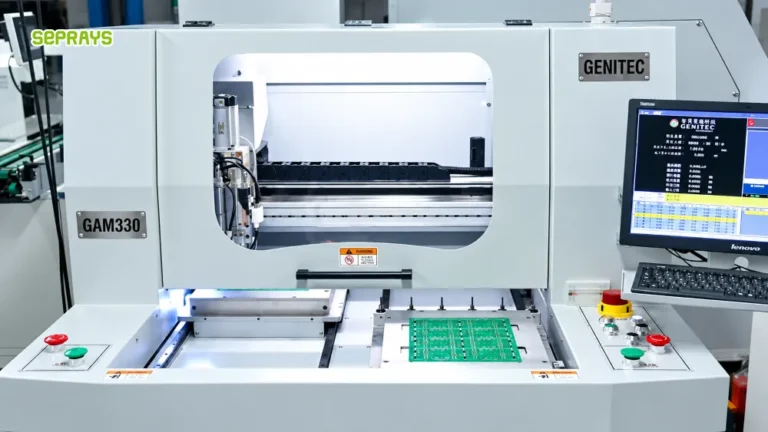
PCB Routing in Action: A Real-World Depaneling Solution at a Customer Production Site
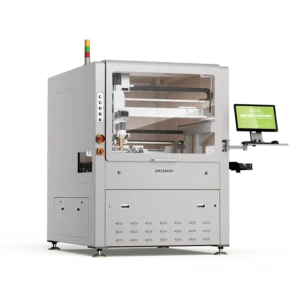
PCB routing sounds simple until it becomes part of a real production line. A semiconductor electronics manufacturer was facing a familiar problem: the PCB panels were changing, production volume was increasing, and manual separation was becoming harder to control. The team did not simply need a faster cutter. They needed a process that could load the panel, locate it correctly, follow the programmed contour, and separate the boards with consistent edge quality. This is where a GAM330 automatic PCB router machine from Seprays Group was evaluated for the production application. 🏭 Customer Production Challenge The customer manufactures electronic assemblies used in a semiconductor-related application. At first, the depaneling process looked manageable. But several small problems started adding up. Operators had
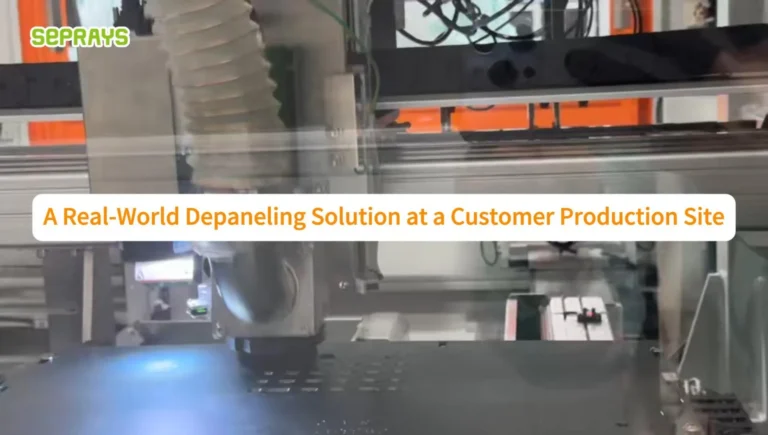
PCB Milling in Action: A Real-World Depaneling Solution at a Customer Production Site
PCB milling is not always the first process engineers think about when choosing a depaneling method. But on a real production line, the question is usually more practical: Can we separate the boards cleanly without damaging components, slowing production, or creating unnecessary costs? That question became particularly relevant at a semiconductor electronics manufacturing site where the production team was working with different PCB outlines, relatively high-value assemblies, and frequent product changes. Instead of looking for the fastest cutting method on paper, the team focused on something more useful: which process could remain stable when the PCB design changed? 🏭 The Production Problem Was More Than Just Cutting The customer was producing electronic assemblies for semiconductor-related equipment. The PCB panels were

Automated Laser PCB Depaneling for AI Hardware and High-Performance Electronics Manufacturing
Automated Laser PCB Depaneling becomes much more interesting when the PCB is no longer a simple board. AI servers, semiconductor equipment, automotive electronics, and high-performance computing systems often use boards with dense components, fine traces, unusual outlines, and tighter quality requirements. In these applications, the question is not simply, “How fast can we separate the panel?” A better question is: Can the separation process keep up with the board’s accuracy, quality, and automation requirements? That is where laser processing starts to make practical sense. 🔍 Why AI Hardware Changes the Depaneling Problem AI hardware is pushing electronics manufacturing toward higher component density and more complex PCB structures. A small amount of mechanical stress can become a quality concern when components