.png)
 Spanish
  English
  Japanese
  Korean
  Russian
  Chinese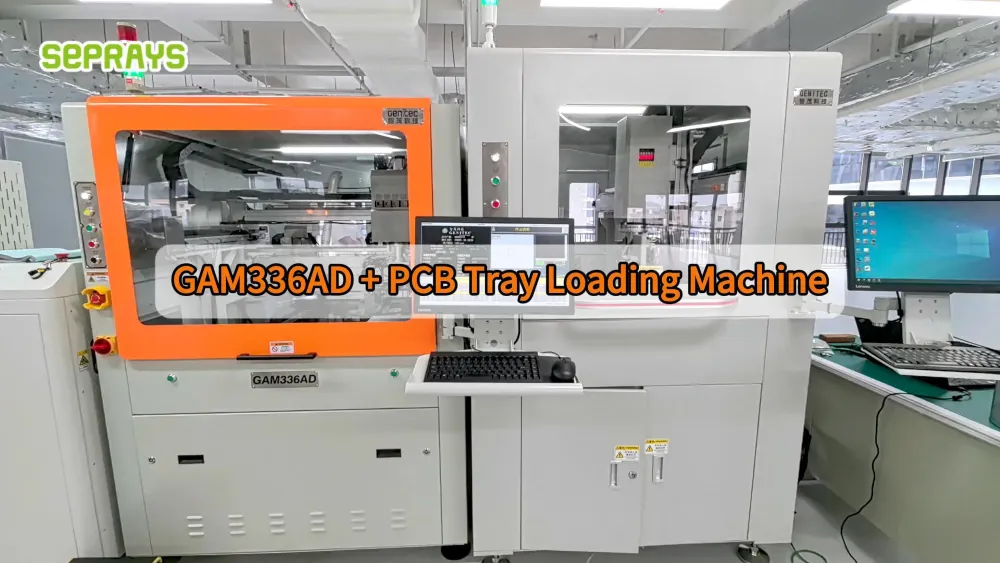
Dual-spindle PCB depaneling is worth considering when a production line needs more output but cannot afford extra manual handling or a larger workstation footprint.
In electronics manufacturing, cutting is only part of the cycle. Boards still need to be positioned, separated, collected, and transferred to the next process. When these steps fall behind, a fast machine alone will not solve the bottleneck.
🔍 Why Does Production Slow Down?
Imagine an overseas semiconductor-related electronics manufacturer producing assembled circuit boards for industrial or consumer electronics.
Orders are increasing, but operators spend too much time moving panels, unloading finished boards, and preparing the next cycle. The cutting machine may be capable of working faster, yet the overall line remains constrained by handling time.
Common issues include:
- Long waiting periods between cutting cycles
- Repetitive manual loading and unloading
- Inconsistent production rhythm
- Limited output from a single spindle
- Additional labor and work-in-process inventory
The practical question is not simply how fast the spindle runs. It is how many acceptable boards the complete process can deliver per hour.
⚙️ How Does a Dual-Spindle System Help?
A dual-spindle configuration allows two cutting spindles to work within a coordinated process. Depending on the machine design and programmed sequence, this can increase cutting capacity and reduce idle time.
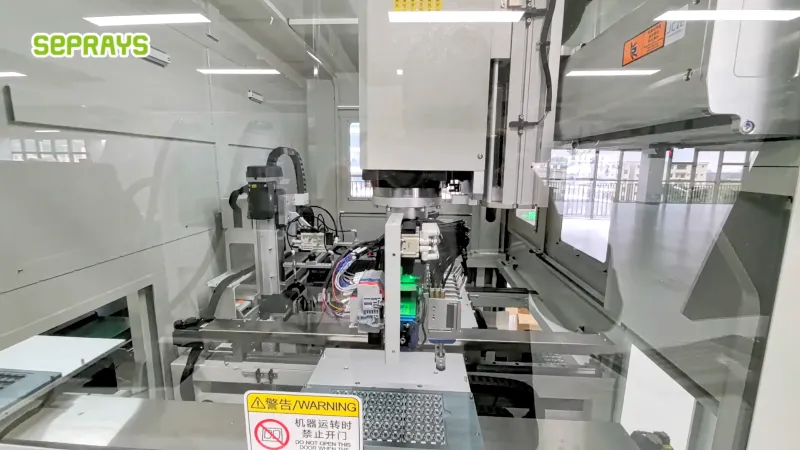
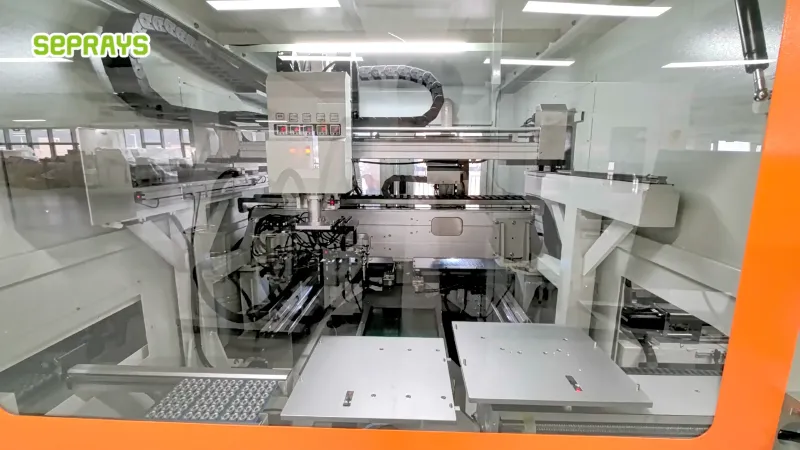
For suitable PCB designs, the GAM336AD dual-spindle solution from Seprays combines milling-based separation with inline automation and tray-loading capabilities.
The potential advantages include:
- More cutting capacity within one system
- Better use of available production time
- Reduced dependence on repetitive manual handling
- A more continuous workflow between cutting and product collection
However, two spindles do not automatically mean twice the actual output. Board geometry, tool paths, spindle coordination, loading time, and downstream capacity all affect the result.
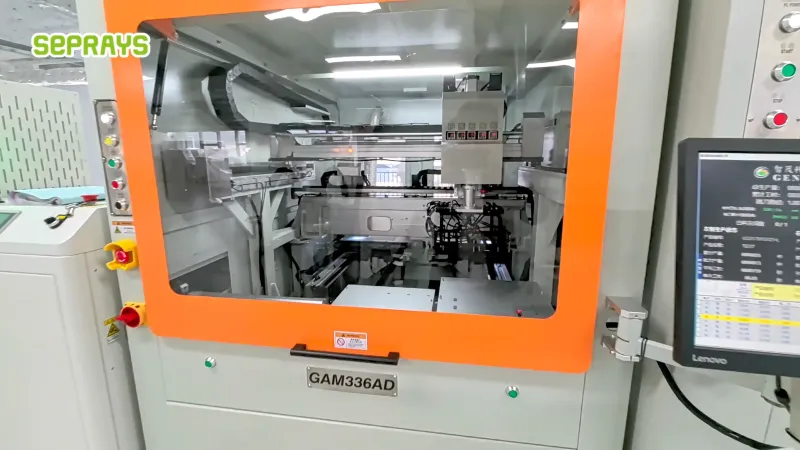
📦 Why Add Automated Tray Loading?
Cutting faster creates little value if finished boards accumulate at the machine exit.
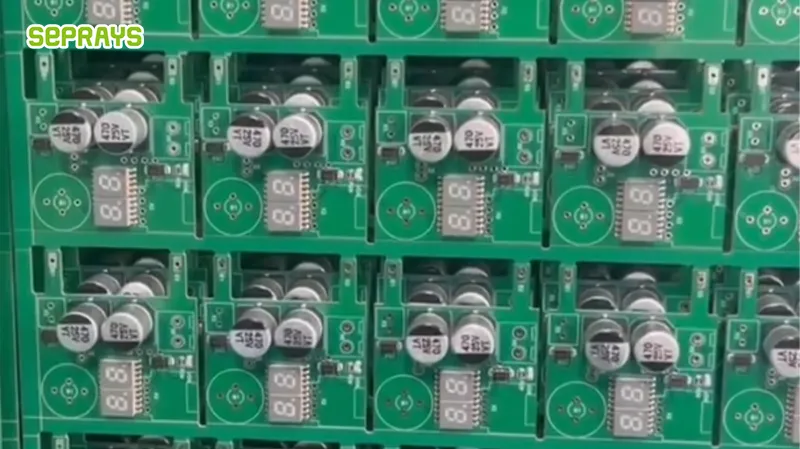
Automated tray handling helps organize separated boards for collection and transfer. It can reduce repetitive operator movements and make product flow more predictable.
For a production line, the workflow may look like this:
PCB infeed → positioning → dual-spindle milling → board transfer → tray loading
The exact sequence depends on the equipment configuration and factory layout.
Tray specifications also matter. Board dimensions, component height, tray capacity, pickup locations, and stacking arrangements should be checked before integration.
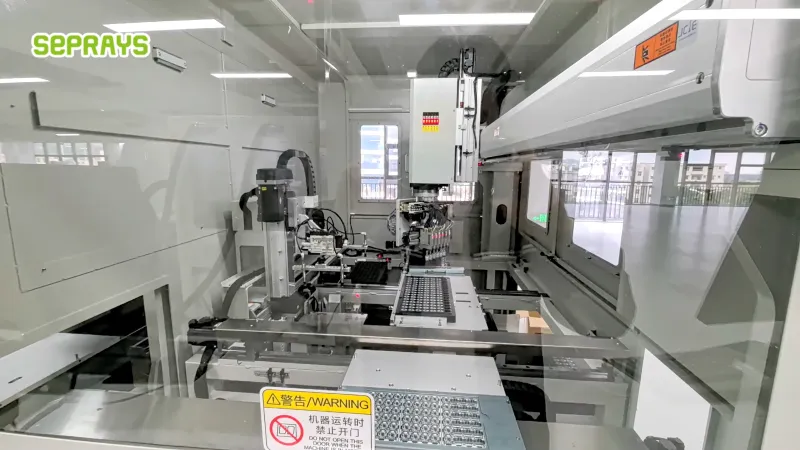
📊 Single-Spindle vs. Dual-Spindle Automation
| Factor | Single-spindle system | Dual-spindle system |
|---|---|---|
| Cutting capacity | One spindle | Two coordinated spindles |
| Potential throughput | Depends on cycle time | Higher when the process benefits from parallel cutting |
| Equipment investment | Generally lower | Generally higher |
| Tooling and maintenance | One spindle to manage | More components to maintain |
| Tray handling | Manual or automated | Manual or automated |
| Best fit | Moderate output or flexible production | Higher-volume production with suitable cutting paths |
The comparison is general. Actual capabilities depend on the selected model and configuration.
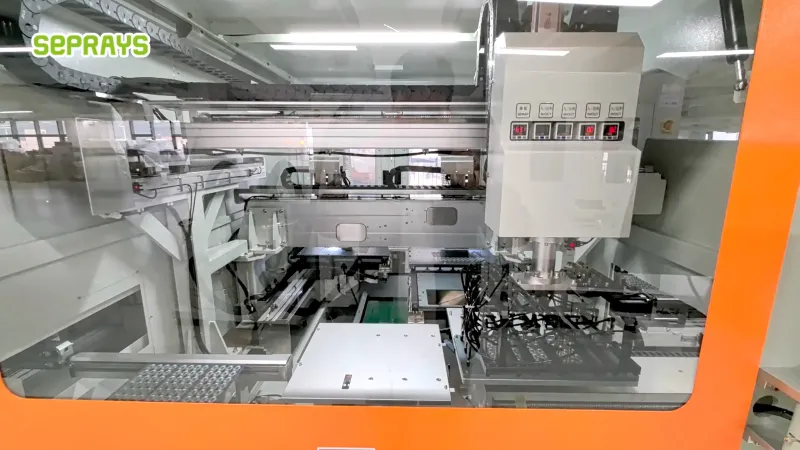
💰 What Should You Include in the Cost Calculation?
A fair comparison should include equipment investment, cutters, labor, maintenance, cleaning, tray handling, scrap, and rework.
Consider a simple example. If automation saves 20 minutes of operator handling per production hour, that represents a potential saving of 2.5 labor-hours over a seven-and-a-half-hour shift. This is an illustrative calculation, not a measured result for a specific installation.
The real saving depends on whether the released labor can be reassigned and whether the machine maintains stable output.
Before investing, compare actual cycle times and labor requirements using representative PCB panels. Include changeover time and unplanned stops rather than measuring only the fastest cutting cycle.
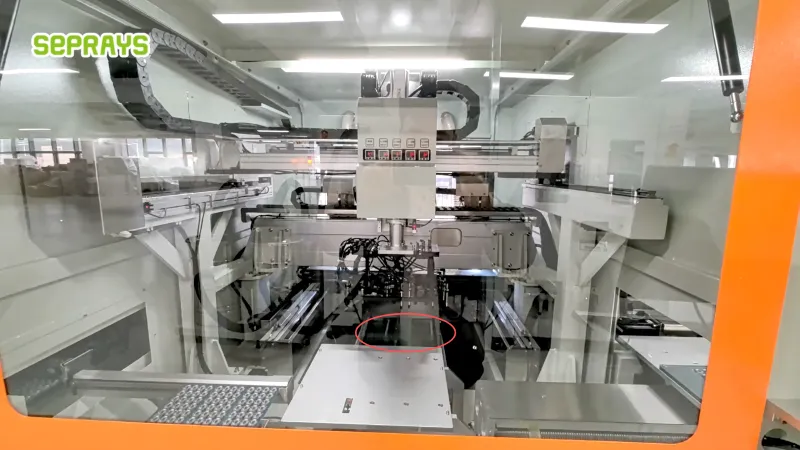
🏭 A Practical Application Scenario
For an overseas semiconductor-related electronics manufacturer, Seprays could evaluate a dual-spindle configuration with automated tray loading after reviewing the customer’s PCB drawings, panel layout, cutting paths, and production targets.
The evaluation should measure three things: cutting performance, the time required to transfer boards, and the number of acceptable boards produced over a complete production run.
If cutting is the main bottleneck, dual spindles may help. If manual unloading or downstream equipment is limiting output, tray automation and line balancing may deliver more value.
This is an illustrative application scenario, not a claim about a named customer installation.
⚠️ When Is Dual-Spindle Automation Not the Best Choice?
For low-volume production, frequent design changes, or short batches, a simpler system may provide a better return.
A dual-spindle machine also requires suitable cutting paths and enough downstream capacity to handle the output. More cutting capacity cannot compensate for poor fixture design, unsuitable tooling, or a bottleneck elsewhere in the line.
The counterintuitive lesson is that buying a faster machine is not always the fastest route to higher production output. Improving the entire process may be the better investment.
🌍 Why Choose Seprays Group?
Seprays Group has been dedicated to PCB/FPC depaneling technology for more than 30 years, with its history dating back to 1993. It provides a full range of solutions, including milling-cutter depanelers, laser depanelers, V-groove depanelers, punching depanelers, and automated handling systems.
Its equipment is trusted by leading manufacturers, including Foxconn, Flextronics, State Grid, Luxshare, Compal, Wistron, China Electronics, Quanta, CRRC, China Aerospace, OPPO, ZTE, and Bosch. Seprays equipment is used in factories across China and worldwide.
For manufacturers considering higher output, Seprays can help evaluate depaneling technology and automation requirements against the actual production process.
If you have a similar production challenge, please contact us with your PCB drawings, panel dimensions, expected output, and tray requirements. These details provide a practical starting point for selecting a suitable configuration.
WhatsApp: +8618929266433
Correo electrónico: sales@seprays.com
❓ FAQ
1. What is the main advantage of dual-spindle PCB depaneling?
It can increase cutting capacity when two spindles can work efficiently within the programmed process.
2. Can dual-spindle equipment double production output?
Not necessarily. Actual output depends on cutting paths, cycle time, loading, unloading, and downstream capacity.
3. What is the benefit of automated tray loading?
It reduces repetitive manual handling and helps organize finished boards for the next production stage.
4. Is dual-spindle automation suitable for every PCB factory?
No. It is generally more attractive when production volume and process repeatability justify the additional investment.
5. What information is needed to evaluate a suitable solution?
Provide PCB drawings, panel dimensions, material and thickness, cutting paths, target output, and tray specifications. A sample test can help verify performance before purchase.