.png)
 Spanish
  English
  Japanese
  Korean
  Russian
  Chinese
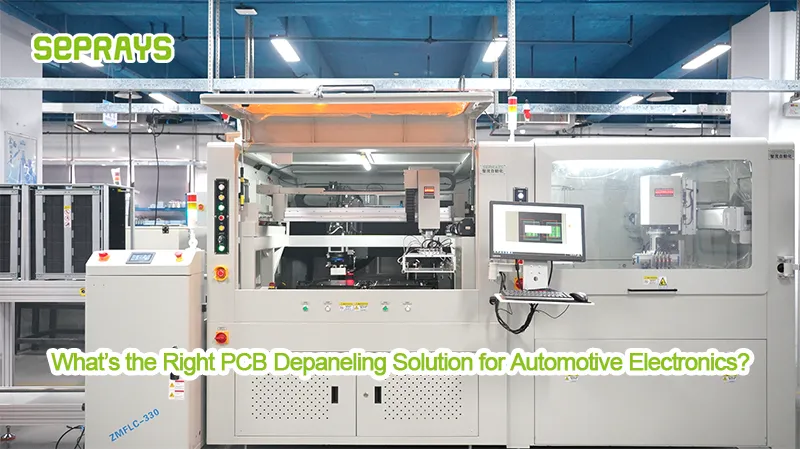
CE-certified PCB depaneling machines continue to be the preferred choice among EU electronics manufacturers, especially those operating in Germany and France. For factories that value predictable quality, long-term durability, and strict compliance with European safety directives, the CE mark is not just a label—it represents reduced operational risk and a stable path toward scaling production.
Below is a practical, experience-driven discussion on why these machines stand out, the common pain points European factories face, and how CE-certified equipment offers realistic solutions.

🔧 H1: Meeting EU Safety Expectations Without Compromises
One of the biggest pain points raised in German and French manufacturing audits is machine safety documentation. Engineers often struggle when equipment from non-EU sources lacks clear conformity data.
A CE-certified PCB depaneling machine avoids these setbacks by including risk assessments, wiring diagrams, and validated safety circuits. This means the factory doesn’t need a separate internal engineering review every time changes are made—saving both engineering hours and approval delays.
🏭 H2: Consistent Industrial Build Quality for High-Density PCB Assembly
In EU factories—especially automotive, medical, and aerospace—machines must operate under long production cycles with minimal maintenance downtime.
CE-certified PCB depaneling machines typically use:
- Industrial-grade controllers
- Enclosed mechanical structures
- Low-noise, low-vibration cutting assemblies
These characteristics match expectations commonly seen in German and French facilities where reliability, structural rigidity, and predictable tolerance levels matter more than “speed numbers” on marketing brochures.
📉 H3: Cost Analysis — Why CE Compliance Can Reduce Long-Term Production Costs
At first glance, some factories assume CE-certified systems have a higher purchase price. However, when comparing the total cost over 5–7 years, several savings emerge:
- Reduced downtime due to standardized safety and electrical components.
- Lower maintenance cost thanks to high-precision spindles, blades, and actuators.
- Fewer audit findings during ISO 9001, ISO 13485, or IATF audits.
- Simpler integration with SMT lines using standard EU cabling and interface protocols.
In many shared case discussions with EU production managers, long-term stability consistently outweighs minor upfront price differences.

🧪 H4: Real Case Example — Resolving Micro-Cracks in Automotive PCBs
A French automotive electronics supplier reported recurring micro-cracks during manual depaneling. After switching to a CE-certified PCB depaneling machine with controlled cutting force and optimized blade geometry, crack rates dropped by over 70%.
Only after the change did they realize the benefit of CE-driven design requirements: mechanical guards, vibration-controlled assemblies, and rigid blade support structures—all factors that improve cutting integrity, not just safety compliance.
⚙️ H5: Practical Considerations When Selecting CE-Certified Depaneling Equipment
EU engineers typically evaluate machines on:
- Whether the machine meets EN/ISO machinery standards
- Access to lifecycle documentation (EC DoC, risk analysis, wiring)
- Mechanical rigidity for long-term accuracy
- Replacement parts available in the EU region
- Noise and dust management, especially in German factories with strict indoor requirements
These practical engineering considerations matter more than marketing claims—and CE-certified PCB depaneling machines are designed to meet them consistently.

Why Choose Seprays Group?
Seprays Group focuses on engineering-driven machine design, stable cutting performance, and CE-aligned safety architecture. Our solutions are built for factories aiming for long-term reliability, precise depaneling quality, and reduced operational risk.
If you need guidance or wish to discuss your specific PCB process, feel free to contact us anytime.
WhatsApp: +86 189 2926 6433
E-mail: sales@seprays.com