.png)
 English
  Spanish
  Japanese
  Korean
  Russian
  Chinese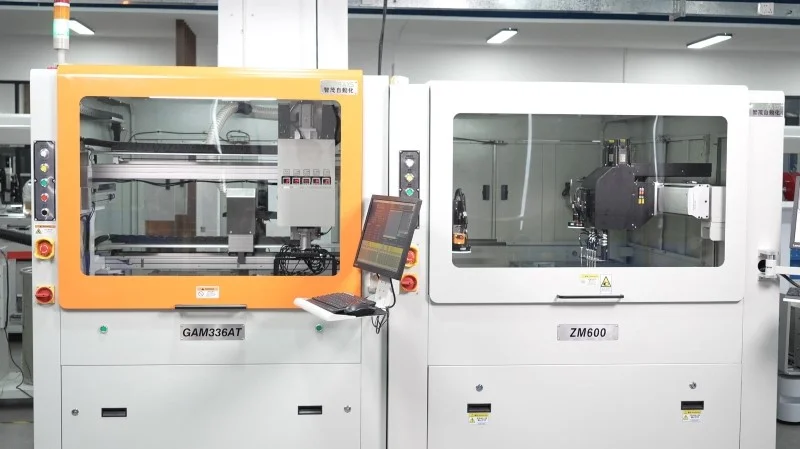
For some factories, it clearly is. For others, it becomes an expensive upgrade that never fully pays back. The real value depends less on the machine itself and more on how your SMT line actually runs day to day.
This article looks at inline PCB router depaneling from a production-floor perspective—what problems it really solves, where it struggles, and when the investment makes sense.
🧩 What “inline” really changes
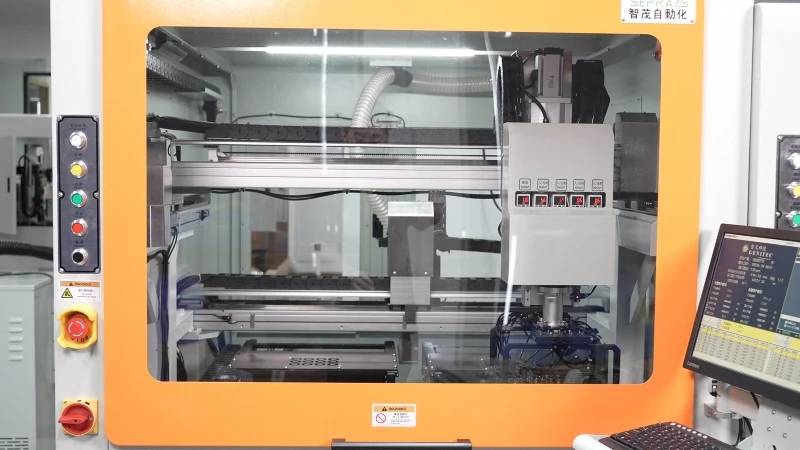
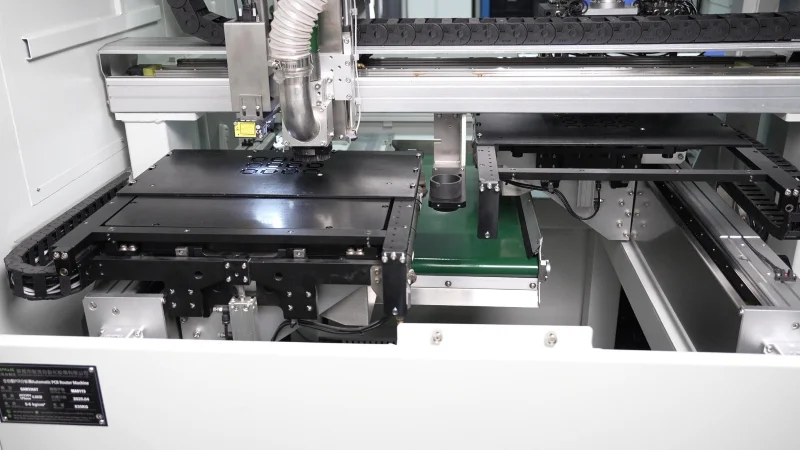
Inline PCB router depaneling connects directly to the SMT line. Panels move automatically from reflow or AOI into depaneling without manual loading.
What changes in practice:
- No operator loading or unloading
- No buffer carts between processes
- Depaneling becomes part of takt time, not a side operation
What doesn’t change:
- Routing speed per PCB
- Basic cutting physics
- The need for good panel design
Inline doesn’t make routing magically faster—it makes the flow smoother.
⚠️ The pain points that push teams toward inline systems
👷 Labor pressure
Manual router depaneling often depends on skilled operators. When labor turnover rises or shifts become unstable, inline automation starts to look attractive.
🔄 Bottlenecks after reflow
Many lines discover that depaneling—not placement or reflow—limits output. Inline routing removes waiting time between processes.
📊 Traceability demands
Automotive, medical, and industrial customers increasingly ask:
- Which panel?
- Which PCB?
- Which time and machine?
Inline systems integrate naturally with MES and barcode tracking.
💸 Cost reality: what you really pay for
Inline router depaneling costs more than standalone machines—not just upfront, but structurally.
Upfront investment
- Inline mechanics
- Conveyor interfaces
- Safety enclosures
- Software integration
Ongoing costs
- Maintenance during line downtime
- Higher integration complexity
- Changeover planning
This means the ROI depends on utilization. If the line runs inconsistently, the payback stretches quickly.
📐 Quality perspective: where inline routing shines
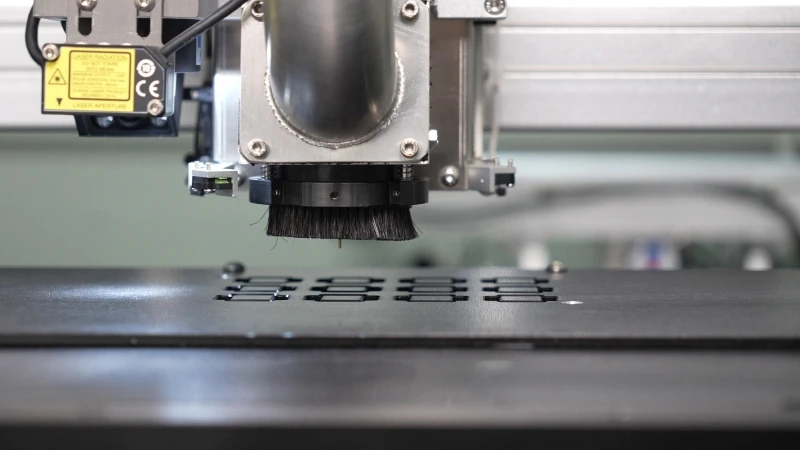
Routing itself is already a low-stress depaneling method. Inline systems add consistency:
- Fixed positioning
- Repeatable clamping
- Less human variation
For dense PCBAs or edge-sensitive components, inline routing often improves yield stability, not just efficiency.
🏭 Case insight: industrial control electronics
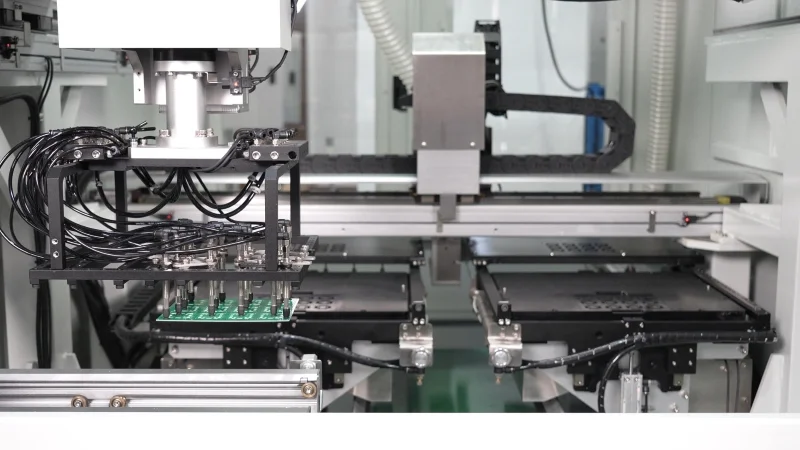
An industrial electronics manufacturer using Seprays’ inline PCB router depaneling faced frequent line stoppages caused by manual depaneling delays. After integration:
- Output stabilized without increasing routing speed
- Scrap caused by handling damage dropped
- Traceability data helped resolve customer quality audits faster
The biggest gain wasn’t speed—it was predictability.
🤔 When inline PCB router depaneling is not worth it
Inline routing may disappoint if:
- Product mix changes frequently
- Batch sizes are small
- SMT lines don’t run continuously
- Depaneling is not a real bottleneck
In these cases, flexible standalone routing often delivers better overall efficiency.
🛠️ A practical decision framework
Inline PCB router depaneling makes sense when:
- SMT lines run long, stable shifts
- Labor consistency is a challenge
- Traceability is a customer requirement
- Yield loss from handling matters
It makes less sense when flexibility matters more than flow.
💬 A question worth asking internally
Before approving an inline system, many experienced engineers ask:
“Are we solving a depaneling problem—or a line management problem?”
Inline routing is excellent at the second one.
🌐 Why Choose Seprays Group?
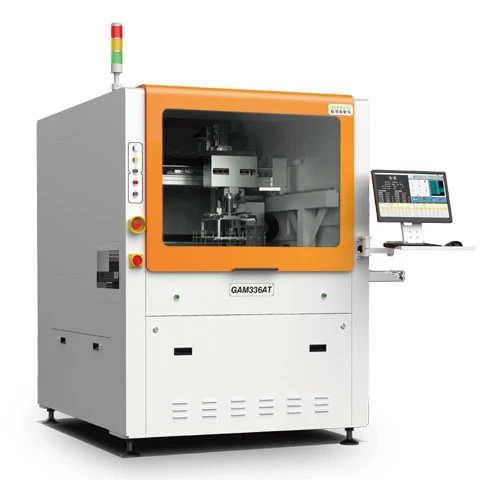
Seprays Group designs inline PCB router depaneling systems with a focus on:
- Stable mechanical structures for long-term use
- Low-stress cuttingis suitable for dense and high-value PCBAs
- Seamless integration with SMT lines and MES environments
We don’t treat inline depaneling as a one-size-fits-all upgrade. Instead, we help manufacturers evaluate whether it truly fits their production reality.
If you’re considering inline PCB router depaneling—or unsure whether it’s worth the investment—please feel free to contact us.
WhatsApp: +8618929266433
E-mail: sales@seprays.com