.png)
 Japanese
  English
  Spanish
  Korean
  Russian
  Chinese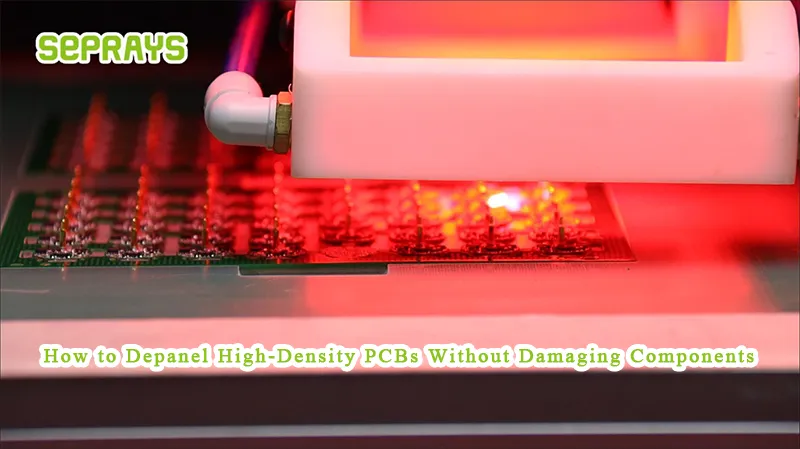
How to Depanel High-Density PCBs Without Damaging Components
How to depanel high-density PCBs without damaging components? It’s a question that often comes up as designs get tighter and margins shrink. At first, everything looks fine on the SMT line. Then issues appear—cracked solder joints, lifted components, or unexplained failures during testing. In many cases, the root cause is not assembly.It’s the depaneling step. 🔍 Why High-Density PCBs Are More Vulnerable High-density PCBs are built for performance, not forgiveness. They typically include: This means even small mechanical stress can lead to: The risk is higher.And harder to detect early. ⚙️ Where Damage Usually Happens Damage during depaneling is often subtle. Common sources include: These factors combine. And the result is often delayed failure, not immediate rejection. 🧩 Choosing the Right Depaneling Method Method selection is critical. Here’s a practical comparison: Method Stress Level Precision Suitability for High-Density PCBs Saw Blade Medium Medium Limited (risk near edges) Router Low-Medium High Good for complex layouts Laser Very Low Very High Ideal for sensitive components V-Groove Low Medium Only if spacing allows Punching Medium Medium Not recommended for dense boards For high-density designs, laser and optimized router depaneling are the most commonly used solutions. 💥 Common Pain Points from Production Engineers working
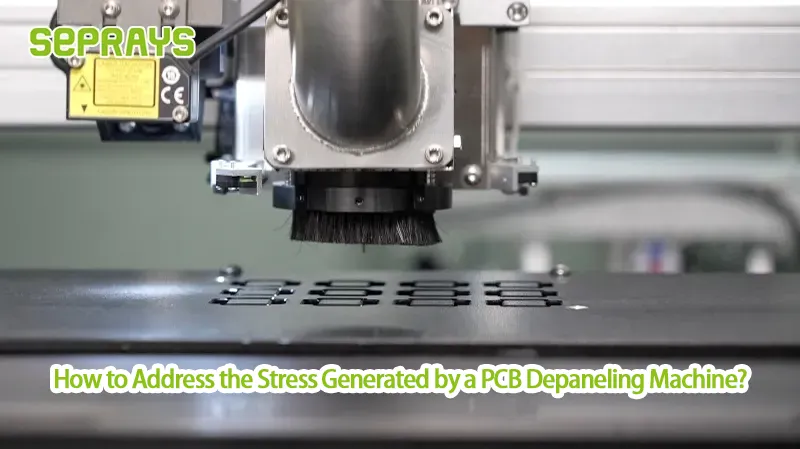
How to Address the Stress Generated by a PCB Depaneling Machine?
How to address the stress generated by a PCB depaneling machine? It’s a question many engineers don’t ask—until defects start showing up. Cracked edges. Intermittent failures. Reduced yield with no obvious root cause. In many cases, the issue isn’t assembly.It starts with depaneling. 🔍 Where Does Depaneling Stress Come From? Stress is introduced during the separation process. Different sources include: Even small forces can affect: The challenge is not eliminating stress—but controlling it. ⚙️ How Different Depaneling Methods Affect Stress Not all machines behave the same. Here’s a simplified comparison: Method Stress Level Key Characteristics Saw Blade Medium High speed, mechanical contact Router Low-Medium Controlled cutting, flexible paths Laser Very Low Non-contact, minimal mechanical impact V-Groove Low Controlled breaking along pre-scored lines Punching Medium High force, fast operation Understanding this is the first step. Choosing the right method already solves part of the problem. 💥 Common Signs of Stress Damage Stress doesn’t always show immediately. Watch for: These issues often appear later in testing or in the field. That makes them harder—and more expensive—to fix. 🧩 Design-Level Solutions Stress control starts before production. PCB design plays a key role. Consider: Good design reduces risk before the process even begins. 🛠️
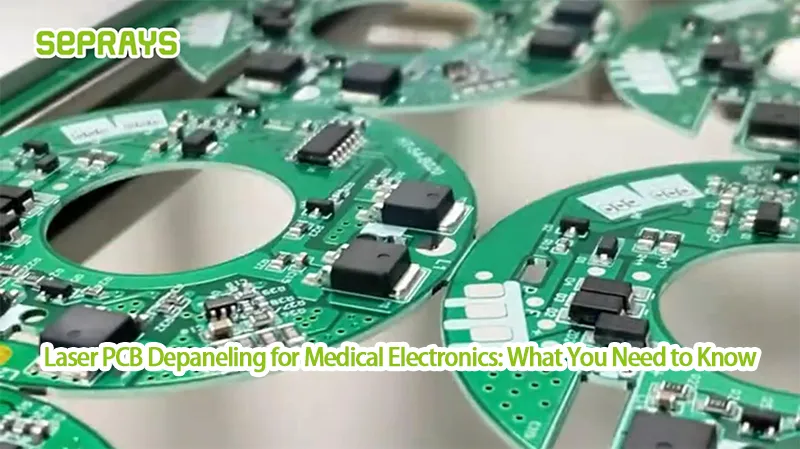
Laser PCB Depaneling for Medical Electronics: What You Need to Know
Laser PCB depaneling for medical electronics is not something most teams think about at the start of a project. It usually becomes important later, when edge defects appear, or when reliability testing starts to fail without a clear reason. In medical devices, small issues don’t stay small.They show up in performance.And sometimes, in compliance. 🏥 Why Medical Electronics Require Extra Care Medical PCBs are different from standard consumer products. They often involve: These boards are used in devices where failure is not acceptable. So the depaneling process must avoid introducing any hidden damage. ⚙️ What Makes Laser Depaneling Stand Out Laser PCB depaneling is a non-contact process. No mechanical force.No blade pressure. That changes everything. Key advantages include: For medical electronics, these benefits directly impact product reliability. 🔍 Common Problems in Traditional Depaneling Before switching to laser, many manufacturers faced issues like: These problems may not be visible immediately. But they can lead to: That’s where laser depaneling offers a different approach. 📊 Laser vs Traditional Methods A simple comparison helps clarify the differences: Method Stress Level Precision Cleanliness Best Use Case Laser Very Low Very High Excellent Medical, high-density PCBs Router Low-Medium High Moderate Complex shapes Saw Blade Medium
Not a New Starting Point, but a New Height: Seprays Suzhou Branch Upgrades and Relocates
Many of our clients are unaware that… Seprays’ Suzhou branch established its presence there as early as 2022. However, this time, things are different. On March 30, 2026, we officially relocated and upgraded our facility.This isn’t merely a simple change of office space; rather, it represents—Bringing our “service capabilities” directly to our clients’ doorsteps. Why the upgrade? Over the past few years, we have been serving an ever-growing number of clients across East China: And their requirements have become increasingly consistent: Previously, many matters required back-and-forth communication.Now, we have fully established our “on-site capabilities” to handle them directly. What makes the Suzhou branch different? What does this mean for you? If you are currently facing any of these issues: Then we suggest:Visit us on-site for a trial run—it is far more effective than having 10 separate conversations. Our address is right here 👇 📍 Room 101, Building 19, Xinjudinghui Wisdom Valley, No. 198 Jinfeng South Road, Mudu Town, Wuzhong District, Suzhou City. For navigation, simply search for: Seprays (Suzhou) Branch. When it comes to depaneling…Watching a video is no substitute for seeing it in person, and seeing it in person is no substitute for trying it out yourself. With this
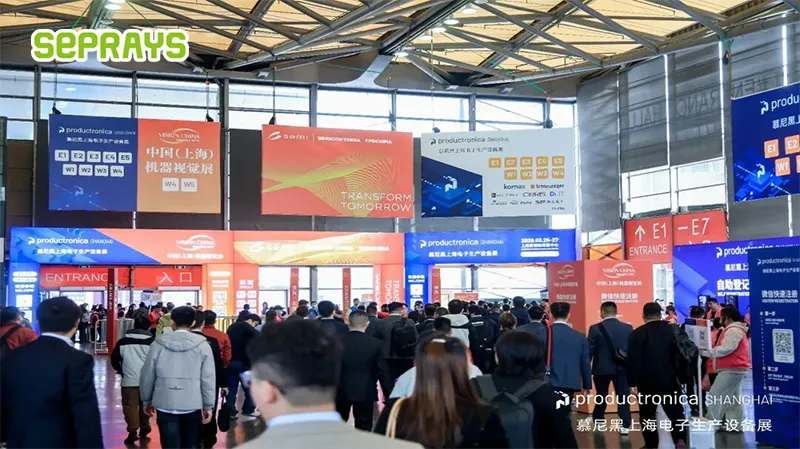
Live from the Show Floor | Seprays Showcases at electronica China, Board Separation Automation Takes Center Stage
This Year’s Industry Momentum Is Evident from a Single Exhibition On March 25, the Productronica China exhibition officially opened in Shanghai.The scene was a vivid illustration of the industry’s vitality: large crowds, constant inquiries, and even larger throngs gathered around the equipment displays.At Booth 4762 in Hall E4, Seprays found itself “surrounded” by visitors for nearly the entire day.This wasn’t due to mere gimmicks, but rather because—Many customers are genuinely seeking stable, practical solutions for PCB depaneling. 1. Why is everyone focusing on “Depaneling” this time around? Unlike previous years, the questions customers asked most frequently this time were not about technical specifications or parameters, but rather: Simply put, depaneling is no longer merely the “final step” in the manufacturing process;It has evolved into a critical stage that directly impacts both yield rates and product reliability. 2. What did Seprays bring to the table this time? In a nutshell: Not just equipment, but a complete solution package. Laser Depaneling Machine (Offline) Customers manufacturing high-precision products invariably stopped to take a closer look.—The core appeal lies in two key features: dust-free operation and zero mechanical stress. ZM400ATP: Integrated Depaneling & Tray Loading System Many factories currently face a bottleneck at the
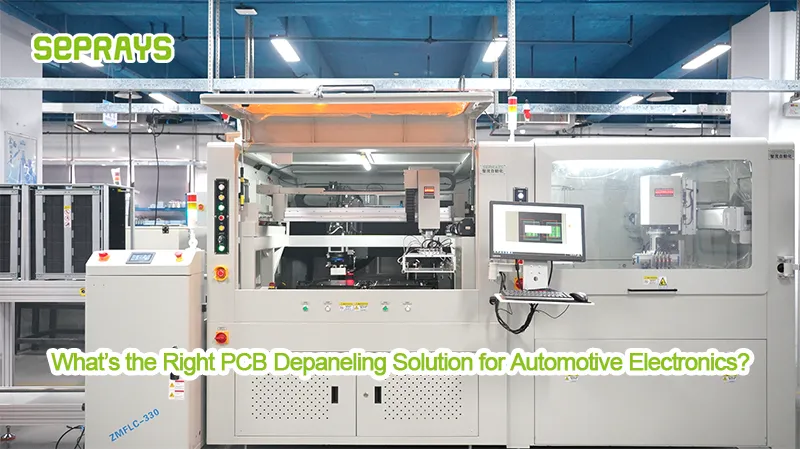
What’s the Right PCB Depaneling Solution for Automotive Electronics?
What’s the right PCB depaneling solution for automotive electronics? It’s a question that usually comes up after something goes wrong—edge cracks, unstable yield, or unexpected failures during testing. In automotive manufacturing, depaneling is not just a finishing step. It’s part of reliability control. And the margin for error is small. 🚗 Why Automotive Electronics Raise the Bar Automotive PCBs operate under tougher conditions than most. They face: This means the depaneling process must avoid introducing hidden defects. Even micro-damage can become a field failure later. ⚙️ Common Challenges in Automotive PCB Depaneling From real production lines, several issues appear repeatedly: These are not rare cases. They are daily concerns in automotive electronics manufacturing. 🔍 Overview of Available Depaneling Solutions Different methods solve different problems. Here’s a practical comparison: Method Stress Level Precision Speed Suitable Application Saw Blade Medium Medium High Power boards, straight cuts Router Low-Medium High Medium Complex shapes, control units Laser Very Low Very High Medium Sensitive modules (ADAS, sensors) V-Groove Low Medium Medium Pre-scored panels Punching Medium Medium Very High High-volume standard boards No single method fits all automotive applications. The key is matching the process to the product. 🧩 Matching Solutions to Automotive PCB Types Different


