.png)
 Korean
  English
  Spanish
  Japanese
  Russian
  Chinese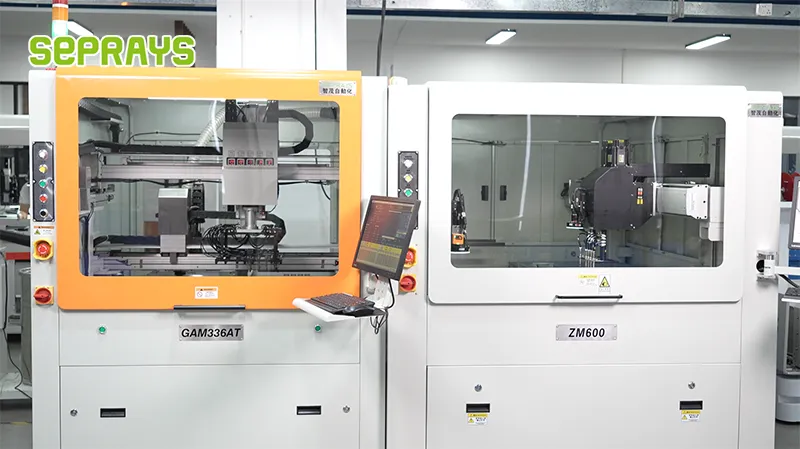
This question comes up frequently when manufacturers move from manual or semi-automatic separation toward higher throughput and more stable quality. The short answer is 네—PCB milling depaneling can be automated. The more useful answer is how far automation really goes, and when it actually pays off.
🤖 What “Automation” Means in PCB Milling Depaneling
Automation does not mean just adding a conveyor.
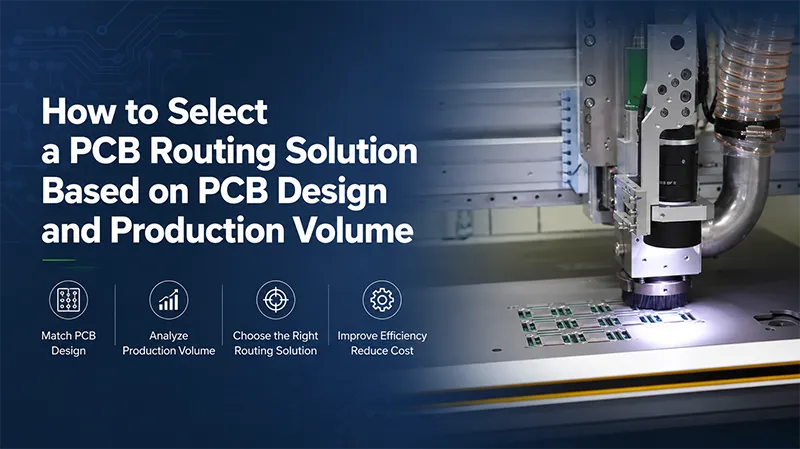
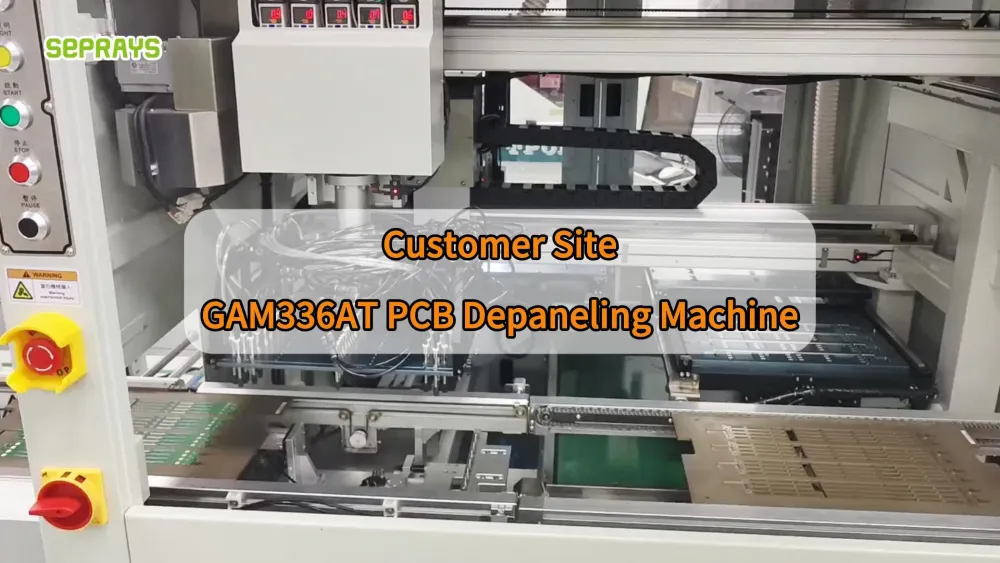
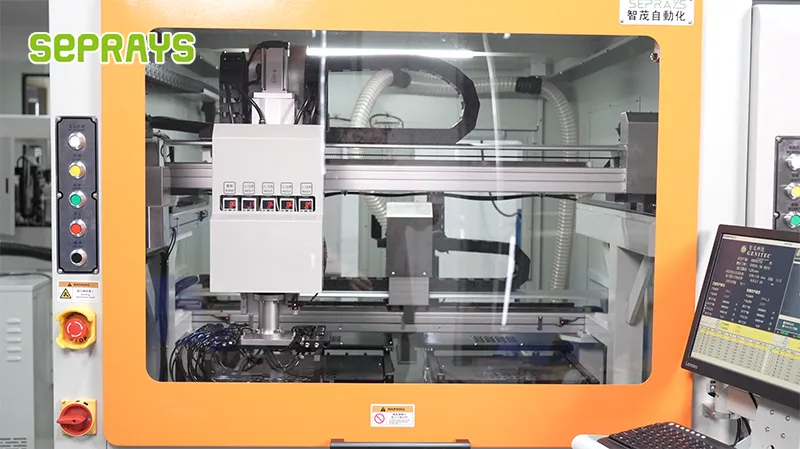
In real production, automated PCB milling depaneling usually includes:
- Automatic panel loading and unloading
- Vision alignment before cutting
- Program-controlled routing paths
- Integrated dust collection
- Data connection with the SMT line
The goal is not speed alone, but repeatability and reduced human dependency.
🧩 Why Manual Milling Still Exists
Many factories still rely on manual or semi-automatic milling depaneling because:
- Product mix changes frequently
- Batch sizes are small
- Initial investment budgets are limited
- Operators already understand the process
Manual systems offer flexibility, but they also introduce operator-to-operator variation, which becomes a bottleneck as volumes rise.
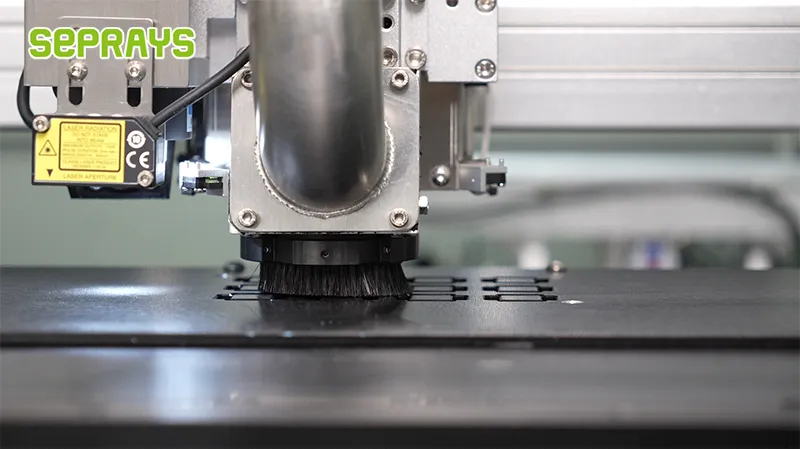
⚠️ Pain Points That Push Teams Toward Automation
Engineers usually start considering automation when they face:
- Inconsistent edge quality between shifts
- Higher scrap rates on high-density PCBA
- Labor shortages or rising labor costs
- Difficulty keeping cutting parameters consistent
- Production data that cannot be traced or analyzed
Automation is often driven by stability needs, not just efficiency.
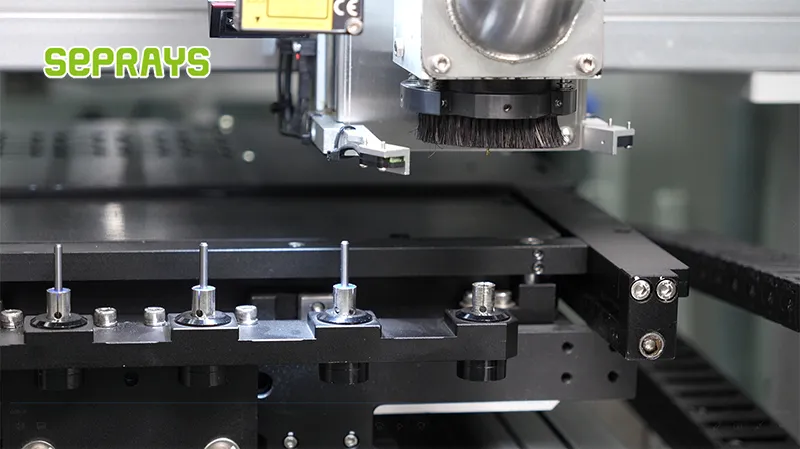
⚙️ What an Automated PCB Milling System Actually Solves
Key improvements automation brings:
- Consistent cutting depth and speed
- Stable edge accuracy across large batches
- Reduced mechanical stress from human handling
- Better dust and debris management
- Easier compliance with traceability requirements
In milling depaneling, process control matters as much as machine precision.
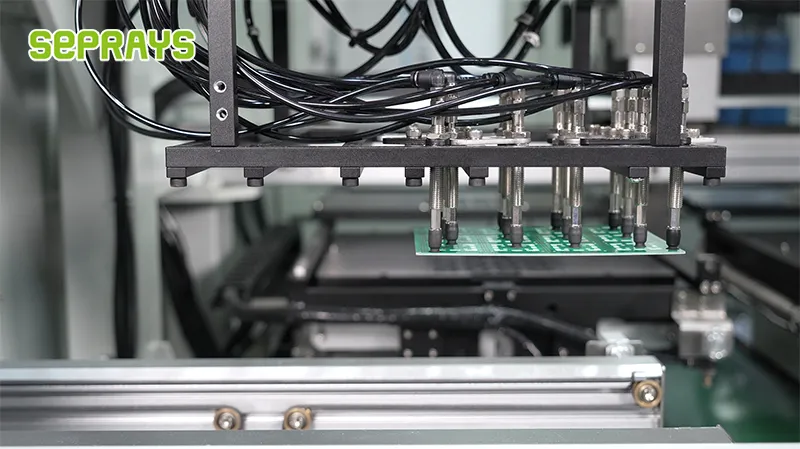
💰 Cost Analysis: Automation vs. Manual Operation
Automation increases:
- Initial equipment cost
- Integration and setup effort
But it reduces:
- Labor cost per board
- Scrap and rework
- Downtime caused by operator errors
- Quality inspection workload
For medium-to-high volume production, many plants find that the total cost per unit drops after automation, even if the upfront cost is higher.
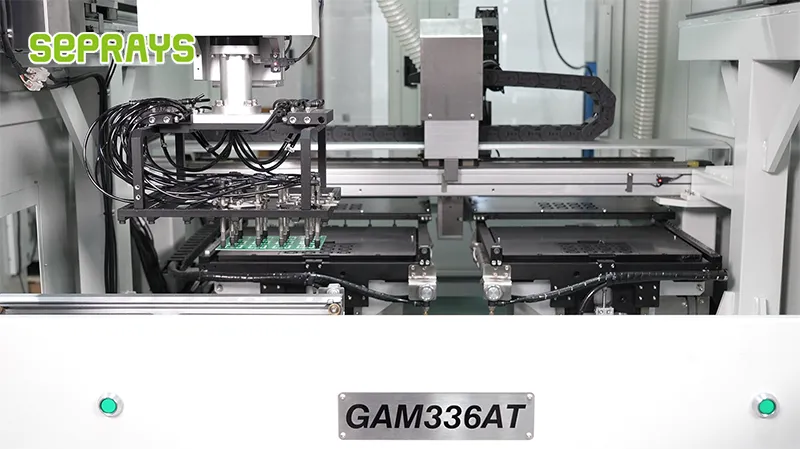
🧪 A Practical Case from the Field
In one industrial electronics project supported by Seprays Group, a customer initially used manual milling and depaneling for flexibility.
As volumes increased:
- Operators struggled to maintain consistent edge quality
- Dust buildup caused frequent cleaning stops
- Shift-to-shift variation became visible in yield reports
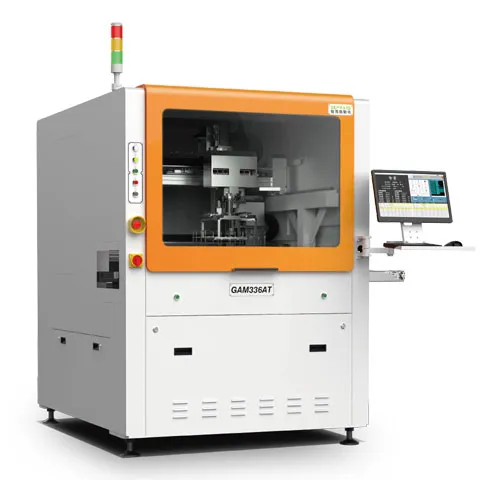
By upgrading to an automated milling depaneling system with inline loading and vision alignment:
- Edge accuracy stabilized
- Operator involvement dropped significantly
- Scrap related to depaneling decreased
The customer did not gain speed alone—they gained predictability.
🧠 When Automation Makes Sense—and When It Doesn’t
Automation makes sense if:
- Production runs are repetitive
- PCBA density is high
- Edge clearance is tight
- Quality consistency is critical
- Labor availability is limited
Manual or semi-automatic may still work if:
- Product changeovers are frequent
- Volumes are low
- Boards are mechanically robust
Automation is not a requirement—it is a strategic choice.
🔧 How Automation Is Typically Implemented
Most factories do not jump directly to full in-line automation. A common path is:
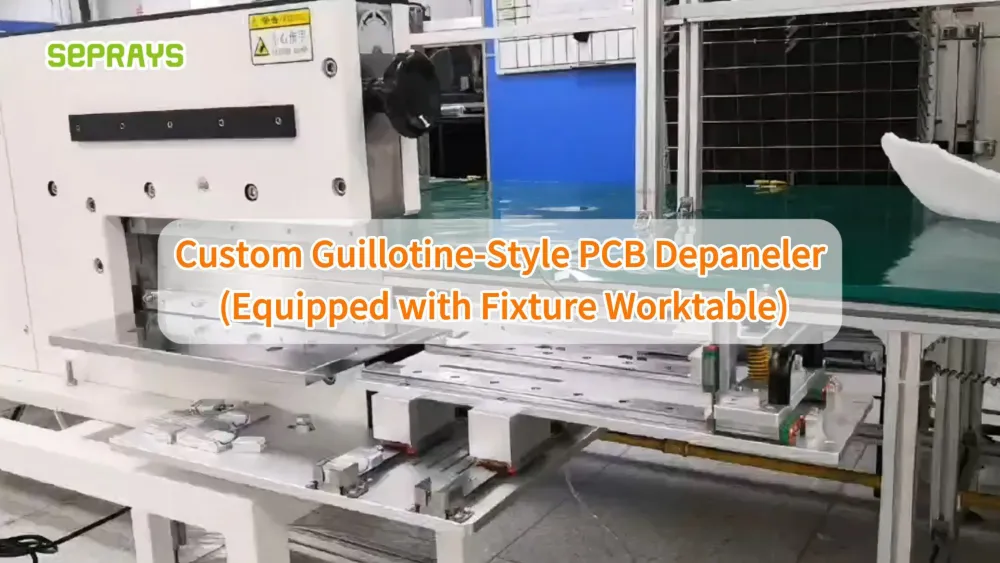
- Semi-automatic milling with fixtures
- Vision-assisted alignment
- Automatic loading/unloading
- Full inline integration with SMT
This staged approach reduces risk and spreads investment over time.
💬 So, Can PCB Milling Depaneling Be Automated?
Yes—but automation is valuable only when it solves real production problems.
For high-density, high-value PCBAs, automation often improves yield more than it improves speed.
The key is matching the automation level to your actual production reality—not copying what others are doing.
⭐ Why Choose Seprays Group?
Seprays Group focuses on practical depaneling automation, not one-size-fits-all solutions. From standalone milling systems to fully automated inline depaneling, Seprays helps manufacturers choose automation levels that improve stability, quality, and long-term cost control.
If you are evaluating whether automated PCB milling depaneling fits your production, please contact us for an open, technical discussion.
WhatsApp: +8618929266433
이메일: sales@seprays.com