.png)
 Korean
  English
  Spanish
  Japanese
  Russian
  Chinese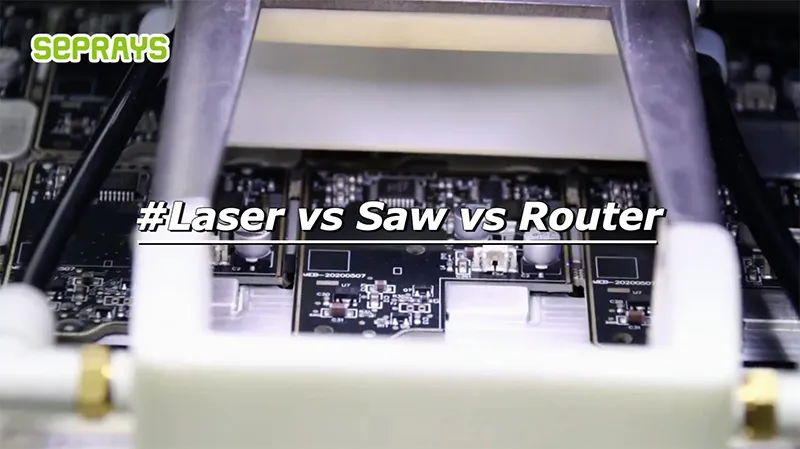
Laser vs Saw vs Router PCB Depaneling is no longer just a technical comparison for process engineers.
In 2026, it will directly affect:
- Product reliability
- SMT line efficiency
- Production flexibility
- Long-term manufacturing cost
And here’s the interesting part:
There is no single “best” depaneling method anymore.
What works perfectly for consumer electronics may fail in automotive production.
What saves cost in high-volume manufacturing may create problems in high-mix environments.
That’s why more manufacturers are evaluating depaneling from a process perspective — not just machine specifications.
🔍 Why Choosing the Wrong Depaneling Method Gets Expensive Fast
A surprising number of production issues start after SMT assembly.
Not during soldering.
Not during testing.
But during depaneling.
Factories often experience:
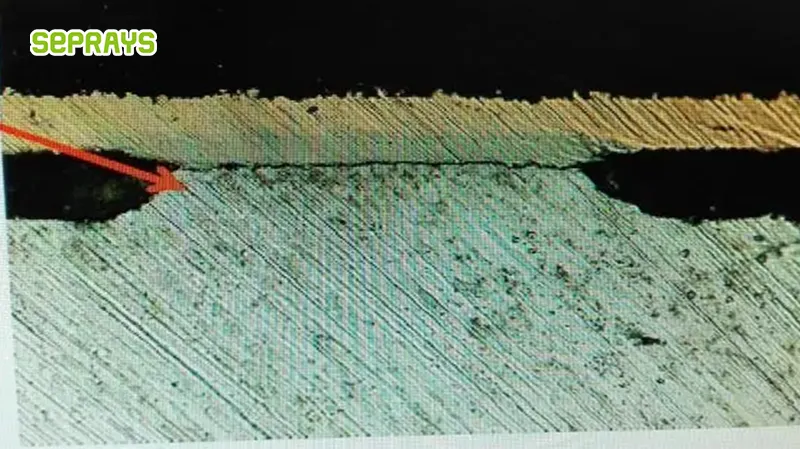
- Micro-cracks near components
- Board edge damage
- Excessive mechanical stress
- Low production efficiency
- High setup time
The difficult part?
These problems are sometimes blamed on PCB design or assembly quality.
But the real issue may simply be the wrong depaneling process.
⚙️ Understanding the Three Main Depaneling Methods
Before comparing performance, it helps to understand what each method actually does best.
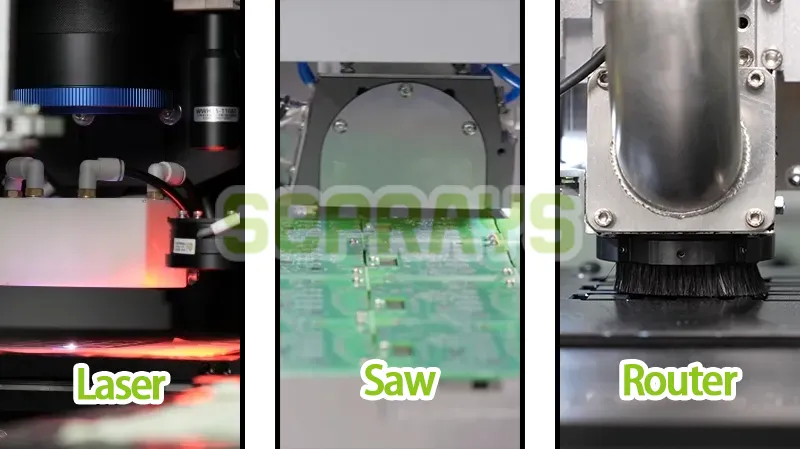
🔹 레이저 구분
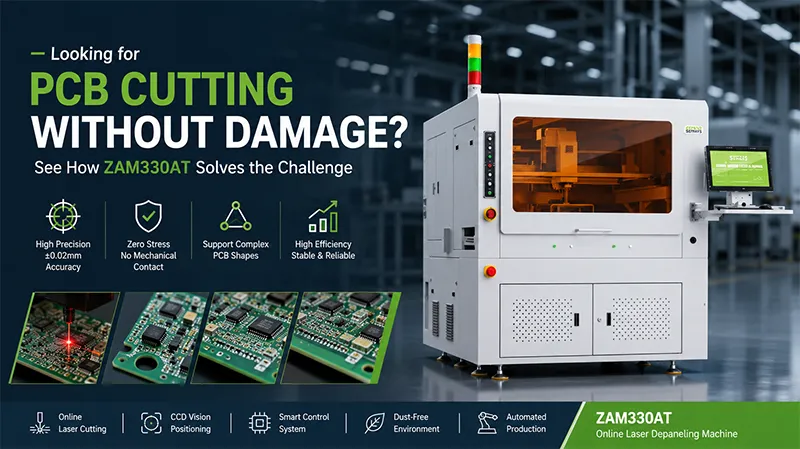
Uses focused laser energy to separate PCB boards without physical contact.
Best known for:
- Ultra-low stress
- High precision
- Complex cutting paths
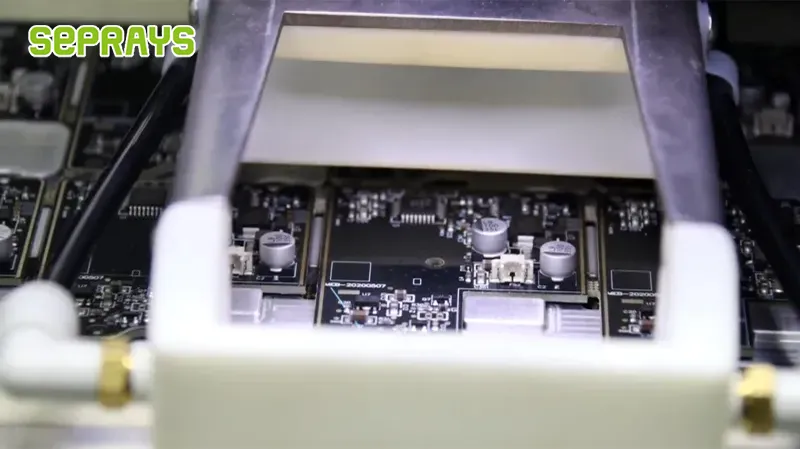
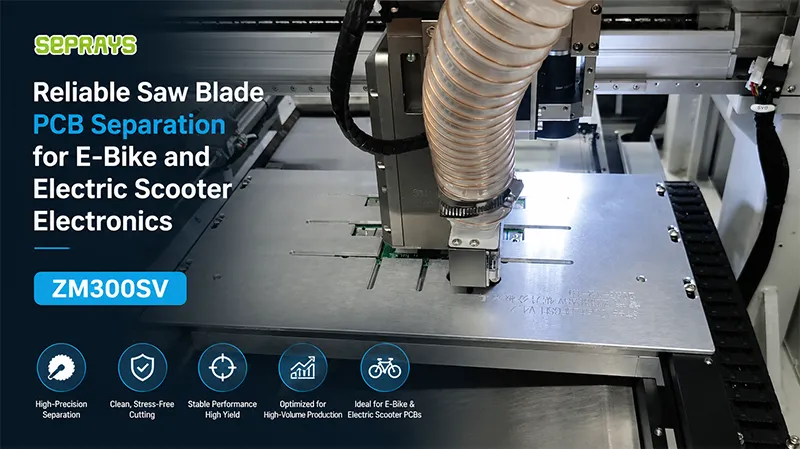
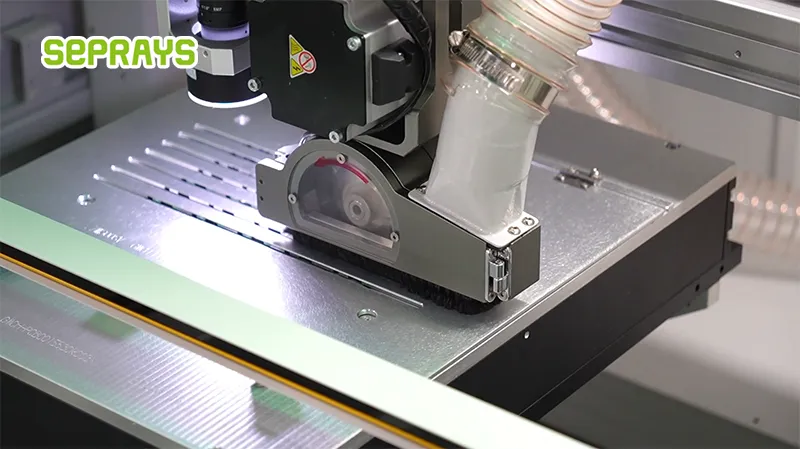
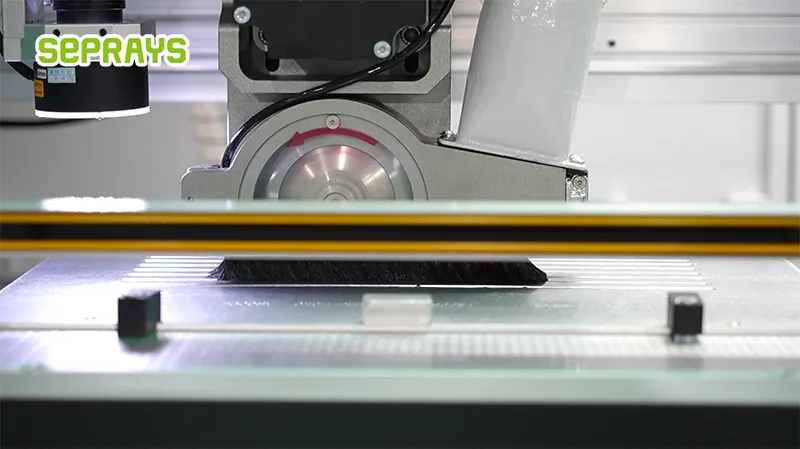
Uses high-speed circular blades for straight-line cutting.
Best known for:
- High speed
- Strong efficiency
- Low operating cost
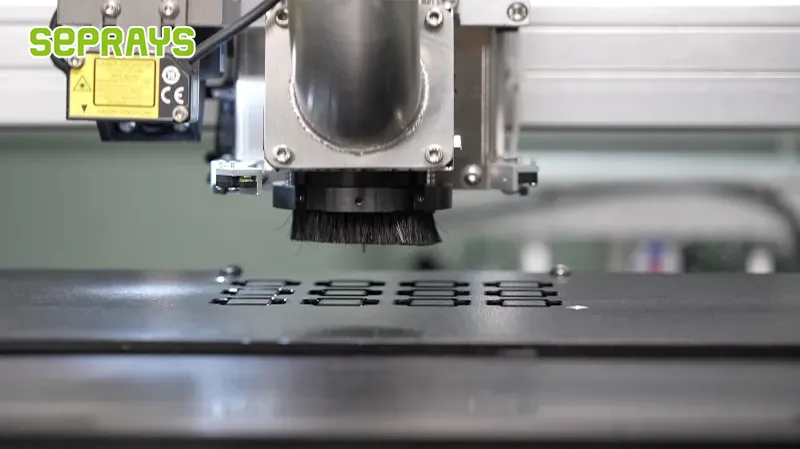
🔹 라우터 구분
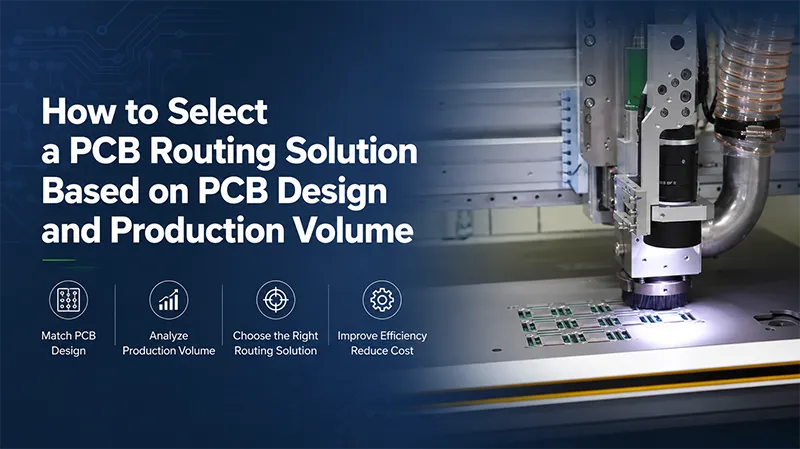
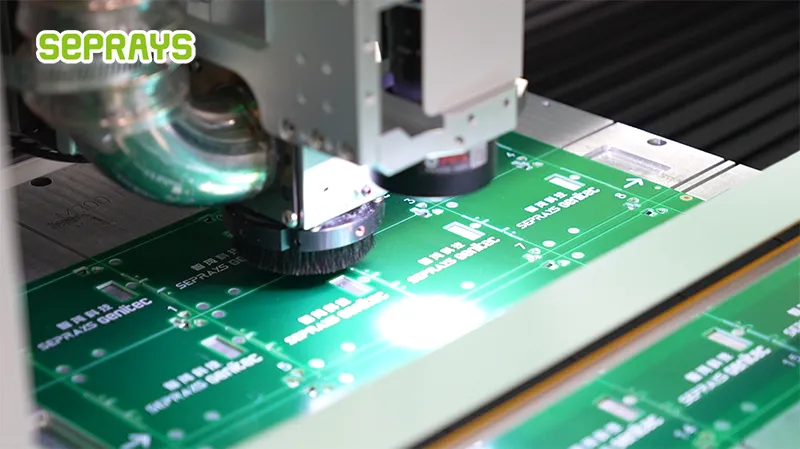
Uses milling cutters to follow programmed cutting paths.
Best known for:
- Flexibility
- Irregular board shapes
- Balanced performance
📊 Laser vs Saw vs Router — Quick Comparison
| Factor | Laser | Saw | Router |
|---|---|---|---|
| Cutting Stress | Very Low | 당 | Low |
| 속도 | 중소 | Very High | 중소 |
| Complex Shapes | Excellent | Limited | Excellent |
| Straight-Line Cutting | Good | Excellent | Good |
| Dust Generation | Low | 당 | Higher |
| Initial Investment | High | Lower | 중소 |
| High-Mix Production | Excellent | 당 | Excellent |
| Automotive PCBA | Strong | Depends | Strong |
| Flexible PCB | Excellent | Weak | 당 |
💡 The “Fastest” Method Is Not Always the Most Efficient
This is where many buyers get surprised.
Saw depaneling is often the fastest method for straight-line cutting.
But speed alone does not guarantee higher production efficiency.
Why?
Because production efficiency also includes:
- Changeover time
- Yield stability
- Rework reduction
- Operator dependency
- Automation compatibility
In some factories, slower but more stable depaneling actually improves overall throughput.
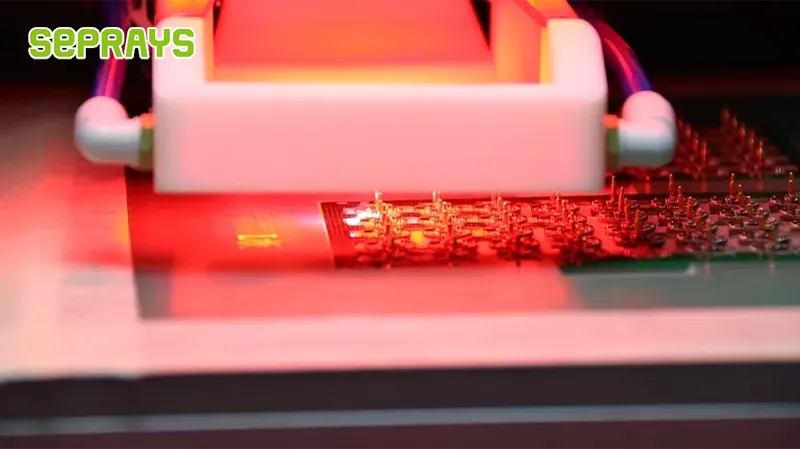
🏭 When Laser Depaneling Makes Sense
Laser depaneling is growing rapidly in:
- Semiconductor electronics
- Medical devices
- Flexible PCB production
- High-density PCBA manufacturing
Why?
These products are highly sensitive to mechanical stress.
Laser systems avoid direct physical contact during cutting.
That reduces the risk of:
- Cracks
- Delamination
- Solder joint damage
But there are trade-offs.
Laser systems usually involve:
- Higher initial investment
- More complex process tuning
- Material compatibility considerations
🔧 When Saw Depaneling Is Still the Best Choice
Despite newer technologies, saw depaneling remains extremely popular in mass production.
Especially for:
- LED panels
- Aluminum PCB
- Straight-line V-cut boards
- Large-volume consumer electronics
Its biggest advantage?
Efficiency.
For repetitive straight-line cutting, saw systems are difficult to beat in terms of speed and cost performance.
But there are limitations.
Saw cutting is less suitable for:
- Complex contours
- Irregular PCB shapes
- Extremely sensitive components near edges
🧩 Why Router Depaneling Remains the Industry Standard
Router depaneling sits in the middle.
And that is exactly why it remains widely used.
It provides a strong balance between:
- 정밀
- Flexibility
- Cost control
- Automation compatibility
Router systems are especially valuable for:
- Mouse-bite panels
- Complex board outlines
- Mixed production environments
- Automotive electronics
With CCD vision systems and modern software, router depaneling has become far more advanced than many people realize.
🚨 A Counterintuitive Reality in 2026
Some factories still choose depaneling methods based mainly on machine price.
But experienced manufacturers increasingly focus on:
- Long-term process stability
- Product reliability
- Scalability for future production
In many cases, the cheapest machine creates the highest hidden cost later.
Especially when:
- Product complexity increases
- SMT density rises
- Quality standards tighten
🧪 Case Example — Mixed Production Challenges
A manufacturer producing both automotive and industrial PCBAs faced constant process inconsistency.
Their original setup included:
- Saw depaneling for all products
This worked well for simple panels.
But problems appeared when more complex PCBAs entered production:
- Edge damage
- Alignment deviation
- Difficult changeovers
After reviewing production data, the factory worked with Seprays to redesign the depaneling process.
The updated solution combined:
- 라우터 구분 for complex boards
- Saw cutting for straight-line sections
- CCD vision alignment
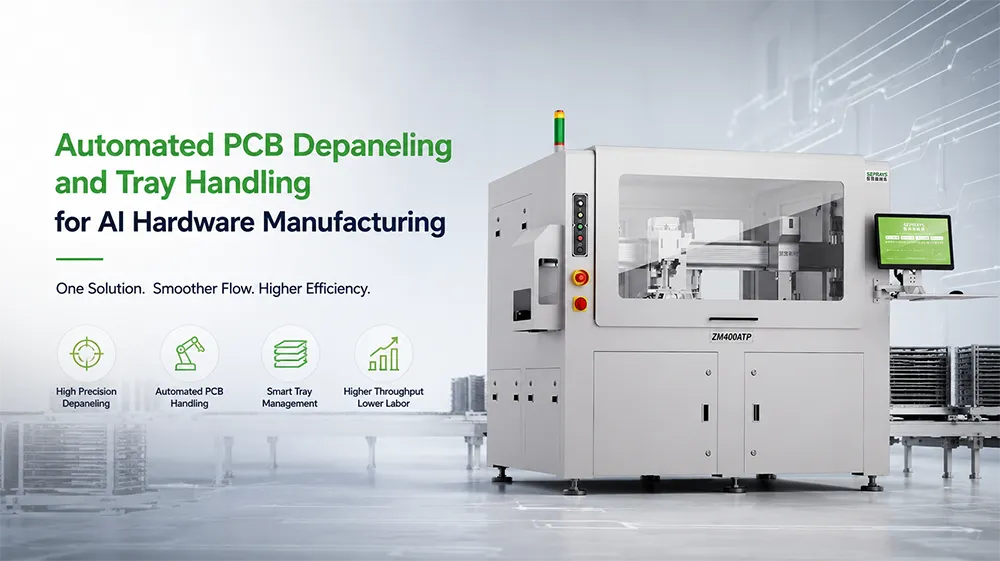
- Automated handling integration
The result?
Higher process flexibility without sacrificing production efficiency.
Interestingly, the biggest improvement was not in cutting speed.
It was production stability.
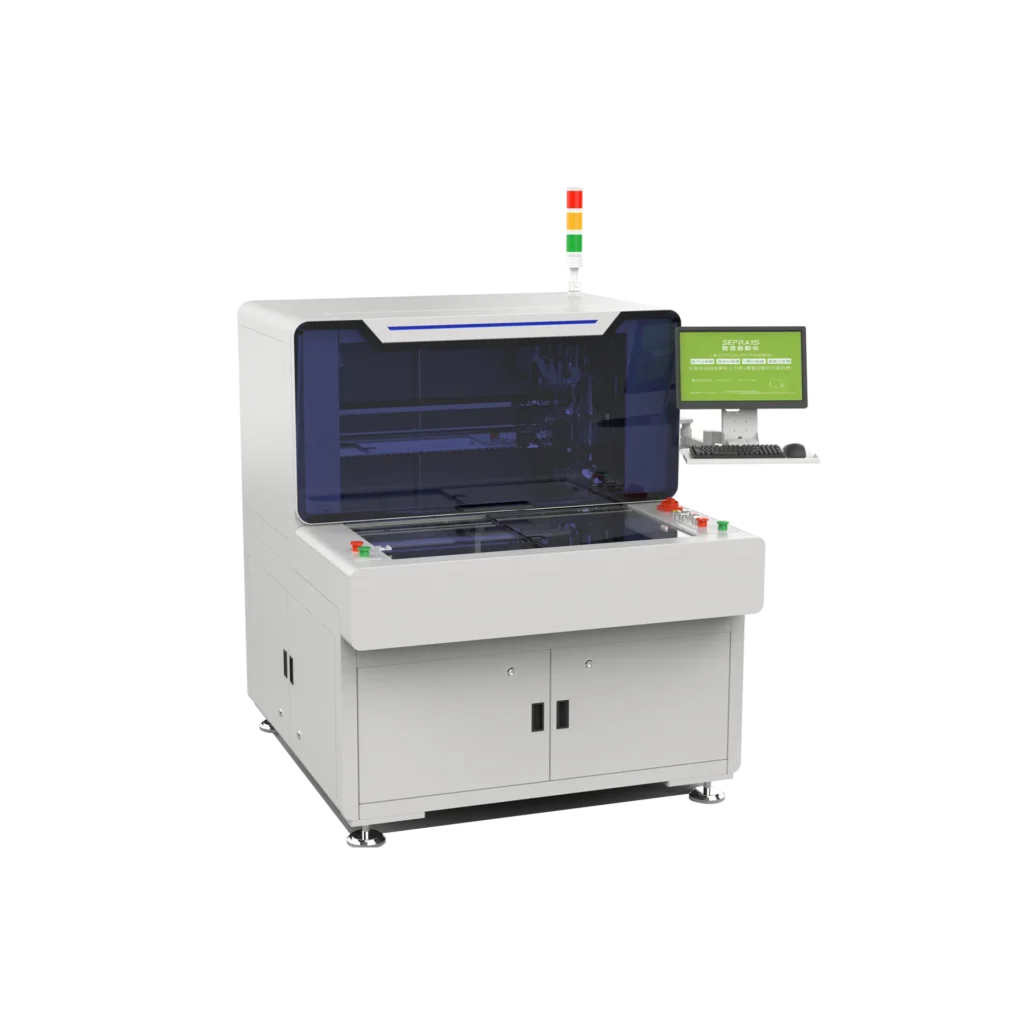
🔄 Why Hybrid Solutions Are Growing
In 2026, more manufacturers are using hybrid depaneling systems.
Why?
Because modern PCB panels are becoming more complicated.
Some boards include:
- V-cut sections
- Mouse-bite tabs
- Irregular contours
- Sensitive edge components
One cutting method may not handle everything efficiently.
Hybrid systems combine multiple technologies in one process.
This helps manufacturers improve:
- Flexibility
- Yield
- Automation compatibility
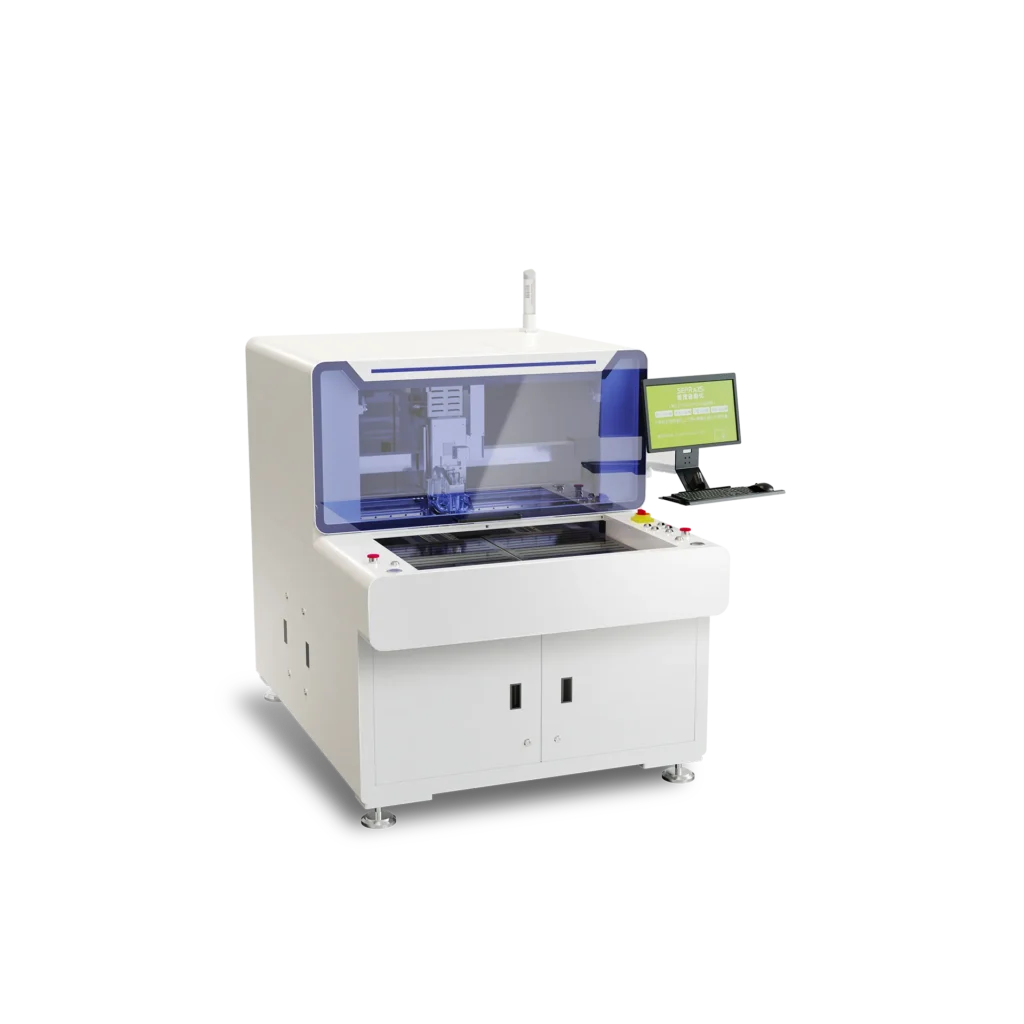
🌍 Smart Manufacturing Is Changing Depaneling Requirements
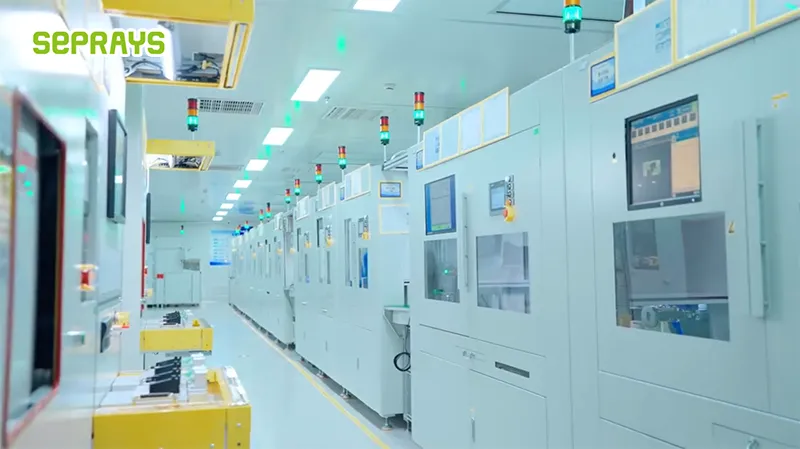
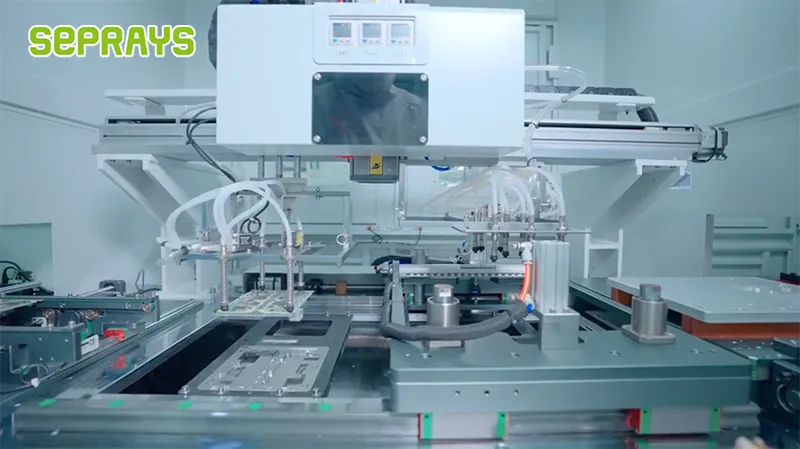
Modern SMT lines increasingly prioritize:
- Inline automation
- MES connectivity
- Vision-guided correction
- Reduced manual handling
That changes equipment selection.
Depaneling is no longer isolated.
It becomes part of the intelligent production system.
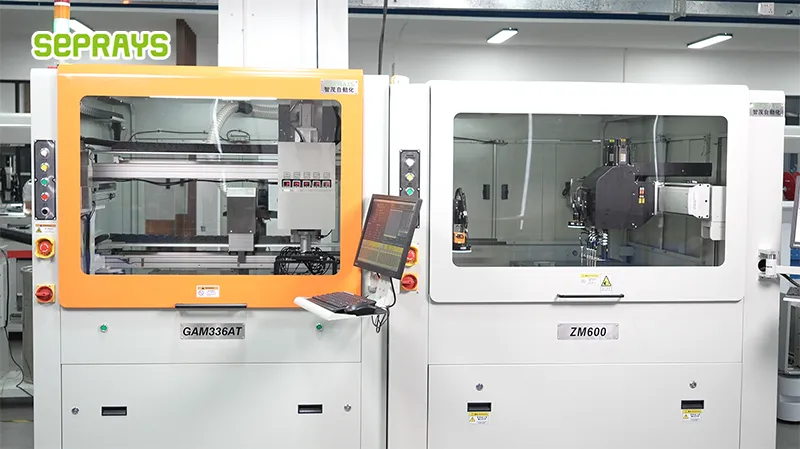
💰 Which Method Is the Most Cost-Effective?
The answer depends heavily on:
- PCB design
- Production volume
- Product sensitivity
- Future scalability
General guideline:
- Saw → Best for simple high-volume straight-line cutting
- Router → Best overall balance for mixed PCB production
- Laser → Best for ultra-sensitive or high-precision applications
There is no universal answer.
The “best” method is the one that matches your real production conditions.
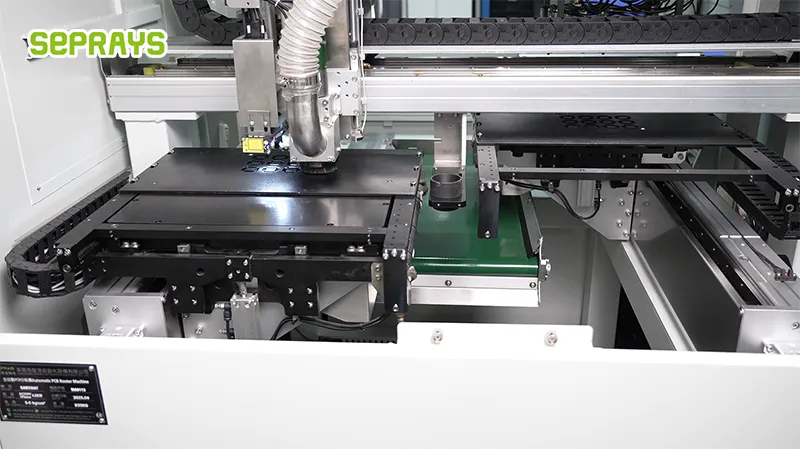
🚀 Final Thoughts
In 2026, PCB depaneling decisions are becoming more strategic.
Manufacturers are no longer asking:
“Which machine is fastest?”
They are asking:
“Which process gives us stable yield, flexibility, and long-term reliability?”
That shift matters.
Because modern electronics manufacturing is becoming increasingly complex.
And the depaneling process now plays a bigger role in final product quality than many expected.
🚀 Why Choose Seprays Group?
With more than 30 years of experience in PCB/FPC depaneling technology, Seprays Group helps electronics manufacturers choose the right depaneling solutions for complex modern production environments.
Seprays Group provides a complete range of solutions—including milling-cutter depanelers, laser depanelers, V-groove depanelers, punching depanelers, hybrid depaneling systems, and automated handling equipment. Our solutions are trusted by globally recognized manufacturers such as Foxconn, Flextronics, State Grid, Luxshare, Compal, Wistron, China Electronics, Quanta, CRRC, China Aerospace, OPPO, ZTE, and Bosch. Seprays equipment is widely used in factories across China and worldwide.
By combining practical manufacturing experience with advanced automation, CCD vision systems, and low-stress processing technologies, Seprays helps customers improve yield, production flexibility, and long-term process stability.
If you are evaluating laser, saw, or router PCB depaneling solutions for your factory, feel free to contact us. Our team can help you assess the most suitable solution for your production requirements.
WhatsApp: +8618929266433
이메일: sales@seprays.com
❓ FAQ
1. Which PCB depaneling method causes the least stress?
Laser depaneling generally produces the lowest mechanical stress because it uses non-contact cutting.
2. Is saw depaneling still useful in 2026?
Yes. Saw depaneling remains highly efficient for straight-line, high-volume production.
3. Why is router depaneling still widely used?
Because it offers a strong balance between flexibility, accuracy, and production cost.
4. Are hybrid depaneling systems becoming more common?
Yes. Many modern PCB panels require multiple cutting methods within a single production process.
5. How do manufacturers choose the right depaneling method?
It depends on PCB structure, production volume, component sensitivity, automation requirements, and long-term manufacturing goals.